

Most people who share their home with a cat have suspected it for years. That slow blink from across the room. The way your cat appears in the kitchen exactly at dinner time. The uncanny feeling that they understood every word you just said. It turns out, those suspicions aren’t too far off the mark.
Cat intelligence has long been underestimated, partly because cats rarely perform on command, and partly because so few scientists have dedicated serious resources to studying them. Cats don’t always make their smarts easy to measure. Researchers note they can be notoriously difficult to work with in laboratory settings, and compared with animals like rats and dogs, very few studies have been conducted on feline cognition specifically. Still, what researchers have uncovered is genuinely fascinating.
Here are twelve facts about your cat’s brain and cognitive abilities that might just change how you see your feline companion entirely.
1. Their Brain Structure Is Surprisingly Similar to Ours

Size isn’t everything when it comes to brains. While it’s the brain structure and surface folding that determine intelligence rather than actual brain size, the feline brain’s surface folding and structure are ninety percent similar to that of the human brain.
Like humans, cats have a cerebral cortex, which controls cognition, emotions, motor function, memory, and planning, as well as a cerebellum responsible for regulating movement and balance, and a brainstem that regulates essential functions including heart rate and temperature. That’s a remarkably familiar blueprint.
Much like the human brain, each part of the cat brain is compartmentalized, specialized, and connected to the other parts, giving cats an almost human-like ability to understand, respond to, and even manipulate their surroundings.
2. Cats Have a Cognitive Level Comparable to a Young Child
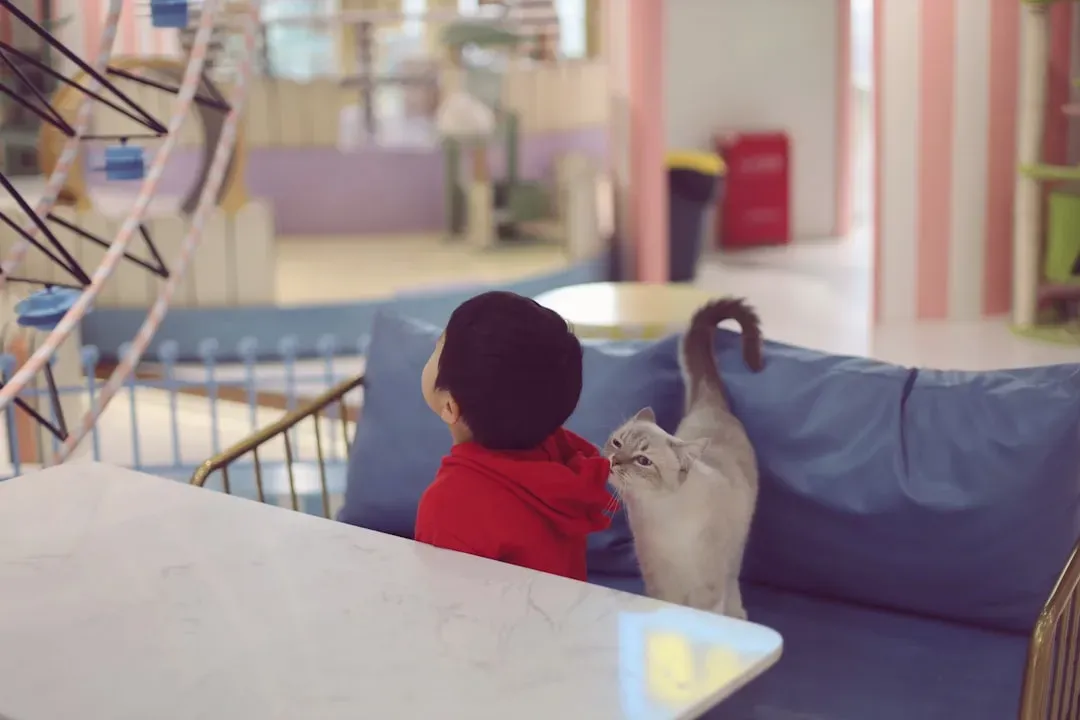
According to several feline behaviorists and child psychologists, an adult cat’s intelligence is comparable to that of a two to three year old child, since both species learn through imitating, observing, and experimenting.
Broadly speaking, cat intelligence is often characterized in the same way as dog intelligence, namely that both are similar to human toddlers. Cats and dogs are simply smart in different ways.
That distinction matters. Cats are social when it suits them but can also take on a more solitary lifestyle, so it shouldn’t be surprising that they more frequently try to solve problems on their own rather than turning to people for social cues. Independence, it seems, is just another form of intelligence.
3. Their Long-Term Memory Is Remarkably Powerful

Cats excel at procedural and spatial memory and are known to retain their memories for ten years or more. What’s even more fascinating is that cats can associate individual memories of places or events with the emotions they experienced at that time, including fear, pain, or trauma, as well as positive emotions like happiness or contentment.
Cats display neuroplasticity, allowing their brains to reorganize based on experiences. They have well-developed memory, retaining information for a decade or longer. These memories are often intertwined with emotions, allowing cats to recall both positive and negative experiences associated with specific places.
This emotional memory is not trivial. It explains why a cat who had a bad experience at the vet years ago still becomes tense at the sight of a carrier, and why a cat raised with affection tends to be far more trusting as an adult.
4. Cats Genuinely Recognize Their Own Names

It’s not selective hearing, though it might feel that way. Research indicates that domestic cats do recognize their own names even if they walk away when they hear them. Behavioral scientist Atsuko Saito previously showed that cats can recognize their owner’s voice.
The cats in the study had more pronounced responses to their own names, including meowing or moving their ears, heads, or tails, compared to similar words or other cats’ names. The response was measurable even when a stranger, not just the owner, said the name.
Cats from ordinary households, after habituating to four different general nouns or four names of cohabiting cats, showed a significant rebound in response to the subsequent presentation of their own names, and this discrimination held even when unfamiliar persons uttered the names. So yes, your cat knows its name. Whether it chooses to act on that knowledge is a different matter entirely.
5. They Can Learn the Names of Other Cats in the Household

This one tends to surprise people. Cats have been shown to distinguish their own name from another familiar cat’s name, and they also distinguished those names from general nouns. Interestingly, cats living in multi-cat households habituated less to their companion cats’ names than to other nouns.
Research into multi-animal families confirmed that cats could learn the names of other cats in the family unit, which they could only do with some form of vocal recognition. That implies a level of social awareness that most people wouldn’t expect from an animal often described as indifferent.
6. Cats Use Social Referencing to Navigate Uncertainty

A 2015 study showed that cats will look to their people for cues about how to react in a potentially dangerous situation. This is called social referencing.
Most cats, specifically around seventy nine percent, exhibited referential looking between the owner and the object and also to some extent changed their behavior in line with the emotional message given by the owner. In other words, when something seemed uncertain or threatening, they checked in with their humans first.
Cats show social referencing behavior, gazing at the human face when exposed to a potentially frightening object, and to some extent changed their behavior depending on the facial expression of their owner, whether positive or negative. This is a subtle but significant sign of emotional and social intelligence at work.
7. They Can Read Human Emotions

Your cat is watching you more closely than you realize. Research demonstrates that cats integrate visual and auditory signals to recognize human and conspecific emotions and appear to modulate their behavior according to the valence of the emotion perceived.
Studies have found that cats respond more positively to their owners when they express facial and postural signals of happiness rather than anger. Cats were more likely to engage in positive behaviors such as ears forward or a relaxed body posture and spent a longer time in contact with their owners when they appeared happy.
Research also found that “fear” odours elicited higher stress levels in cats than neutral scents, suggesting that cats perceived the valence of the information conveyed by olfactory signals and regulated their behavior accordingly. They’re reading you through scent, sound, and visual expression, often all at once.
8. Kittens Learn Through Watching, Not Just Doing

Observational learning is one of the sharpest tools in a cat’s cognitive toolkit. In one experiment, kittens that were able to observe their mothers performing an experimentally organised act were able to perform the same act sooner than kittens that had observed a non-related adult cat, and sooner than those placed in trial and error conditions with no other cat to observe.
This type of learning involves much more than simple imitation. It includes attention, retention, reproduction, and motivation. Kittens focus on their mother’s behaviors, remember what they observed, then perform the actions stored in memory, with their learning driven by survival instinct.
Simply by watching their owners and mirroring their actions, cats are capable of learning human-like behaviors like opening doors and turning off lights. That’s not coincidence. That’s deliberate, applied learning.
9. Their Hunting Intelligence Is Highly Sophisticated

Cats have evolved and adapted their intelligence in the wild to be remarkable hunters. That evolutionary pressure has shaped cognitive abilities that remain sharp even in the most pampered house cat living its best indoor life.
Watching a domestic cat playing, you can observe all their natural hunting instincts at work. Actions like stalking, hiding, and pouncing are actually highly skilled and could certainly be described as intelligent.
Indoor cats may lack experience with real prey, but their instincts are fully intact and easily activated. A 2021 study suggests that indoor cats may actually be more motivated toward predatory play than cats with outdoor access, showing more intense reactions to prey-like stimuli. The drive is deeply embedded, regardless of environment.
10. Cats Have a Surprisingly Refined Sense of Time

Anyone who has ever been five minutes late with a cat’s dinner already suspects this. Cats have a limited but real concept of time, with research showing that some cats can discriminate between different intervals of time. These abilities can be quite detailed, with some cats being able to tell the difference between eight seconds passing and ten seconds passing.
One study found that cats could even discriminate between a five second and an eight second time interval. While it may be pushing things to say cats have an understanding of math, they appear to be able to differentiate between quantities of food. A paper published in 2008 found that cats could understand that three is greater than two.
Cats have a natural internal clock that tells them when to hunt and when to rest, but they’re smart enough to readjust their natural behaviors according to our daily routines. This is known as associative learning.
11. They Understand Object Permanence

Object permanence is the understanding that something still exists even when it’s out of sight. It’s a concept that takes human babies several months to develop. Felines display object permanence, which is an ability humans only develop when they are around eight months old. Object permanence is an important skill to have when operating as a hunter at night.
Studies show that cats mastered the test in which they saw a desirable object such as tasty food, and then it disappeared behind a box, successfully searching for and finding the food.
Cats clearly have a superior ability to learn new information, mesh it with existing information, recall it, and use that information in other situations. This cognitive ability places them firmly in the highly intelligent category. Stash something out of sight and your cat still knows it’s there.
12. Urban Life Has Actually Made Cats Smarter

Domestication has done more than tame cats. It may have actively sharpened their minds. Living in urban environments has exposed cats to challenges that require adaptive behaviors, contributing to cognitive development. Selective breeding and genetic changes have further influenced their intelligence.
Cats’ intelligence may have increased during their semi-domestication, as urban living may have provided an enriched and stimulating environment requiring novel adaptive behaviors. The need to navigate human homes, routines, and relationships turns out to be genuinely cognitively demanding.
Cat intelligence study is mostly drawn from consideration of the domesticated cat. The process of domestication has allowed for closer observation of cat behavior and increased incidence of interspecies communication, and the inherent plasticity of the cat’s brain has become apparent as the number of studies in this area has grown.
Conclusion: Smarter Than They Let On

The picture that emerges from the science is of an animal far more cognitively complex than popular culture gives it credit for. Cats remember, reason, observe, and read emotions. They recognize names, track hidden objects, and quietly adjust their behavior based on your mood.
Perhaps the most honest summary comes from research itself: the latest behavioral research on animal intelligence challenges all our old-school notions on what it means to be smart. Cats simply express their intelligence on their own terms, which is, in its own way, the most cat-like thing imaginable.
The next time your cat watches you with that calm, unhurried gaze, it might be worth remembering that there’s quite a lot going on behind those eyes. More than we’ve given them credit for, and likely more than we’ve yet discovered.
