
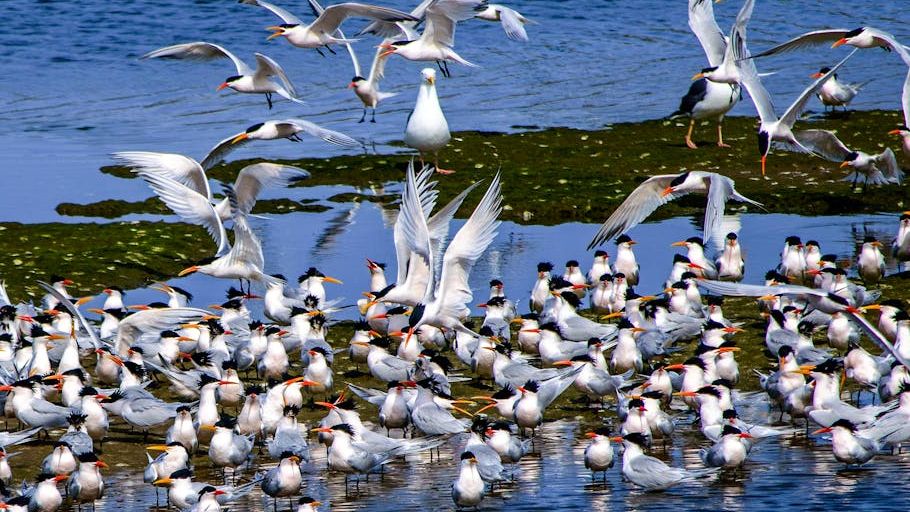
Walk any American beach at dawn and you’re witnessing something that, a few decades ago, felt permanent. Terns diving in tight arcs, plovers sprinting across wet sand, pelicans gliding low over swells. It feels ancient, reliable. It isn’t.
The 2025 State of the Birds report showed that birds across most habitats have suffered major losses since 1970. Long-suffering shorebirds have continued to see declines, facing threats from rising and warming seas on top of coastal habitat losses across their expansive ranges. The picture along the coast is particularly sobering, and the eight species below tell that story in sharp, specific detail.
Saltmarsh Sparrow: A Race Against the Tide
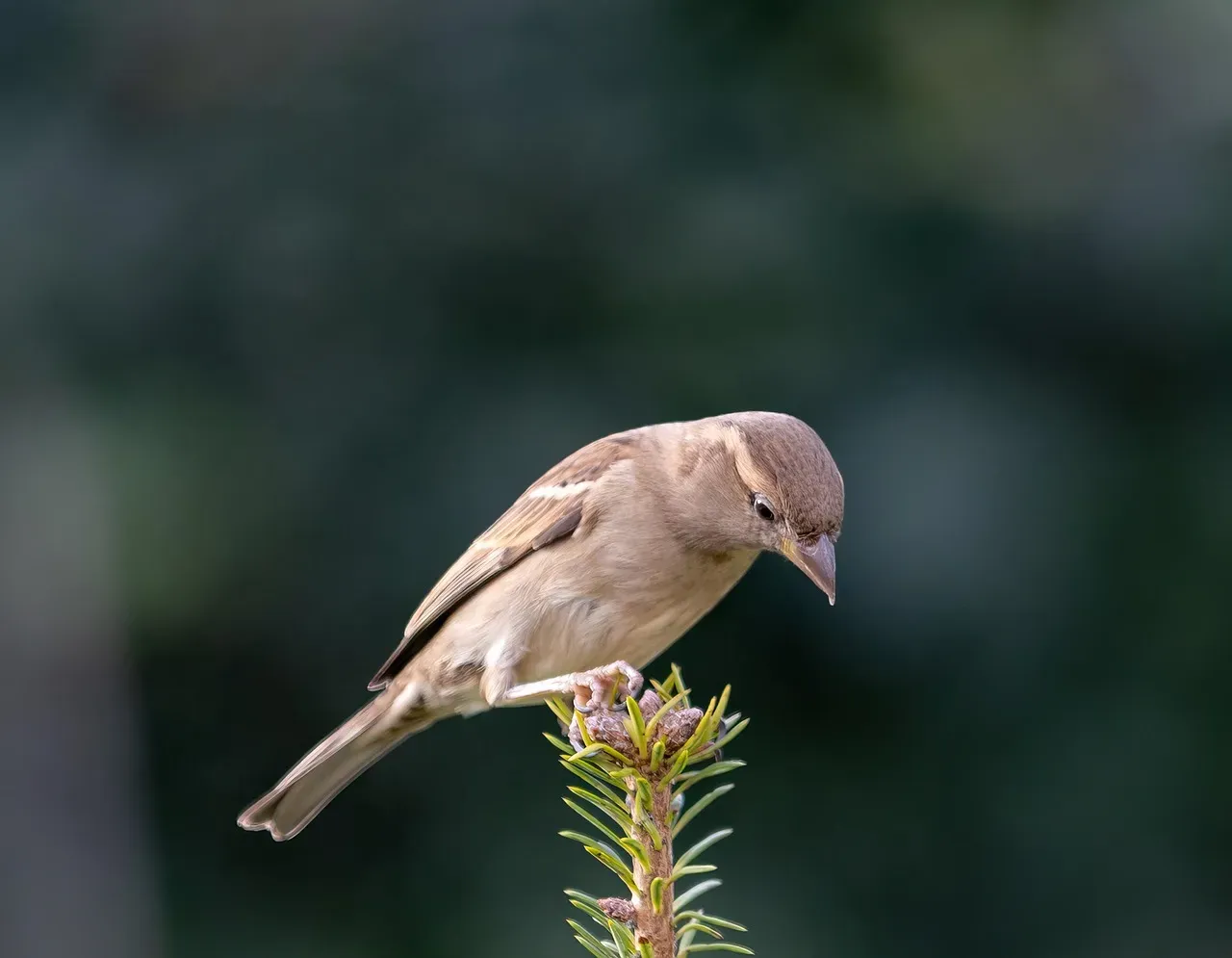
Few birds illustrate the urgency of sea-level rise quite like the saltmarsh sparrow. Endemic to the east coast of the United States, they are extreme salt marsh specialists and even build their nests in the intertidal zone. It is a genuinely precarious way to live, and it has worked for an extraordinarily long time.
The saltmarsh sparrow’s life is intimately connected to the tides. With a nesting cycle of 23 to 24 days, breeding is synchronized with the 28-day tidal cycle influenced by the moon. The bird’s marshy nest sites, built just above the high tide mark, are safe from flooding as long as the nesting cycle is completed between the twice-monthly high tides.
Nesting success was very low for all sparrows, regardless of genetic makeup, due to high levels of nest flooding, and sea-level rise is outpacing the rate at which these sparrows may be able to adapt. Without intervention, climate and species population models predict that they will go extinct by the 2050s, perhaps as soon as 2035.
As the marshes experience more frequent and higher-elevation flooding events, these ground-nesting birds cannot possibly alter their genetic blueprint in time to evolve a new nest-building strategy. They don’t even have the option to migrate to higher ground within the marsh, as marshes are disappearing at an alarming rate.
Piping Plover: Squeezed Between the Sea and Development
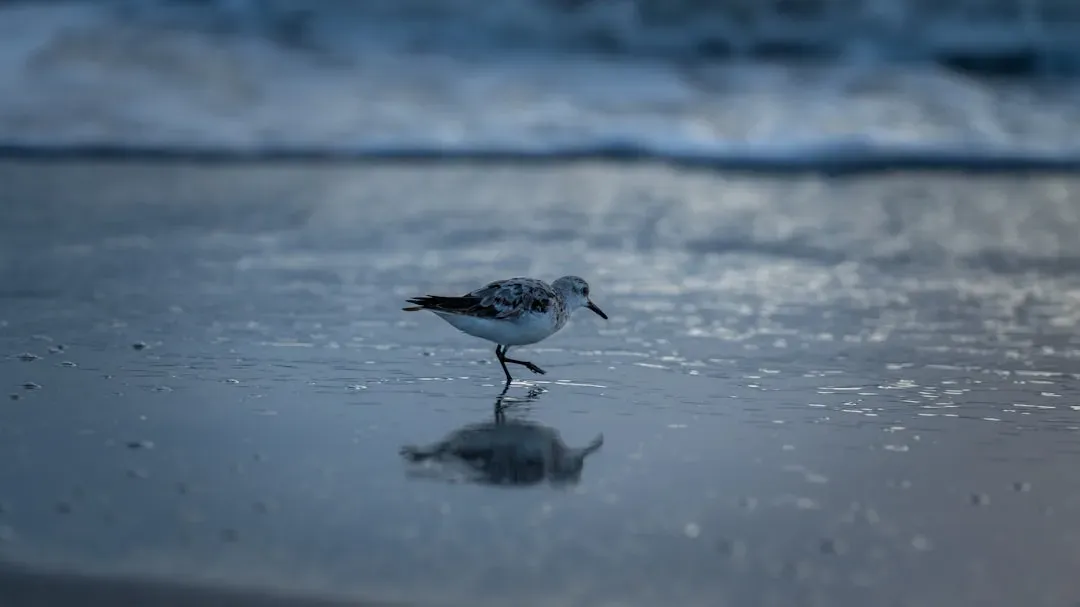
Climate change and sea level rise threaten the migratory birds’ habitat. The piping plover is a sand-colored, delicate little shorebird that has long nested on open Atlantic beaches, and it now finds itself caught between two forces moving in opposite directions: rising seas pushing in from one side, and coastal infrastructure blocking any retreat on the other.
Two-thirds of the piping plover’s most popular winter habitat will be affected by sea level rise. The Audubon Society predicts that plovers will lose nearly a third of their non-breeding range – specifically the Southeastern coastline – by 2080.
Half of South Carolina’s islands are already developed. That further limits plovers’ population. The piping plover remains listed under the US Endangered Species Act. Conservation work has stabilized some populations, but the margin remains thin.
Red Knot: A Long-Distance Flier Losing Its Footing
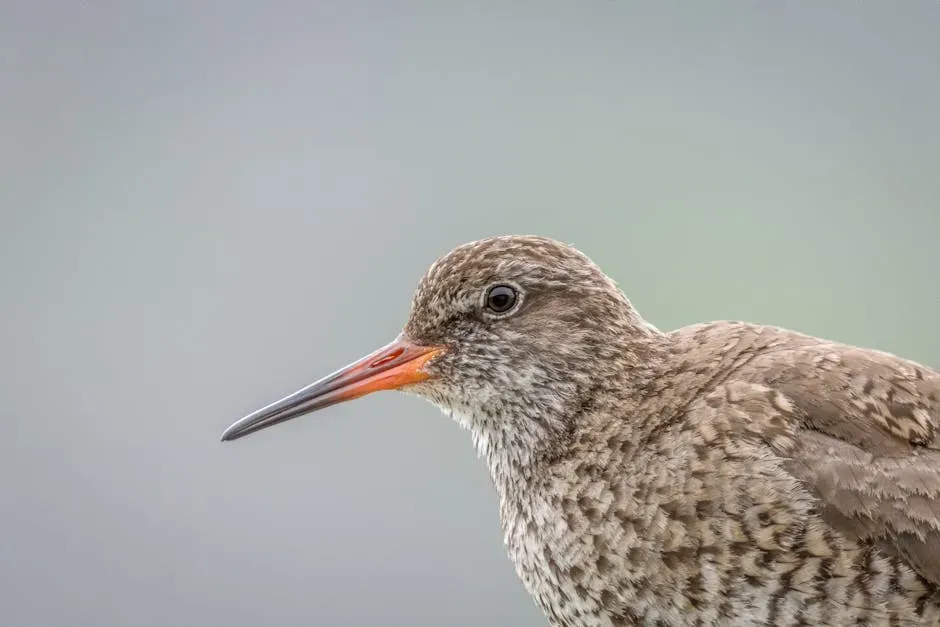
The red knot is one of the great long-distance migrants on the planet, traveling from the tip of South America to Arctic Canada and back each year. That incredible journey depends on a chain of very specific stopover sites – and when one link in that chain weakens, the consequences ripple across the entire population.
The dwindling red knot population along the Atlantic coast has been called one of the most precipitous declines of any bird species. The subspecies that occurs along the Atlantic coast once numbered 100,000 to 150,000, but fewer than 30,000 remain today, a population drop of more than three quarters since the 1980s.
The plunge in numbers led the US Fish and Wildlife Service to list the Rufa red knot as threatened under the Endangered Species Act in 2014. Out of all habitat groups, shorebirds have the highest number of tipping point species – those that have lost more than half their populations in the past 50 years. The red knot is among the most visible symbols of that crisis.
Black Skimmer: When Nesting Beaches Disappear
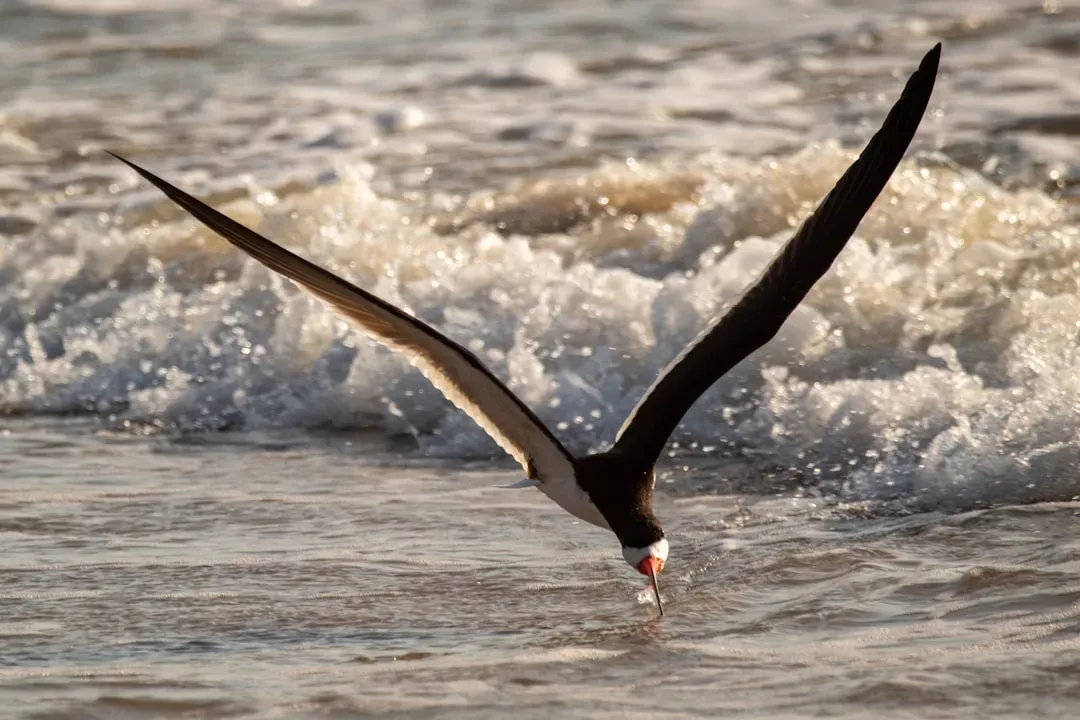
The black skimmer has one of the most distinctive feeding behaviors of any bird on the American coast – it flies low over calm water with its lower mandible slicing the surface, snapping shut the moment it touches a fish. Watching one work is genuinely remarkable. Watching their nesting colonies shrink is something else entirely.
The northern Gulf of Mexico is a critical breeding region for vulnerable coastal birds of conservation concern, including the black skimmer. Rising sea levels coupled with booming coastal development have wreaked havoc on natural seabird habitat and roosting sites. Seabird colonies on low-lying islands, like North Carolina’s barrier islands, are flooding more often.
Black skimmers have special conservation status in most Atlantic coast states. They nest directly on open sand and shell beaches, which makes their eggs and chicks extraordinarily vulnerable to storm surge, high tides, and the kind of intensified weather that is becoming more frequent. There is no nest to move, no cover to retreat to. They simply need the beach to hold.
Least Tern: A Small Bird With a Big Problem
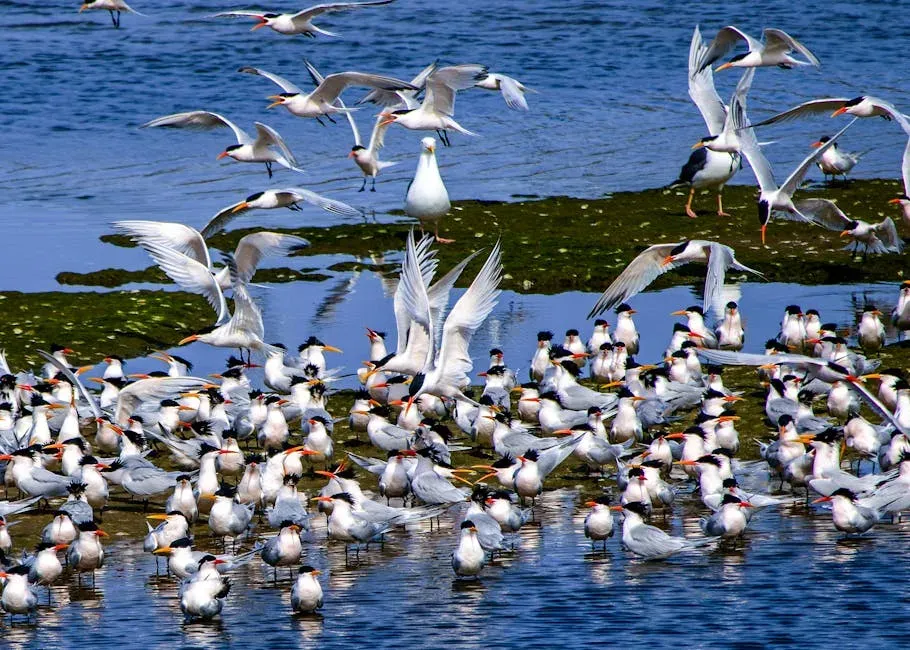
The least tern is the smallest tern in the world, barely larger than a sparrow, and yet it has one of the most spirited and determined nesting behaviors you’ll see along the Atlantic and Gulf coasts. It dive-bombs intruders with genuine commitment. That ferocity, it turns out, is no match for a warming ocean.
Least tern populations are not doing well. They declined by roughly nine tenths between 1966 and 2015, according to the North American Breeding Bird Survey. The North American Waterbird Conservation Plan estimates a continental population of 60,000 to 100,000 breeding birds, and lists it as a species of high concern.
Researchers have studied how temperature affects least tern behavior and ecology at coastal sites, specifically focusing on how the terns cope with the thermal challenges of their breeding environment during incubation. As beach temperatures rise and storms intensify, even successfully brooding a nest is becoming harder. The least tern is listed as an endangered species in New Jersey because of human impacts on nesting and fledging areas, especially competition for recreational use of beaches.
Western Snowy Plover: Threatened on Both Coasts
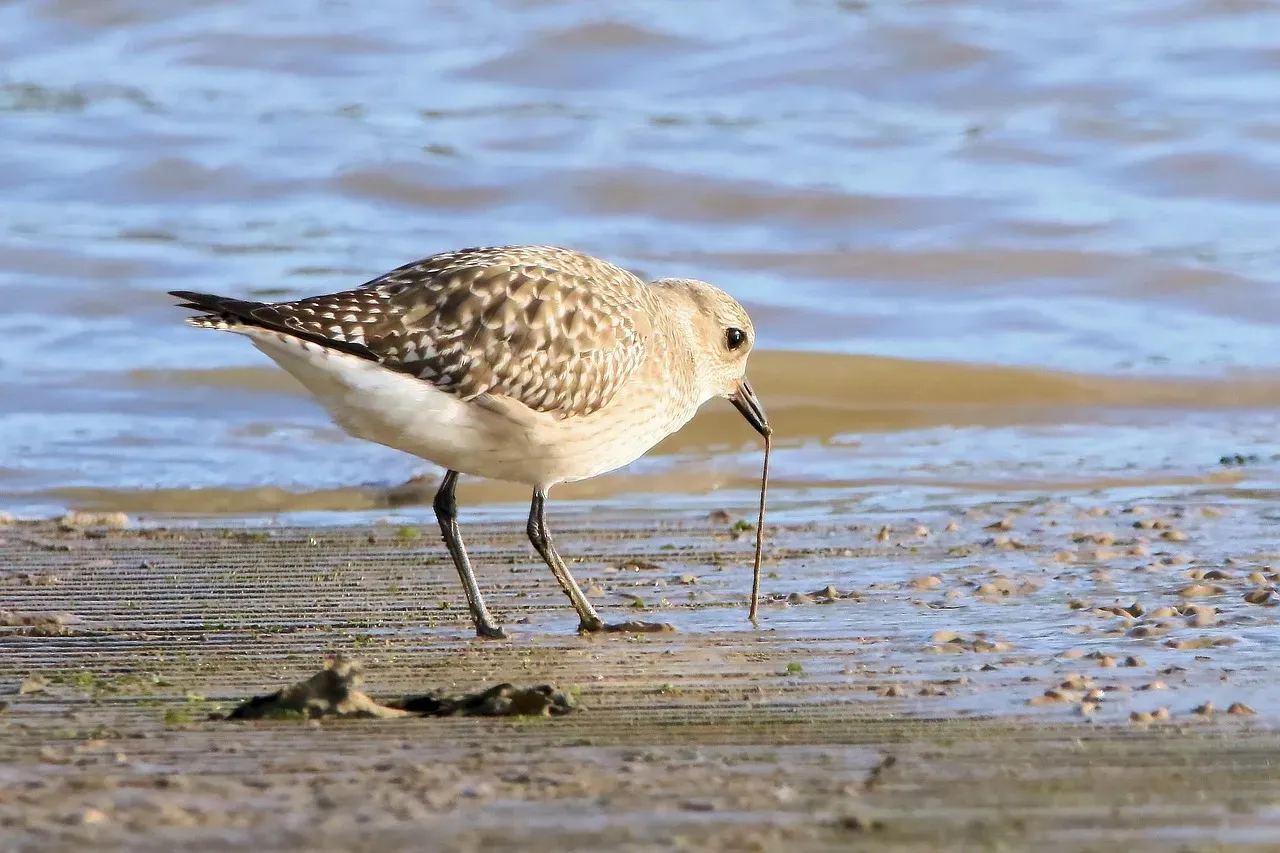
Along the Pacific coast, the western snowy plover faces a quieter but equally serious set of pressures. These small, pale shorebirds nest directly on open sandy beaches, often in sites shared with beachgoers, dogs, and off-road vehicles. The overlap is rarely to the birds’ advantage.
The Pacific coast population of western snowy plovers has been in decline for several years, due to a loss of habitat and disturbances from development, recreation, and other human pressures. Flooding from high tides has been the primary cause of nest failure at some monitored sites.
A population viability analysis suggested that the West Coast population would not reach the recovery objective of 3,000 individuals identified in the federal recovery plan without additional habitat restoration. Control of beach grass and management to reduce human disturbance are ongoing. Although the snowy plover population appears to be increasing as a result of management actions in Washington and Oregon, the species in Washington is still state-listed as endangered.
Roseate Tern: Recovering, but Not Out of Danger
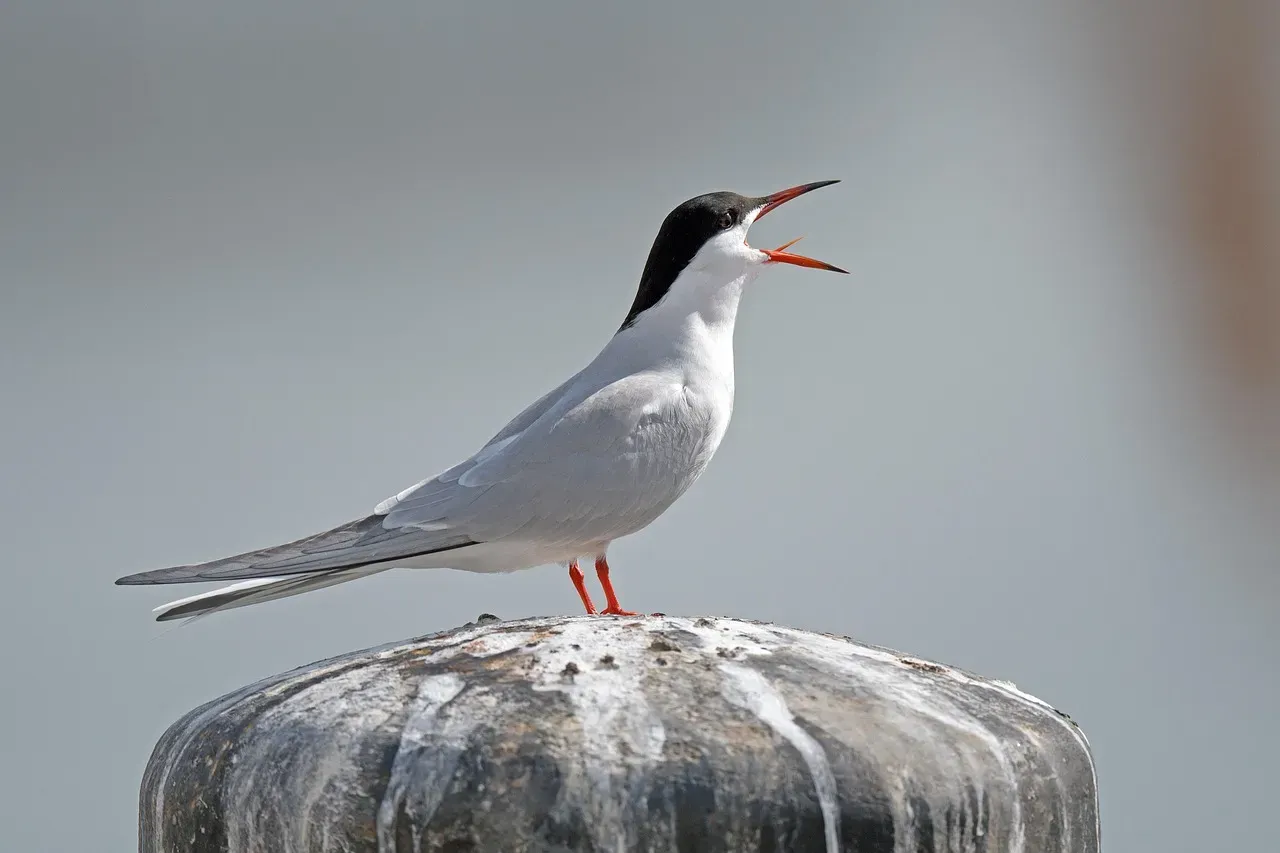
The roseate tern is arguably one of the more cautiously hopeful stories on this list, though caution is very much the operative word. Listed as federally endangered, it has benefited from decades of targeted habitat restoration and predator management along the northeastern coast. The results have been real, and they matter.
The United States’ roseate tern population has reached its highest numbers since 1987, when it was listed as a federally endangered species. The rebound is due to successful habitat restoration and predatory gull management in Buzzards Bay, but remains short of the recovery target goal of 5,000 nesting pairs.
Nesting colonies of terns observed on Nauset Beach in Massachusetts in the 1960s included roseate terns, with more than 5,000 nests producing more than 10,000 eggs and chicks. Today, that colony is gone. Conservation groups are now elevating coastal nesting sites to account for sea level rise and protecting upslope habitats. The roseate tern shows that conservation works – but also how quickly gains can be undone by a changing coastline.
Brown Pelican: An Icon Under Renewed Pressure
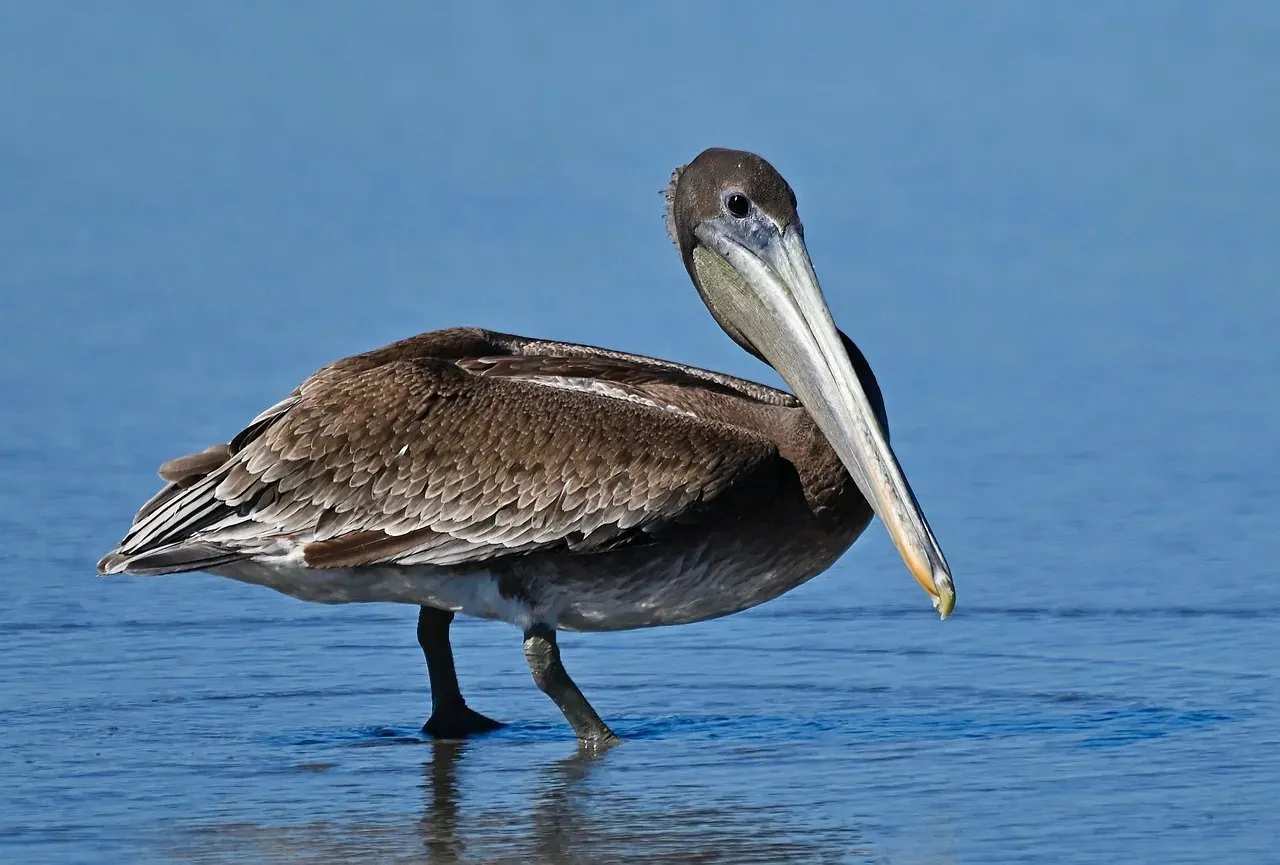
The brown pelican’s comeback from near-extinction in the 20th century, largely driven by the banning of DDT, is one of the celebrated chapters in American conservation. By 2009, it was removed from the federal endangered species list. It seemed like a settled success story. It is not quite that simple now.
The restoration of a historic pelican nesting island in Louisiana, for example, rescued the island from inundation and provided healthy habitat for thousands of brown pelicans, roseate spoonbills, and reddish egrets to nest. The fact that islands needed rescuing at all tells you something about the new pressures at play. Forage fish, the small fish that pelicans and other seabirds depend on for food, are threatened by climate change and commercial harvest.
Seabirds raise their young on land but forage and often winter at sea, inhabiting a wide range of coastal habitats. They are sensitive to extreme weather events such as extreme winds, temperatures, and precipitation, which can impact their survival or reproductive success. For a large, conspicuous bird like the brown pelican, that visibility can mask vulnerability. The challenges it faces today are subtler than DDT – but they are no less real.
What Comes Next
Under higher warming scenarios, the coastal habitat group had the most species facing multiple coincident climate threats in the breeding season. That finding, dry as it sounds in a scientific paper, represents something very tangible: birds running out of options simultaneously on multiple fronts.
Every threat birds face is playing out against the backdrop of climate change. Rising temperatures are forcing some birds to shift their ranges poleward or upslope, and migratory birds are changing the timing of their journeys to their breeding grounds. Shorebirds have the most tipping point species of any group of birds in North America, and rates of shorebird declines exceed thresholds for listing as vulnerable or endangered under national and international conservation standards.
Coastal restoration, conservation ranching, forest renewal, and seabird translocations show how proactive, concerted efforts and strategic investments can recover bird populations. The evidence is clear that conservation can work. What remains genuinely uncertain is whether the pace and scale of that work can keep up with a coastline that is changing faster than at any point these birds have known. That gap – between what’s possible and what’s actually happening – is where the fate of these species will be decided.
