
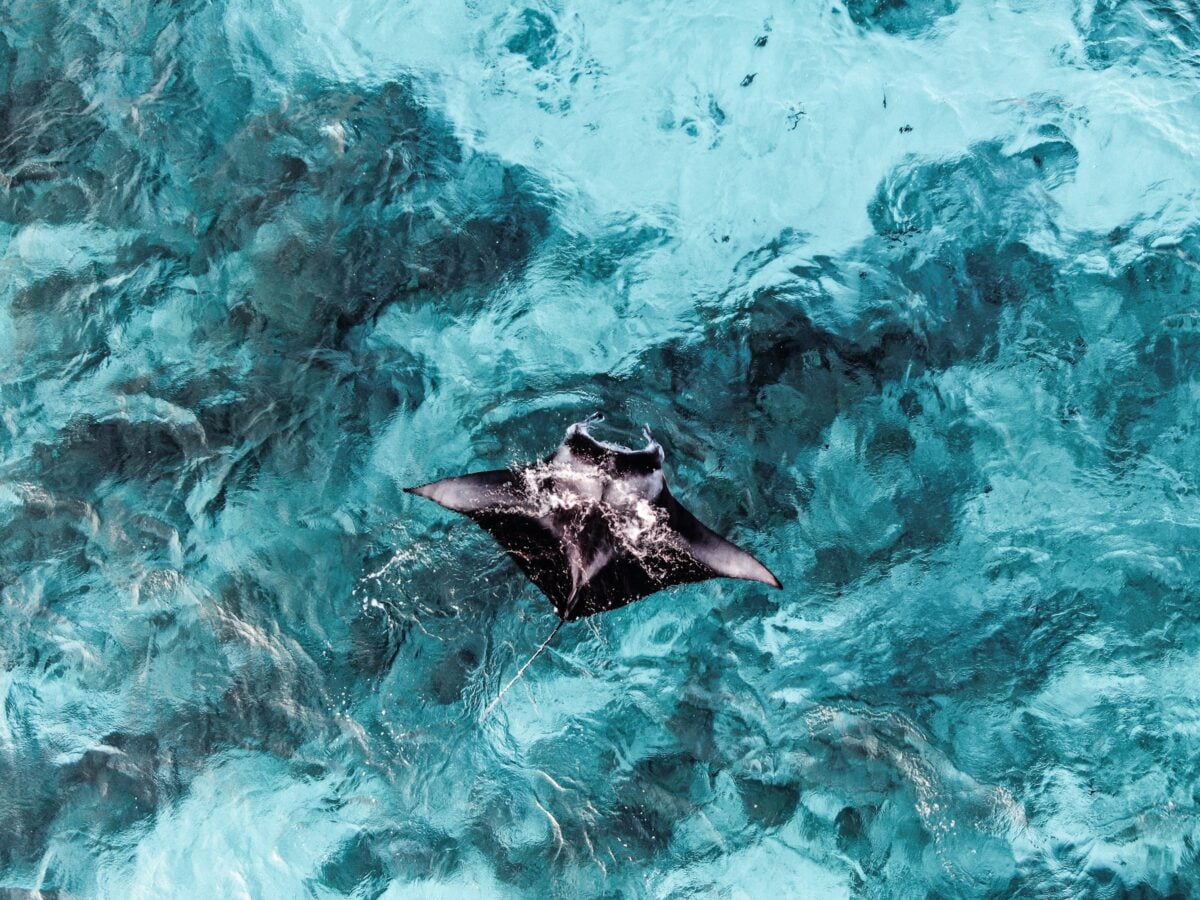
Imagine gliding through warm tropical waters and realizing the animal soaring above you like a living spaceship is not just big and beautiful, but also one of the brainiest fish in the ocean. That is the quiet shock hidden inside manta rays: behind those wide, wing‑like fins sits a brain that is huge for a fish, both absolutely and in relation to its body. In animal science, that is a serious red flag for advanced cognition, social behavior, and the kind of underwater awareness we’re only beginning to understand.
For years, people talked about dolphins, octopuses, and crows as the “smart ones.” Mantas rarely made the list, partly because we simply did not look closely enough. Now, research on brain size and structure is forcing a rethink. If you thought a “big fish brain” was an insult, manta rays quietly disagree. They are building a strong case as some of the most intriguing minds in the sea, and the story behind that oversized brain is far richer than most of us were ever told.
A Surprisingly Big Brain for a Giant Fish
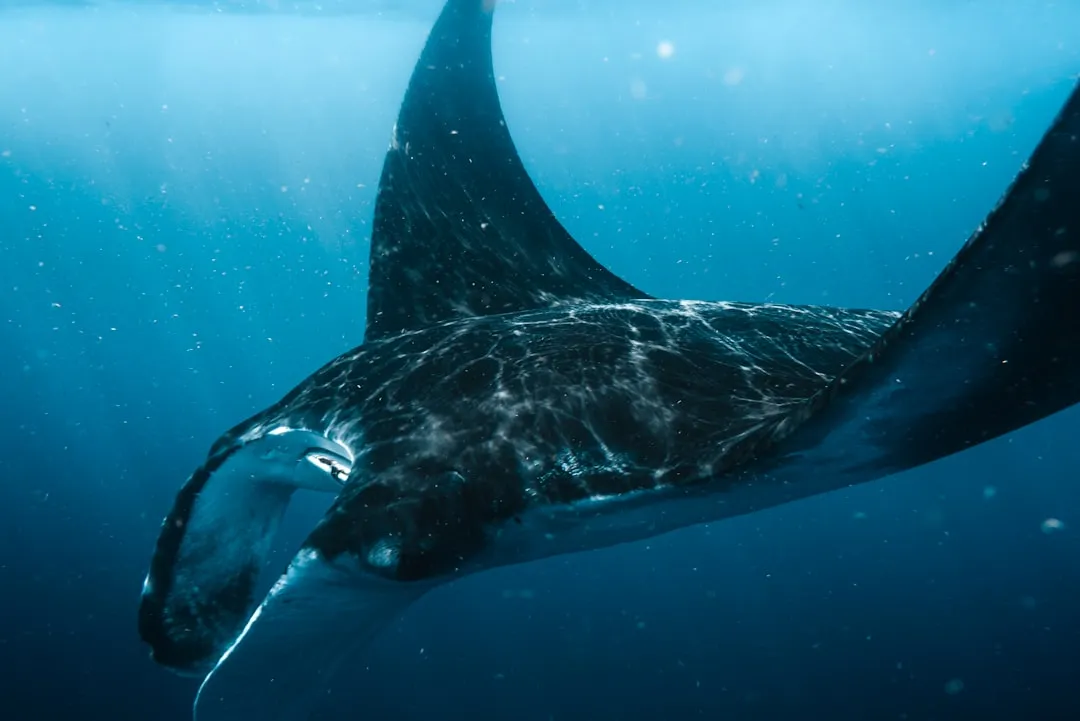
The first twist is simple but powerful: manta rays are enormous, yet their brains are even more impressive than their size suggests. Among cartilaginous fish like sharks and rays, mantas sit near the top when scientists compare brain mass to body mass. That ratio does not mean they are secretly running underwater universities, but it does suggest that their nervous system is doing more than just handling basic survival.
What really stands out is that manta brains are large both in absolute terms and when scaled to their body size. In the fish world, most species get by with relatively small, streamlined brains that handle instinctive tasks: find food, avoid predators, reproduce, repeat. Mantas, by contrast, seem to have invested heavily in neural tissue, particularly in areas associated with vision and possibly higher‑level processing. It is a bit like discovering the sleek glider you admire from afar is actually built with the electronics of a high‑end jet.
Why Brain-to-Body Ratio Matters (And What It Doesn’t Prove)
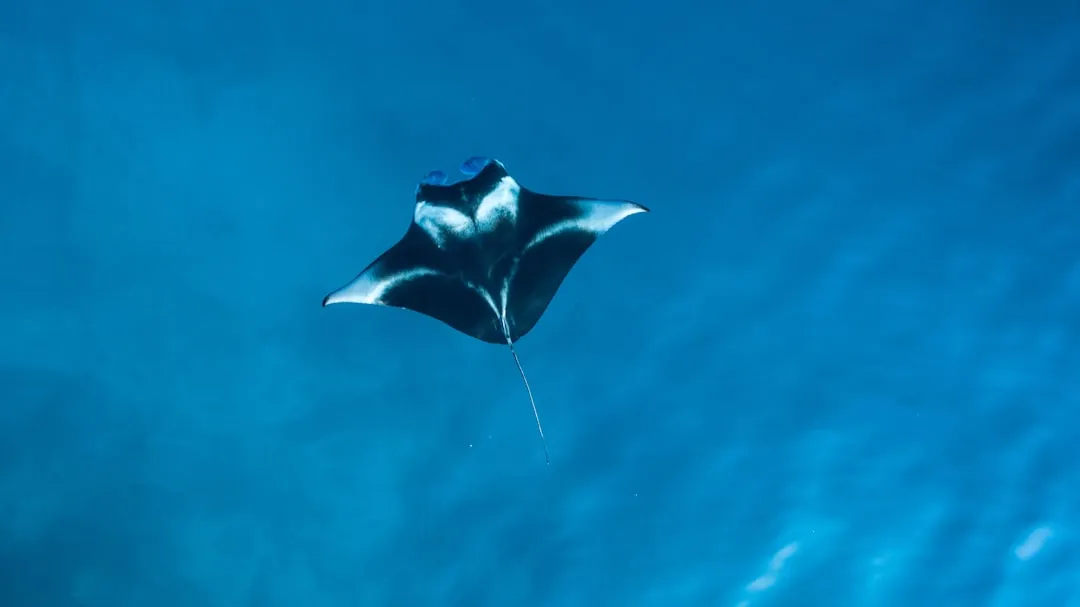
So why do scientists obsess over brain‑to‑body ratio in the first place? In broad strokes, animals with larger brains relative to their bodies tend to show more flexible, complex behaviors: problem‑solving, social nuance, learning from experience. It is not a perfect rule, but across many vertebrates, this correlation is strong enough to pay attention to. Manta rays quietly check that box in a way that many other fish do not.
Still, it is important not to turn a single number into a wild story. A high brain‑to‑body ratio does not automatically mean mantas think like dolphins or humans. Different brains are wired for different lives. A manta ray’s neural investment may be tuned to navigation, spatial memory, visual tracking of plankton swarms, or reading subtle body language in a group. The honest answer is that we do not fully know yet – and that uncertainty is actually exciting rather than disappointing.
Built for Vision, Movement, and Sensory Rich Lives
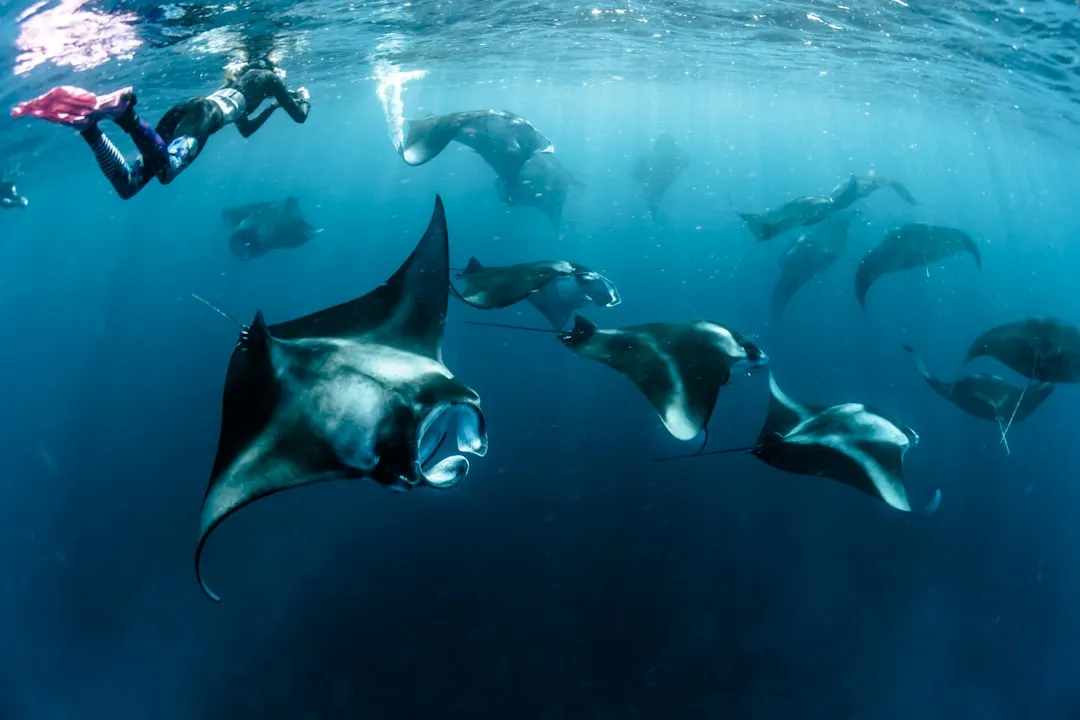
If you look at a manta ray, the first thing you notice is motion: those slow, looping wingbeats that make them look like they are flying through another element. Behind that grace is a highly developed cerebellum and visual centers that help them coordinate complex, three‑dimensional movement. You do not pilot a several‑meter‑wide body through reefs, cleaning stations, and swirling plankton clouds without serious neural control.
Their large brain also supports an unusually rich sensory world. Mantas have excellent vision for a fish, and they inhabit environments packed with visual cues – other rays, predators, boats, cleaning fish, and shifting light patterns. All of that input has to be processed, filtered, and turned into action, often in real time. Their brain is not just bigger for show; it is more like an endlessly running operations center that keeps a giant, delicate aircraft in perfect trim.
Social Minds: Do Manta Rays Have Underwater Friendships?
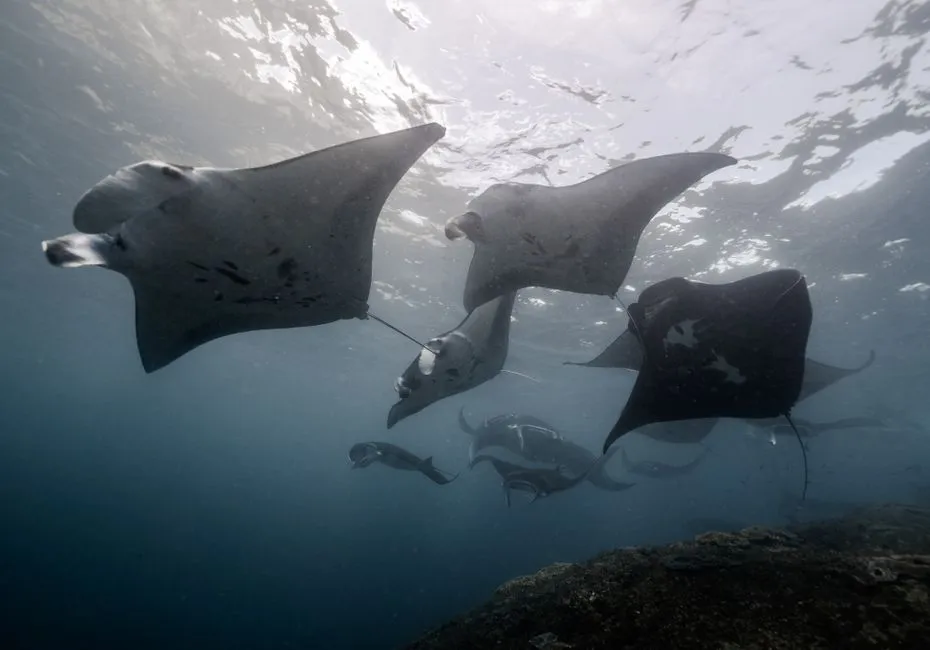
One of the most intriguing aspects of manta behavior is how social they can be. Divers and researchers regularly observe mantas gathering at cleaning stations, circling in loose groups, and sometimes forming what looks suspiciously like lines or spirals. That kind of coordinated activity hints that mantas may benefit from remembering individuals, tracking social context, or at least reading the moods and intentions of nearby rays.
Some observations suggest that individual mantas return to the same sites over years, and that they might even prefer certain companions or cleaning stations. While we need more rigorous research before shouting that mantas have “friendships,” it is hard to shake the impression that they lead socially aware lives. When I first watched footage of a group of mantas looping around each other in slow, deliberate arcs, it felt less like random fish milling about and more like a kind of underwater dance with unspoken rules.
Signs of Curiosity and Problem-Solving
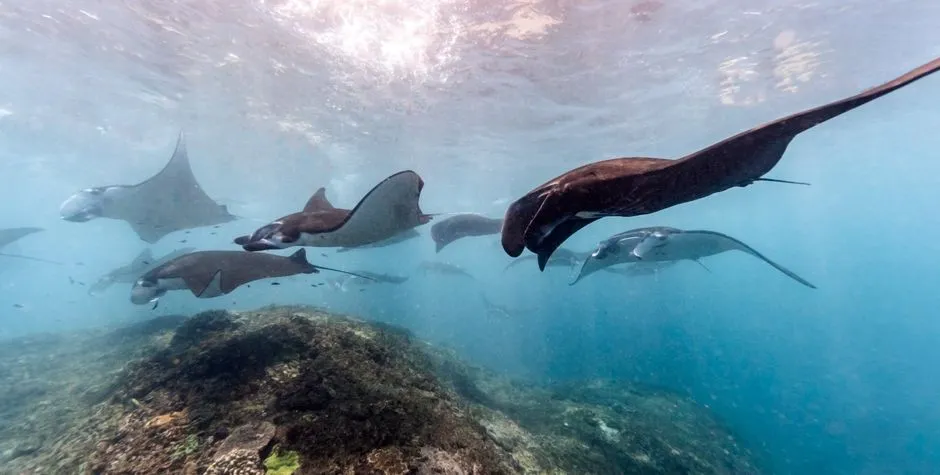
Many divers describe mantas as strangely curious, often approaching humans, hovering nearby, and making lingering passes almost as if they are inspecting us. While personal stories are not hard science, this pattern shows up so often that scientists take note. Curiosity is a tricky word, but choosing to investigate rather than simply flee or ignore is often associated with more flexible behavior and a more capable brain.
There have also been controlled observations suggesting mantas can learn from repeated experiences, such as consistently returning to reliable food sources or adjusting their behavior near boats and nets. Unlike a small reef fish that simply bolts at any disturbance, mantas sometimes seem to pause, assess, and then choose a response. That does not make them masterminds of the ocean, but it does nudge them closer to the category of animals that do more than run on autopilot.
The Emotional Effect of Meeting a Manta Ray
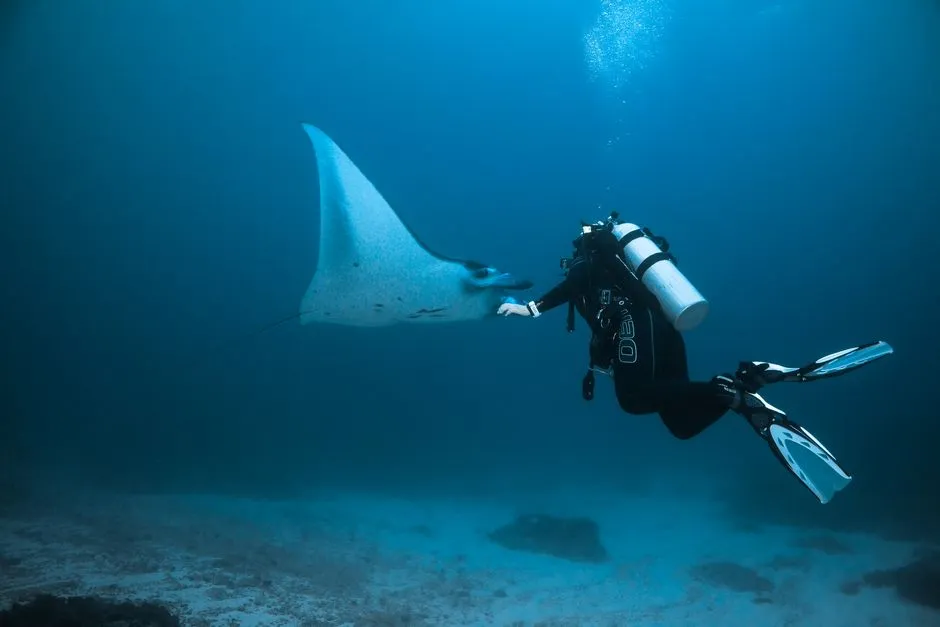
Ask people who have swum with mantas, and you often hear the same strangely emotional language: they talk about feeling watched, acknowledged, or humbled. Now, feelings are not data, but they do tell us something about how mantas come across. There is a slow, steady intensity in the way a manta can lock you in its gaze and then glide past, like a flying carpet with eyes. It is hard not to imagine there is more going on behind that look than a simple reflex.
I still remember the first time I saw video of a manta hovering over a diver who was gently removing entangled fishing line. The ray stayed almost unnaturally still, as if cooperating with the process. We have to be careful not to project human emotions onto that behavior, but I also think it is a mistake to dismiss it entirely. At the very least, their large brain grants them enough control and awareness to participate in these oddly intimate cross‑species moments.
What Manta Brains Mean for Conservation
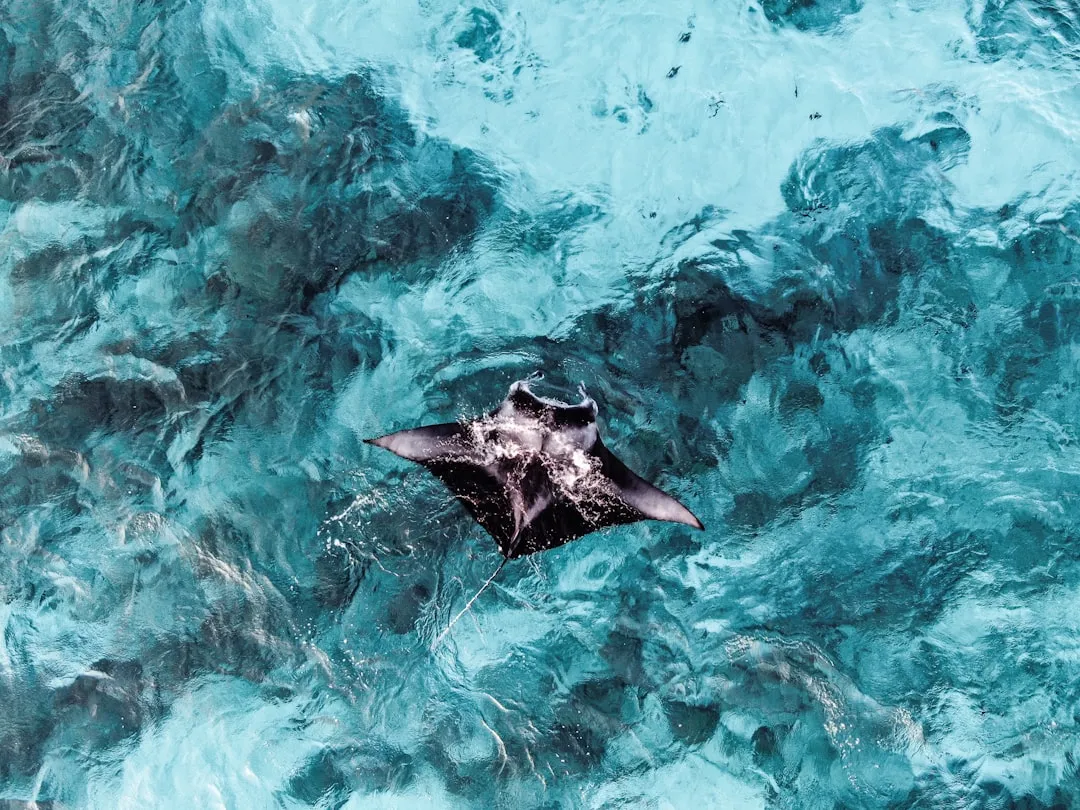
Once you realize mantas may be among the most cognitively complex fish in the sea, it becomes much harder to view them as just another marine resource. These are long‑lived, slow‑reproducing animals with large, sophisticated brains that take years to fully pay off in terms of experience and learning. When we kill one manta, we are not just removing biomass; we are wiping out decades of accumulated knowledge about migration routes, feeding sites, and perhaps social networks.
This is where my own opinion comes in strongly: if we are willing to grant special protection to smart mammals like dolphins and whales, we should extend a similar moral seriousness to manta rays. Their unusual brain‑to‑body ratio, complex behavior, and striking social life all point in the same direction. At a minimum, they deserve cautious management, reduced fishing pressure, and serious investment in habitat protection. Treating them as “just fish” is not only outdated science; it is lazy ethics.
Rethinking “Fish Intelligence” in the Age of Manta Rays
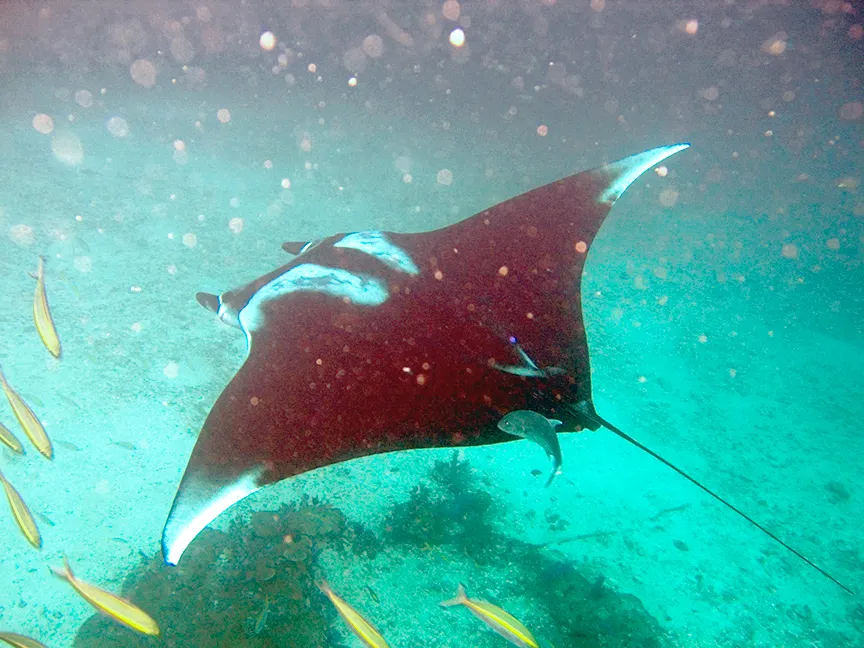
Manta rays quietly blow up the old stereotype that fish are simple, interchangeable creatures gliding on pure instinct. Their large brains, sensory sophistication, and seemingly social, curious behavior force us to redraw the map of underwater intelligence. They sit at this fascinating intersection between our expectations of fish and our growing awareness that cognition shows up in many different bodies and brain designs.
To me, the real lesson is that we have been underestimating the ocean for a long time. If an animal as big, visible, and spectacular as a manta ray could be hiding such neural sophistication in plain sight, what else are we missing? Animal science is finally catching up to what many divers have felt all along: there is someone home behind those manta eyes. The question is, now that we know better, will we start treating them like the remarkable, thinking beings they appear to be – or keep acting as if a big brain in a fish does not really count?
