


In the relentless theater of natural selection, survival often depends on an organism’s ability to defend itself from predators. While sharp teeth, powerful claws, and venomous bites are common defensive adaptations, some creatures have evolved truly extraordinary—even bizarre—mechanisms to deter threats. From shooting blood from their eyes to releasing foul-smelling chemicals, these unusual defensive strategies showcase nature’s boundless creativity in the face of evolutionary pressure. This article explores some of the most peculiar and fascinating defensive adaptations in the animal kingdom, demonstrating how even seemingly vulnerable creatures can develop remarkable survival techniques that confound predators and ensure their species’ continuation in hostile environments.
The Texas Horned Lizard’s Blood-Shooting Defense

The Texas horned lizard (Phrynosoma cornutum) possesses one of the most startling defensive mechanisms in the animal kingdom. When threatened, this unassuming reptile can increase the blood pressure in vessels near its eyes until they rupture, shooting streams of blood up to five feet away. This blood isn’t just visually shocking—it contains chemical compounds that are particularly distasteful to canine and feline predators, causing them to retreat immediately.
Scientists have discovered that this blood-squirting behavior is remarkably precise and controlled. The lizard can direct the blood stream at specific threats and can squirt from either eye independently. The blood contains a chemical compound that appears to be particularly noxious to canid predators like coyotes and foxes, suggesting this bizarre defense evolved specifically to counter these common threats. Despite the dramatic nature of this defense, the lizard suffers no long-term harm from the temporary rupture of these specialized blood vessels, allowing it to employ this strategy multiple times throughout its life.
The Bombardier Beetle’s Chemical Explosion

Few defensive mechanisms are as chemically sophisticated as that of the bombardier beetle (family Carabidae). When threatened, this insect performs an impressive feat of chemical warfare by mixing two separately stored compounds—hydrogen peroxide and hydroquinones—in a specialized chamber in its abdomen. When these chemicals combine with catalytic enzymes, they create a violent exothermic reaction reaching temperatures of around 100°C (212°F), producing a caustic spray that is expelled with an audible popping sound directly at the aggressor.
The bombardier beetle’s defensive system is remarkable for its precision engineering. The beetle’s abdomen contains two separate chambers that keep the reactive chemicals apart until needed, preventing self-harm. When the beetle feels threatened, it contracts muscles that force the chemicals into a reaction chamber lined with enzymes, triggering the explosive reaction. The nozzle-like opening at the tip of the abdomen can be rotated in virtually any direction, allowing the beetle to target predators with extraordinary accuracy. This chemical defense is so effective that few predators attempt to attack a bombardier beetle more than once.
The Hagfish’s Slime Defense
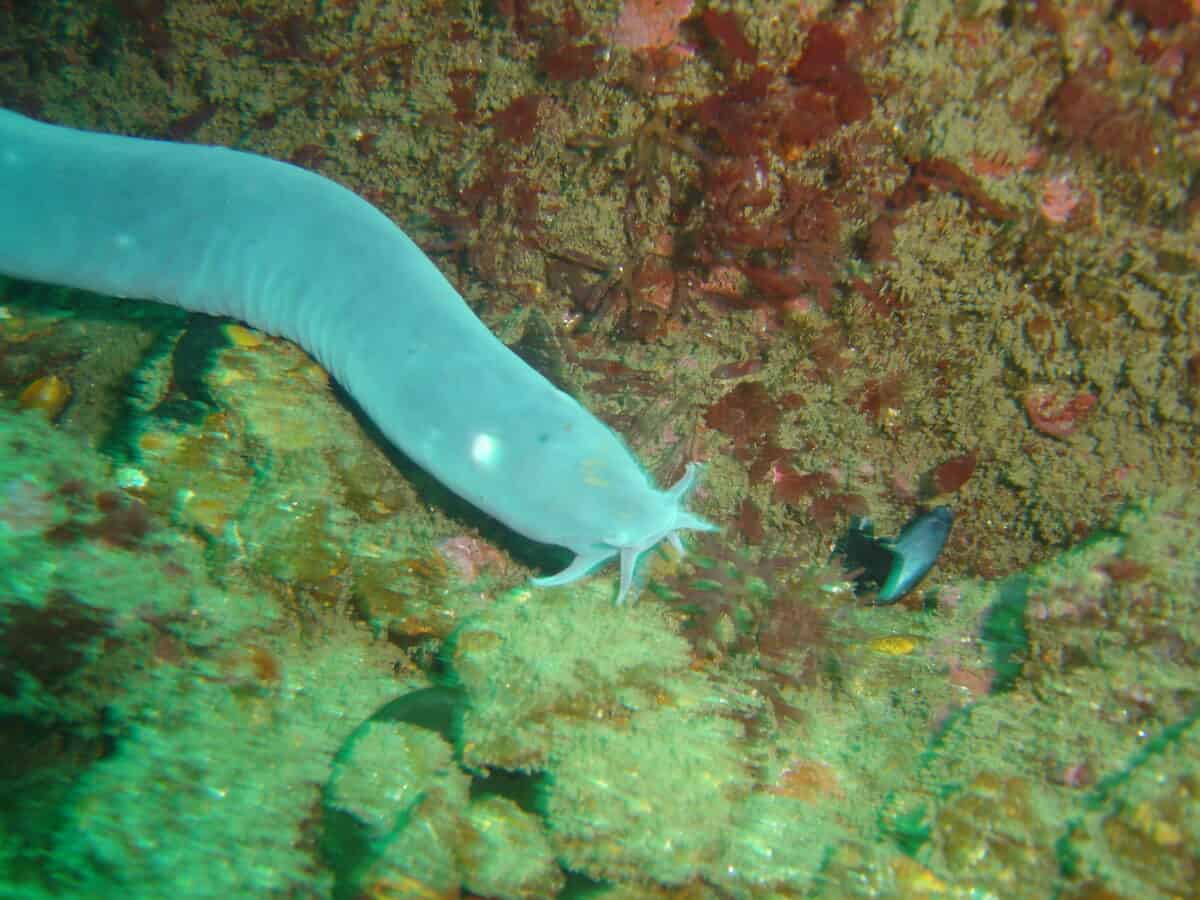
The hagfish, often called the “slime eel” despite not being a true eel, deploys one of the most repulsive yet effective defensive strategies in the marine world. When attacked, this primitive jawless fish can produce over five gallons of thick, fibrous slime in just seconds. This gelatinous substance expands rapidly upon contact with seawater, clogging the gills of would-be predators and potentially causing them to suffocate if they cannot clear their respiratory systems quickly enough.
The biochemistry behind hagfish slime is fascinatingly complex. The slime consists of two main components: mucin vesicles that absorb water and expand, and thread cells containing protein filaments that can stretch to remarkable lengths. When released, these filaments uncoil like released springs, creating a strong, fibrous network that gives the slime its cohesive properties. The resulting substance is so effective that it can allow the hagfish to slip away from predators like sharks while they struggle to clear their mouths and gills. Scientists are studying hagfish slime for potential applications in creating sustainable, protein-based materials that could replace petroleum-based plastics.
The Malaysian Exploding Ant’s Self-Sacrifice

The Malaysian exploding ant (Colobopsis explodens) takes the concept of defensive sacrifice to an extreme level. When threatened, specialized worker ants called “doorkeepers” or “blockers” can contract their abdominal muscles so violently that they rupture their own bodies, spraying a toxic, corrosive yellow secretion onto attackers. This deliberate self-destruction, known as autothysis, is the ultimate form of altruistic defense for the colony.
The sticky toxic substance released during this explosion contains compounds that not only harm predators directly but also serve as an alarm pheromone, alerting other colony members to danger. The mandibular glands of these ants are oversized and produce the toxic cocktail throughout the ant’s life, preparing for this potential final act of defense. While this sacrifice means certain death for the individual ant, it can save dozens or hundreds of colony members, making it evolutionarily advantageous for the species as a whole. This extreme form of defensive behavior underscores how natural selection can favor traits that benefit the group, even at tremendous cost to individuals.
The Sea Cucumber’s Evisceration Strategy

Sea cucumbers (class Holothuroidea) employ one of the most dramatic defensive tactics in the animal kingdom: voluntary evisceration. When threatened, certain species of sea cucumber can forcibly expel their internal organs—including intestines, respiratory trees, and parts of their reproductive system—through their anus or a rupture in their body wall. This startling display often distracts or deters predators long enough for the sea cucumber to escape. Some species also expel sticky threads called Cuvierian tubules that can entangle and immobilize attackers.
What makes this defense even more remarkable is the sea cucumber’s extraordinary regenerative ability. Within a few weeks, it can completely regrow the expelled organs and resume normal functions. This process is energetically costly and leaves the animal vulnerable during the regeneration period, but it’s evidently worth the risk when faced with predation. Some species have evolved variations of this defense—certain sea cucumbers in the South Pacific release a powerful toxin called holothurin that can kill fish within minutes. These diverse defensive adaptations have allowed sea cucumbers to thrive in ocean ecosystems worldwide despite their seemingly vulnerable, soft-bodied nature.
The Wood Frog’s Freeze Tolerance

The wood frog (Lithobates sylvaticus) has developed a defensive strategy against winter’s predator—freezing temperatures—that borders on science fiction. These remarkable amphibians can survive having up to 65% of their body water frozen solid. During winter, wood frogs essentially become “frogsicles,” with no heartbeat, no breathing, and no brain activity, yet they can thaw and resume normal function when temperatures rise in spring. This bizarre adaptation allows them to range farther north than any other North American reptile or amphibian, inhabiting areas from the southern Appalachians to north of the Arctic Circle.
The biochemical mechanisms behind this freeze tolerance are fascinating. As temperatures drop, wood frogs produce massive amounts of glucose and urea that act as natural antifreeze in their cells. This prevents the formation of ice crystals within cells that would otherwise cause fatal damage. Instead, ice forms in the spaces between cells and organs. The frogs also produce specialized proteins that manage ice crystal growth, ensuring freezing occurs in a controlled manner. Their cells drastically reduce water content and enter a state of suspended animation. When spring arrives, the thawing process begins with the heart, followed by breathing and brain activity, allowing the frog to hop away within hours of thawing—an extraordinary defense against both winter’s cold and the vulnerability of hibernation.
The Opossum’s Death-Feigning Performance

The Virginia opossum (Didelphis virginiana) has given us the phrase “playing possum” through its remarkable ability to feign death when threatened. This involuntary response goes far beyond simple immobility—the opossum enters a catatonic state where its body becomes limp, its breathing slows dramatically, and it secretes a foul-smelling substance from its anal glands that mimics the smell of decaying flesh. Its lips pull back in a grimace, revealing teeth, and it may even drool or exude a green substance from its mouth, completing the illusion of a diseased or decomposing carcass.
This thanatosis (death-feigning) behavior exploits the tendency of many predators to avoid carrion, particularly if it appears diseased. The state is not under conscious control but rather a physiological response to extreme threat, similar to fainting in humans. What makes this defense particularly effective is its duration—an opossum can remain in this death-like state for up to four hours, long after most predators have lost interest and moved on. When the threat has passed, the opossum gradually recovers, with younger opossums typically regaining mobility faster than adults. This bizarre but effective strategy has contributed significantly to the opossum’s success as North America’s only native marsupial.
The Japanese Tiger Beetle Larvae’s Catapulting Jaws
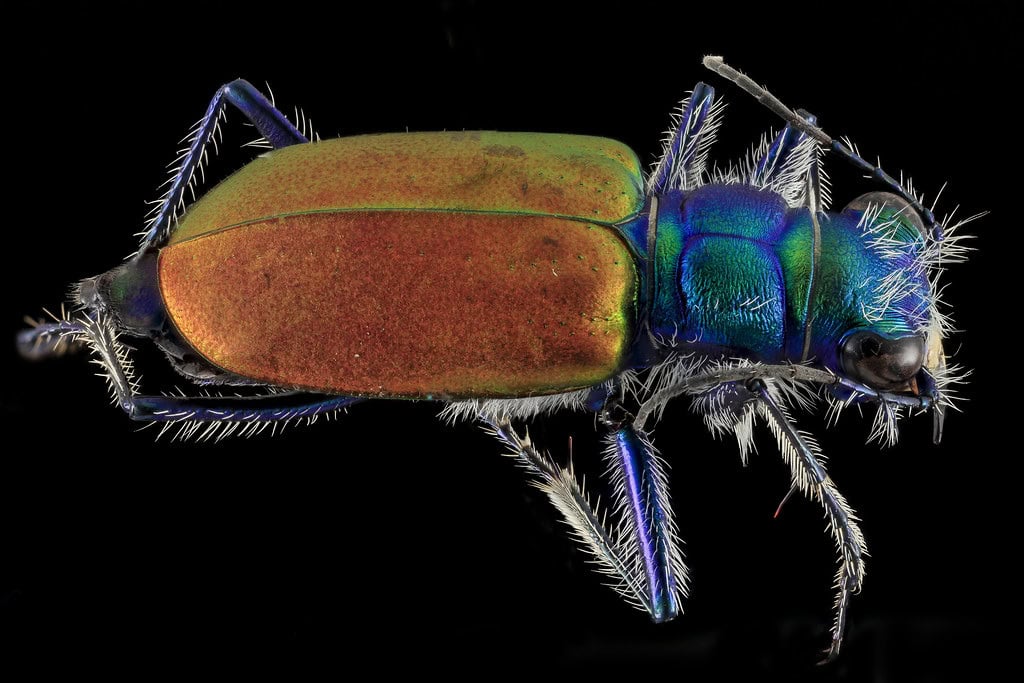
The larvae of the Japanese tiger beetle (Cicindela japonica) have evolved one of the most mechanically complex defensive adaptations in the insect world. These grub-like larvae dig vertical burrows in soil where they wait to ambush passing prey. However, when these predatory larvae themselves become potential prey, they deploy a startling defense: using their oversized mandibles like a catapult to literally fling would-be attackers through the air. The force generated by these specialized jaws can launch an attacking ant or small spider several centimeters away—a significant distance considering the larvae’s small size.
The mechanics behind this defensive catapult are remarkable. The mandibles lock into a loaded position using a special catch mechanism that stores potential energy, similar to how a crossbow works. When triggered, this energy is released in a fraction of a second, creating acceleration forces that can exceed 300 times gravity. This adaptation allows the vulnerable, soft-bodied larvae to defend themselves without leaving the safety of their burrow. The strategy effectively buys time and creates distance between the larva and potential threats, allowing it to retreat deeper into its tunnel. This specialized adaptation demonstrates how evolutionary pressure can produce highly specific mechanical solutions to survival challenges.
The Cuttlefish’s Visual Deception

Cuttlefish employ one of the most sophisticated visual defensive systems in the animal kingdom. These cephalopods possess specialized skin cells called chromatophores, iridophores, and leucophores that allow them to change both color and texture almost instantaneously. This remarkable ability enables cuttlefish to create disruptive patterns that break up their outline, match their surroundings with pixel-perfect camouflage, or display bright, startling patterns to confuse predators. Some species can even create waves of color that move across their body, disorienting viewers and making their actual movement difficult to track.
What makes the cuttlefish’s defense particularly bizarre is their ability to deploy this camouflage despite being colorblind themselves. They see the world in shades of green and blue but can match virtually any background color with astonishing precision. Recent research suggests they may perceive color through the unique polarization of light waves rather than through traditional color receptors. Even more remarkably, cuttlefish can simultaneously display different patterns on different sides of their body—showing a calming pattern to a potential mate on one side while displaying threatening coloration to a rival on the other. This visual control system, managed by a brain that’s proportionally one of the largest in the invertebrate world, represents one of nature’s most sophisticated defensive adaptations.
The Termite Soldiers’ Explosive Self-Destruction
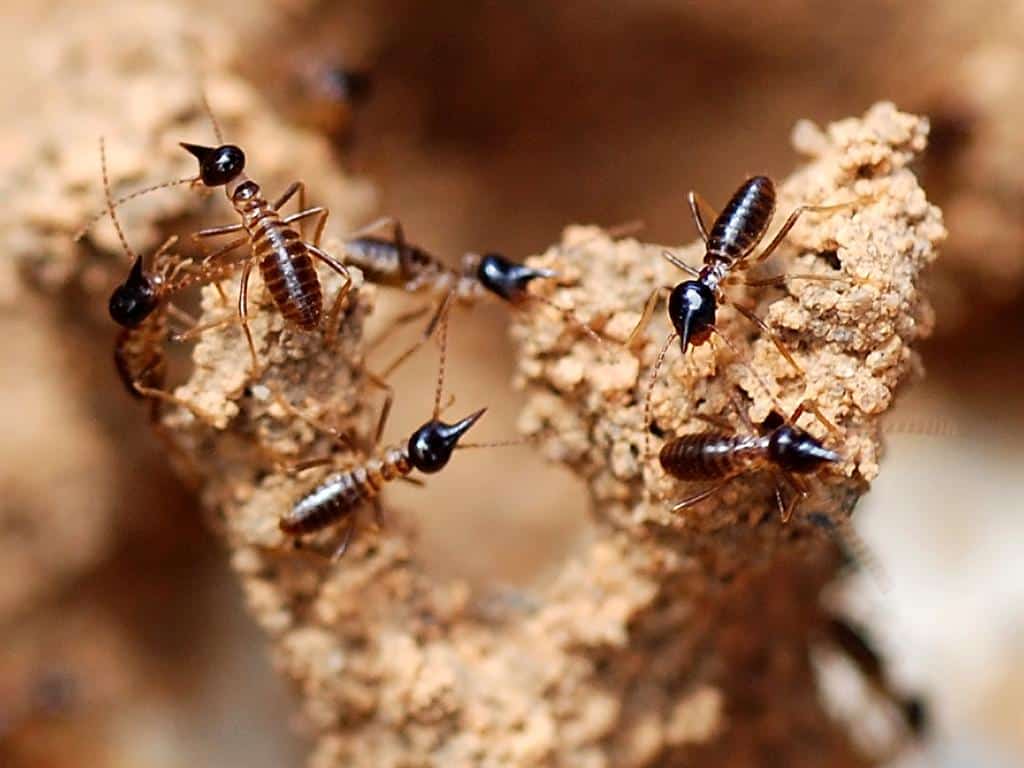
Certain species of termites in the family Termitidae have evolved one of the most dramatic defensive strategies in the insect world. Older worker termites develop into “explosive” soldiers that carry a backpack-like sac filled with toxic blue copper-containing proteins. When their colony is threatened, these specialized defenders will violently contract their abdominal muscles, rupturing their own bodies and spraying the sticky, toxic substance onto invaders. This process, known as autothysis or defensive suicide, effectively glues enemies in place while exposing them to toxins that can cause paralysis or death.
The chemistry behind this defense is remarkable, involving compounds that become toxic only when mixed during the explosion—similar to a two-part epoxy. The defensive fluid hardens quickly upon exposure to air, creating a literal death trap for attackers like ants. Different termite species have evolved variations on this strategy; some produce soldiers with elongated nozzle-like heads that can spray the defensive compounds without dying, while others have developed even more potent chemical cocktails. This collective defense mechanism represents an evolutionary strategy where the sacrifice of individual termites protects the genetic legacy of the colony—particularly the reproductive termites who share their DNA. The willingness to die for the colony makes these termites one of nature’s most extreme examples of altruistic defense.
The Hairy Frog’s Wolverine-like Claws
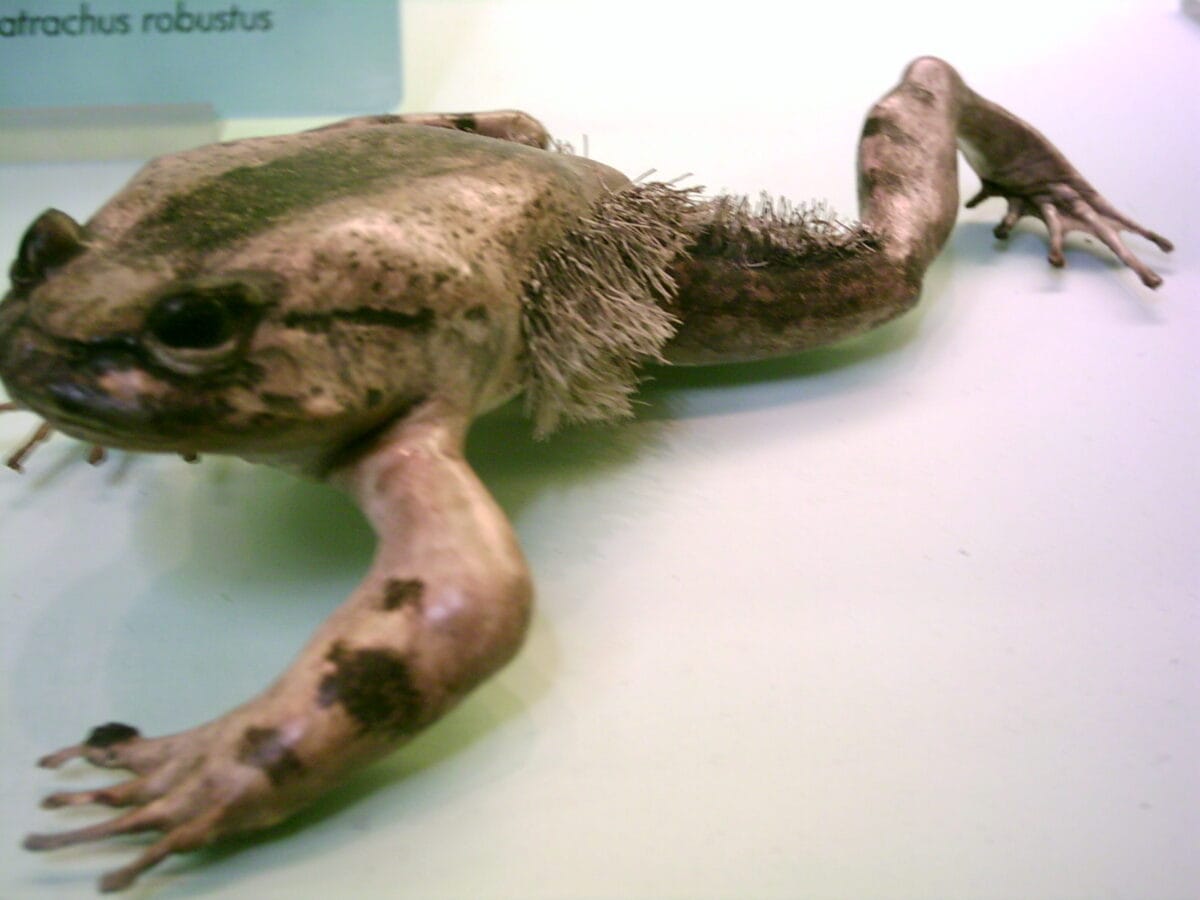
The Central African hairy frog (Trichobatrachus robustus), also known as the horror frog or Wolverine frog, has developed a defensive adaptation straight out of a superhero comic. When threatened, this unusual amphibian can deliberately break the bones in its own toes, forcing the sharp, pointed bone fragments through its skin to create makeshift claws. These temporary weapons can inflict significant damage on predators or anything else that threatens the frog, providing a last-resort defense mechanism that few attackers would anticipate.
The anatomical structure supporting this bizarre defense is unique. The frog’s toe bones terminate in small, bony nodules surrounded by connective tissue. When the frog contracts certain muscles, these bones rotate and break through a specialized area of skin, creating functional claws. When the danger passes, the bones retract and the skin heals. What makes this adaptation particularly unusual is that it involves voluntary self-injury—the frog endures pain and tissue damage to deploy its defense. While other animals have retractable claws, they typically involve sliding mechanisms rather than breaking through skin. The hairy frog’s name, incidentally, comes from hair-like structures on males during breeding season that increase oxygen absorption—another unusual adaptation in this remarkable species.
The Extraordinary Lessons of Bizarre Animal Defenses

The remarkable defensive adaptations explored in this article demonstrate nature’s boundless creativity in the face of evolutionary pressure. From self-destructing termites to blood-squirting lizards, these bizarre mechanisms reveal how the relentless forces of natural selection can produce solutions that might seem improbable or even impossible if not observed in the living world. These adaptations challenge our understanding of biological possibilities and inspire both scientific research and technological innovation.
Each of these strange defenses represents a successful evolutionary answer to the fundamental challenge of survival. They show us that vulnerability can drive innovation—often, the most unusual defenses have evolved in creatures that lack traditional protective adaptations like armor, speed, or strength. These mechanisms also demonstrate the power of specialization, with many bizarre defenses being highly effective against specific predators or threats rather than serving as all-purpose protection.
Beyond their scientific significance, these unusual adaptations remind us of the fragility and resilience of life. Many of the species featured here face threats from habitat loss, climate change, and human activity that their remarkable defenses cannot counter. Understanding and appreciating these bizarre survival strategies may help inspire conservation efforts to protect not just the animals themselves, but the evolutionary processes that produced such extraordinary adaptations.
As we continue to study and document these remarkable defensive mechanisms, we gain not only scientific knowledge but a deeper appreciation for life’s capacity to persist against seemingly impossible odds—adapting, evolving, and surviving through solutions that continue to astonish and inspire human observers.

From exploring the marine wonders in the Azores and witnessing the vast savannas of Kenya, to delving deep into the rich biodiversity of South Africa and traversing iconic landscapes in Australia and the US like Yellowstone, Chris's experiences are vast.
With a penchant for diving alongside sharks, the ocean holds a special place in his heart.
Through his academic insights, he champions wildlife conservation, striving with 'Animals Around The Globe' to cultivate a profound connection between humans and animals, enhancing our mutual appreciation.
Connect with him at Feedback@animalsaroundtheglobe.com.
- The Lizard That Shoots Blood From Its Eyes - July 21, 2026
- What Happens If Fireflies Stop Glowing? - July 21, 2026
- Coyotes Are Thriving in Every U.S. State — Even New York City - July 21, 2026