


Worried about unexpected vet bills?
Pet insurance can cover thousands in unexpected vet costs. Get a free quote from Lemonade in under 2 minutes.
Get My Free Quote →Sponsored · Opens Lemonade.com
The Dumbo octopus, with its ear-like fins that resemble the famous Disney elephant, is arguably one of the ocean’s most endearing creatures. Belonging to the genus Grimpoteuthis, these remarkable cephalopods inhabit the mysterious depths of the world’s oceans, typically dwelling at extreme depths ranging from 3,000 to 13,000 feet below the surface. Their charming appearance belies their remarkable adaptations to one of the most challenging environments on Earth.
First discovered in the early 20th century, these creatures have captivated marine biologists and ocean enthusiasts alike. Unlike their shallow-water cousins that often display defensive behaviors, Dumbo octopuses exhibit a gentle, almost curious nature when encountered by deep-sea submersibles. Their distinctive appearance and peaceful demeanor make them ambassadors of the deep, highlighting the incredible diversity of life that exists in the least explored regions of our planet.
The Biology Behind the Cuteness

The Dumbo octopus’s most distinctive feature—the ear-like fins that earned them their nickname—are actually specialized appendages called cirri. These fins extend from the mantle and flap rhythmically, allowing the octopus to navigate the deep-sea environment with remarkable precision. Unlike many other octopus species that propel themselves by forcing water through their siphons, Dumbo octopuses primarily rely on these fins for locomotion, giving them their characteristic graceful, almost ballet-like movement through the water.
These deep-sea creatures typically grow to about 8-12 inches in length, though some species can reach up to 6 feet when including their arm span. Their bodies are semi-transparent and range in color from pale white to pink, red, or brown, depending on the species. Most remarkably, they lack the ink sacs common to other octopuses—a logical adaptation since ink would serve little purpose in the pitch-black depths where they live. Instead, they’ve developed other adaptations for survival, including exceptional low-light vision and specialized sensory cells.
Life in the Extreme Deep
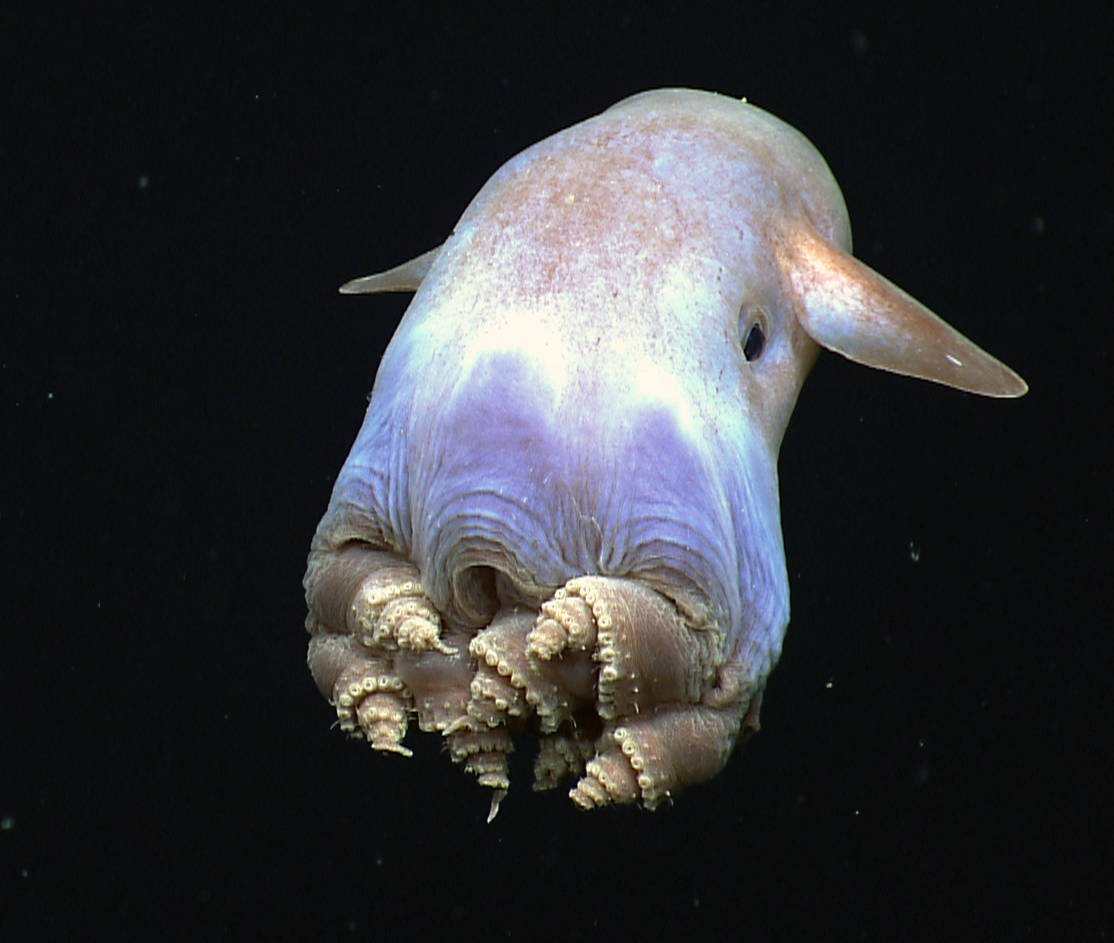
The Dumbo octopus has mastered life in one of Earth’s most extreme environments. The hadal and abyssal zones where they reside present challenges that would be fatal to most organisms: crushing pressure (sometimes exceeding 5,000 pounds per square inch), near-freezing temperatures, and almost complete darkness. Yet these resilient creatures have evolved to not only survive but thrive in these conditions. Their gelatinous bodies contain high concentrations of ammonium ions, which help maintain buoyancy despite the immense pressure.
Perhaps most remarkably, Dumbo octopuses have adapted to an environment where food is scarce. They are opportunistic predators, consuming whatever small crustaceans, worms, and other invertebrates they can find. Unlike their shallow-water relatives that often pursue and capture prey with spectacular displays of intelligence, Dumbo octopuses employ a more energy-efficient strategy. They hover above the seafloor, using their umbrella-like webbed arms to trap small prey against the bottom before consuming it—a method perfectly suited to their low-energy environment.
Reproductive Mysteries Unveiled

The reproductive habits of Dumbo octopuses remained largely unknown until relatively recent scientific breakthroughs. Unlike many octopus species that reproduce once and then die, evidence suggests Dumbo octopuses may reproduce multiple times throughout their lives. Females carry eggs at different developmental stages simultaneously, allowing them to release eggs opportunistically when environmental conditions are favorable or when they encounter a mate—a crucial adaptation in the vast, sparsely populated deep sea.
In 2018, researchers made a groundbreaking discovery when they observed a newly hatched Dumbo octopus for the first time. The hatchling emerged fully formed, complete with functional fins and all the physical characteristics of adults, suggesting there is no larval stage. This precocious development—being born essentially as miniature adults—allows young Dumbo octopuses to immediately begin their deep-sea lives without requiring a developmental period in more vulnerable shallow waters. This remarkable reproductive strategy highlights yet another unique adaptation to their extreme environment.
A Global Presence in the Deep
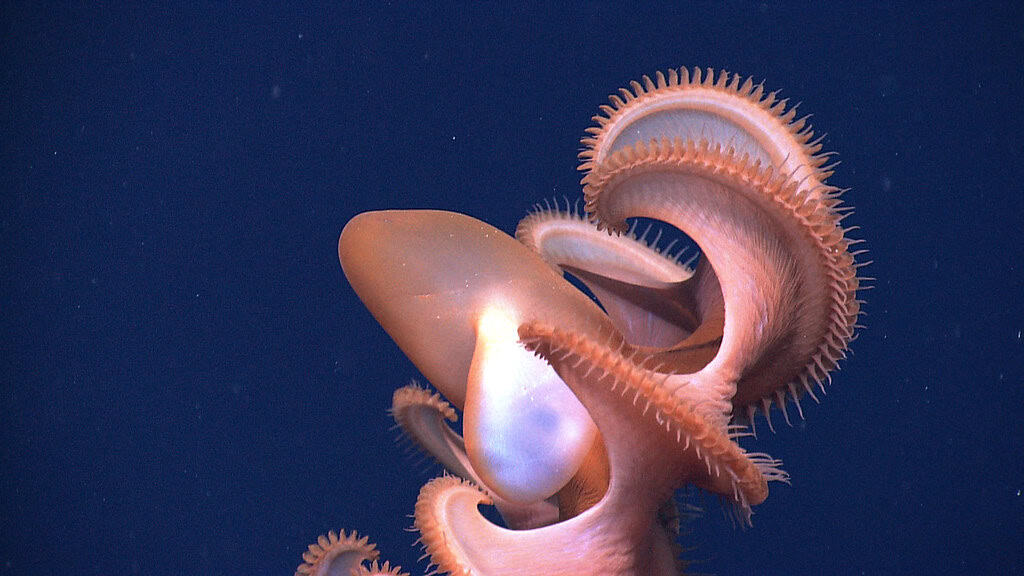
Despite their elusive nature, Dumbo octopuses have a surprisingly widespread distribution throughout the world’s oceans. There are approximately 17 recognized species within the genus Grimpoteuthis, with representatives found in nearly every major ocean basin. From the cold waters of the North Atlantic and Arctic to the depths off Antarctica and throughout the Pacific, these adaptable creatures have established themselves as successful residents of the deep sea globally.
This widespread distribution suggests that Dumbo octopuses evolved early in the history of cephalopods, developing their unique adaptations as they colonized the deep-sea environment. Different species have specialized to various depth ranges and habitat types, from underwater mountains to abyssal plains. Their global presence makes them an important indicator species for deep-sea health, with researchers monitoring their populations to understand how human activities and climate change might be affecting the least visible parts of our oceans.
Intelligence in the Darkness

While the intelligence of shallow-water octopuses has been well-documented—with examples of tool use, problem-solving, and even personality—the cognitive abilities of Dumbo octopuses remain largely mysterious. The deep sea presents fewer complex challenges than coastal environments, potentially requiring different types of intelligence. However, researchers have observed behaviors suggesting significant cognitive capabilities, including coordinated hunting techniques and complex responses to submersible vehicles.
Their relatively large brains (proportional to body size) indicate that Dumbo octopuses likely possess considerable intelligence, perhaps specialized for the unique challenges of deep-sea living. Their exceptional ability to process visual information in near-darkness suggests highly developed sensory integration. Some scientists speculate that their intelligence may be directed toward energy conservation and efficient foraging strategies rather than the complex problem-solving seen in their shallow-water relatives—an adaptation perfectly suited to their resource-limited environment.
Technological Challenges in Studying Dumbo Octopuses

Researching creatures that live miles beneath the ocean surface presents extraordinary challenges. Until the development of modern deep-sea submersibles and remotely operated vehicles (ROVs), scientists had access only to specimens accidentally caught in deep-sea trawling nets—often damaged beyond usefulness for behavioral studies. Today, specialized equipment allows researchers to observe these creatures in their natural habitat, though such expeditions remain extremely costly and logistically complex.
The pressure at depths where Dumbo octopuses live would crush conventional equipment, requiring specialized technology built to withstand these extreme conditions. High-definition cameras with powerful lights must be employed to capture images in the perpetual darkness. Even with this advanced technology, studies are limited by the brief observation windows provided by expeditions, making long-term behavioral research nearly impossible. These technological hurdles explain why, despite decades of interest, many aspects of Dumbo octopus biology remain shrouded in mystery.
Conservation Concerns in an Unseen World

While Dumbo octopuses live far from direct human interaction, they are not immune to anthropogenic threats. Deep-sea mining operations, which extract valuable minerals from the seafloor, risk disrupting or destroying their habitats. Bottom trawling—a fishing method that drags heavy nets across the seabed—can damage the delicate ecosystem structures these creatures depend on, even at depths where the octopuses themselves are not targeted.
Climate change represents another potential threat, as ocean acidification and shifting temperature patterns penetrate even to the deepest ocean layers. Because deep-sea species have evolved in extraordinarily stable environments, they may be particularly sensitive to even small environmental changes. The slow reproductive rate of Dumbo octopuses compounds these concerns, as populations would likely recover slowly from any significant disruption. Conservation efforts are complicated by our limited understanding of their population sizes, distribution patterns, and basic biology—highlighting the urgent need for continued research.
Cultural Impact and Public Fascination
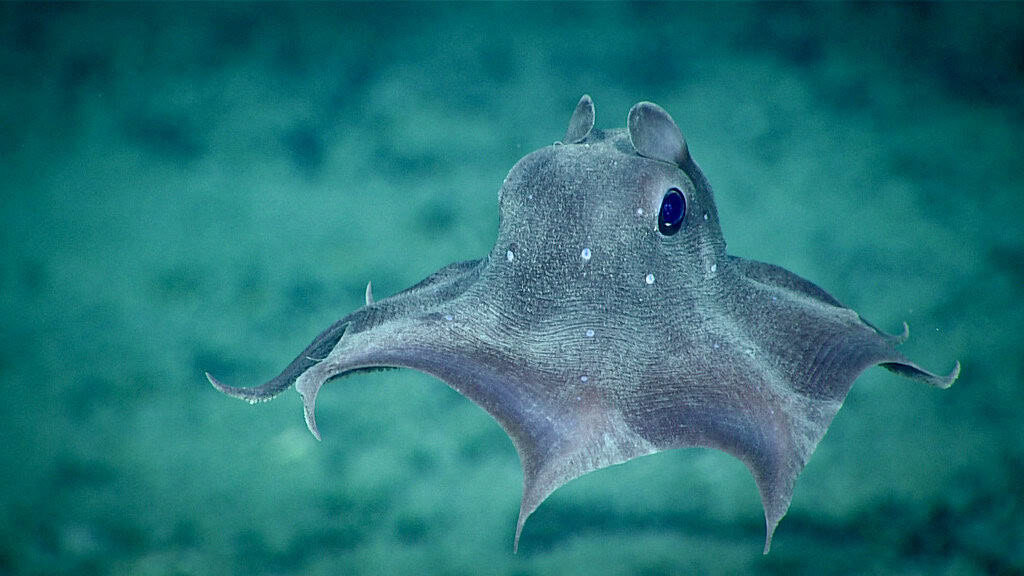
Despite living far from human eyes, Dumbo octopuses have captured the public imagination in ways few deep-sea creatures have. Their appearance in documentaries like the BBC’s “Blue Planet” series introduced millions to these charming cephalopods, generating widespread affection. Their Disney-character namesake helps make them accessible entry points for public engagement with deep-sea conservation issues—creatures that people can connect with emotionally despite never encountering them in person.
This cultural resonance extends to scientific funding as well. Research expeditions featuring Dumbo octopuses often receive greater media coverage and public interest than studies of less charismatic deep-sea fauna. Some oceanographic institutions have even adopted stylized Dumbo octopuses as mascots or logos. This cultural prominence serves an important educational purpose, helping to make the abstract concept of deep-sea conservation tangible through the image of these endearing animals, whose protection represents the broader challenge of safeguarding Earth’s last great wilderness.
Remarkable Adaptations for Extreme Pressure

The adaptations that allow Dumbo octopuses to withstand crushing deep-sea pressure represent evolutionary marvels. Their bodies contain significantly higher proportions of water than shallow-water relatives, making them more compressible and less susceptible to pressure damage. Their blood contains specialized proteins that function efficiently under high pressure, while their cell membranes incorporate unique fatty acid compositions that maintain fluidity despite the cold and pressure—adaptations that have potential applications in biotechnology and medicine.
Perhaps most remarkably, Dumbo octopuses have evolved simplified internal anatomies compared to their shallow-water cousins. They lack the rigid structures that could collapse under pressure, with even their beaks being softer and more flexible. Their nervous systems demonstrate pressure-tolerant modifications, with specialized ion channels that continue functioning where conventional neural structures would fail. These adaptations represent millions of years of evolutionary refinement, resulting in creatures perfectly suited to an environment that would instantly kill most other complex organisms.
Recent Discoveries and Ongoing Research

The scientific understanding of Dumbo octopuses continues to evolve with each new deep-sea expedition. In 2020, researchers identified previously unknown species within the Grimpoteuthis genus, suggesting that the diversity of these creatures may be significantly greater than previously thought. Genetic analysis has revealed surprising relationships between geographically distant populations, indicating complex patterns of deep-ocean connectivity that challenge our understanding of marine ecosystems.
Technological innovations are expanding research possibilities as well. New autonomous underwater vehicles capable of longer-duration missions are providing extended observation periods, capturing behaviors never before documented. Advances in environmental DNA (eDNA) analysis allow scientists to detect Dumbo octopus presence without direct observation, mapping their distribution more comprehensively. These scientific frontiers promise to unveil more secrets about these enigmatic creatures in coming years, potentially revolutionizing our understanding of deep-sea ecology through the study of these charismatic ambassadors of the abyss.
The Continuing Mystery of the Ocean’s Cutest Enigma
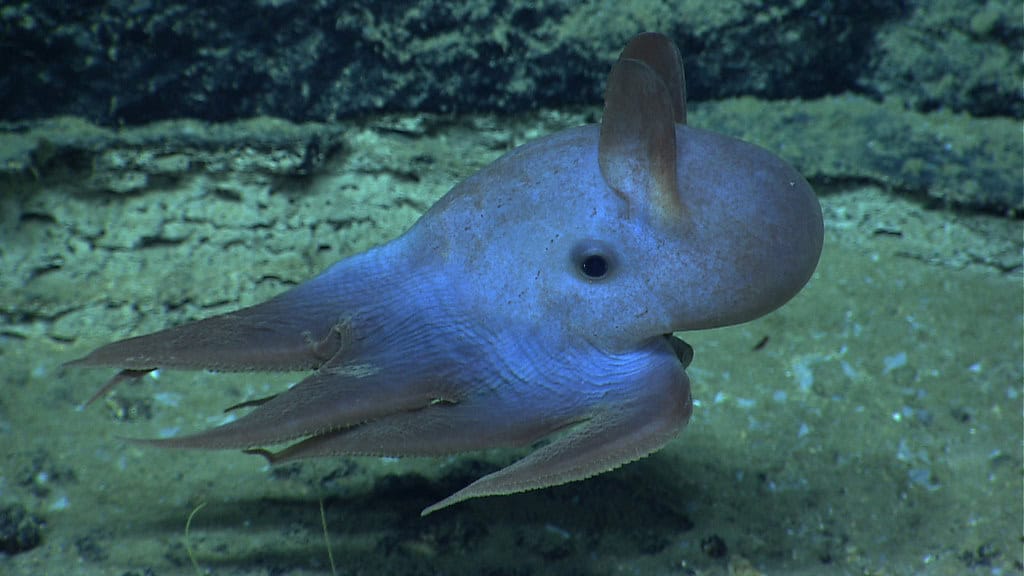
The Dumbo octopus embodies the fascinating intersection of extreme adaptation and endearing appearance that makes marine biology so captivating. Despite significant scientific advances, these creatures remain largely mysterious, with each new discovery revealing how much more there is to learn about their unique biology and behavior. Their continued study represents not just scientific curiosity but an essential component of understanding Earth’s least explored ecosystem—the deep ocean that covers most of our planet.
As climate change and resource extraction increasingly threaten even remote oceanic regions, the protection of creatures like the Dumbo octopus takes on new urgency. Their adaptations, evolved over millions of years, contain biological innovations we are only beginning to comprehend, with potential applications ranging from medicine to materials science. Perhaps most importantly, these charming cephalopods remind us that even in the most extreme environments, life finds a way to thrive with elegance and, yes, even cuteness—a testament to the remarkable diversity of life on our blue planet.
Worried about unexpected vet bills?
Pet insurance can cover thousands in unexpected vet costs. Get a free quote from Lemonade in under 2 minutes.
Get My Free Quote →Sponsored · Opens Lemonade.com

From exploring the marine wonders in the Azores and witnessing the vast savannas of Kenya, to delving deep into the rich biodiversity of South Africa and traversing iconic landscapes in Australia and the US like Yellowstone, Chris's experiences are vast.
With a penchant for diving alongside sharks, the ocean holds a special place in his heart.
Through his academic insights, he champions wildlife conservation, striving with 'Animals Around The Globe' to cultivate a profound connection between humans and animals, enhancing our mutual appreciation.
Connect with him at Feedback@animalsaroundtheglobe.com.
- The Loudest Animal Relative to Body Size Is Tinier Than a Thumbtack - June 10, 2026
- The World’s Smallest Mammal Could Fit on Your Fingertip - June 10, 2026
- How Turtles Use Earth’s Magnetic Field to Navigate Oceans - June 10, 2026