
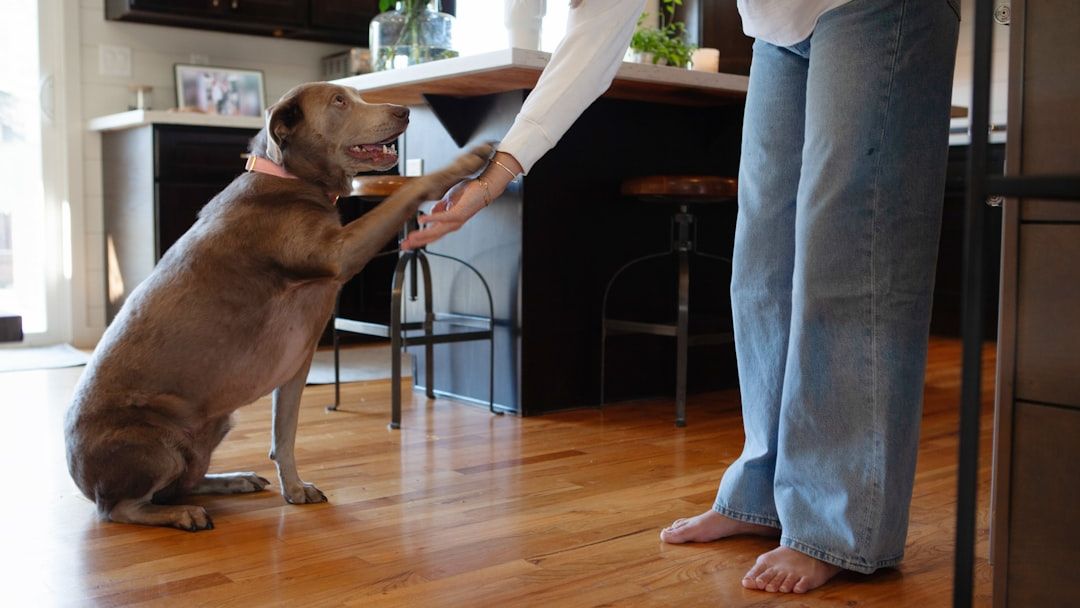
There’s something almost magical about the way a dog looks at you when you’re having a rough day. Before you’ve said a single word, before you’ve even fully processed your own feelings, your dog is already there. Right next to you. Quietly. That’s not a coincidence, and it’s definitely not just about the treats. Science is now telling us something that dog lovers have suspected for a very long time.
Recent research across multiple disciplines is rewriting what we thought we knew about how dogs process human emotional life. The findings are, frankly, stunning. Dogs are not just reacting to treats and commands. They are reading us, smelling us, and responding to our inner emotional states in ways that seem almost impossibly sophisticated. So buckle up, because what researchers are uncovering goes much deeper than a wagging tail.
Dogs Read Faces Like Tiny, Furry Psychologists
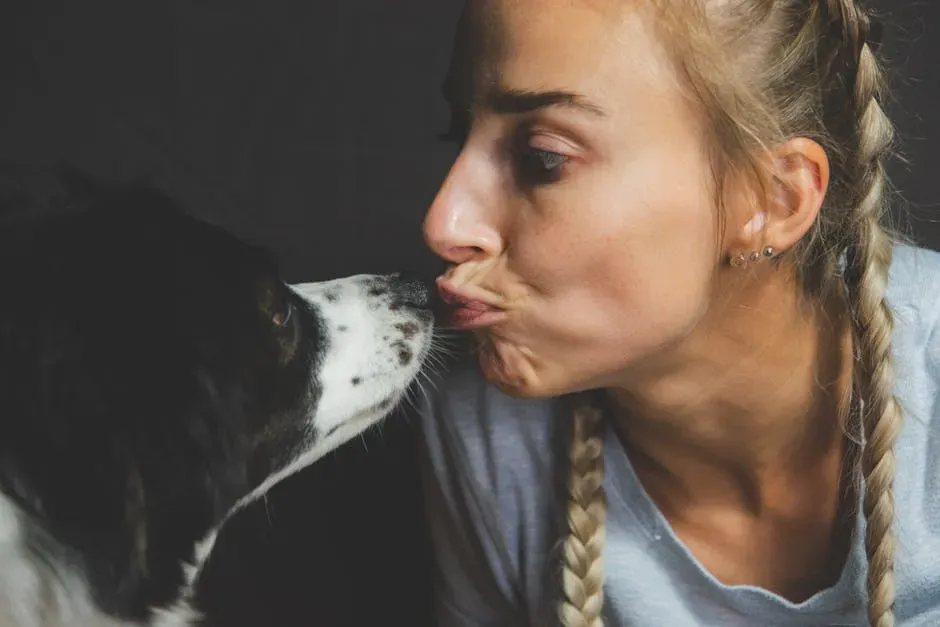
Most of us assume a dog staring at our face is just waiting for the next cue. Turns out, there’s a lot more happening behind those big, attentive eyes. Modern studies show something much deeper: dogs process emotional cues from humans in sophisticated ways. Research from institutions like the University of Lincoln and the University of Vienna found that dogs can distinguish between happy and angry human facial expressions even when those faces belong to strangers.
Here’s where it gets really impressive. Dogs use human emotion as a discriminative cue, and when dogs for whom happy faces were rewarded were tested, they learned the discrimination more quickly than dogs for whom angry faces were rewarded, suggesting that dogs recognized an angry face as an aversive stimulus. Think about what that means. It’s not a trained response. It’s emotional reading, plain and simple.
Research shows that dogs pay particularly close attention to human facial expressions, perhaps because we don’t have tails, and our ears don’t move. Honestly, that’s a charming way of putting it. Dogs evolved alongside us, so they had to develop their own toolkit for reading a species that communicates almost entirely with its face.
Studies show dogs can visually discriminate between happy versus angry faces, calm versus tense expressions, and familiar versus unfamiliar people. Dogs tend to focus more on the left side of a human face, which is often more emotionally expressive. Interestingly, dogs show stronger responses when viewing their owner’s face compared to strangers, which suggests emotional attachment deepens recognition accuracy.
It’s Not Just Sight – Dogs Can Literally Smell Your Feelings
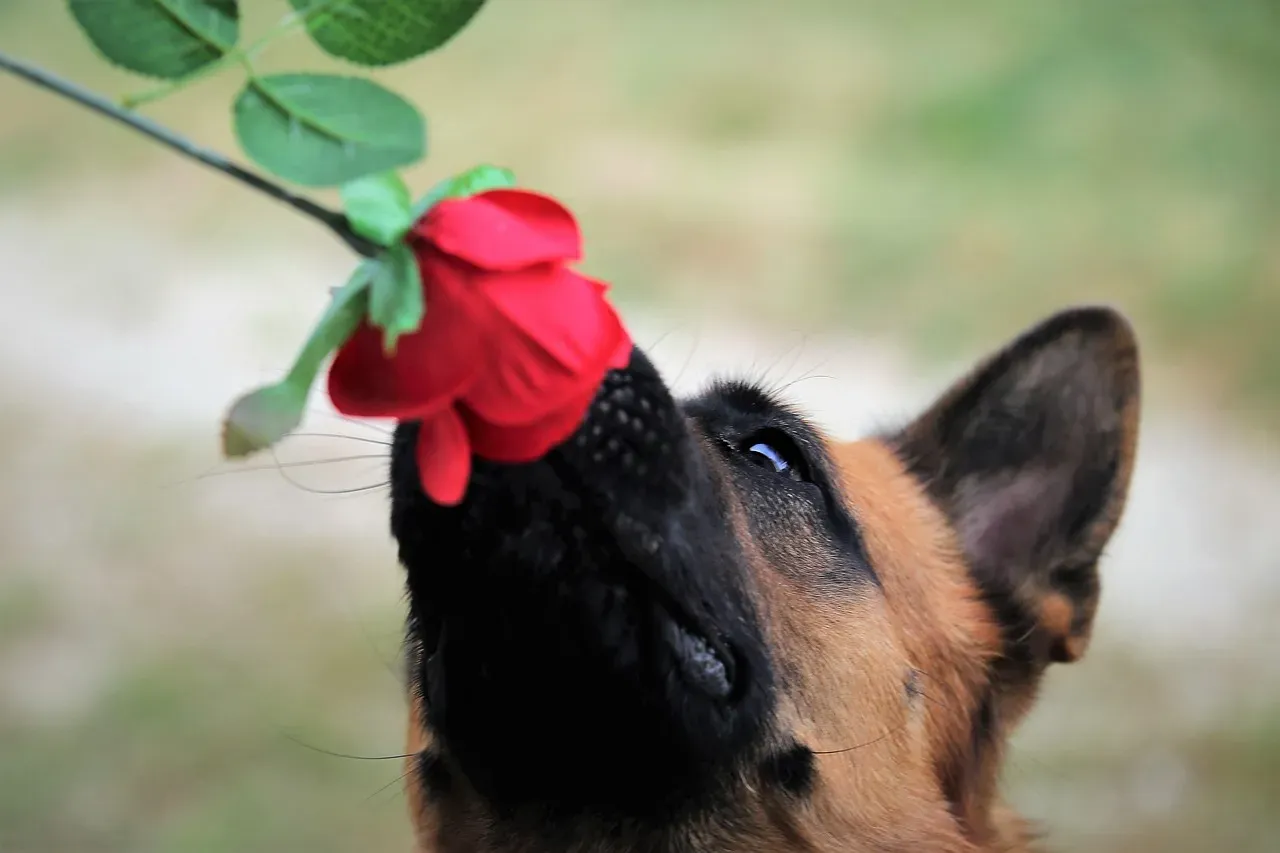
I think this is the part that blew my mind completely. Your dog doesn’t just watch your face for clues. They’re also sniffing out your emotions, sometimes before you even realize you’re feeling them. When we feel fear, our bodies release stress-related hormones and compounds, including cortisol and adrenaline-related byproducts, that can slightly change the scent profile of our sweat and breath. These chemical changes, known as chemosignals, are released unconsciously and are impossible for humans to hide.
The biological hardware dogs use for this is extraordinary. Dogs have up to 300 million olfactory receptors, while humans have about six million. That gives dogs a sniffing ability estimated to be 10,000 to 100,000 times more sensitive than ours. Imagine trying to keep a secret from someone who could smell your anxiety through a concrete wall. That’s basically what it’s like for your dog.
Evidence now confirms that dogs can detect an odour associated with acute stress in humans from breath and sweat alone, which provides a strong foundation for future investigations into areas such as emotional contagion, knowing that there is a confirmed odour component to acute negative stress that can be detected in the absence of other visual or vocal cues.
Dogs even experience emotional contagion from the smell of human stress, leading them to make more “pessimistic” choices. That means your anxiety doesn’t just register in your dog’s nose. It actually changes your dog’s mood and behavior. That’s a remarkable, almost sobering, level of emotional connection.
Your Mood Literally Changes How Your Dog Behaves and Learns

Let’s be real, most of us have never stopped to wonder whether our emotional state affects our dog’s ability to learn new tasks. But the research is surprisingly direct on this point. A study published in Animal Cognition found that dogs perceive differences in human emotion and behave differently depending on their owner’s emotional state. Dogs gazed and jumped less often and were less compliant with the “sit” command when learning a new task from a sad owner. By contrast, dogs with happy owners performed better at the new task than dogs with sad or neutral owners.
Your mood is literally affecting how well your dog can learn. Think about that the next time you’re trying to train during a stressful week. It’s almost like they’re mirroring your energy, a canine kind of empathy, though researchers are careful about using that exact word.
The researchers found that dogs showed signs of stress, including shaking and whining, more often when they heard a human crying. They also physically touched their pet parents more often when they heard the sounds of crying. That’s not random behavior. That’s something that looks and functions remarkably like comfort-seeking on our behalf.
These stress responses show that, rather than being a learned behavior, understanding human emotion may be a result of evolution during the domestication process. In other words, thousands of years of living with us has literally shaped the dog brain.
The Brain Science Behind What Dogs Actually Process

What happens inside a dog’s head when it reads your face? Scientists have been quietly uncovering some fascinating answers. When researchers used brain imaging through fMRI scans on dogs, they discovered something fascinating: dogs process emotional tone in a similar brain region that humans use. That’s an incredible parallel. Two different species, shaped by shared history, processing emotion in overlapping ways.
A key study determined that dogs can recognize emotions in humans by combining information from different senses, taking into account both visual and auditory cues. Scientists presented domestic dogs with pairings of images and vocal sounds conveying different combinations of positive and negative emotional expressions in humans and dogs. The dogs spent significantly longer looking at facial expressions that matched the emotional state of the vocalization. The team believes that dogs must form abstract mental representations of the different emotional states, and are not simply displaying learned behaviors.
It’s the first time that a species other than humans has been shown to be capable of interpreting the vocal and facial expressions of an entirely different species of animal, a talent that surely helps dogs survive in their ecological niche: the jungle of the human home.
According to researchers, dogs’ ability to connect emotionally with humans is neither pure instinct nor purely learned behavior, but rather a sign of cognitive ability. The dogs had to extract information from sound, then associate this information with an image, and that involves very complex psychological mechanisms. That’s not a simple reflex. That’s thinking.
The Irony: Dogs Understand Us Better Than We Understand Them

Here’s where the story takes a slightly humbling turn. For all the research showing how brilliantly dogs read us, a very different body of work reveals that humans are actually quite poor at reading dogs in return. Honestly, this one stings a little.
New research from Arizona State University has revealed that people often do not perceive the true meaning of their pet’s emotions and can misread their dog. The reasons include a human misunderstanding of dog expressions due to a bias towards projecting human emotions onto their pets.
Adding to the misunderstanding is a human projection of their feelings onto the dog. This “anthropomorphizing” of the interaction further clouds truly understanding what your dog’s emotional state actually may be and what she is trying to tell you. It’s a bit like wearing noise-canceling headphones during a heartfelt conversation. You’re technically present, but you’re missing everything important.
Even in studies of human perception of human emotions, it is clear that there is more to reading emotion than just looking at a person’s face. Culture, mood, situational context, and even a previous facial expression can influence how people perceive emotions. With dogs, we haven’t even begun to account for those same complexities.
Humans and dogs have lived side by side for some 30,000 years, and along the way, evolution seems to have given dogs the skills to read their owners’ needs and emotions. The dog evolved to understand us. It may be time we return the favor.
Conclusion
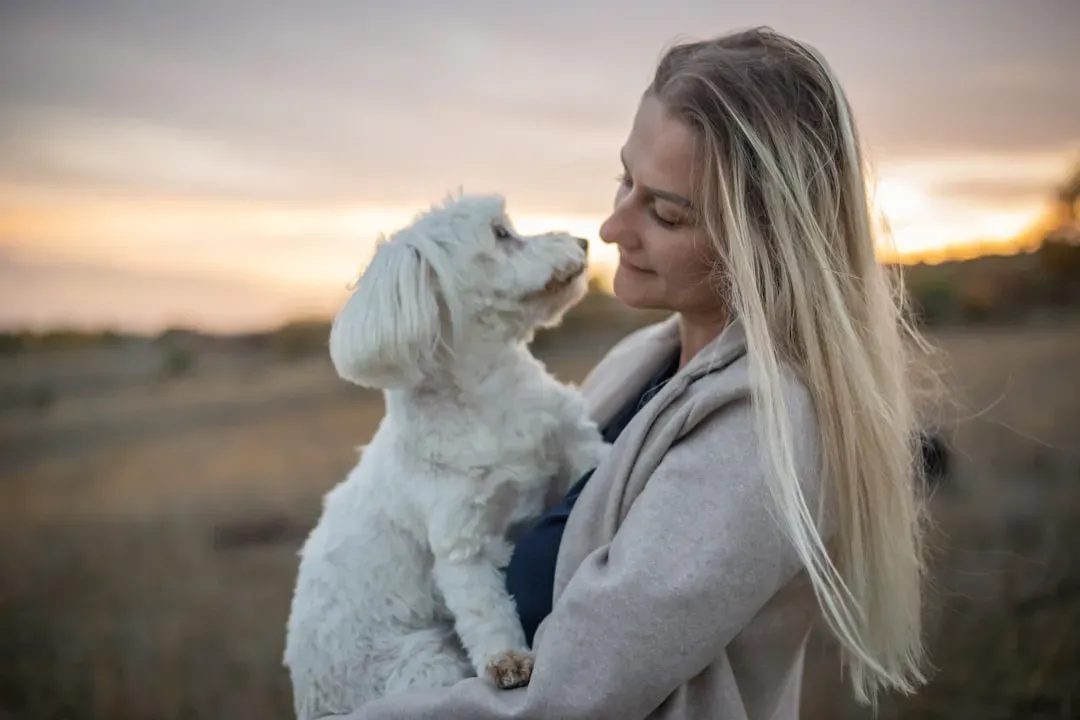
The evidence is stacking up in a way that’s hard to ignore. Dogs are not just cute, loyal companions responding to basic commands and food rewards. They are emotionally perceptive beings, shaped by tens of thousands of years of life alongside humans, equipped with sensory tools that go far beyond what most of us imagined. They read our faces. They smell our stress. They adjust their behavior to our moods. They comfort us when we cry. The science is increasingly clear on all of this.
What’s perhaps most striking, and a little humbling, is the direction that understanding flows. While your dog may already have a sophisticated read on your emotional world, you might still be misreading theirs almost every day. The relationship between humans and dogs has always felt like a conversation. We’re just starting to realize how much of that conversation we’ve been missing.
Next time your dog curls up beside you on a hard day, maybe pause and really look back. Who’s the one doing the real emotional heavy lifting here? What do you think about that? Drop your thoughts in the comments below.
