

Imagine walking through a forest or diving into the ocean only to encounter creatures that look like they’ve stepped straight out of a science fiction movie. From the deepest trenches of our oceans to the wetlands of North America, our planet is home to animals so bizarre, so otherworldly in appearance, that they challenge everything we think we know about life on Earth. These aren’t creatures from distant galaxies, but rather the incredible result of millions of years of evolution pushing life to its most extraordinary limits.
What makes these animals seem so alien isn’t just their strange appearance, but their abilities that defy conventional understanding. Some can regenerate entire limbs, others can eat faster than our eyes can follow, and a few can even smell underwater. Let’s dive into the fascinating world of Earth’s most alien-looking inhabitants.
The Star-Nosed Mole: Nature’s Speed Demon with Tentacles
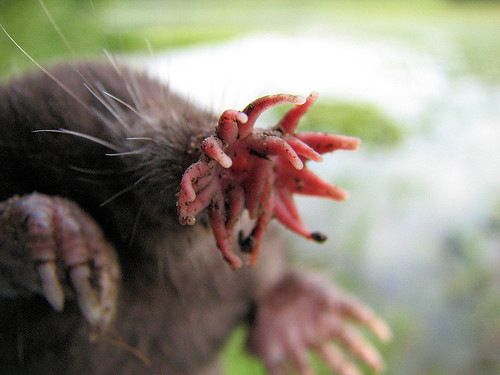
A star-nosed mole is surely one of the world’s weirdest-looking animals. If you were to come face to face with one, you might think its head had been replaced by a tiny octopus. This small North American mammal possesses what might be the most bizarre facial feature in the animal kingdom.
The Star-Nosed Mole’s nose is a spectacle of nature, boasting 22 fleshy tentacles that make it stand out from the animal crowd. The distinctive star organ on the mole’s snout contains more than 100,000 nerve fibers–five times the number of “touch” fibers in the human hand, all packed into a space smaller than your fingertip. What’s even more incredible is that for an animal that’s nearly blind, the American species is astonishingly speedy: The world’s fastest eater, it can find and gobble down an insect or worm in a quarter of a second.
The Axolotl: The Peter Pan of Amphibians
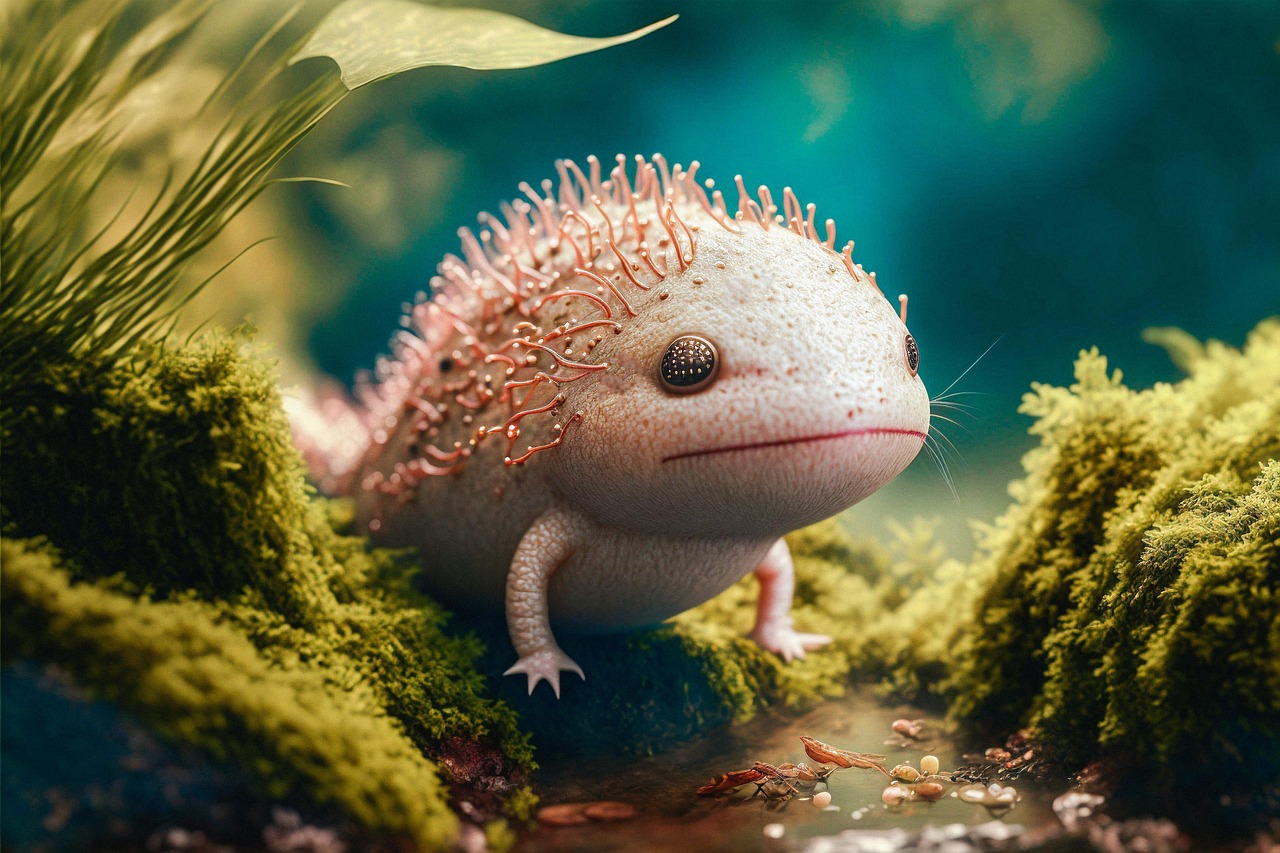
With their round heads and permanently smiling faces, wild axolotls are cute (it’s one of the reasons they do well in the pet trade). But where do axolotls live today, and why do they look so alien to us? These Mexican salamanders have captured hearts worldwide with their perpetual grin and feathery external gills.
One reason for the cuteness overload is neoteny, which is the retention of juvenile features throughout adult life. For instance, although adult axolotls also have functional lungs like other amphibians and can breathe through their skin, they have big, fluffy external gills – something other amphibians don’t keep after babyhood. Perhaps most remarkable is the feature of the axolotl that attracts most attention is its healing ability: the axolotl does not heal by scarring, but is capable of tissue regeneration; entire lost appendages such as limbs and the tail can regrow over a period of months, and, in certain cases, more vital structures, such as the tissues of the eye and heart can be regrown.
The Goblin Shark: A Living Fossil from the Deep
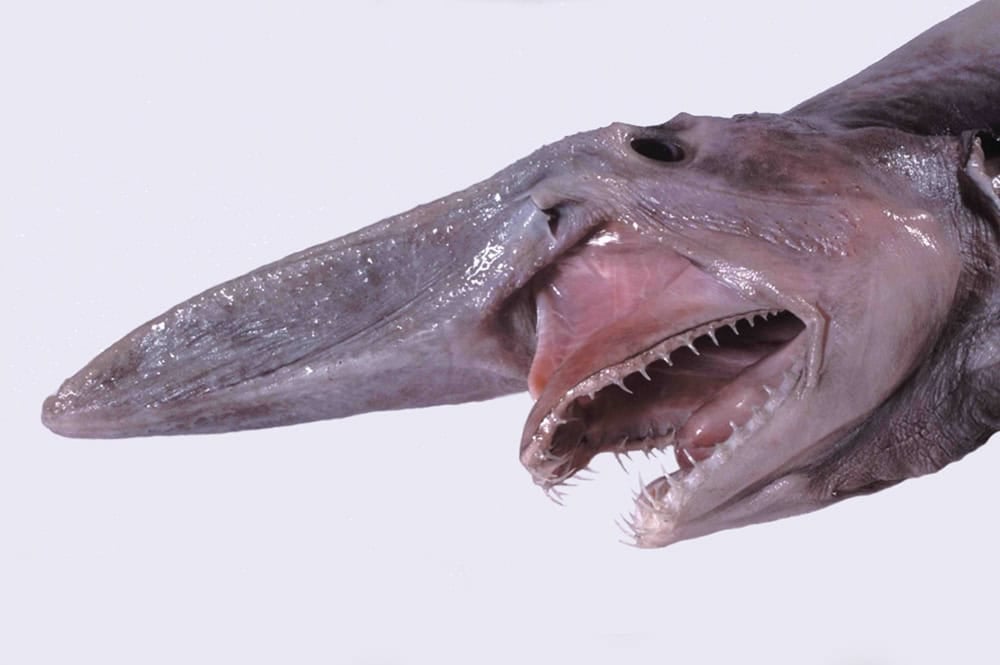
Swimming in the depths of our oceans lurks one of the most prehistoric-looking creatures alive today. alien-looking shark with a shovel-like snout and a mouth it uses to lurch at and snatch prey. Last year, fishers pulled a 15.4-foot-long (4.7 m) pregnant female from the waters off Taiwan, but the maximum size of these sharks is unknown, according to the Florida Museum of Natural History.
Little is known about goblin sharks, except that they live in deep waters along continental slopes and seamounts. The deepest recorded individual was hauled up from 4,265 feet (1,300 m) deep. These ancient predators use their extendable jaws in a way that seems almost mechanical. Scientists think goblin sharks hunt prey, such as squid and crustaceans, by detecting changes in electric fields. Once the sharks are close enough, their jaws shoot outward to gobble up the unsuspecting animal.
The Dumbo Octopus: Deep Sea Cuteness
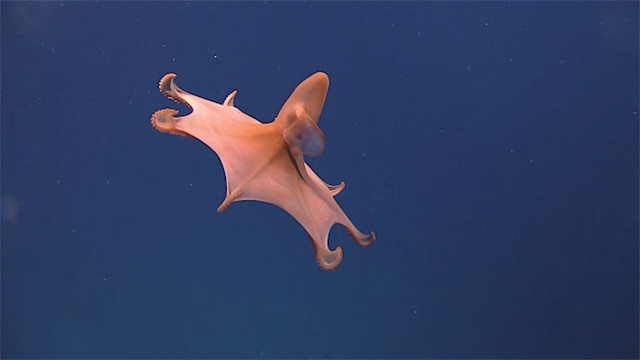
In the darkest depths of our oceans, where sunlight never reaches, lives a creature that combines otherworldly appearance with undeniable charm. There are 17 species of dumbo octopus (Grimpoteuthis), which are named after Disney’s lovable elephant character. These octopuses, which belong to the larger umbrella octopus family Opisthoteuthidae, have two ear-like fins extending from above each eye.
deepest living of all known octopuses, inhabiting ocean depths of at least 13,100 feet (4,000 m). In 2020, scientists filmed a dumbo octopus 22,785 feet (6,957 m) below the surface of the Indian Ocean. These ears and their body shape contribute to their alien-like appearance. Despite living in one of Earth’s most hostile environments, these creatures have evolved a graceful swimming style that sets them apart from their shallow-water cousins.
The Japanese Spider Crab: Underwater Giant
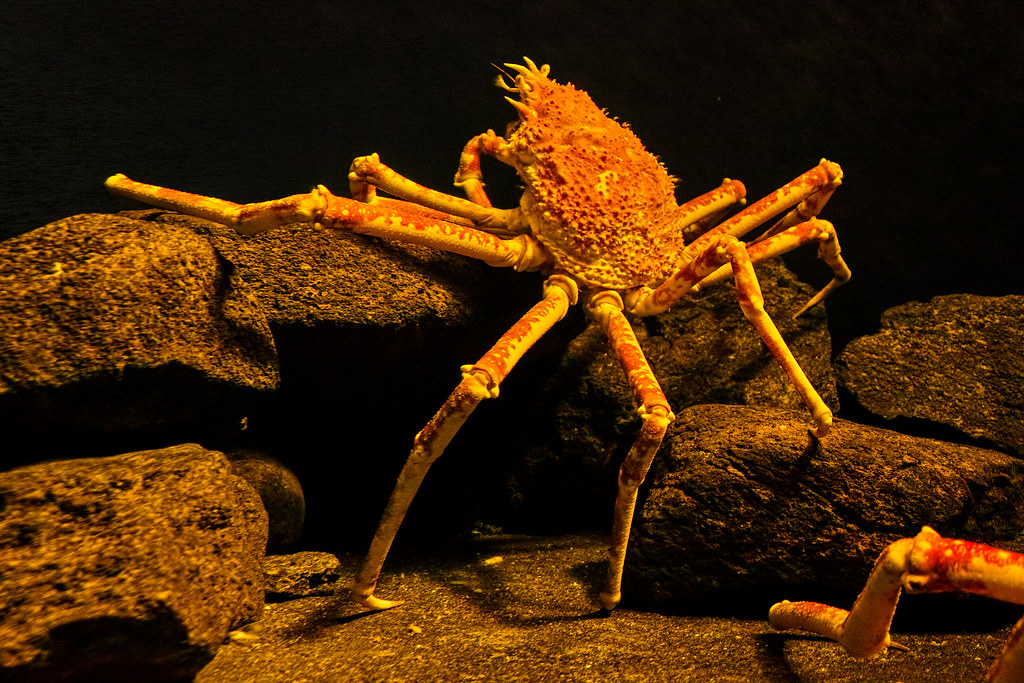
Imagine encountering a creature with legs spanning wider than a car is long. Japanese spider crabs are the largest crustaceans on Earth. They live in the deep Pacific Ocean along the coasts of Japan, Taiwan, and surrounding areas. These armored giants look like something that crawled out of a mechanical engineer’s nightmare.
Japanese spider crabs use their long, alien-like legs to easily travel over the muddy ocean floor. They have a leg span of up to 12 feet from claw to claw. Japanese spider crabs actually have 10 legs, eight of which they use for walking and two that have claws. Despite their intimidating appearance, they’re actually gentle giants that feed primarily on dead animals that sink to the ocean floor, acting as nature’s underwater cleanup crew.
The Philippine Tarsier: Alien Eyes in the Forest
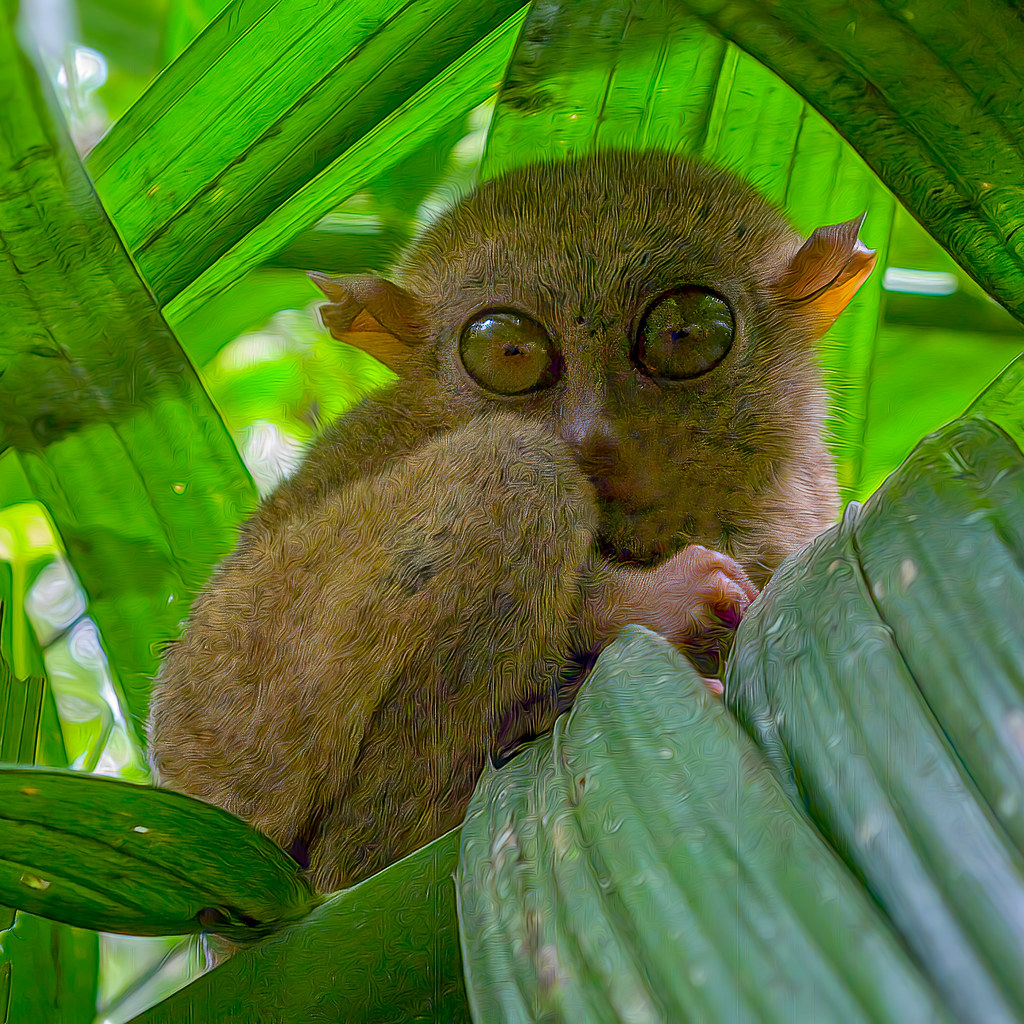
In the tropical forests of the Philippines lives a tiny primate that looks like it was designed by an extraterrestrial artist. The Philippine tarsier is one of the animals that can only be found in the Philippines. These small animals only grow to about 5 inches in length, and they are considered among the world’s smallest primates. These nocturnal creatures have large eyes and ears which they use for hunting in darkness that contribute to their alien-like appearance.
Some people describe tarsiers as looking like a lemur and a tree frog cross. They are fully carnivorous, eating small lizards, frogs, and insects. What makes them particularly alien-like is their ability to rotate their heads almost completely around, combined with those enormous eyes that seem to stare right into your soul. These remarkable primates represent one of the oldest lineages of primates, making them living links to our ancient past.
The Vampire Squid: Not Quite What It Seems
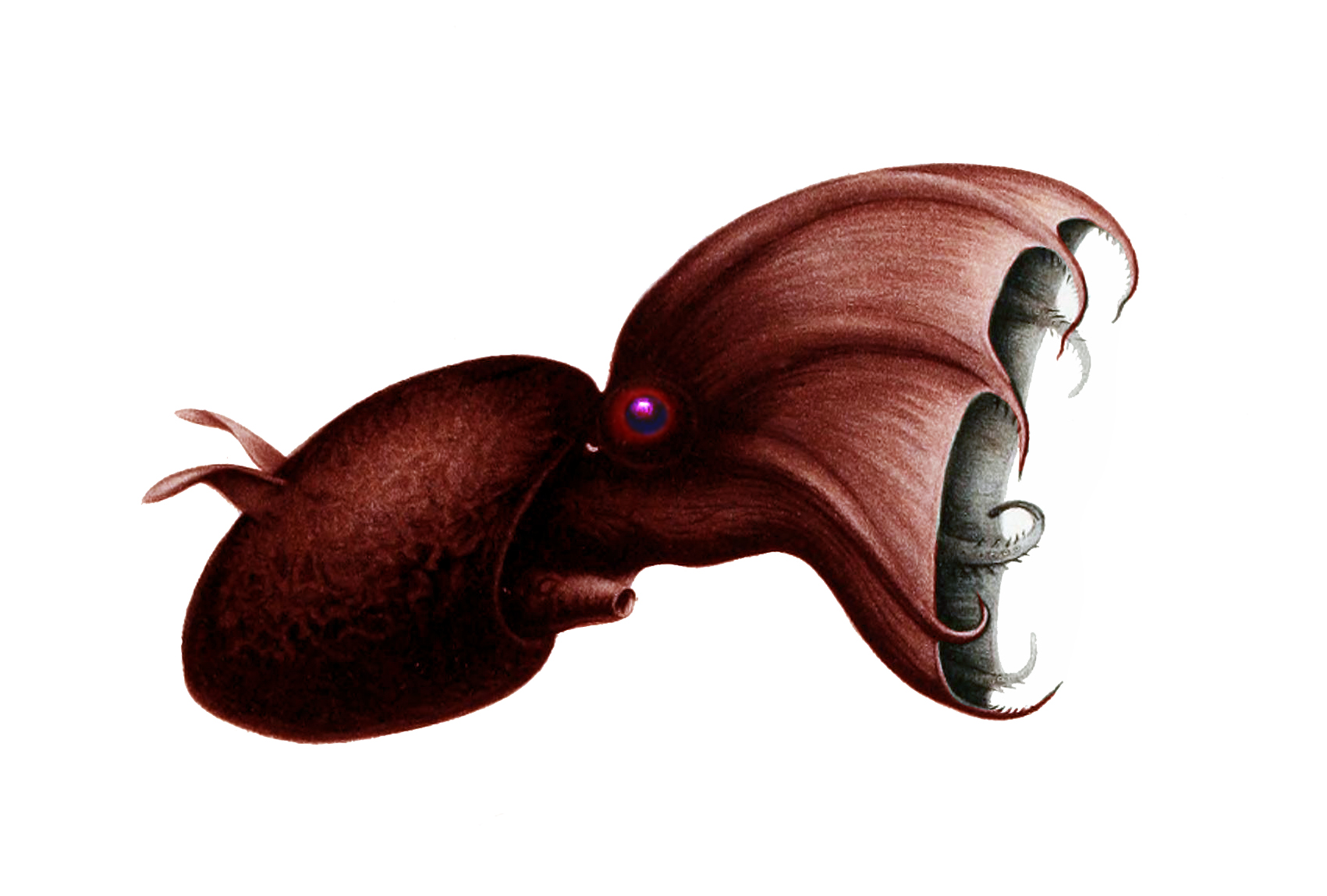
Despite its terrifying name, the vampire squid is neither a vampire nor technically a squid. Living in the oxygen minimum zones of tropical and temperate oceans, this creature has evolved one of the most alien defense mechanisms in the animal kingdom. When threatened, it can turn itself inside out, revealing spines and bioluminescent photophores that create a dazzling light show.
This deep-sea dweller has the largest eyes relative to body size of any animal on Earth, allowing it to detect the faintest traces of light in the abyss. Its web-like arms can be pulled over its body like a cloak, and it can produce clouds of bioluminescent mucus to confuse predators. The vampire squid represents an evolutionary link between octopuses and squids, making it a truly unique creature in Earth’s family tree.
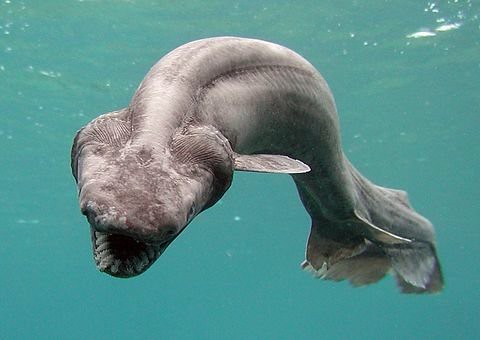
The Frilled Shark: Swimming Dinosaur
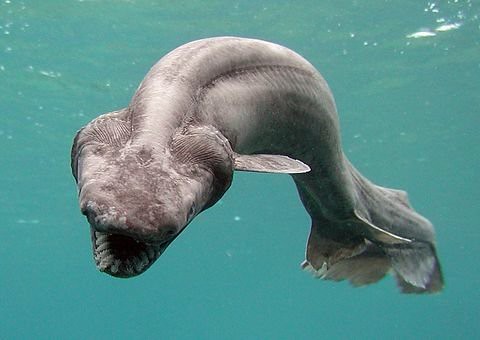
Any animal with long, transparent fangs and a light dangling from its chin will never feel “of this earth.” The snake-like body doesn’t help its case. The frilled shark is often called a “living fossil” because it has remained virtually unchanged for millions of years, resembling sharks that lived alongside dinosaurs.
This primitive shark has an eel-like body that can grow up to six feet long, with distinctive frilly gill slits that give it its name. Its jaw can unhinge like a snake’s, allowing it to swallow prey much larger than its head. Found in deep waters around the world, frilled sharks are rarely seen alive, making every encounter feel like a glimpse into Earth’s prehistoric past.
The Giant Isopod: Underwater Pillbug on Steroids
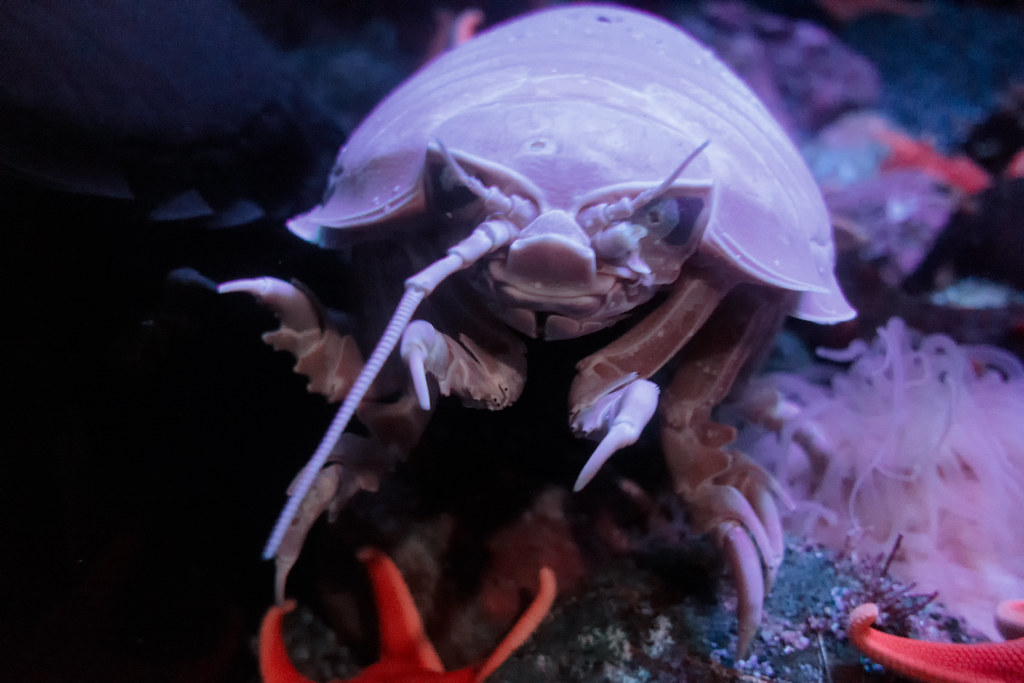
As with most deep-sea creatures, scientists haven’t been able to learn as much about the giant isopod as they’d like. That doesn’t change the fact that they’re dreadful to look at, though. These armored crustaceans look like pill bugs that have been enlarged by science fiction radiation, growing up to 20 inches long.
Giant isopods are related to the common pill bugs found in gardens, but their deep-sea lifestyle has transformed them into something far more alien. They can survive for years without food, entering a state of near-hibernation on the ocean floor. Their compound eyes and powerful claws make them efficient scavengers, feeding on whatever organic matter drifts down from the surface world above.
The Anglerfish: Living Nightmare with a Fishing Rod
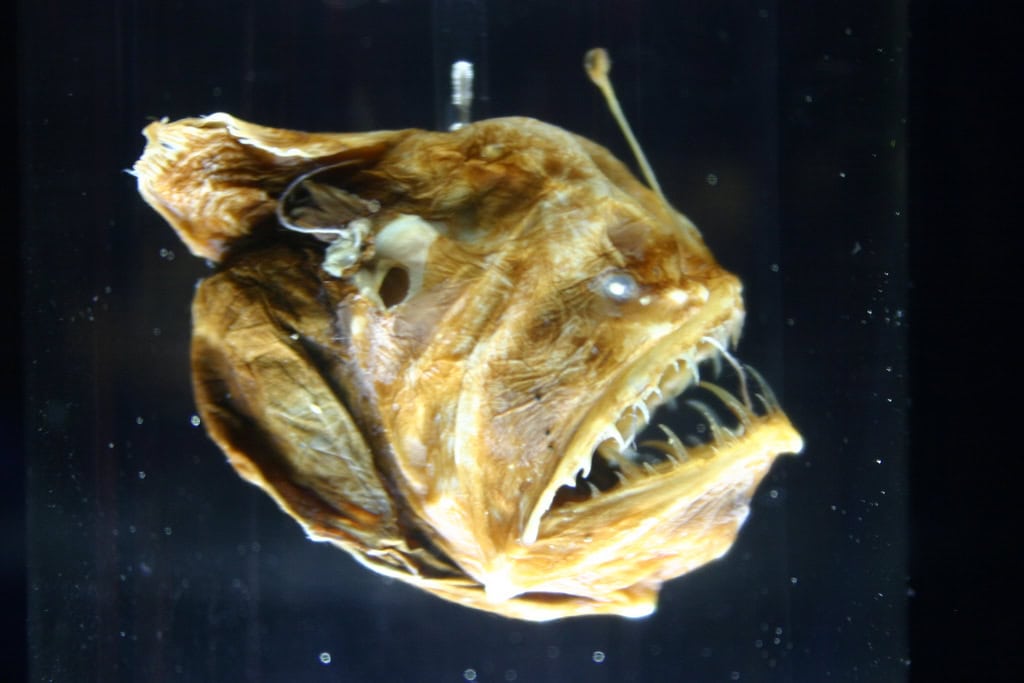
In the perpetual darkness of the deep sea, the anglerfish has evolved one of nature’s most ingenious hunting strategies. These fish carry their own fishing rod, complete with a glowing lure that dangles in front of their massive mouths. The bioluminescent light attracts curious prey directly into their waiting jaws.
What makes anglerfish even more alien is their bizarre reproductive strategy. The tiny male permanently fuses to the much larger female, essentially becoming a living sperm-producing organ. This ensures that in the vast darkness of the deep ocean, they never have to worry about finding a mate. Their expandable stomachs allow them to swallow prey larger than themselves, making them perfectly adapted predators of the abyss.
The Mantis Shrimp: Rainbow Warrior with Nuclear Punches
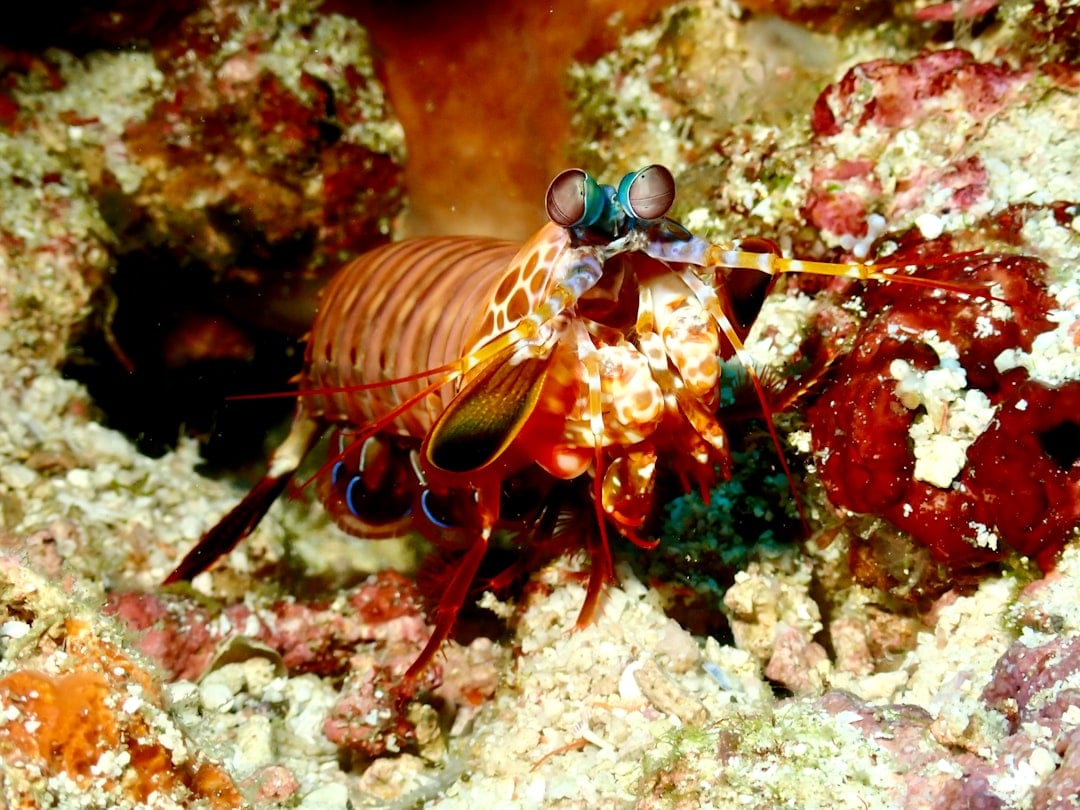
A shrimp that punches so hard and fast that the water boils around it? Oh yes, that’s real. The mantis shrimp isn’t actually a shrimp but rather one of the most formidable predators in the ocean. These colorful crustaceans possess the most complex eyes in the animal kingdom, capable of seeing polarized light and a spectrum of colors far beyond human perception.
Their club-like appendages can strike with the force of a bullet, creating cavitation bubbles that produce temperatures nearly as hot as the sun’s surface. This incredible punch can shatter aquarium glass and crack open shells with ease. With their alien-like stalked eyes that move independently and their rainbow-colored exoskeletons, mantis shrimp look like they were designed by an artist from another world.
The Blobfish: Misunderstood Alien of the Deep
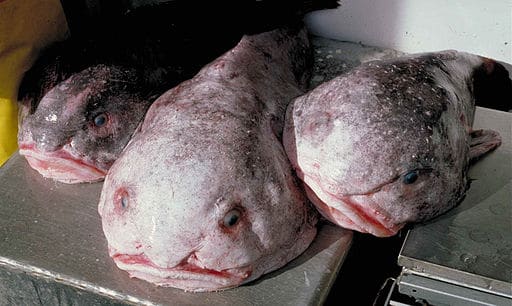
The blobfish has gained internet fame as one of the world’s ugliest animals, but this reputation is somewhat unfair. In its natural deep-sea habitat, where pressure is nearly 120 times greater than at sea level, the blobfish looks quite normal. It’s only when brought to the surface that its gelatinous body loses its shape, creating the blob-like appearance that made it famous.
This fish has evolved to live without a swim bladder or much muscle, instead relying on its jelly-like composition to maintain buoyancy in the deep ocean. Its alien appearance at surface pressure is actually a testament to how perfectly adapted it is to one of Earth’s most extreme environments, where few other creatures can survive.
Conclusion
These remarkable creatures remind us that we don’t need to look to the stars to find alien life – it’s all around us, hidden in the deepest oceans, the darkest caves, and the most remote forests of our own planet. Each of these animals represents millions of years of evolution, pushing the boundaries of what life can become when faced with extreme challenges and unique environments.
From the lightning-fast star-nosed mole to the regenerating axolotl, from the prehistoric frilled shark to the rainbow-colored mantis shrimp, these creatures challenge our understanding of biology and inspire wonder about the incredible diversity of life on Earth. They prove that truth really is stranger than fiction, and that our planet continues to surprise us with its endless capacity for creating the extraordinary.
What strikes me most about these alien-looking animals is how perfectly adapted they are to their environments, no matter how extreme or unusual those habitats might be. What do you think about these incredible creatures? Tell us in the comments.

As a little kid, I fell in love with nature, wildlife, and animals. Living in the USA, South Africa, Italy, China and Germany gave me the opportunity to discover the world's Wildlife. My favorite animals are Mountain Gorillas, Siberian Tigers, and Great White Sharks.
I'm a certified PADI Open Water Diver, went to Everest Base Camp and Trekked Gorillas in Uganda. I hold a Master of Science in Economics and Finance.
Please send any feedback to feedback@animalsaroundtheglobe.com
- 5 Unexpected Things That Make Your Dog Feel Loved - July 18, 2026
- 7 Snakes That Hunt in Daylight And 4 That Only Come Out at Night - July 18, 2026
- 10 Emotional Things Dogs Remember About Their Humans Forever - July 18, 2026