

Picture yourself trudging through scorching desert sands, parched and weary, when suddenly a vision appears on the horizon. Cascading greenery spills down terraced platforms like a waterfall of life, exotic flowers bloom against impossible heights, and the air itself seems cooler, fresher somehow. This is how ancient travelers might have felt encountering one of the most mysterious wonders ever recorded. Yet here’s the thing: nobody can prove these legendary gardens actually stood where history claims they did. In fact, mounting evidence suggests the most famous landmark of ancient Babylon might never have been in Babylon at all. Could centuries of scholars have been searching in entirely the wrong place? Let’s dive in.
A Wonder Lost Between Legend and Reality
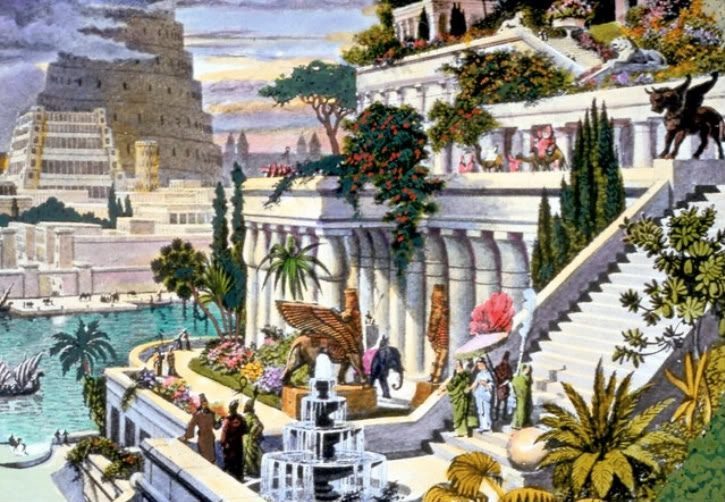
The Hanging Gardens stand alone among the Seven Wonders as the only one whose location has never been definitively established, with no archaeological evidence found in Babylon and no Babylonian texts mentioning them. Think about that for a moment. We’ve located the Great Pyramid, uncovered remnants of the Temple of Artemis, even found pieces of the Colossus of Rhodes beneath the waves. Yet this supposed masterpiece has vanished without a trace.
Ancient writers described them as a remarkable feat of engineering featuring ascending tiered gardens with diverse trees, shrubs, and vines resembling a large green mountain constructed of mud bricks. Greek historians painted vivid pictures of lush terraces rising roughly six stories high, watered by ingenious pumps that seemed to defy gravity itself.
The Traditional Tale: A King’s Gift of Love
According to legend, the gardens were built by King Nebuchadnezzar II for his Median wife Queen Amytis, who missed the green hills and valleys of her homeland. It’s a romantic story, honestly. A powerful monarch transforming the arid Mesopotamian landscape into a mountain paradise just to ease his homesick bride’s longing. The kind of gesture that makes for compelling history.
Only the Roman historian Josephus attributes construction to Nebuchadnezzar II, yet the king’s name has persisted in the gardens’ lore. However, here’s where things get suspicious. Nebuchadnezzar left many long and complete inscriptions documenting his works, yet none mention any garden. For a ruler who stamped his name on individual bricks, this silence feels deafening.
The Great Geographical Mix Up
Oxford scholar Stephanie Dalley has proposed that the gardens were actually constructed by Assyrian king Sennacherib for his palace at Nineveh, with the two sites becoming confused over intervening centuries. This isn’t some fringe theory either. Dalley spent nearly two decades decoding ancient cuneiform texts, and what she discovered challenges everything we thought we knew.
Dalley believes the gardens were built in Nineveh, about 300 miles north of Babylon, constructed by King Sennacherib in the early seventh century BCE, nearly a century earlier than scholars previously thought. The evidence? Sennacherib called his new palace and garden “a wonder for all peoples” in his own inscriptions. Sound familiar?
After the Assyrians conquered Babylon in 689 BCE, Nineveh was referred to as the “New Babylon,” and Sennacherib even renamed city gates after those of Babylon’s entrances. So maybe ancient Greek writers simply got their wires crossed, attributing Sennacherib’s masterpiece to the more famous city of Babylon.
Engineering Marvels That Actually Existed
Let’s be real: whether in Nineveh or Babylon, creating such gardens would have demanded extraordinary innovation. The canal system stretched over 50 kilometers into the mountains, with an enormous aqueduct at Jerwan constructed of over two million dressed stones. That’s not mythology. That’s verifiable archaeology.
Sennacherib describes the making and operation of screws to raise water in his garden. The gardens were watered by a novel irrigation system, perhaps making early use of what would eventually be known as the Archimedes screw. These bronze water-raising devices predated Archimedes himself by centuries, representing technological leaps that would influence engineering for millennia.
The gardens were described as having exceptional irrigation, roofed with stone balconies layered with materials like reeds, bitumen, and lead so water wouldn’t seep through the terraces. Every detail speaks to sophisticated hydraulic knowledge and meticulous construction.
Why Babylon Stays Silent
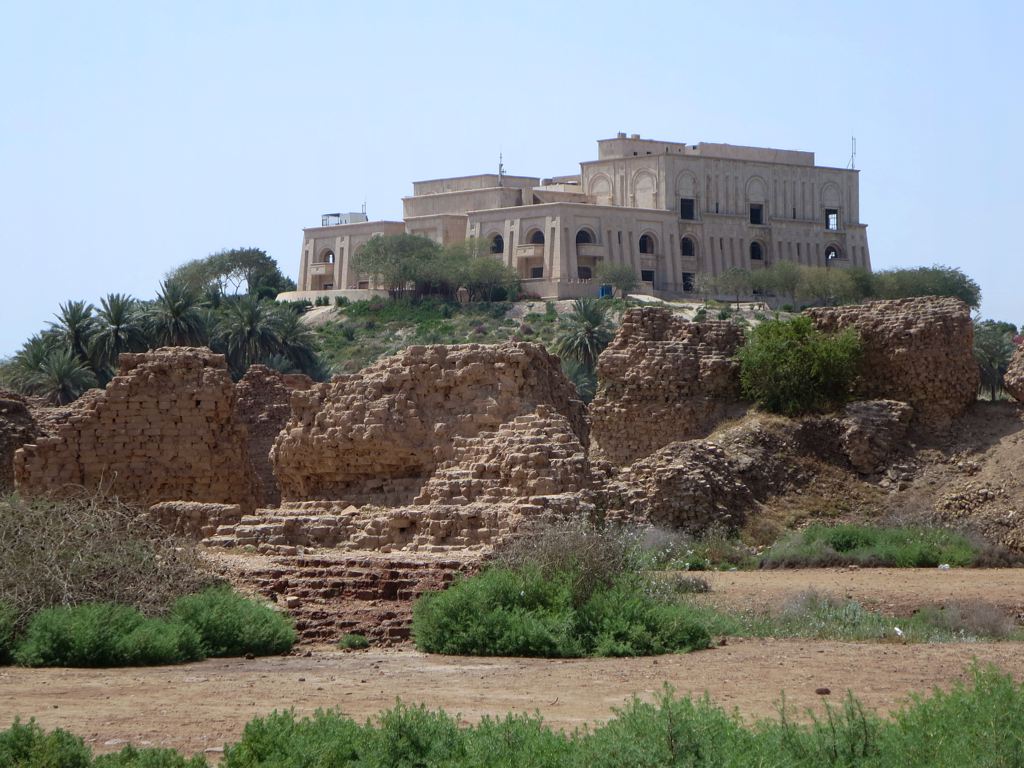
The case against Babylon’s claim grows stronger the deeper you dig. Scholars have found no trace of the garden in Babylon’s ruins or copious cuneiform texts, and the city’s desert location would have made it improbable for a verdant garden since there are no tributaries to lead enough water from the Euphrates. Watering such extensive terraces from the flat, arid plains surrounding Babylon would have been nearly impossible with ancient technology.
Nineveh, situated along the Tigris River in present-day northern Iraq, was in a mountainous area with considerably wetter climate than Babylon. Geography matters. Creating elaborate gardens in a region naturally suited for them makes infinitely more sense than forcing them into hostile desert terrain.
Archaeological silence is equally damning. Systematic excavations at Babylon began in 1899, and although many structures like double walls and the Ishtar Gate were found, there is no trace of the legendary gardens. German archaeologists spent twenty years searching. They found nothing.
A Wonder Reimagined for Modern Understanding

So what does this reimagining mean for how we understand ancient wonders? It suggests that legends evolve, details blur, and even educated ancient writers working centuries after events could get crucial facts wrong. Greco-Roman sources tended to present historical detail interwoven with myth, and their recounting of Mesopotamian civilizations often confused Assyria and Babylonia.
The Hanging Gardens remain one of the most captivating mysteries of the ancient world, with their location, patron, purpose, and fate ultimately unknowable, their secrets tantalizingly just out of reach. Yet perhaps that’s not quite true anymore. Maybe we’ve simply been looking through the wrong lens all along.
The gardens likely did exist, just not where tradition placed them. They represent Sennacherib’s ambition to transform Nineveh into a new Babylon, a rival capital worthy of wonder. Excavators’ drawings of reliefs from Sennacherib’s palace show striking similarities to ancient descriptions of the Hanging Gardens, clearly corresponding to details given in Greek sources.
Conclusion: Rewriting Ancient History

The Hanging Gardens of Babylon might be the greatest case of mistaken identity in archaeological history. Centuries of searching the wrong city, reading romantic legends as literal truth, and assuming ancient sources were infallible have obscured what may be a more fascinating reality. Sennacherib’s achievements in Nineveh showcase Assyrian engineering prowess that deserves recognition beyond the shadow of Babylonian fame.
Whether gardens cascaded down terraces in Babylon, Nineveh, or perhaps never existed at all, they’ve captured human imagination for over two millennia. They remind us that even our most cherished historical certainties deserve scrutiny. Sometimes the greatest discoveries come not from finding what we seek, but from questioning where we’ve been looking.
What do you think? Does the evidence convince you that these legendary gardens actually belonged to Assyria all along? The debate continues, and who knows what future excavations might finally reveal.
