
Walk quietly through the African savanna at dawn and you might sense something you can’t quite name. The air feels thick with information. Herds separated by kilometers are somehow moving in sync. Elephants across the landscape are responding to signals that, to human senses, simply do not exist.
What’s happening is one of the most sophisticated communication systems in the animal kingdom. Elephants have evolved multiple overlapping channels, most of them invisible or inaudible to us, through which they share warnings, coordinate movement, find mates, and maintain deep social bonds. Understanding how they do it changes how you see these animals entirely.
The World Below Human Hearing: Infrasound and the Rumble That Travels Miles
Most elephant conversation happens at frequencies we simply cannot detect. Elephants can produce infrasonic calls which occur at frequencies less than 20 Hz, and these calls are especially important for long-distance communication in both Asian and African elephants. The rumble of an elephant isn’t just a sound. It’s a message sent across the landscape with remarkable efficiency.
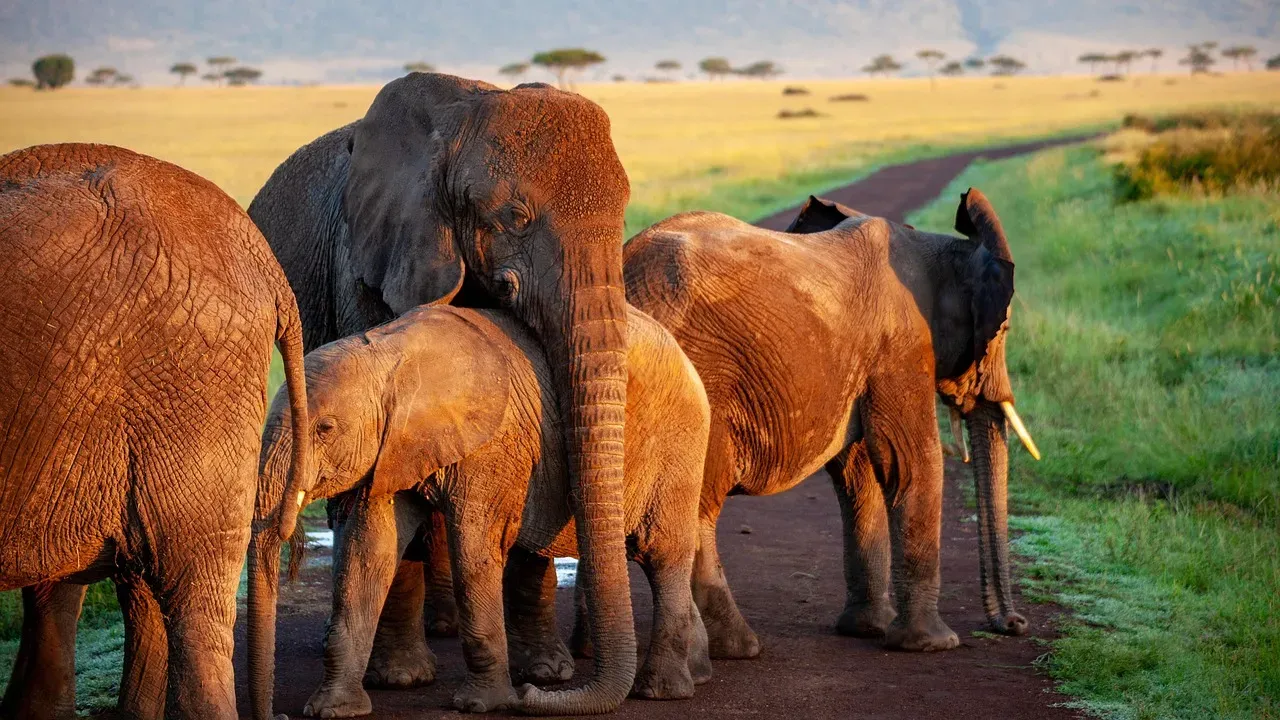
Because infrasonic sound waves attenuate slowly, they can travel farther than higher-pitched calls, in some cases up to 10 km, making them ideal for long-distance messaging across wide open terrain. To put that in perspective, an elephant on one side of a large national park can, under the right conditions, be heard by another on the far side.
Unlike human vocal production, which relies primarily on the larynx, elephants use their massive larynx in combination with specialized vocal folds to produce these low-frequency sounds. The exceptional size of an elephant’s larynx allows for the production of these deep, rumbling vocalizations, and their vocal folds can vibrate at extraordinarily slow rates, creating sound waves with very long wavelengths that correspond to infrasonic frequencies.
Infrasound travels farther at dawn and dusk due to temperature inversions, and wind and humidity can extend or shorten communication ranges. Elephants appear to be aware of this. They appear to intuitively understand these atmospheric conditions, often timing their long-distance calls during dawn hours when transmission efficiency is maximized.
Listening Through Their Feet: The Science of Seismic Communication
Elephants are known to communicate with seismics, vibrations produced by impacts on the earth’s surface or acoustical waves that travel through it, and they appear to rely on their leg and shoulder bones to transmit the signals to the middle ear. This is not a passive process. It’s an active, finely tuned sensory skill.
The acoustic component of a rumble propagates through the air as a three-dimensional wave and is attenuated through foliage fairly quickly, while the seismic component propagates through the ground as a two-dimensional Rayleigh wave and therefore travels a longer distance compared to the acoustic component. The ground, in other words, is a better carrier than the air in certain conditions.
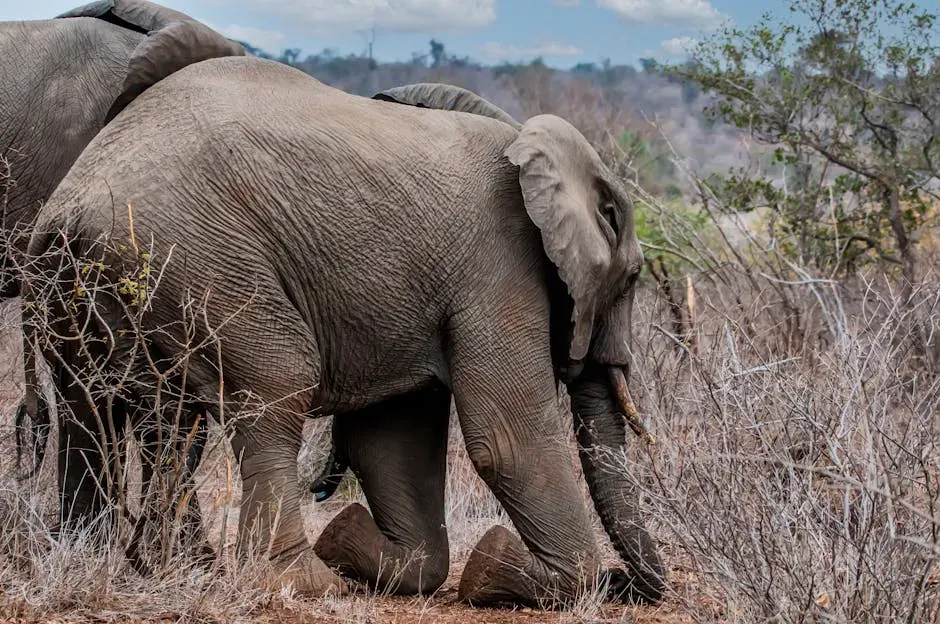
When detecting seismic signals, the animals lean forward and put more weight on their larger front feet – this is known as the “freezing behaviour”. It’s a striking sight: a large animal going utterly still, essentially pressing its body against the earth to pick up distant signals.
In areas with little to no anthropogenic seismic noise, frequencies around 20 Hz are relatively noise-free, other than vibrations associated with thunder or earth tremors, making it a reasonably quiet communication channel, and this is the range in which elephants may communicate seismically. That channel, however, is increasingly compromised by human infrastructure.
Names, Gestures, and the Surprising Complexity of Elephant Vocabulary
Elephant communication is not just about distance. Up close, it reveals a richness that researchers are still working to fully decode. In 2024, machine learning was used to investigate elephants’ personal names, and research published in Nature Ecology and Evolution demonstrated that elephants call each other by distinct vocalized names and respond when they hear others call their name. Researchers analyzed hundreds of elephant calls recorded over more than a year in Kenya, applying machine learning to distinguish specific sounds by which elephants call each other.
Another particularly interesting aspect the researchers discovered is that, unlike in dolphins and parrots, elephant names did not appear to be imitations of the receiver’s own vocalizations. The ability to name individuals without relying on imitation is an important feature of human language. The implications of that finding are genuinely significant.
Elephants used 38 gesture types almost exclusively when a visually attentive experimenter was present, demonstrating audience directedness. They persisted in gesturing more when their goal was partially as compared with fully met, and they elaborated their gesturing when their goal was not met. That’s not instinct. That’s flexible, goal-directed communication.
Research suggests that elephants, like parrots, bats, and dolphins, may use vocal learning to develop new communication signals for maintaining complex individual-specific social relationships. Elephants learn to imitate sounds that are not typical of their species, the first known example after humans of vocal learning in a non-primate terrestrial mammal.
Touch, Scent, and the Full Sensory Conversation
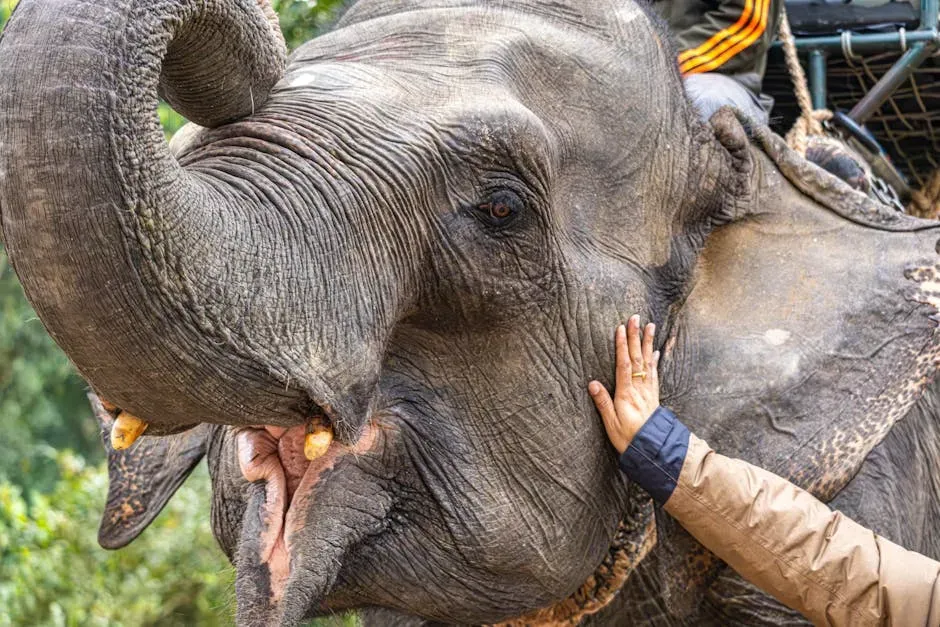
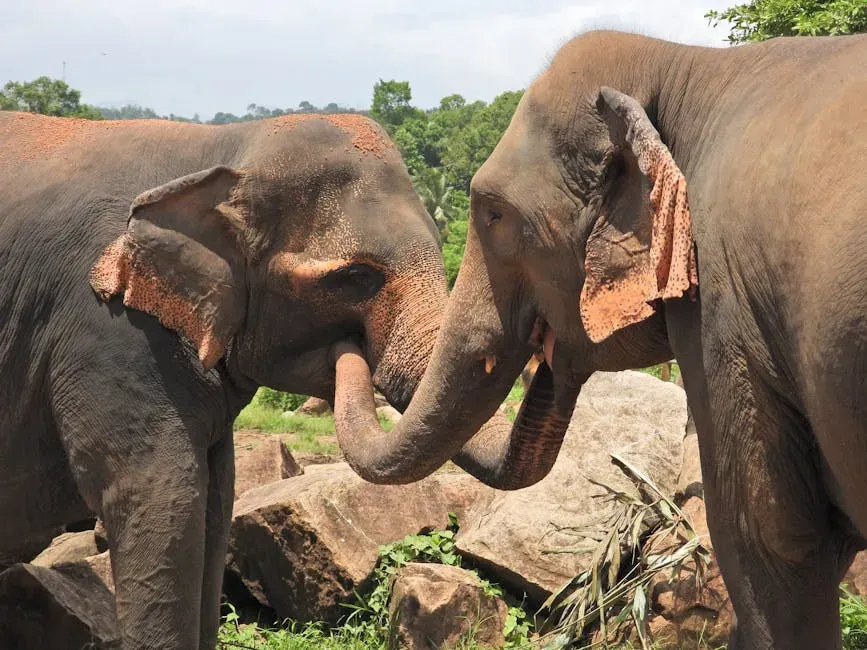
Infrasound grabs the headlines, but elephant communication is genuinely multimodal. Elephants communicate via touching, visual displays, vocalizations, seismic vibrations, and semiochemicals, and individual elephants greet each other by stroking or wrapping their trunks. Each channel carries different kinds of information, often layered together in real time.
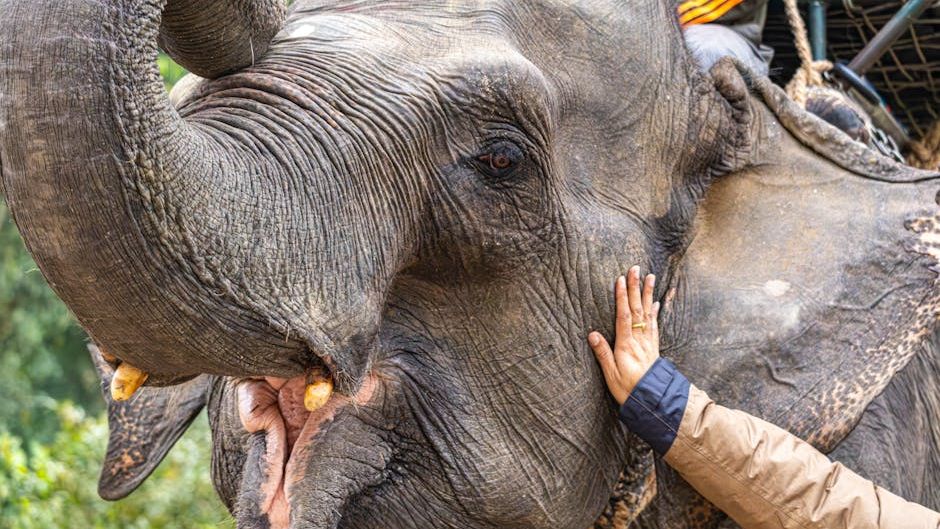
Touching is especially important for mother-calf communication. When moving, elephant mothers will touch their calves with their trunks or feet when side-by-side, or with their tails if the calf is behind them. If a calf wants to rest, it will press against its mother’s front legs, and when it wants to suckle, it will touch her breast or leg. The tactile bond between a mother and her young is constant and precise.
Elephants also produce chemical signals from temporal glands and other body parts, which others investigate with their trunks to gather information about reproductive status or identity. A single trunk-touch during a greeting can carry a remarkable amount of biological information.
When elephants in the wild are confronted by a potential enemy or predator, they may show their annoyance by extending their ears outwards at a 90-degree angle from their body to appear larger, and the spreading of ears may also be seen when elephants feel excited, surprised, or alarmed. Visual signals, in short, serve as punctuation in a conversation already rich with sound and scent.
Why This Matters: Social Bonds, Matriarchs, and Conservation

None of this communication exists in isolation. It serves a deeply social species whose survival depends on the quality of its information network. Research has focused primarily on using playback experiments to study social knowledge in African elephants, demonstrating the vital role of older matriarchs as repositories of both social and ecological information for their family groups. The matriarch is, in a very real sense, the memory of the herd.
Recent findings show that social disruption has very significant negative effects on knowledge acquisition in elephant families, and that elephants can determine ethnicity, gender, and age from acoustic cues in human voices. Disrupt the group, and you disrupt the flow of knowledge that keeps younger elephants alive.
Noise pollution from roads and industry disrupts infrasonic signals, quietly severing connections that elephant families depend on for coordination and survival. Recent research suggests that elephants can also detect human-generated seismic noise from vehicles and machinery and may interpret it as risk cues, adjusting their behavior accordingly, which highlights how sensitive and integral ground-based communication is to their survival.
Complex sounds generated by conspecifics can be interpreted over ranges of kilometers to aid in social cohesion, definition of territory, reproduction, resource utilization and avoidance of predators. That entire web of coordination becomes fragile the moment human activity drowns out the signals that hold it together.
Conclusion
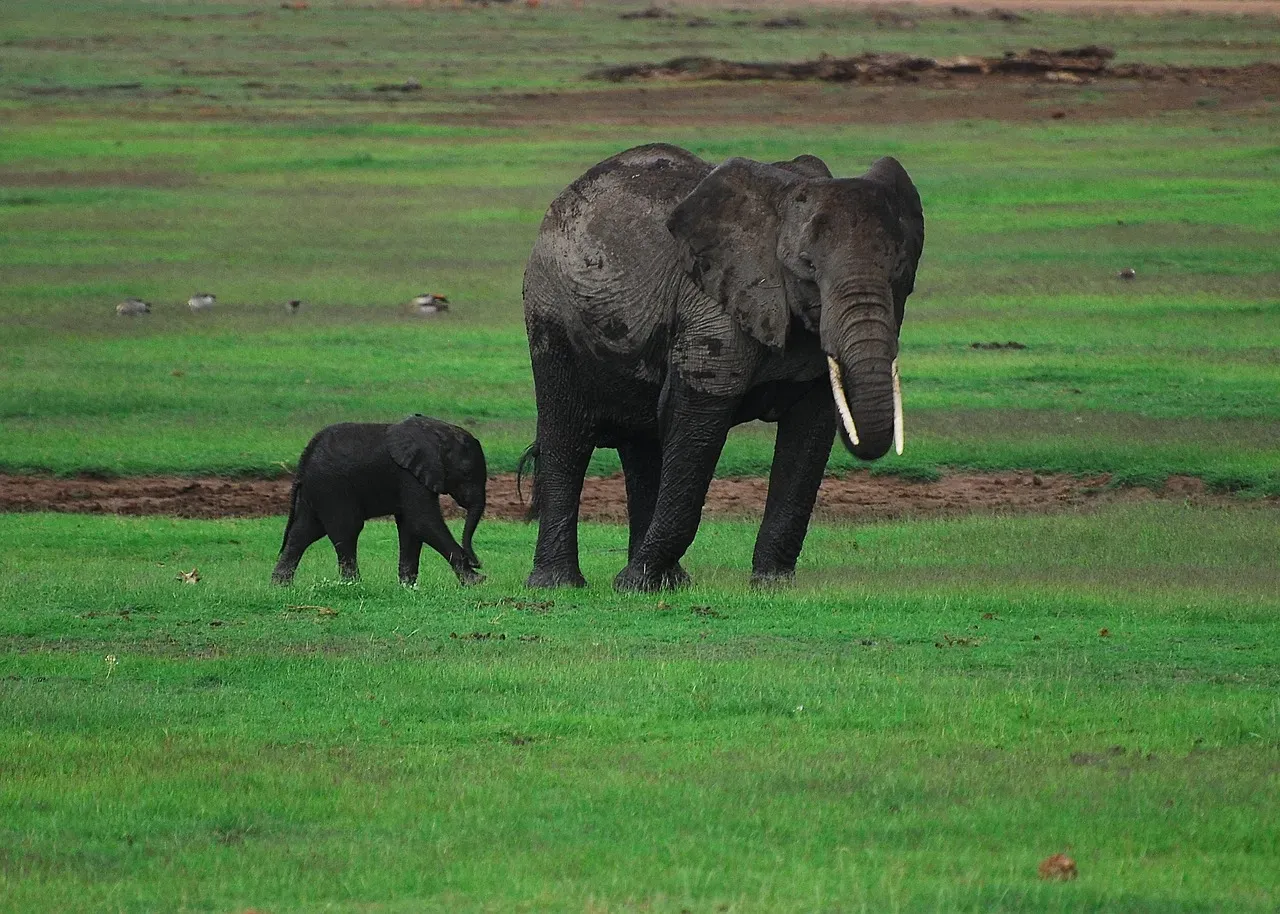
What science has uncovered about elephant communication over the past few decades is genuinely humbling. These animals have been talking to one another across miles of terrain, through solid earth, in frequencies beyond our hearing, for far longer than we’ve been able to listen.
The more carefully researchers look, the more they find: names, goal-directed gestures, vocal learning, seismic listening, chemical memory. Each discovery adds another layer to a picture that keeps growing more complex.
Perhaps what’s most striking is how much of elephant social life depends on communication channels that are silent to us by default. They were never mute. We simply hadn’t learned to hear them yet. The real question now is whether, having finally begun to understand their language, we’ll do enough to protect the quiet in which it can still be spoken.
