
Imagine walking through a forest so ancient, so layered with life, that every single step could place your foot beside a creature no human has ever named. That is not a fantasy. It is the honest, sobering reality of Earth’s tropical rainforests in 2026. These green cathedrals of biodiversity are so staggeringly complex that science, for all its tools and ambition, has barely scratched the surface of what lives within them.
The numbers alone are enough to make your jaw drop. The sheer scale of what we still don’t know about life on this planet is, frankly, a little humbling. So let’s dive in, because what lies hidden in the world’s rainforests is far more astonishing than most people ever dare to imagine.
A Universe Hiding in Plain Sight: How Vast Is the Unknown?
Here’s the thing that genuinely keeps scientists up at night. In the best-case scenario, we know only about one in five of Earth’s species. The other roughly four out of five remain completely undiscovered. Think about that for a moment. We’ve been cataloguing life on Earth for centuries, and we are still operating with only a fraction of the full picture.
Although rainforests cover less than two percent of Earth’s surface, they are home to an estimated half of all terrestrial species. The exact number of species inhabiting the world’s tropical rainforests remains unknown, with estimates ranging from three to fifty million. That gap between three and fifty million is not a rounding error. It’s a testament to how much we still genuinely don’t know.
Estimates vary, with between about two fifths and three quarters of all biotic species considered indigenous to the rainforests. There may be many millions of species of plants, insects and microorganisms still undiscovered in tropical rainforests. We are, in a very real sense, living next to a biological mystery the size of a continent.
Scientists estimate that there are more than fifty million different species of invertebrates living in rainforests alone. One scientist found fifty different species of ants on a single tree in Peru. It is said you would probably only need a few hours of poking around in a rainforest to find an insect unknown to science. I know that sounds crazy, but it’s absolutely true.
Recent Discoveries That Will Leave You Speechless
The pace of new discoveries in recent years has been nothing short of remarkable. A Conservation International expedition into the Alto Mayo Landscape in Peru uncovered 27 species entirely new to science, including four new mammals, eight fish, three amphibians and ten butterfly species. The discoveries are remarkable given the region’s high population density. This wasn’t some remote, untouched wilderness. People live there.
Among those discoveries was a bizarre “blob-headed” fish whose unusual head structure remains a complete mystery to scientists. Three new amphibians were also identified, including a rainfrog, a narrow-mouthed frog, and a climbing salamander. A blob-headed fish. In a region with hundreds of thousands of human inhabitants. Honestly, that’s incredible.
Scientists in Brazil’s Atlantic Forest described a remarkable new species of frog measuring just under seven millimeters in length, roughly the size of a pencil eraser. Unlike other similarly tiny frogs that often struggle with balance, this species has maintained its inner ear structure, allowing it to jump gracefully up to thirty-two times its body length. The discovery highlights both the region’s rich biodiversity and the urgent need for conservation, as this critically threatened ecosystem now stands at just thirteen percent of its original extent.
A brand new species of ground-dwelling bird was also discovered in the mountains of Brazil’s Serra do Divisor National Park. The researchers named it Tinamus resonans, from the Latin word meaning sounding back or resounding. The new tinamou species is restricted to a narrow elevational range and estimated to have a population of only about 2,100 individuals. Discovered just recently, and already potentially at risk. That is the bittersweet reality of rainforest science right now.
The Rainforest Canopy: Earth’s Most Mysterious Frontier
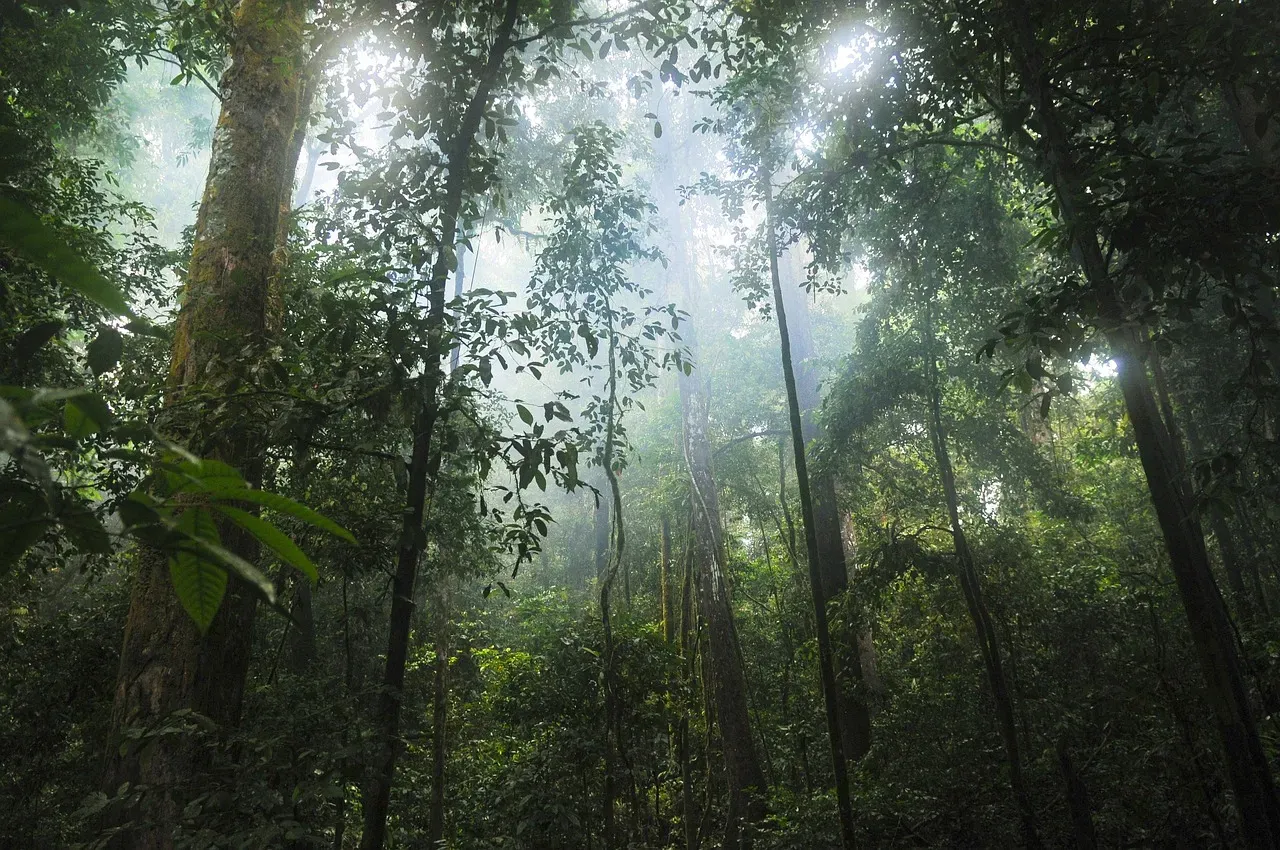
Scientists have long suspected the richness of the canopy as a habitat, but have only recently developed practical methods of exploring it. As far back as 1917, naturalist William Beebe declared that another continent of life remains to be discovered, not upon the Earth, but one to two hundred feet above it. Over a century later, that continent is still largely uncharted.
The canopy system characteristic of tropical rainforests significantly enhances biodiversity by creating diverse microhabitats that provide food, shelter, and new opportunities for species interactions. It is estimated that roughly seventy to ninety percent of rainforest life exists within the trees. The forest floor, the part most people imagine, is actually not where most of the action is. It’s all happening above your head.
Tropical rainforest canopies shelter a deeply under-explored reservoir of biodiversity. In recent years, the sequencing of DNA fragments from environmental samples, known as eDNA, has revolutionized biomonitoring. By sampling rainwash eDNA in just two one-hectare plots in the Amazon, researchers were able to detect 170 plant taxa, 72 vertebrate taxa including mammals, birds and amphibians, and 313 insect taxa including mosquitoes, ants and beetles. That is an astonishing number of species from a patch of forest barely bigger than a soccer field.
By equipping drones with a specially designed robotic arm, researchers can now safely and efficiently gather eDNA samples from the canopy. This pilot project, a collaboration involving ETH Zurich and the environmental NGO Wilderness International, is leveraging the power of drones to collect environmental DNA from previously inaccessible areas in the treetops of rainforests. Science is getting creative. Honestly, it has no choice.
Where the Hidden Species Are Concentrated
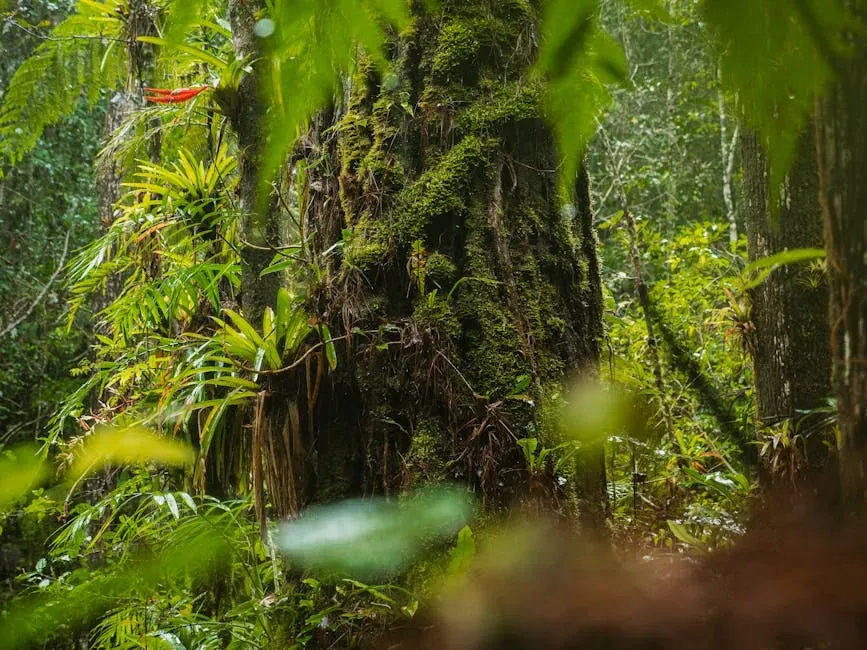
Maps of undiscovered species show that tropical forests in countries like Brazil, Indonesia, Madagascar and Colombia hold the most considerable amount of unknown species, accounting for about a quarter of potential discoveries. These are the hotspots. The biological dark matter of our planet, concentrated in green, rain-soaked corridors of the tropics.
Research has determined that tropical forests harbor roughly three fifths of global terrestrial vertebrate species, more than twice the number found in any other terrestrial biome on Earth. Up to nearly a third of global vertebrate species are endemic to tropical forests, with more than one in five of those species already at risk of extinction. These are not just statistics. Each number represents a living being that exists nowhere else on the planet.
A team of botanists from Oxford University and the University of the Philippines made a recent discovery during an expedition to the remote Barangay Balbalasang rainforest on the island of Luzon. This almost impenetrable wilderness takes days to reach and has to be hacked through by machete. Many new species remain undocumented in the world’s “plant data darkspots,” representing up to roughly one in seven of the world’s flora. Think about that the next time you look at a map and assume the planet has no more secrets.
Scientists in Peru found three new frog species in the Andes Mountains during expeditions between 2021 and 2024, hiking for hours at night through dangerous, remote areas with steep cliffs and unpredictable weather, searching with headlamps for amphibians. They found species with bumpy skin and high-pitched sounds, black spots on legs, and one measuring less than an inch long. The dedication required to find these creatures is extraordinary. These scientists are, in every sense, explorers.
A Race Against Time: Discovery vs. Destruction
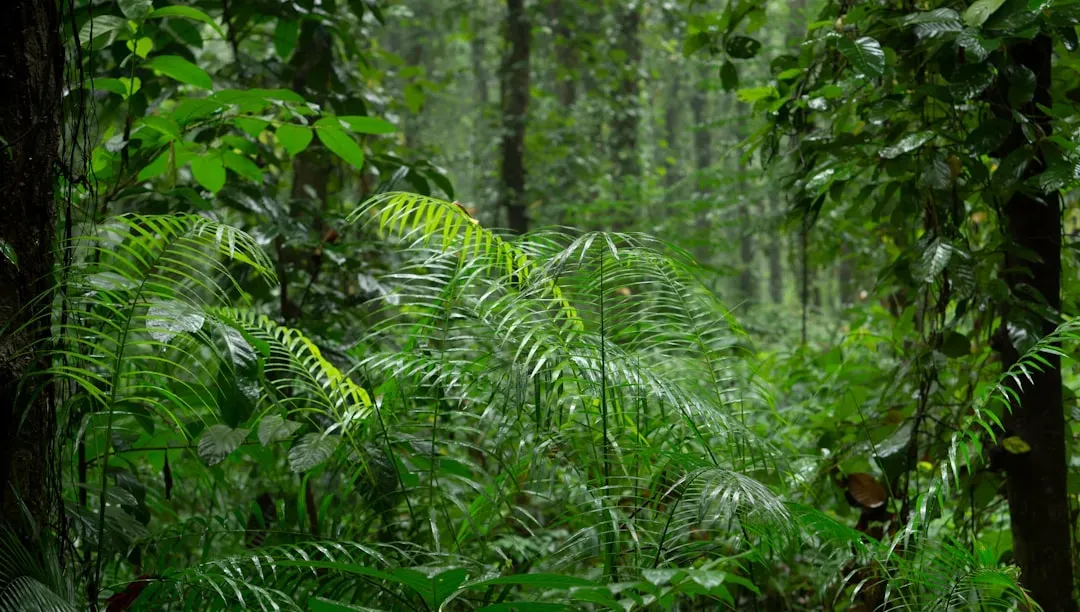
Undescribed species account for somewhere between roughly one sixth and nearly three fifths of current extinctions, depending on the organism under consideration. Let that sink in. Species are going extinct before we even know they exist. We are losing chapters from a book we haven’t even opened yet.
An estimated 137 species of life forms are driven into extinction every single day in the world’s tropical rainforests. The forces of destruction, including logging and cattle ranching, have all contributed to the loss of millions of acres of tropical rainforest. Every tree that falls could be the last home of something we never named. That thought is not alarmist. It is mathematical.
Roughly seventy percent of the plants identified by the National Cancer Institute as useful in cancer treatment are found only in the rainforest. Drugs used to treat leukemia, Hodgkin’s disease and other cancers come from rainforest plants, as do medicines for heart ailments, hypertension, arthritis and birth control. Yet fewer than one percent of tropical forest species have been thoroughly examined for their chemical compounds. The potential cure for diseases we still struggle to treat today could be growing quietly in a forest nobody has surveyed yet.
Beyond newly discovered species, expeditions in the Alto Mayo landscape also observed 49 species considered threatened by the IUCN Red List, including two critically endangered primates, two endangered bird species and an endangered harlequin frog. To document so many species, scientists complemented traditional survey methods with technologies such as camera traps, bioacoustics sensors and environmental DNA collected from the water. The tools are improving. The question is whether time is on our side.
Conclusion: The Greatest Story Never Fully Told
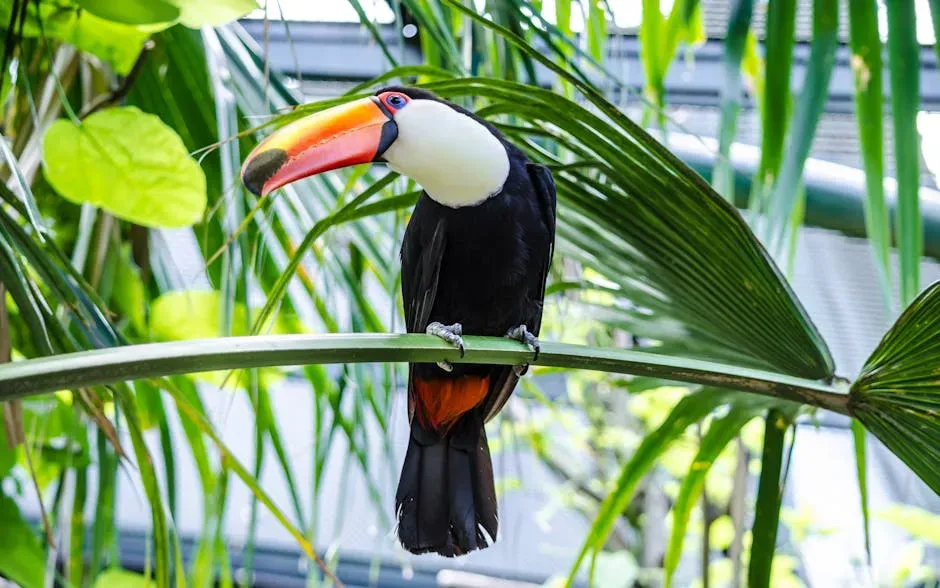
The world’s rainforests are not just lungs of the Earth or backdrops for nature documentaries. They are living libraries, and most of the books have never been read. Every expedition into the Amazon, the Congo, Borneo, or Madagascar turns up species that rewrite what we thought we knew about life on this planet. A pencil-eraser frog. A tame mountain bird. A blob-headed fish. These are not curiosities. They are proof that nature is endlessly inventive and endlessly patient, waiting in the understory for someone curious enough to look.
The uncomfortable truth is that we are in a genuine race. It is estimated that there remain undiscovered roughly 160 species of land mammals and 3,000 species of amphibians, the majority in rainforests. We are in a race to discover these species before they go extinct. That race has no finish line, only the ongoing choice between curiosity and indifference.
So here is the question worth sitting with: if we are already losing species we haven’t named, what else might we be losing without ever knowing what we had? What do you think? Drop your thoughts in the comments below.
