
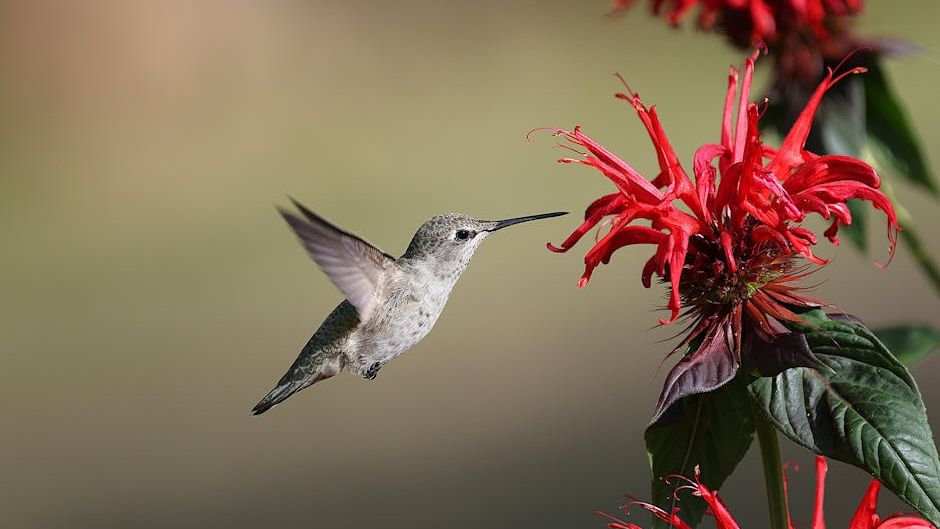
Somewhere along a vine-draped forest edge in Cuba, a creature the size of a large insect hovers at a flower, drawing nectar with a tongue that flicks in and out up to thirteen times per second. Most first-time observers mistake it for a moth or a bee. It’s neither. It’s a bird – the smallest bird on Earth.
The bee hummingbird, also known as the zunzuncito or Helena hummingbird, is a species native to the island of Cuba in the Caribbean. Its existence challenges what most of us think a bird can be. Small enough to sit comfortably on a fingertip, it carries a kind of quiet biological intensity that is genuinely hard to overstate.
Just How Small Is Small?
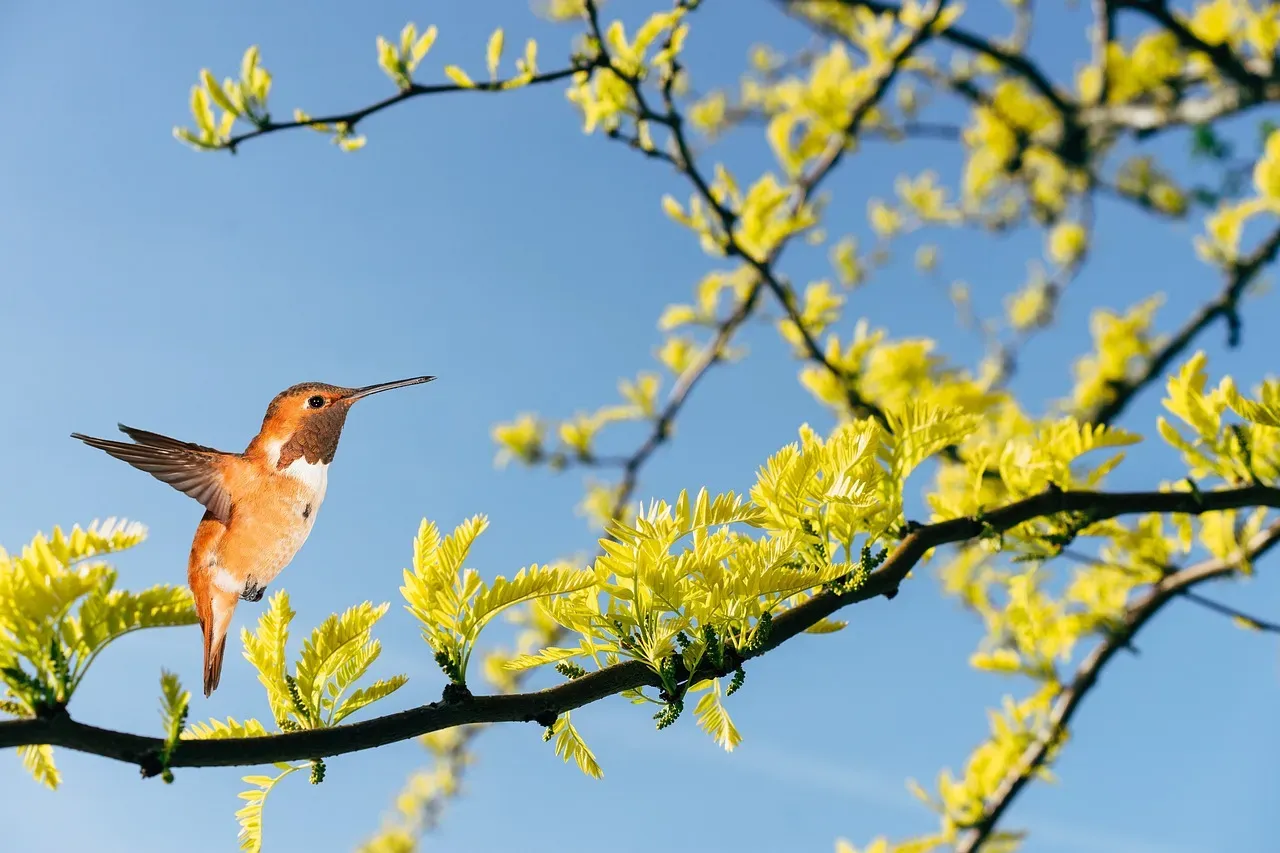
At the other end of the size spectrum from every other bird on the planet, the bee hummingbird is endemic to Cuba and is the world’s smallest bird, weighing less than a tenth of an ounce – less than a U.S. penny – and measuring just barely over two inches long from bill tip to tail tip.
Females weigh around 2.6 grams and measure about 6.1 centimeters in length, and are slightly larger than males, which have an average weight of just 1.95 grams and a length of 5.5 centimeters. To put that in perspective, a standard U.S. penny weighs 2.5 grams – so a male bee hummingbird weighs less than a single coin.
Enshrined by Guinness World Records as the smallest bird in the world, bee hummingbird males weigh less than 2 grams, making them also the smallest warm-blooded animals on the planet. That distinction belongs not just to ornithology but to all of vertebrate biology.
The bee hummingbird has also been described as the smallest known dinosaur – a characterization based on the recognition that birds are a living form of theropod dinosaurs, and no smaller bird or non-avian dinosaur has been found in the fossil record. It’s a genuinely strange thing to consider while watching one hover at a garden flower.
A Portrait in Iridescent Color
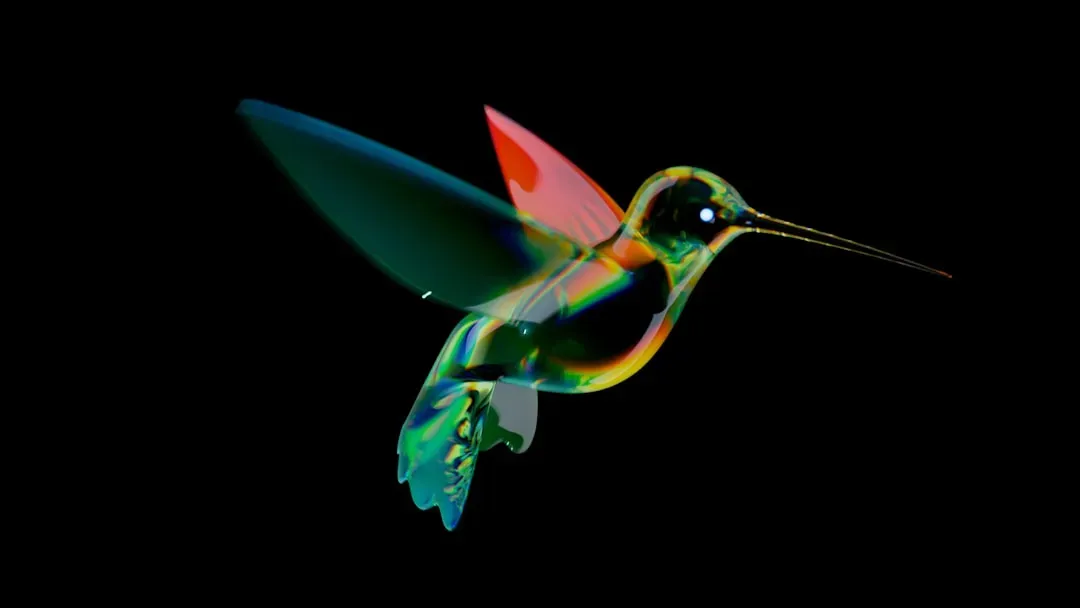
The male has a green pileum and bright red throat, an iridescent gorget with elongated lateral plumes, bluish upper parts, and the rest of the underparts are mostly greyish white. In direct sunlight, the colors shift and flash depending on the angle, making the bird look almost metallic.
The bee hummingbird’s feathers have iridescent colors, which are not always noticeable, but depend on the viewing angle. It’s a quality shared by many hummingbirds, though few carry it in such a concentrated, brilliant package.
Females are slightly larger but less colorful, similar to non-breeding males, with a green back, pale grey underparts, and white-tipped tail feathers. Compared to other small hummingbirds, which often have a slender appearance, the bee hummingbird looks rounded and plump. That roundness, combined with its buzzing flight, is precisely what leads so many observers to initially mistake it for an insect.
Flight, Physics, and a Heart That Won’t Slow Down
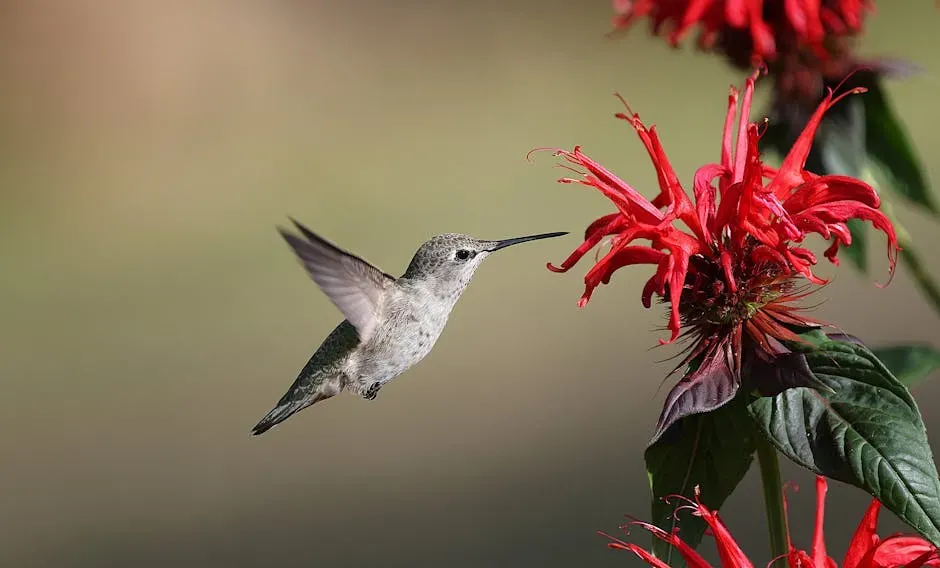
Bee hummingbirds exhibit remarkable agility, capable of beating their wings up to 80 times per second during normal flight and up to 200 times per second during courtship displays. That upper figure is barely comprehensible. At 200 beats per second, the wings become a blur that even high-speed cameras struggle to resolve.
Bee hummingbirds are recorded as having the second fastest heartbeat of any animal. It can reach as much as 1,260 beats per minute, made possible by a breath rate of up to 250 breaths per minute. The body is essentially running at a continuous maximum.
Like all hummingbirds, they are swift, strong fliers and are able to fly straight up, down, backward, and even upside down. When size is taken into account, the amount of energy required by a bee hummingbird each day is ten times the amount spent by marathon runners. That metabolic cost is what drives almost every other behavior this species exhibits.
This bird cannot stay warm enough at night – it is simply too small to maintain its body temperature. At night, it uses a special adaptation called torpor, a semi-migration-like state that reduces its energy needs. Its daytime body temperature is around 104 degrees Fahrenheit, the highest of all birds, while at night it drops to approximately 66 degrees Fahrenheit to conserve energy.
A Diet Built Around Constant Motion
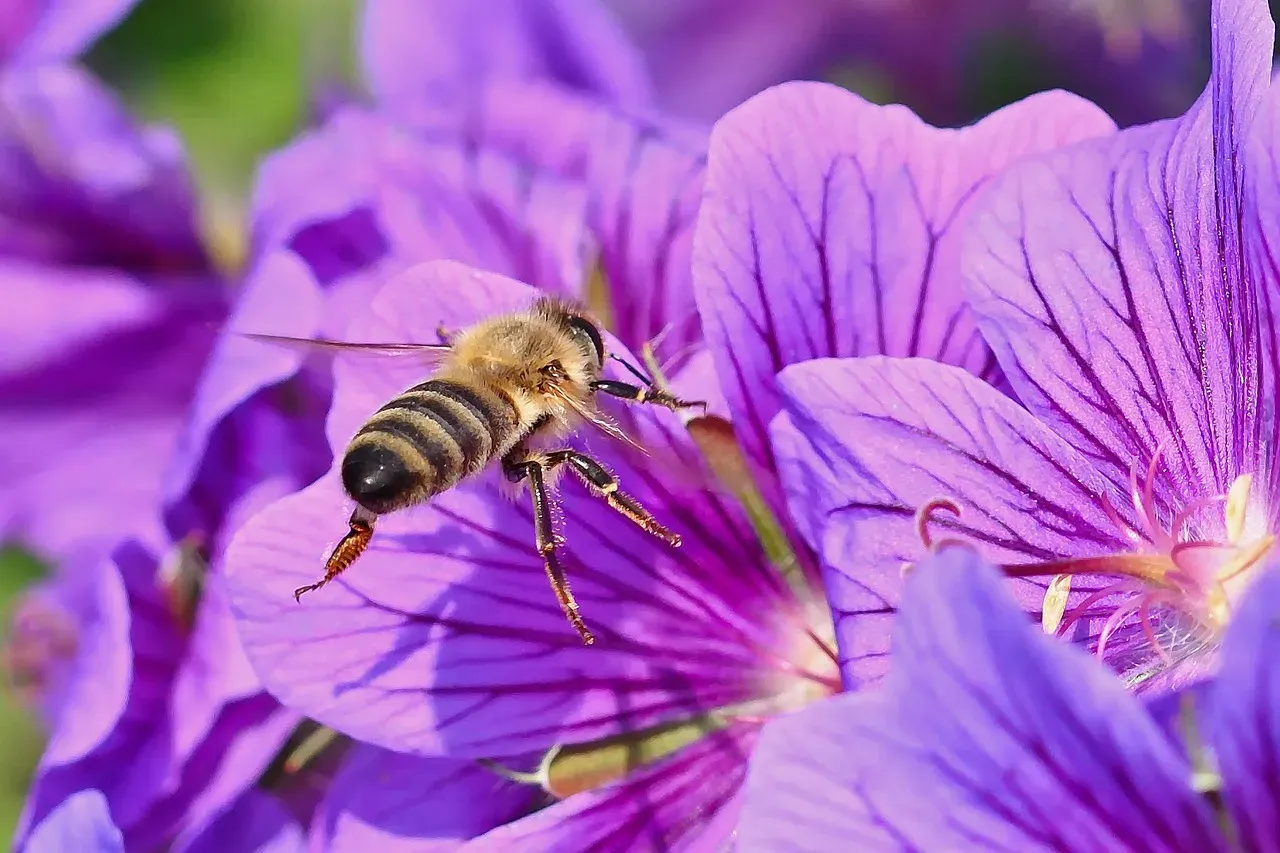
The bee hummingbird feeds mainly on nectar, moving its tongue rapidly in and out of its mouth. In the process of feeding, the bird picks up pollen on its bill and head. When it flies from flower to flower, it transfers the pollen – in this way, it plays an important role in plant reproduction.
In one day, the bee hummingbird may visit as many as 1,500 flowers. In a typical day, bee hummingbirds will consume up to half their body weight in food. That’s a feeding rate driven entirely by the demands of sustaining flight, body heat, and a near-constant heartbeat.
Flowers such as the solandria grandiflora and the scarlet bush have evolved to make their nectar accessible only to this species – in these relationships, the birds and plants are codependent. Bee hummingbirds primarily feed on nectar from a variety of small flowers, particularly those of lianas, vines, and epiphytes, and supplement their diet with tiny insects and spiders, which provide essential proteins.
Nesting and Reproduction
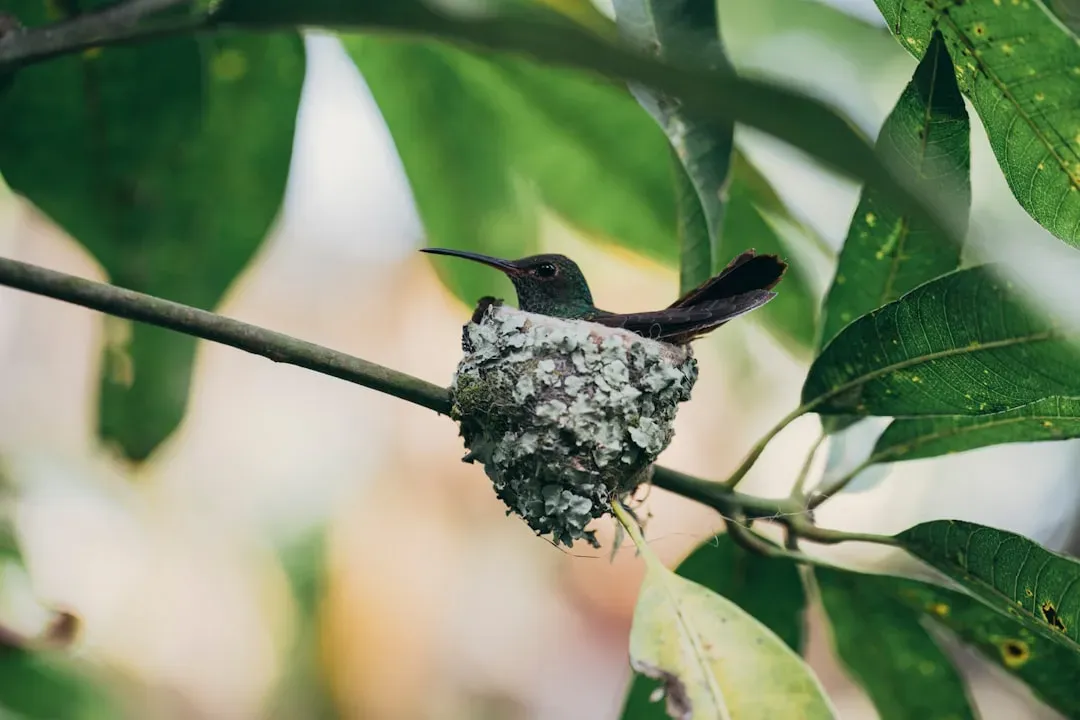
The bee hummingbird’s breeding season runs from March through June, with the female laying one or two eggs. Using strands of cobwebs, bark, and lichen, female bee hummingbirds build a cup-shaped nest about 2.5 centimeters in diameter, positioned roughly three to five meters off the ground. The nest is lined with a layer of soft plant wool.
The female builds a nest barely an inch across, and her eggs are about the size of a coffee bean. Everything about reproduction here is miniaturized to its logical extreme. The chicks hatch naked, with reddish bodies and closed eyes.
After the nest is completed, the eggs are incubated for 21 days by only the female, followed by two days of hatching and 18 days of care by the mother. During the care period, the mother hunts for small insects while the chicks are left alone in the nest. Over the final four to five days, juvenile bee hummingbirds practice their flight capabilities.
Bee hummingbirds are polygynous – they don’t form pairs, and a single male may mate with more than one female during the breeding season. The bee hummingbird lives up to seven years in the wild, and ten years in captivity.
Conservation Status and the Threats They Face
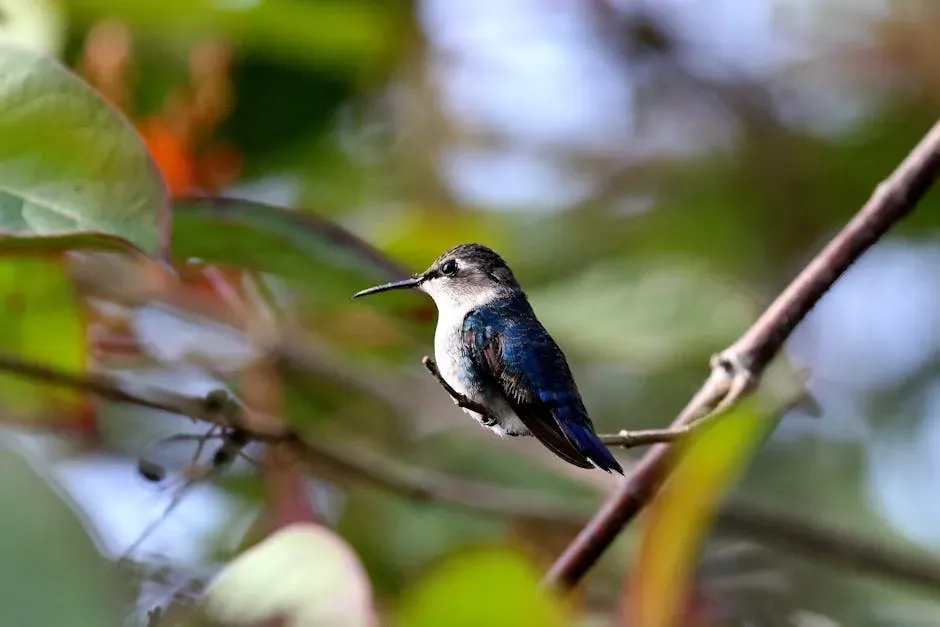
Endemic to Cuba, bee hummingbirds inhabit dense forests, woodland edges, and gardens across the main island and the Isle of Youth, with a preference for lowland areas, though they can be found up to 800 meters in elevation. They are most common in the Zapata Peninsula and mountainous regions of eastern Cuba.
The species is considered Vulnerable by the Cuban Red Data Book and Near Threatened by the IUCN, due to its small population size and its disjunct, fragmented populations. The numbers are declining, and the causes are not difficult to identify.
Bee hummingbirds are threatened by habitat modification or destruction, which has been increasing due to the expansion of cattle, cacao, coffee, and tobacco farming. Climate change poses an additional threat, potentially affecting the timing and availability of nectar sources crucial for their survival.
Cuba has established national parks to safeguard their habitat, and reforestation programs are working to restore native flowers and forests. Whether those efforts prove sufficient depends on how steadily habitat pressures are contained over the coming decades.
Conclusion: The Smallest Bird, an Outsized Lesson
There’s something quietly humbling about the bee hummingbird. A creature weighing less than a paperclip, with a heart beating over a thousand times a minute, pollinating up to 1,500 flowers a day, and building a nest barely the width of a coin – it does all of this without spectacle, in the forest margins of a single island.
Despite its small stature, the bee hummingbird plays a vital role in pollination and maintaining the ecosystem’s balance. Its disappearance would leave gaps not just in a bird list, but in the reproductive cycles of the plants it has co-evolved with over millennia.
The bee hummingbird is a reminder that biological significance rarely scales with size. The smallest things, it turns out, are sometimes doing the most essential work.
