


In the vast orchestra of nature, one performer stands out with a voice so powerful it defies belief. The white bellbird (Procnias albus), a bird native to the mountains of the northern Amazon rainforest, produces the loudest mating call ever recorded in the animal kingdom. This unassuming white bird, roughly the size of a dove, emits a sound reaching an astonishing 125 decibels—louder than a jackhammer, chainsaw, or rock concert. To put this in perspective, sounds above 85 decibels can cause hearing damage in humans. The white bellbird’s extraordinary vocal ability challenges our understanding of bioacoustics and raises fascinating questions about the evolution of communication in animals. This remarkable creature demonstrates how sexual selection can drive the development of extreme traits, even when they seem counterintuitive to survival.
Meet the White Bellbird: Physical Characteristics

The white bellbird displays striking sexual dimorphism, with males and females looking dramatically different. Adult males have immaculate white plumage that contrasts sharply with their bare, black face and strange wattle—a long, fleshy appendage that dangles from the base of their bill. This wattle can grow up to 15 centimeters long and plays a crucial role in their courtship displays. When relaxed, it hangs limply, but during vocalization, the male can contract muscles to make it stand erect. Females, by contrast, have olive-green plumage with streaked underparts, making them much less conspicuous in their forest habitat.
Males typically weigh between 180-220 grams (6.3-7.8 ounces), while females are slightly smaller. Their bodies are compact and robust, with strong chest muscles that support their remarkable vocal apparatus. The white bellbird’s bill is wide at the base but tapers to a point, a feature that contributes to their unique sound production. Despite their small size, these birds have developed specialized anatomical features that enable them to produce their ear-splitting calls, including reinforced lungs and unusually thick abdominal muscles that provide the necessary air pressure.
The Science Behind the Deafening Call

The white bellbird’s record-breaking call results from a remarkable combination of anatomical adaptations and vocal techniques. Research published in the journal Current Biology in 2019 by Jeffrey Podos and Mario Cohn-Haft documented these calls at 125 decibels when measured from a distance of just one meter—about three times more intense than the call of the screaming piha, the previously documented loudest bird. The sound production mechanism involves the bird’s syrinx (the avian equivalent of a larynx), which is exceptionally well-developed in bellbirds.
The white bellbird achieves this volume through a process similar to a trumpet player hitting high notes. It contracts its abdominal muscles to force air through a narrow passage at high pressure, while simultaneously adjusting the tension and position of membranes in the syrinx. What makes this even more remarkable is that the bird accomplishes this without the acoustic amplification structures that other loud animals possess. Unlike howler monkeys with their enlarged hyoid bones or cicadas with their tymbals, the bellbird relies purely on muscle power and an efficient sound-generating mechanism. The bird’s respiratory efficiency must be extraordinary, as it can produce these calls repeatedly without apparent fatigue.
Courtship Rituals and the Purpose of the Call
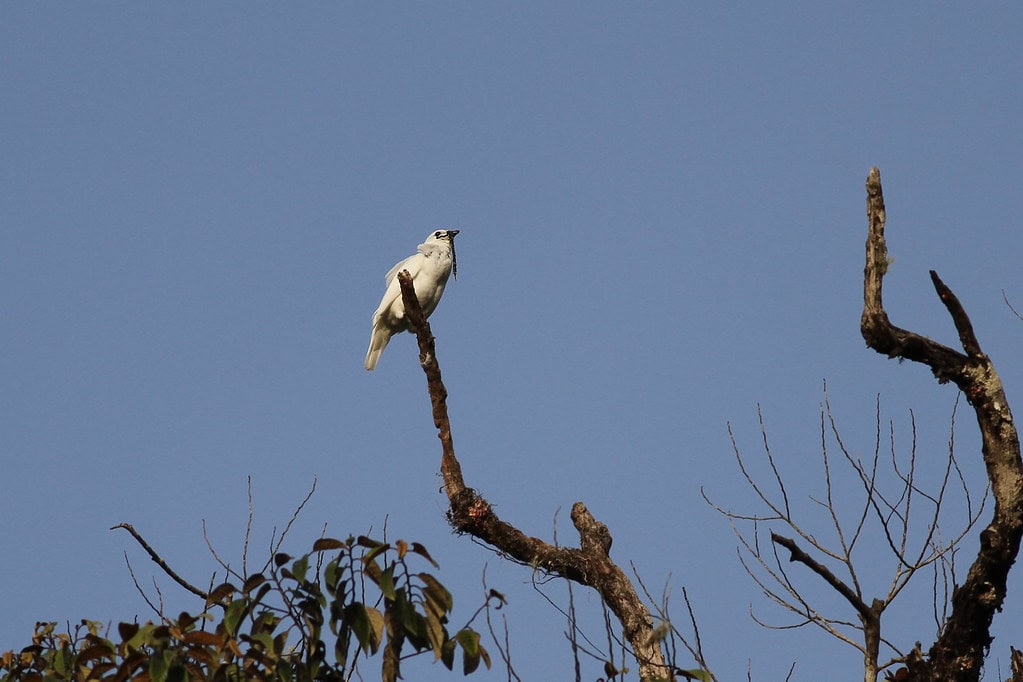
The white bellbird’s thunderous call serves a single purpose: to attract a mate. Males establish territories on the exposed branches of tall trees, where they perform elaborate courtship displays. When a female approaches, the male’s behavior becomes even more dramatic. He turns away from the female, inhales deeply, and then pivots quickly toward her before unleashing his deafening call—often at point-blank range, sometimes from less than a meter away. Researchers have observed females backing away during these close-range performances, suggesting that the males may be walking a fine line between attraction and causing physical discomfort.
This bizarre courtship strategy exemplifies sexual selection at its most extreme. Females presumably select males based on call volume and quality, driving the evolution of increasingly louder calls. The male’s white plumage likely evolved alongside the loud call as part of an integrated signaling system that maximizes visibility and audibility in the dense forest. The risk of predator attraction from such conspicuous behavior is apparently outweighed by the reproductive benefits of securing a mate. This pattern of sexual selection driving traits to extremes, sometimes at the cost of survival efficiency, is seen across the animal kingdom but rarely in such dramatic fashion.
Habitat and Distribution of the White Bellbird

The white bellbird inhabits a relatively small geographic range, primarily in the montane forests of Venezuela, Guyana, and northern Brazil. They prefer elevations between 1,000 and 2,000 meters (3,300-6,600 feet) in the tepuis—unique table-top mountains that rise dramatically from the surrounding lowlands. These isolated ecosystems harbor many endemic species and provide the bellbirds with an acoustic environment where their calls can travel great distances. The birds typically occupy the forest canopy, where males establish display perches on exposed branches that maximize the projection of their calls.
Seasonal movements appear linked to the availability of their preferred fruits, with some populations undertaking altitudinal migrations as food resources shift. The white bellbird’s habitat is increasingly under threat from deforestation, mining operations, and climate change. As temperatures rise, the bird’s montane habitat is expected to shrink, potentially pushing populations to higher elevations where suitable habitat may be limited. Conservation efforts are hampered by the remoteness of many bellbird populations and limited research on their specific habitat requirements and population dynamics.
Diet and Feeding Habits

White bellbirds are primarily frugivorous, with a diet dominated by small, energy-rich fruits. Their feeding strategy involves quick visits to fruiting trees, where they pluck berries while hovering or from a perched position. They show particular preference for fruits from the Lauraceae family (relatives of avocados and cinnamon) and various Melastomataceae species. Their strong, wide-gaped bills allow them to swallow fairly large fruits whole, making them important seed dispersers in their forest ecosystems.
The energy demands of producing such loud calls must be substantial, requiring a high-calorie diet. Males appear to time their display activities around feeding, alternating between calling bouts and foraging. Interestingly, the fruits they consume often contain carotenoid pigments that might play a role in maintaining the brightness of the male’s wattle. Some researchers speculate that the quality of a male’s diet might influence his call volume or stamina, potentially providing females with an honest signal of his foraging ability and territory quality. This connection between nutrition and display performance represents an intriguing area for future research.
Comparing the Bellbird’s Call to Other Loud Animals

While the white bellbird holds the record for the loudest bird call, several other animals produce remarkable vocalizations. The howler monkey, with its calls reaching 140 decibels, remains louder overall. Blue whales produce low-frequency sounds that can reach 188 decibels underwater (though underwater and airborne decibel measurements aren’t directly comparable). Among birds, the screaming piha (previously thought to be the loudest bird) produces calls around 116 decibels, while the common loon’s yodel can reach 100 decibels. The African cicada, another remarkably loud creature, produces sounds up to 106 decibels.
What makes the white bellbird’s achievement so remarkable is its size-to-sound ratio. Producing a 125-decibel sound from a body weighing just 200 grams represents an unparalleled feat of bioacoustic engineering. Most other extremely loud animals are either much larger (like whales) or use specialized resonating chambers (like howler monkeys). The bellbird achieves its volume through sheer muscular efficiency and an optimized sound production mechanism. This evolutionary solution demonstrates nature’s remarkable ability to develop specialized adaptations in response to competitive pressures, in this case, the competition for mates in a dense forest environment where visual signals might be limited.
Evolutionary Origins of the Loud Call
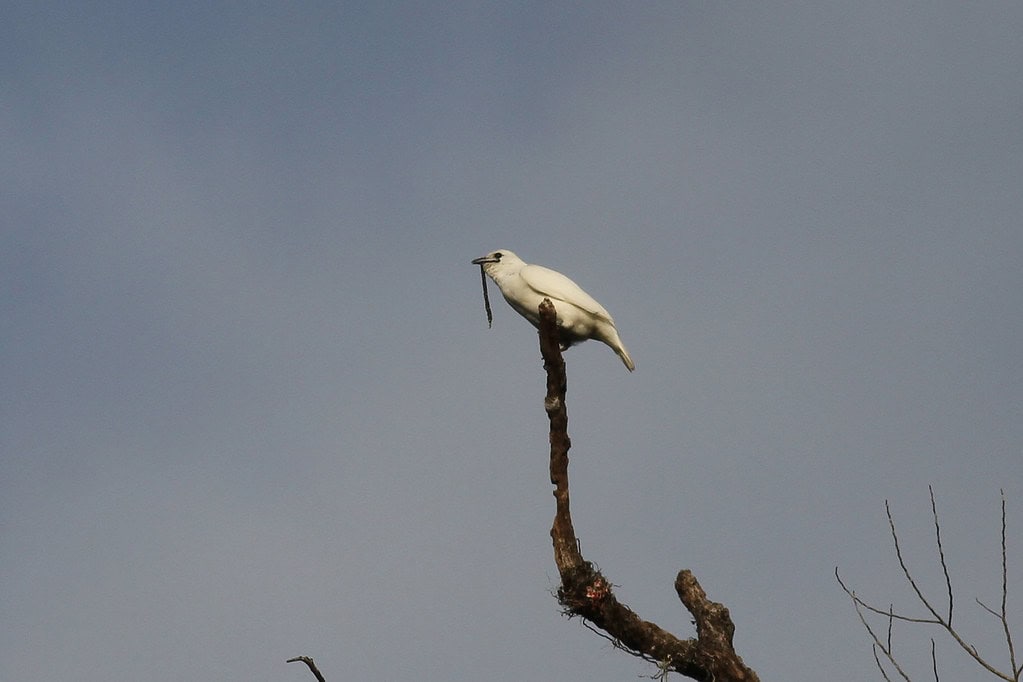
The white bellbird belongs to the cotinga family (Cotingidae), a diverse group of mostly fruit-eating birds known for their elaborate courtship displays and vocalizations. Evolutionary biologists believe the bellbird’s extreme call evolved through a process of runaway sexual selection, where female preference for louder males drove the progressive amplification of call volume over many generations. This pattern is common in species where males compete for female attention, but the bellbird has taken it to an extraordinary extreme.
The bellbird’s closest relatives—the three other Procnias species—all produce loud, distinctive calls but none approaching the white bellbird’s volume. The bearded bellbird (Procnias averano), for instance, produces metallic “bonk” sounds that, while loud, reach only about 100 decibels. Genetic studies suggest that the Procnias genus diverged from other cotingas approximately 5-10 million years ago, with the white bellbird likely specializing in its particular niche relatively recently. The ecological factors that might have accelerated this evolution remain unclear, though the acoustic properties of montane forests may have favored long-distance sound propagation, creating a selective advantage for louder individuals.
Conservation Status and Threats

The white bellbird is currently classified as “Least Concern” on the IUCN Red List, but this status may not reflect emerging threats to its specialized habitat. The tepui mountains and surrounding forests face increasing pressure from mining operations, particularly gold mining, which causes direct habitat destruction and introduces pollutants into previously pristine ecosystems. Climate change poses perhaps an even greater long-term threat, as warming temperatures force montane species to move upslope, potentially shrinking their available habitat range.
Conservation efforts are complicated by the bird’s cross-border range, requiring coordination between Venezuela, Brazil, and Guyana. Some populations receive protection within national parks and reserves, such as Venezuela’s Canaima National Park and Brazil’s Monte Roraima National Park. However, enforcement of protection measures remains challenging in these remote regions. Monitoring populations of white bellbirds presents technical difficulties due to their canopy-dwelling habits and the inaccessible terrain they inhabit. Acoustic monitoring using automated recording devices offers a promising approach for tracking population trends without disturbing the birds or requiring constant human presence in difficult terrain.
Research Challenges and Recent Discoveries
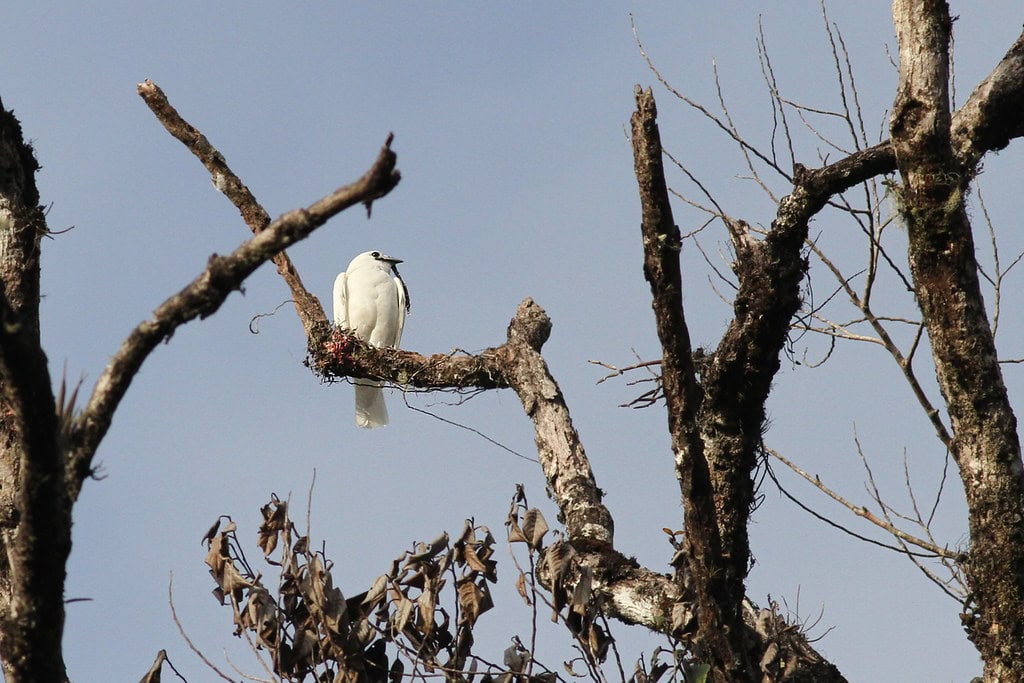
Studying the white bellbird presents unique challenges for researchers. The remote, mountainous habitat makes field studies logistically difficult, while the birds’ preference for the forest canopy puts them out of easy observation range. Until recently, many aspects of their behavior remained poorly documented. The groundbreaking 2019 study by Podos and Cohn-Haft required specialized recording equipment capable of accurately measuring extreme volumes without distortion. The researchers had to develop novel approaches to capture both the acoustic properties of the calls and the behavioral context in which they occur.
Recent research has revealed surprising aspects of the bellbird’s biology beyond just their volume. High-speed video analysis shows that the males can transition from silence to maximum volume almost instantaneously, without the gradual ramp-up most animals require. Researchers have also documented previously unknown details about their courtship displays, including ritualized movements that precede vocalization. Questions remain about how the birds protect their own hearing from damage, whether females judge males on factors beyond pure volume, and how their unusual vocal apparatus evolved. Ongoing studies using new technologies like miniaturized GPS trackers and acoustic monitoring arrays promise to shed further light on these remarkable birds.
Cultural Significance and Human Interactions
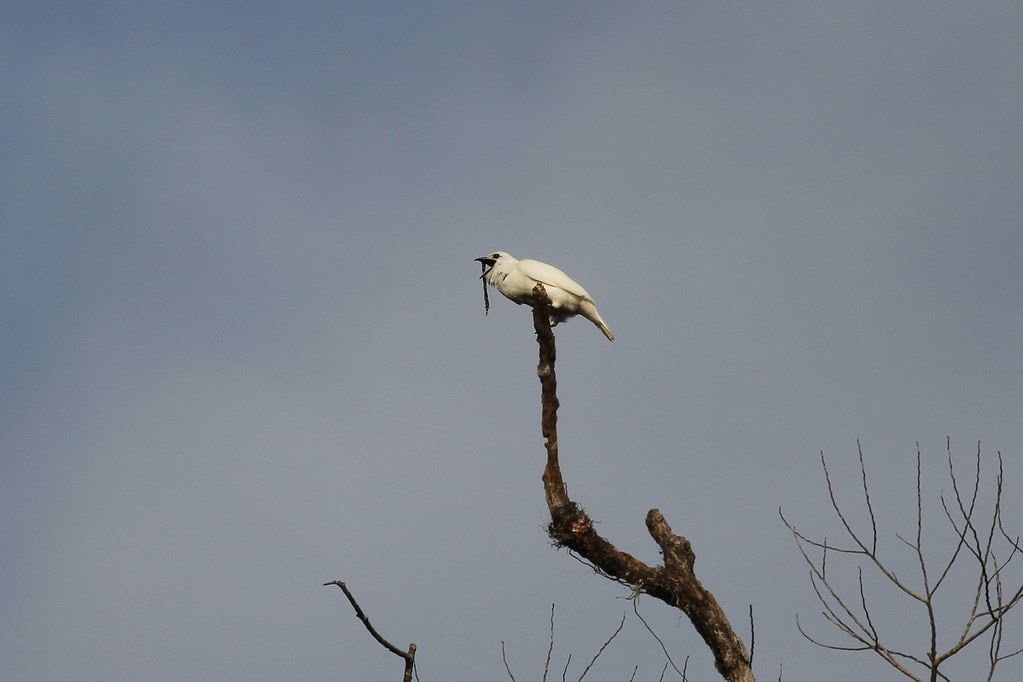
The white bellbird has cultural significance for indigenous peoples of the Guiana Shield region, where it features in various myths and traditional stories. Among some groups, the bird’s distinctive call is associated with weather predictions or seasonal changes. The Pemón people of Venezuela, for instance, consider the bellbird a harbinger of the rainy season. Despite its extraordinary vocal abilities, the white bellbird remains relatively unknown outside scientific circles and local communities—a testament to both its remote habitat and the general human disconnect from biodiversity beyond charismatic megafauna.
Ecotourism focused on the white bellbird has remained limited due to the challenging logistics of accessing their habitat, though specialized birding tours do target the species. Sound recordists and wildlife documentarians have shown increasing interest in capturing the bellbird’s record-breaking call, though recording equipment must be specially calibrated to handle such extreme volumes without distortion. As awareness of this remarkable species grows, it may serve as a flagship species for conservation efforts in the tepui ecosystems, helping to draw attention to the unique and threatened montane forests of northern South America.
Conclusion: The Remarkable Legacy of Nature’s Loudest Vocalist

The white bellbird stands as a testament to the extraordinary power of evolution to produce specialized adaptations that seem to defy physical limitations. This small bird’s ability to produce sounds louder than many mechanical devices highlights the incredible diversity of strategies that have evolved for animal communication. The bellbird’s call represents an evolutionary arms race driven by sexual selection, where the pressure to attract mates has pushed vocal capacity to its physical limits. As we continue to study these remarkable birds, they offer valuable insights into bioacoustics, sexual selection, and the evolution of extreme traits.
Beyond their scientific importance, white bellbirds remind us that even in our era of comprehensive biological knowledge, nature still holds astonishing surprises. The fact that the loudest bird call on Earth was only properly documented and measured in 2019 suggests that many other remarkable adaptations likely remain undiscovered in remote ecosystems. As these habitats face mounting threats from human activities and climate change, the urgency of research and conservation efforts grows. The white bellbird’s deafening call serves not only as a mating advertisement but as nature’s alarm—a reminder of what we stand to lose if we fail to protect the planet’s extraordinary biodiversity.

From exploring the marine wonders in the Azores and witnessing the vast savannas of Kenya, to delving deep into the rich biodiversity of South Africa and traversing iconic landscapes in Australia and the US like Yellowstone, Chris's experiences are vast.
With a penchant for diving alongside sharks, the ocean holds a special place in his heart.
Through his academic insights, he champions wildlife conservation, striving with 'Animals Around The Globe' to cultivate a profound connection between humans and animals, enhancing our mutual appreciation.
Connect with him at Feedback@animalsaroundtheglobe.com.
- What Happens to Male Chicks in Egg Farming? - July 18, 2026
- How Close Are We to Cloning the Woolly Mammoth? - July 18, 2026
- The Most Venomous Creature in the U.S. - July 18, 2026