

Somewhere on the seafloor right now, trillions of microscopic creatures are quietly going about their lives, building shells no wider than a period at the end of a sentence. Most people have never heard of foraminifera. Scientists, on the other hand, regard them as one of the most important organisms on the planet.
Known as foraminifera, these complex little shells of calcium carbonate can tell you the sea level, temperature, and ocean conditions of Earth millions of years ago. They are single-celled, ancient, and quietly extraordinary. What they carry inside their tiny shells is essentially a compressed archive of Earth’s entire oceanic history.
Meet the Foraminifera: A Creature Older Than the Dinosaurs
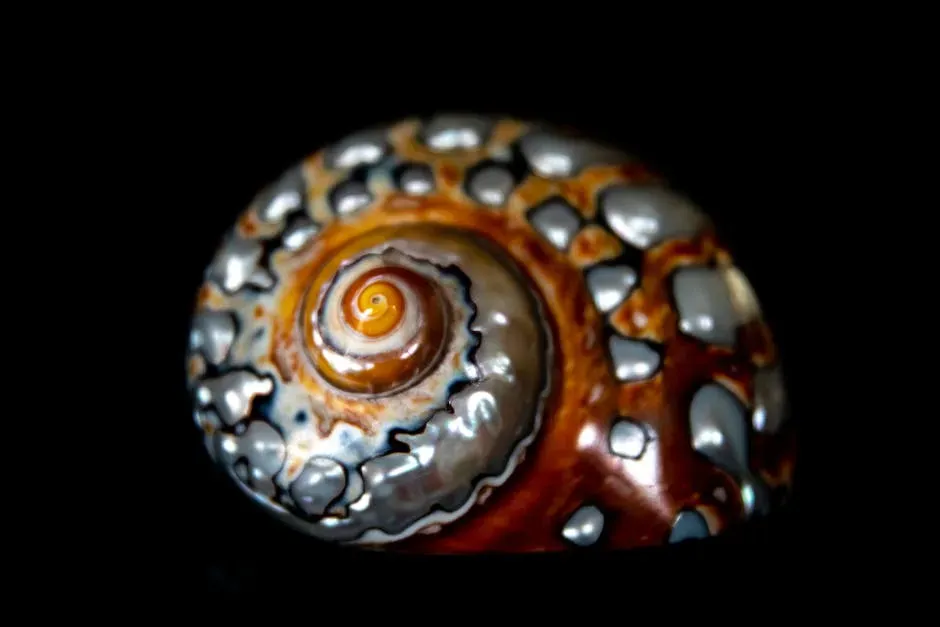
Foraminifera, often referred to as “forams,” are a group of single-celled organisms that hold a significant place in the intricate web of marine ecosystems. Despite their minuscule size, these tiny creatures play a monumental role in shaping the environment around them.
Forams have been found in rocks of marine origin since at least the Cambrian, roughly 550 million years ago. Since then, forams have radiated and evolved to make up approximately 40,000 species in the rock record. To put that in perspective, they were already thriving long before the first fish developed limbs and walked onto land.
There are currently 9,000 species of living foraminifera in the world and 40,000 described extinct fossil species. Their diversity alone is staggering. Measuring up to 5 mm in size, foraminifera may seem inconspicuous, but their abundance is such that entire beaches are composed of their intricate shells, a testament to their widespread distribution and impact.
What we recognize as foraminifera goes back about 650 million years ago. The interesting thing is that although foraminifera are only one cell, they make shells. That’s what, of course, makes it possible for them to become fossilized. That single biological quirk, building a durable shell, is what makes them irreplaceable to science.
Shells as Time Capsules: Reading Chemistry to Decode the Past

As foraminifera grow their calcium carbonate shell, they take in carbon, oxygen and trace amounts of other elements such as magnesium and boron from the surrounding seawater. Each element captured in the shell reflects the exact conditions of the water at that moment in time.
The ratio between oxygen isotopes 18O and 16O tells scientists how much water is trapped in glacial ice, providing important clues about temperature and the size of the ancient continental ice sheets. Carbon in the shells can be analyzed for isotopes, and plants prefer to incorporate lighter carbon during photosynthesis, increasing the ratio in foraminifera when plant and algae production is high. This carbon data provides clues on the types and amounts of vegetation at various times as well as ocean circulation.
The shells of the forams accumulate small amounts of the element boron, the isotopes of which reflect CO2 concentrations in the ocean at the time the shells formed. The researchers measured the boron chemistry of the shells, and were able to translate those values to past seawater atmospheric CO2 contents by comparing the values to modern observations.
Foraminiferal stable oxygen isotopes are one of the oldest and most widely used proxies for studying ancient climates, with pioneering studies dating back to those by Harold Urey in the late 1940s. Decades of refinement have made the methodology remarkably precise. If you look at reconstructions of climate over the last 70 to 100 million years or so, those wiggly lines are all derived from the analysis of foraminifera.
Surviving Catastrophe: What Foram Fossils Tell Us About Mass Extinctions
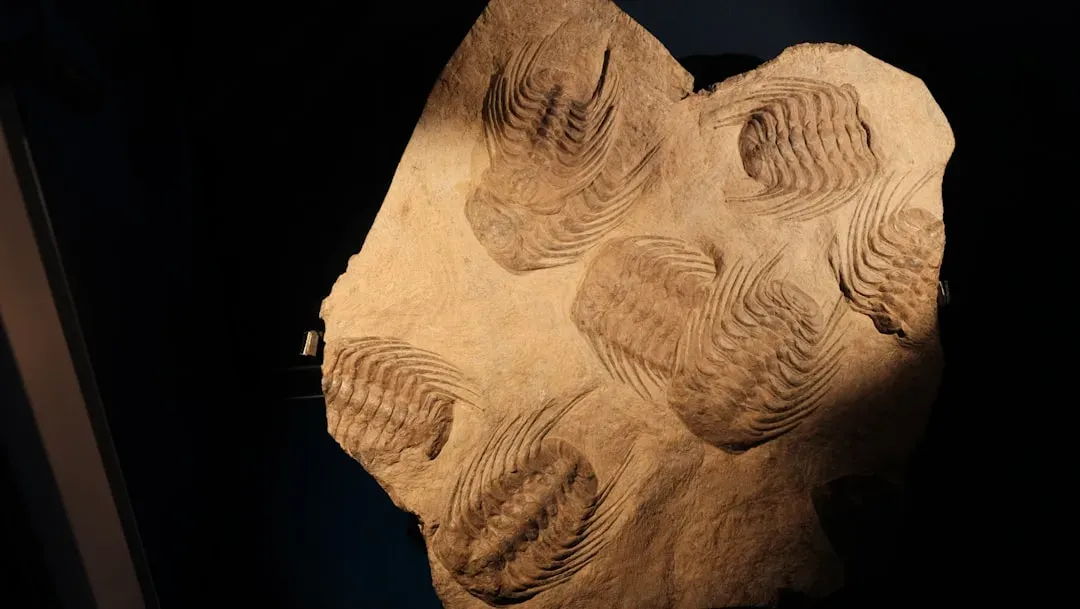
This kind of work has helped to reveal that planktonic foraminifera first showed up in the Jurassic period about 180 million years ago and experienced a major crisis when an asteroid hit the Earth some 66 million years ago. Their fossil record around that event is among the clearest biological records of planetary catastrophe ever found.
Most foraminiferan species reside on the seafloor, but paleontologists are particularly interested in planktonic species, which live suspended in open water. Because of their astonishing numbers and short lives, their fossils are found globally across the ocean floor. This has allowed researchers to reconstruct in detail which species flourished and which suffered when climate changed in the past.
Using a high-resolution global dataset of these microfossils that’s among the richest biological archives available to science, researchers have found that certain mass extinctions are reliably preceded by subtle changes in how a biological community is composed. Scientists think these changes can act as an early warning signal for these extinction events.
Before an extinction event 34 million years ago, marine communities of foraminifera became highly specialized everywhere but in the southern high latitudes, which implies that these micro-plankton migrated en masse to higher latitudes and away from the tropics. This finding indicates that community-scale changes like the ones seen in these migration patterns are evident in fossil records long before actual extinctions and losses in biodiversity occur.
Drilling Into Deep Time: How Scientists Actually Extract This Data
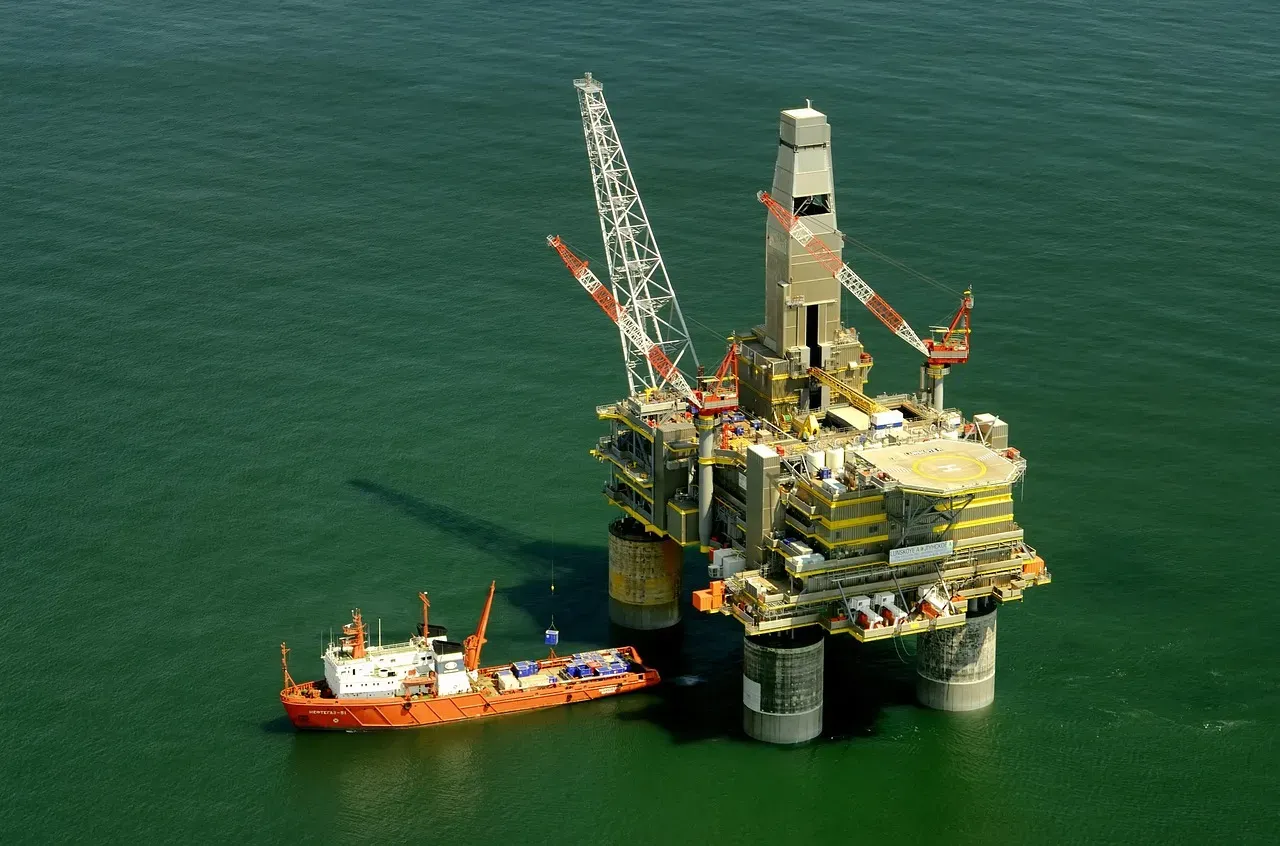
Researchers have spent years at sea on ocean voyages around the world to drill for foraminifera as part of the Integrated Ocean Drilling Program, an international marine research effort that explores the Earth’s history and structure by looking at seafloor sediments and rocks. During each two-month excursion, scientists never set foot on land and spend hours poking through the millions of layers of sediment, trapped gases, fossils, and trace elements found in huge cores drilled from deep under the seafloor.
From top to bottom, each core provides a reverse chronology of the various organisms, sediments, and elements that were found on Earth throughout history. Unlike cores from sedimentary layers from the continents that are quickly destroyed by the forces of plate tectonics, wind, and water, these rarely disturbed ocean sediment cores can provide records up to 180 million years ago.
What makes one recent discovery particularly exciting is that a group of foraminifera evolved very early in Earth’s history, which means scientists now potentially have tools to reconstruct water temperatures as far back as 350 million years, well before the first dinosaurs walked the earth. That pushes the paleoclimate record back further than many researchers had previously thought possible.
Foraminifera are widely used to study the impacts on coastal ecosystems of pollution and sediment runoff, to document sea level changes that occurred before tide gauges existed, to study the frequency and size of coastal earthquake displacements and tsunamis, and in the study of past and present climate change. The applications extend far beyond simple temperature readings.
A Living Warning Sign: What Declining Foram Populations Mean Today

Planktonic foraminifera are tiny marine organisms which are essential to the ocean’s carbon cycle. Recent study reveals that these populations are shrinking at an alarming rate due to ocean changes. For organisms that have survived multiple mass extinctions, that trajectory is worth paying close attention to.
A 2024 study of foraminifera trends found that foraminiferan abundance has declined almost 25 percent over the past 80 years. That might be a bad sign for biodiversity in other groups of creatures, which often follow foraminiferan trends.
Foraminifera with algal symbionts acclimatized to deglacial warming at the end of the Last Glacial Maximum, whereas foraminifera without symbionts kept the same thermal preference and migrated polewards. However, when forcing the trait-based plankton model with rapid transient warming over the coming century, the model suggests that the acclimatization capacities of all groups are limited and insufficient to track warming.
Since foraminifera as a group bounced back from several mass extinctions, they are very unlikely to disappear. Recovery may take a long time, though, and humanity’s involvement makes predicting the near future especially difficult. Their resilience is genuine, but it operates on geological timescales, not human ones.
Conclusion: The Smallest Historians of the Sea

It’s a quiet kind of irony that some of the most consequential research into Earth’s climate history depends on organisms most people couldn’t identify under a microscope. Foraminifera don’t appear in nature documentaries. They don’t have charisma in the conventional sense. Yet the scientific understanding of ice ages, ancient greenhouse periods, mass extinctions, and ocean chemistry all traces back, at least in part, to their preserved shells.
Scientists can use the geological past to say that nature has made those experiments, including global warming. The goal is to use Earth’s history and foraminifera in that history to learn how life on Earth reacted to those events in the past, to help predict how we are dealing with the future.
Foraminifera form one of the critical archives for understanding past climates thanks to their abundance in deep-sea calcium carbonate sediments, allowing high-resolution palaeoclimate records such as temperature to be constructed. That archive keeps getting richer as new drilling expeditions recover older and older cores.
The foram’s story is ultimately a reminder that the most important things often come in the smallest packages. Every climate reconstruction, every projection about future ocean conditions, every line on a deep-time temperature graph owes something to a creature that lives and dies without ever being seen by human eyes. That feels worth knowing.
