


In the vast world of peculiar animal adaptations, few are as surprising and fascinating as the ability of certain turtle species to breathe through their posterior ends. Yes, you read that correctly—some turtles can actually respire through their hindquarters. This remarkable evolutionary adaptation, known scientifically as cloacal respiration, allows these reptiles to extract oxygen directly from water via their rear ends. While it might sound amusing or even crude to human sensibilities, this adaptation is a sophisticated survival mechanism that showcases nature’s ingenious problem-solving abilities. Let’s dive deeper into this unusual but captivating aspect of turtle physiology that demonstrates just how wonderfully weird evolution can be.
The Science Behind Cloacal Respiration

Cloacal respiration is a specialized form of aquatic breathing where turtles extract dissolved oxygen from water through their cloaca—a posterior orifice that serves as the single exit point for the digestive, reproductive, and urinary tracts. The cloaca’s walls are lined with specialized tissue rich in blood vessels called bursae. These bursae are highly vascularized, meaning they’re packed with blood vessels positioned just beneath the thin epithelial tissue.
When water flows through the cloaca, oxygen molecules diffuse across this membrane and enter the bloodstream, while carbon dioxide moves in the opposite direction and is expelled. This process follows the same basic principles as gill respiration in fish or lung respiration in mammals, relying on concentration gradients to facilitate gas exchange, but it occurs in an unexpected anatomical location.
Which Turtle Species Can “Butt Breathe”?

The ability to perform cloacal respiration isn’t universal among turtles. It’s primarily observed in species belonging to the family Chelidae, commonly known as side-necked turtles. The most notable practitioners include the Fitzroy River turtle (Rheodytes leukops) and several species of Australian side-necked turtles from the genus Elseya. The white-throated snapping turtle (Elseya albagula) is another adept cloacal respirator.
North American species like the eastern painted turtle (Chrysemys picta) can also perform limited cloacal respiration, though they’re less specialized in this ability than their Australian counterparts. The distribution of this trait across certain turtle lineages but not others reflects the different evolutionary pressures faced by various turtle populations throughout their evolutionary history.
The Fitzroy River Turtle: Champion of Posterior Respiration
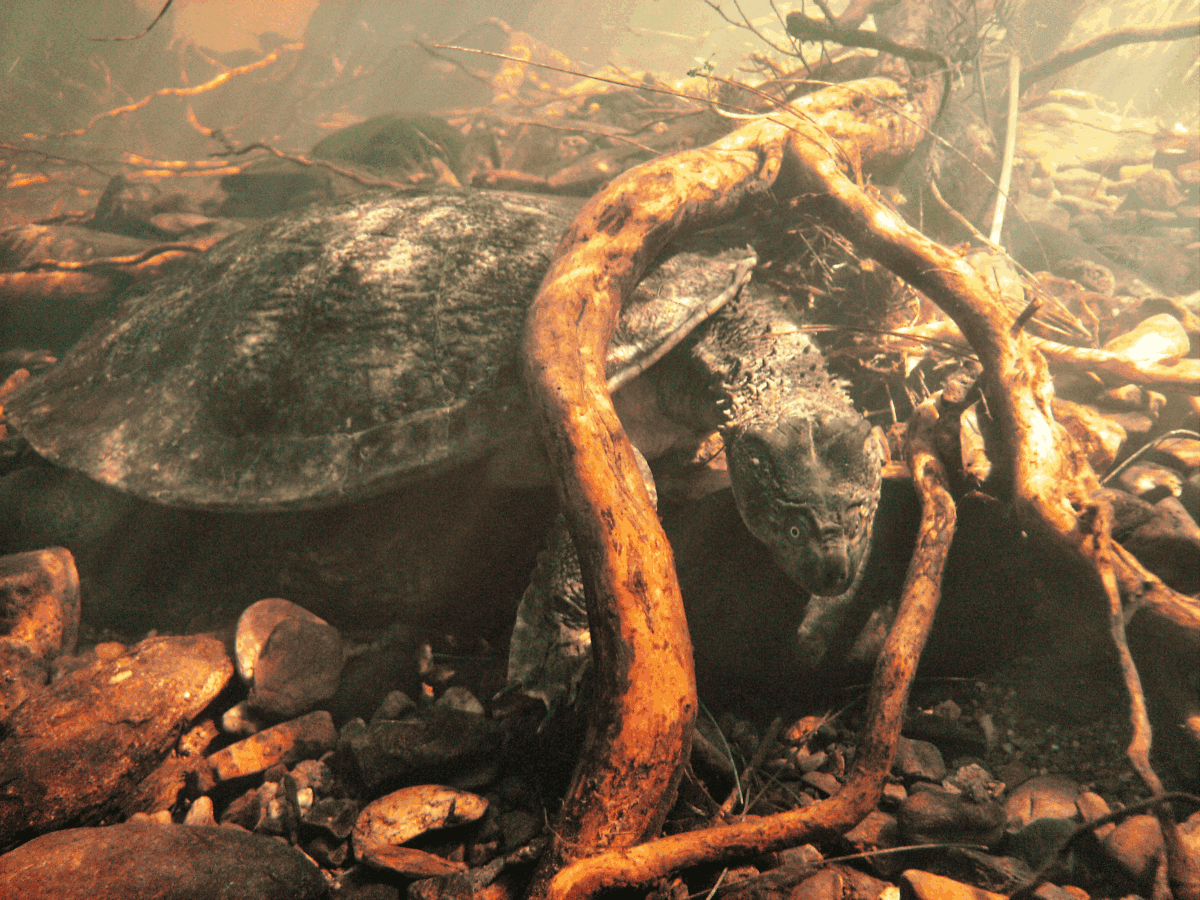
Among the cloacal respirators, the Fitzroy River turtle (Rheodytes leukops) stands out as particularly exceptional. Native to the Fitzroy River basin in Queensland, Australia, this remarkable reptile can obtain up to 70% of its oxygen requirements through cloacal respiration. This allows it to stay submerged for extraordinarily long periods—sometimes weeks at a stretch—without needing to surface for air.
The turtle’s cloaca contains specialized bursae with a surface area that’s proportionally enormous compared to the animal’s size. These bursae are so efficient that they can extract sufficient oxygen even from water with relatively low oxygen content. The Fitzroy River turtle actively pumps water in and out of its cloaca, sometimes at rates of up to 60 times per minute, essentially “breathing” underwater through rhythmic cloacal ventilation that mirrors the way lungs expand and contract in air-breathing animals.
Evolutionary Advantages of Breathing Through the Posterior

Cloacal respiration evolved as an adaptation that provides several significant survival advantages. First, it allows turtles to remain submerged for extended periods, which helps them avoid predators that hunt at the water’s surface. Second, it conserves energy that would otherwise be expended in frequent trips to the surface for air. Third, in cold environments or during brumation (reptile hibernation), these turtles can remain in the oxygen-rich depths where temperatures are more stable. Fourth, for species inhabiting turbid or muddy waters with poor visibility, reducing surface visits minimizes exposure to land-based threats.
In fast-flowing aquatic environments, this adaptation also helps turtles maintain their position without fighting currents to reach the surface. As a supplementary breathing method, cloacal respiration represents an elegant evolutionary solution that addressed multiple environmental challenges simultaneously.
Survival During Hibernation

One of the most critical applications of cloacal respiration occurs during the winter hibernation period. When temperatures drop, turtles enter a state of drastically reduced metabolism called brumation. During this time, they bury themselves in the mud at the bottom of ponds, lakes, or rivers where they remain for months. Their oxygen requirements decrease significantly, but they still need some oxygen to survive. Surfacing isn’t an option, especially if the water is frozen over.
Cloacal respiration becomes their lifeline during these extended periods of dormancy. The oxygen-rich water flowing over the vascularized tissues in their cloaca provides just enough oxygen to sustain their minimal metabolic needs. Without this remarkable adaptation, these turtles would be unable to survive in habitats that experience seasonal freezing, significantly limiting their geographic range and ecological niches.
The Anatomy of Posterior Respiration

The cloacal bursae that facilitate posterior respiration are complex structures that vary in size and efficiency between species. In specialized cloacal respirators like the Fitzroy River turtle, these bursae have evolved finger-like projections that vastly increase the surface area available for gas exchange—much like the folded structure of lungs or gills. The walls of these bursae are extremely thin, often just a few cell layers thick, to minimize the diffusion distance between water and blood.
The cloaca itself is equipped with specialized muscles that can expand and contract, drawing water in and pushing it out in a rhythmic fashion. This creates a constant flow of fresh, oxygen-rich water over the respiratory surfaces. The surrounding blood vessels can dilate or constrict to regulate the amount of blood flowing through the area, effectively controlling the rate of oxygen uptake based on the turtle’s current needs.
Respiration Versus Drowning: How Turtles Manage Both Systems

Turtles that use cloacal respiration have evolved a sophisticated dual respiratory system. They still have fully functional lungs and breathe air when at the surface, which remains their primary method of respiration under normal circumstances. The cloacal respiration serves as a supplementary oxygen source that extends their diving capacity. This dual system requires complex physiological regulation to coordinate when and how intensively each system is used.
When a turtle dives, blood flow can be redirected to prioritize the cloacal respiratory surfaces. When it surfaces, circulation shifts back to emphasize the lungs. This flexibility allows turtles to optimize their respiratory strategy based on environmental conditions, activity levels, and oxygen availability. It’s worth noting that while cloacal respiration can sustain these turtles for extended periods, most species still need to surface periodically for air, especially during warmer months when their metabolic rate and oxygen requirements are higher.
Research Challenges and Discoveries

Studying cloacal respiration presents unique challenges for researchers. The private nature of the behavior and the difficulty of observing it without disturbing the animals has historically limited scientific understanding. Early research relied heavily on indirect observations, such as measuring how long turtles could stay submerged or analyzing oxygen levels in water before and after turtle immersion. Modern research techniques have advanced our knowledge significantly.
Scientists now use specialized chambers that can measure oxygen consumption directly, implantable oxygen sensors, and high-speed imaging to capture the mechanics of cloacal pumping. Molecular studies are revealing the genetic basis for the specialized tissues involved. Each new discovery continues to highlight the sophistication of this seemingly simple but remarkably effective adaptation, providing insights not just into turtle biology but into the broader principles of respiratory physiology and evolutionary adaptation.
Conservation Implications for Butt-Breathing Turtles

Many turtle species that rely on cloacal respiration face significant conservation challenges. Their specialized adaptation makes them particularly vulnerable to changes in water quality and oxygen levels. Water pollution, including runoff from agriculture and industry, can reduce dissolved oxygen content and introduce toxins that damage the delicate respiratory tissues. Dams and water management systems that alter river flow can destroy the fast-flowing, oxygen-rich habitats that species like the Fitzroy River turtle depend on.
Climate change poses additional threats, as warming waters hold less dissolved oxygen. The Fitzroy River turtle and the white-throated snapping turtle are both listed as endangered, partly due to these threats to their specialized respiratory system. Conservation efforts must consider these unique physiological needs, emphasizing both habitat protection and water quality maintenance to ensure the survival of these evolutionary marvels.
Practical Applications Inspired by Turtle Respiration

The unique respiratory mechanism employed by these turtles has inspired various applications in biomimetic engineering and medical science. Researchers studying artificial respiratory systems have drawn inspiration from the efficient gas exchange mechanisms in cloacal bursae. The principles behind this natural system could inform the development of more efficient artificial gills or specialized medical equipment for oxygen delivery.
In aquaculture, understanding how certain species extract oxygen from water efficiently could lead to improved aeration systems. Some researchers are also investigating how the protective mechanisms that prevent tissue damage during low-oxygen conditions in these turtles might be applied to human medical treatments, particularly for conditions involving temporary oxygen deprivation such as stroke or cardiac arrest. Nature’s solutions, even those that seem unusual at first glance, often provide valuable templates for human innovation.
Common Misconceptions About Turtle Respiration

Despite scientific understanding of cloacal respiration, many misconceptions persist about this fascinating adaptation. Perhaps the most common is that turtles breathe exclusively through their posteriors, which isn’t accurate for any species. All turtles have lungs and use them as their primary respiratory organs. Cloacal respiration is supplementary, not a replacement for lung breathing. Another misconception is that all aquatic turtles can perform cloacal respiration equally well, when in fact the ability varies significantly between species.
Some people also mistakenly believe that turtles are simply holding their breath when underwater, not realizing the complex respiratory exchange occurring through the cloaca. There’s also confusion about the process itself—turtles aren’t “breathing” air through their cloacas but extracting dissolved oxygen from water, more similar to how gills function than how lungs process air. Understanding the true nature of this adaptation helps appreciate just how remarkable an evolutionary innovation it truly is.
Conclusion: The Marvel of Evolutionary Adaptation

The ability of certain turtles to breathe through their posterior ends stands as a testament to the incredible diversity of solutions that evolution has produced to meet environmental challenges. What might seem unusual or even comical from a human perspective represents a sophisticated adaptation that has allowed these remarkable reptiles to thrive in environments that would otherwise be inaccessible to them.
Cloacal respiration demonstrates nature’s pragmatic approach to problem-solving—using existing structures in new and innovative ways to overcome limitations. As we continue to study these fascinating creatures, we gain not only a deeper appreciation for the wonders of the natural world but also potential insights that could inform human innovations in medicine, engineering, and conservation. The humble “butt-breathing” turtle reminds us that sometimes the most effective solutions are found in the most unexpected places.

From exploring the marine wonders in the Azores and witnessing the vast savannas of Kenya, to delving deep into the rich biodiversity of South Africa and traversing iconic landscapes in Australia and the US like Yellowstone, Chris's experiences are vast.
With a penchant for diving alongside sharks, the ocean holds a special place in his heart.
Through his academic insights, he champions wildlife conservation, striving with 'Animals Around The Globe' to cultivate a profound connection between humans and animals, enhancing our mutual appreciation.
Connect with him at Feedback@animalsaroundtheglobe.com.
- Photosynthesis vs Respiration: How Animals Rely on Plants and Oxygen - June 23, 2026
- Best Countries for Spotting Rare Big Cats in the Wild - June 23, 2026
- Animals We Eat (That Were Once Worshipped by Ancient Civilizations) - June 23, 2026