
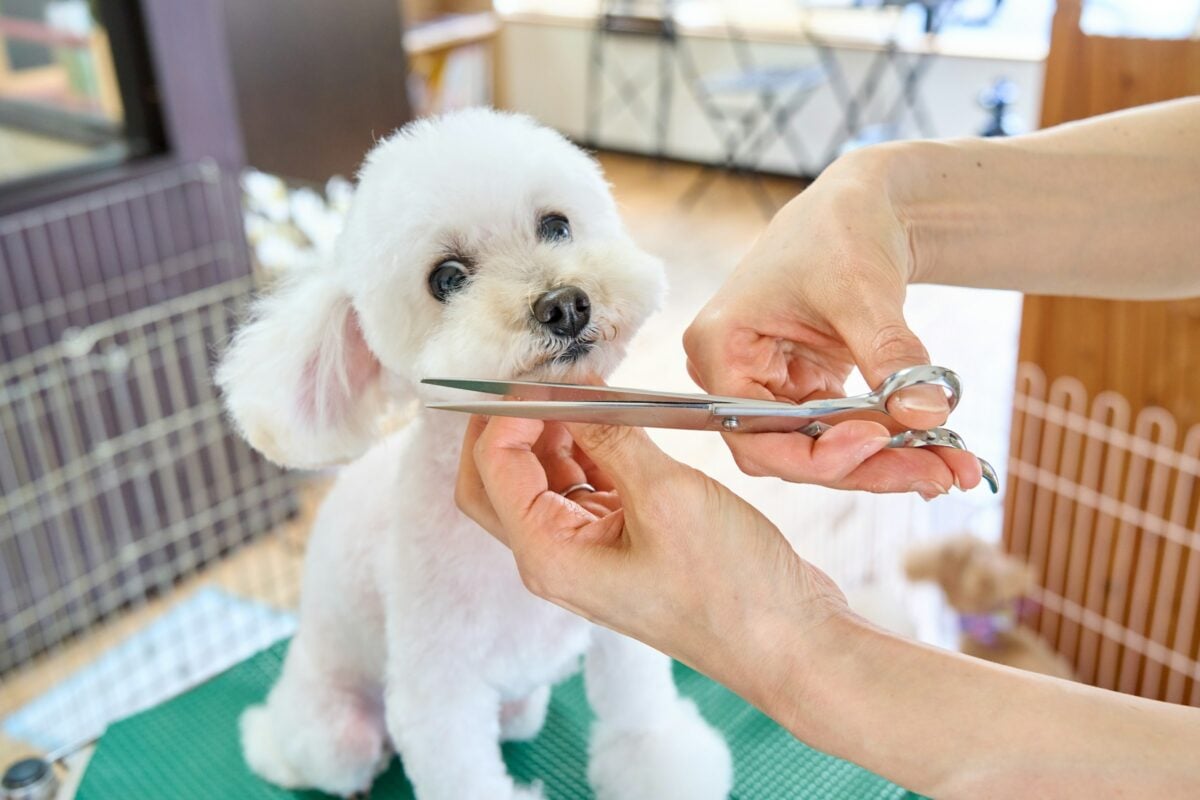
Your dog trots into the grooming salon looking like the same goofy, snack-obsessed pup he’s always been. Ninety minutes later, the groomer has quietly clocked something you haven’t – a new stiffness in the hips, a flinch at the clippers that wasn’t there last time, a spine that suddenly feels sharper under all that fur. You’d swear nothing has changed. They already know better.
Groomers see your dog under bright lights, hands-on, every six to eight weeks, for years on end. That gives them a front-row seat to ageing most owners simply don’t get at home, tucked between distracted pats and busy mornings. Some of what they notice is harmless. Some of it is an early flag for pain, disease, or decline that won’t show up on your radar for months, sometimes years. Here’s what they actually catch first – and why it matters more than you’d think.
#1 – The Coat Loses Its “Snap” Years Before Anyone Spots Grey
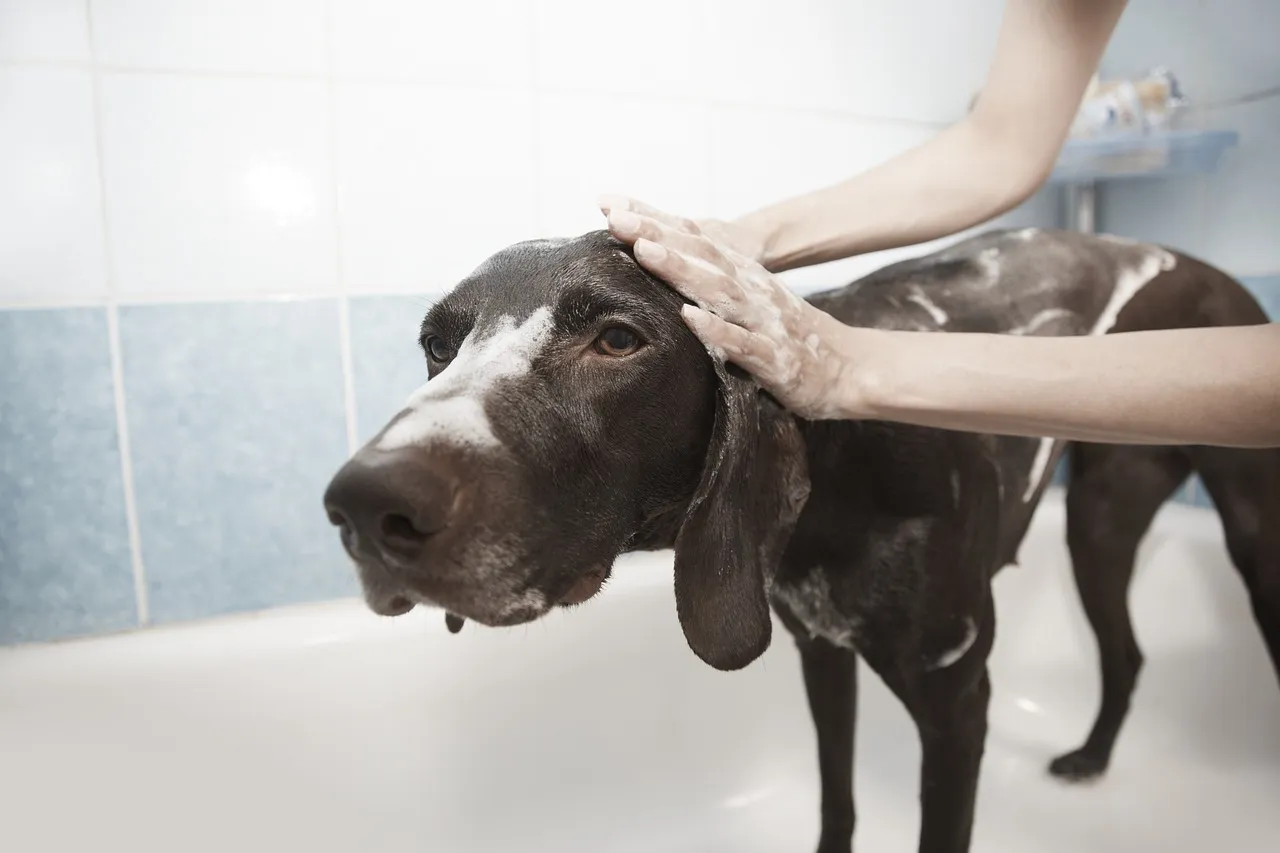
Groomers often feel ageing before they ever see it. Run a brush through your dog’s coat and a good groomer instantly knows if that crisp, springy “snap” of a healthy young coat is gone. Instead it feels flat, dry, or strangely cottony under their fingers.
This texture change can start long before a single grey hair shows up. It isn’t always just age – it can flag thyroid trouble, thinning nutrition, or slowing oil production in the skin. They notice the pattern too: a dog who once needed only a light conditioning pass now soaks up product like a sponge, or tangles pile up faster between visits. Owners call it “a bad shed.” Groomers quietly recognize it as the first slide into a senior coat.
But that’s nothing compared to what they spot at #2, in the way your dog starts standing on the table.
#2 – Subtle Shifts in Stance and Balance on the Grooming Table
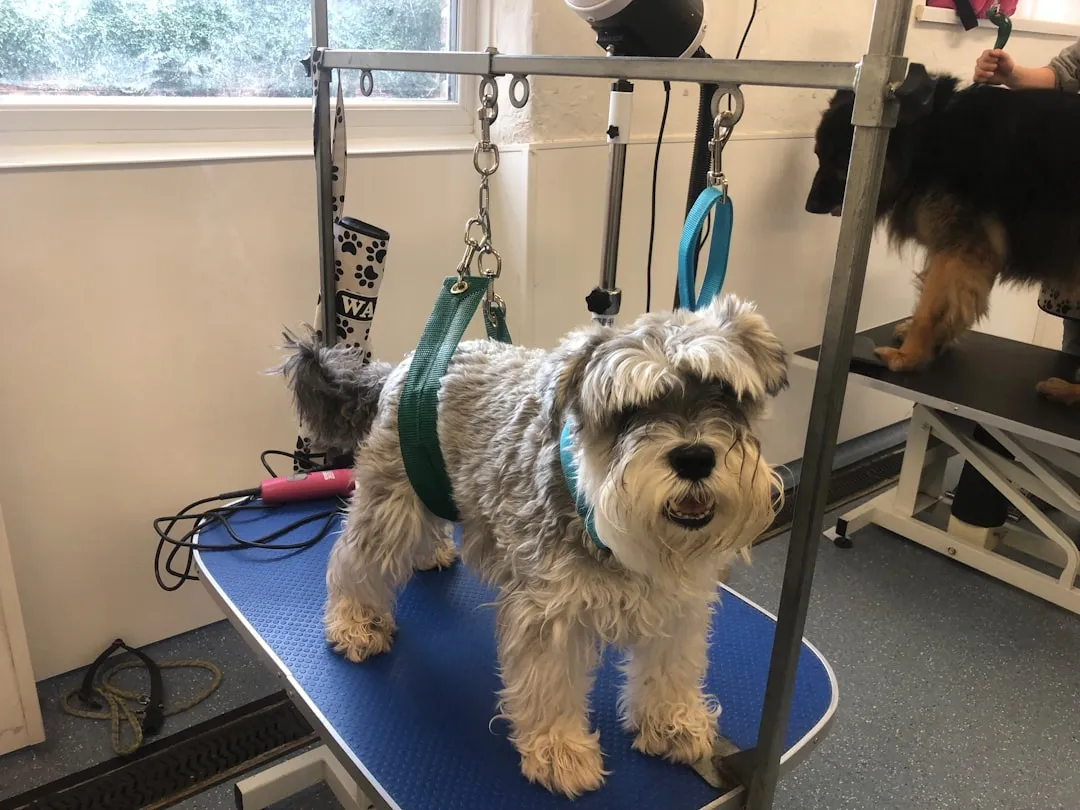
Most owners don’t notice their dog’s posture changing until an obvious limp shows up. Groomers work on raised tables where every wobble is magnified. They see it the moment a dog widens their stance, shifts weight forward, or starts gently leaning into the groomer’s body for support.
That quiet “please help me balance” lean is one of the earliest clues to ageing joints or spinal pain. They also catch tiny tremors in the back legs, a paw slipping more often on the mat, or a dog that suddenly needs to sit every few minutes when he used to stand patiently for an hour. To an untrained eye, your dog just looks “tired today.” To a seasoned groomer, it can read as early arthritis, hip trouble, or fading core strength.
But that’s nothing compared to what they notice at #3, when your dog’s nails hit the floor differently.
#3 – Nail Wear (or the Lack of It) Tells On Your Dog
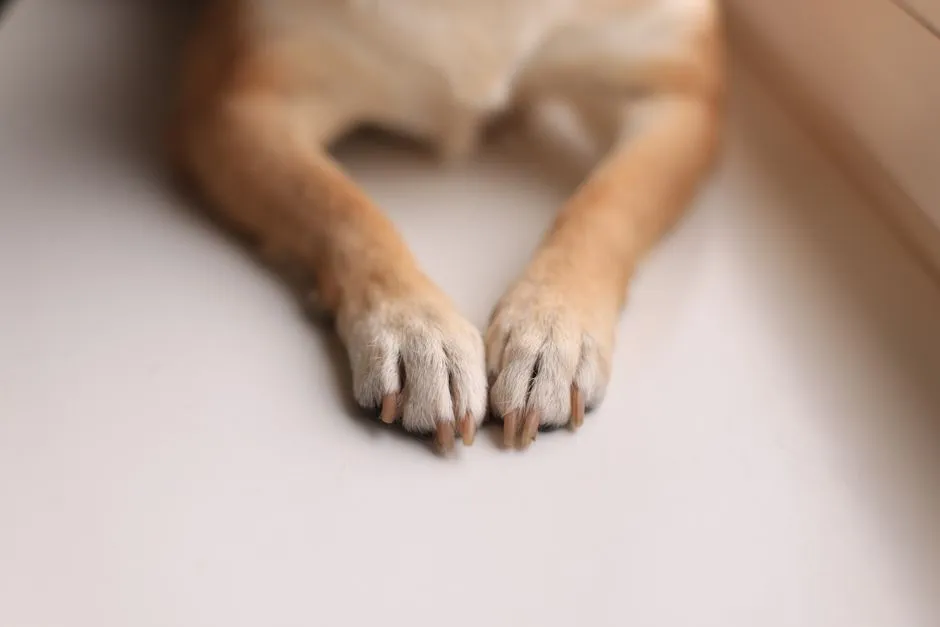
Nails are basically a walking diary. A groomer immediately notices when a dog who used to arrive with naturally worn-down nails now shows up with long, blunt tips.
That usually means the dog isn’t walking as much, or isn’t pushing off properly with the back legs. It can come from pain, stiffness, or the kind of age-related slowdown owners quietly mistake for laziness. Groomers also notice uneven wear – front nails more worn than back, or one side longer than the other – which suggests the dog is compensating for discomfort somewhere. Even the reaction to trimming changes: more flinching, more pulling away, harder panting, as if standing still has become its own small ordeal.
But that’s nothing compared to what they see at #4, when your dog’s eyes reveal how the brain is really ageing.
Fast Facts
- Most dogs are considered “senior” around age 7, though giant breeds often cross that line closer to age 5 or 6.
- Groomers typically see the same dog every 6 to 8 weeks, giving them dozens of side-by-side comparisons most owners never get.
- Coat, nail, and posture changes are often visible under grooming-table lighting months before they show up at home.
- Many of the earliest ageing signs are physical, not behavioral – which is exactly why hands-on groomers catch them first.
#4 – The “Soft Focus” Look That Shows Up Before Cloudy Eyes
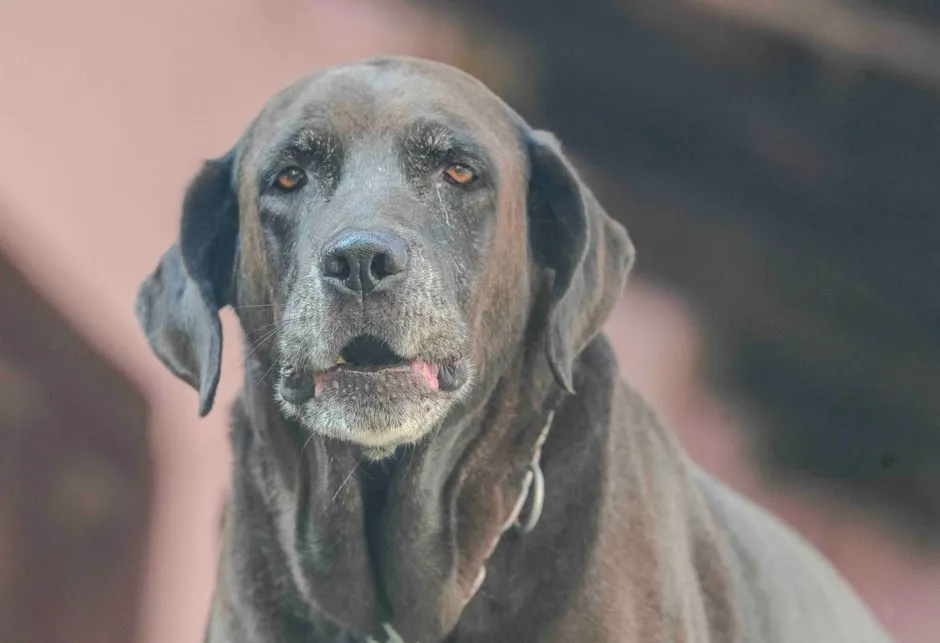
You’re probably watching for obvious blue-grey cloudiness. Groomers catch something earlier: a “soft focus” gaze that doesn’t track movement quite as sharply. Under bright grooming lights, they see pupils that react a beat slower, or eyes that stop following them around the room the way they used to.
Vision decline and early cognitive changes often whisper long before they shout. Many groomers notice senior dogs staring off at nothing mid-groom, or freezing for a second while looking at a wall or a mirror. That blank pause can be an early hint of canine cognitive dysfunction, showing up well before any real confusion appears at home. Owners shrug it off as “he’s just zoning out.” Groomers have seen the same pause play out in dozens of ageing dogs.
But that’s nothing compared to what they smell at #5, long before you ever notice a “senior dog smell.”
#5 – The Quiet Onset of “Old Dog Smell” (It’s Not Just Age)
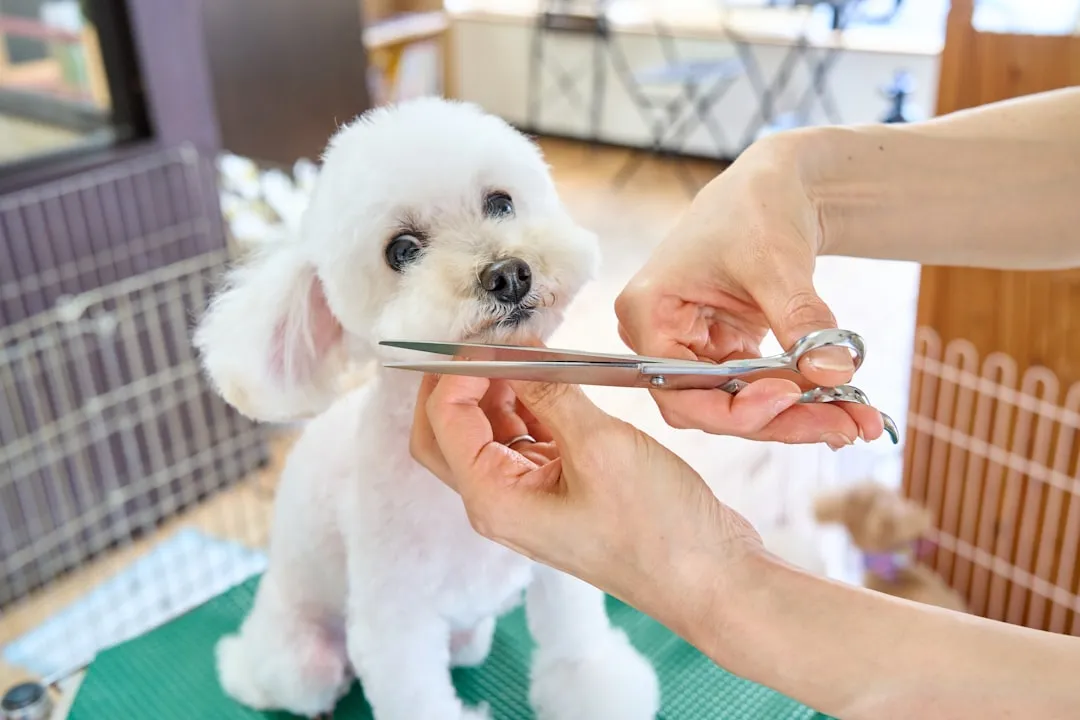
Most people assume that musty old-dog smell is just inevitable. Groomers know that’s only half true. They pick up faint changes in odor – a sour, yeasty, or metallic note – long before it’s strong enough for an owner to catch at home, often coming from very specific places: ears, skin folds, gums, even the paws.
They notice when regular baths stop keeping a dog fresh for as long, or when a freshly washed dog still carries a lingering funk that wasn’t there last year. That smell shift can point to a chronic low-grade skin infection, dental disease brewing under the gumline, or in some cases kidney and metabolic changes. Not every groomer says something, but the good ones do – because a dog whose smell is “ageing” faster than the calendar might actually be fighting something internal.
But that’s nothing compared to what they feel at #6, when their hands run down your dog’s spine.
#6 – Bony Ridges and Muscle Loss Along the Spine and Hips
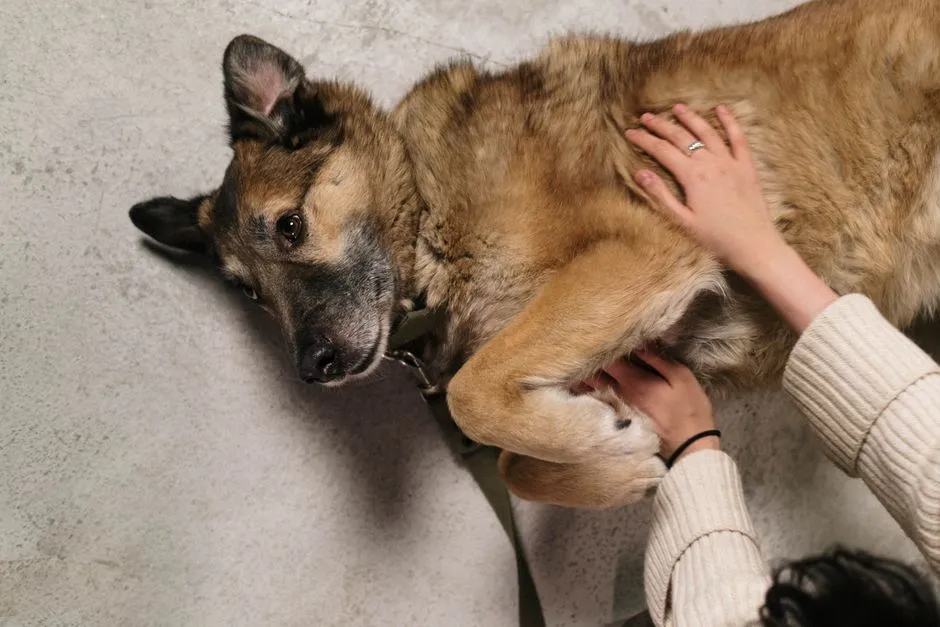
You see a fluffy outline. Groomers feel the frame underneath. Running their hands along your dog’s back, they can tell instantly if the muscle covering the spine and hips is thinning out.
That “sharper” feel – vertebrae or hip bones suddenly obvious under the fur – is a classic ageing marker. Owners miss it constantly because a thick coat hides everything from the outside. A dog can look exactly the same from across the room and feel completely different under the clippers, with a once-rounded rump turning into a flatter, bony shelf, or thighs going stringy instead of solid. Groomers often notice this months before any dramatic weight loss shows up – proof that the body has quietly stopped rebuilding muscle the way it used to.
But that’s nothing compared to the tiny behavior shift they catch at #7, the moment the dryer clicks on.
#7 – New Sensitivity to Dryers, Clippers, and Touch
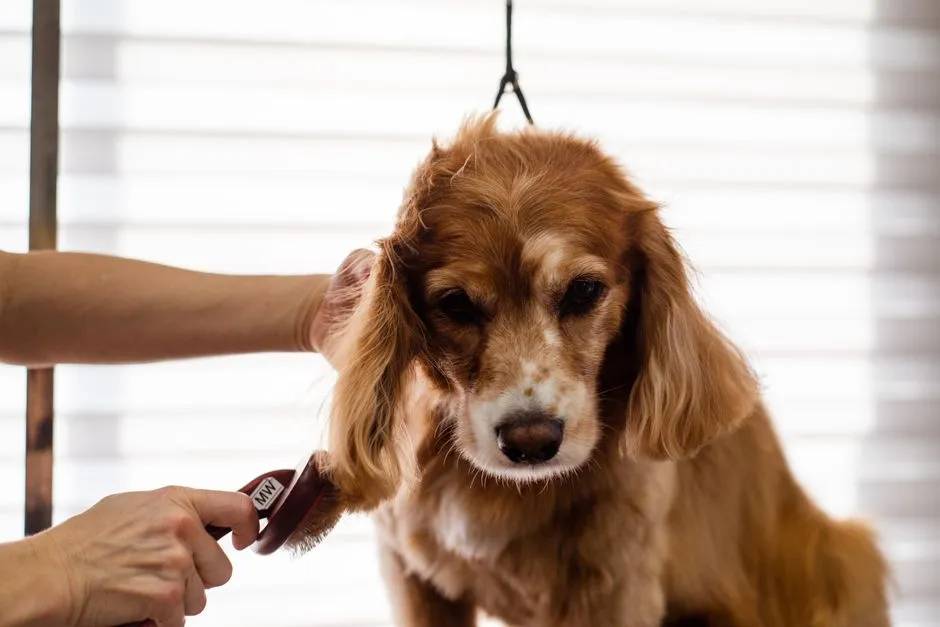
A dog who once shrugged off high-velocity dryers and buzzing clippers without a blink can suddenly start hating the exact same routine. Groomers treat this as a real red flag, not a mood swing. Ageing dogs often develop new sound sensitivity, nerve changes, or heightened anxiety that make an ordinary groom feel overwhelming.
The dog might start shaking, trying to climb into the groomer’s chest, or snapping defensively at tools he used to completely ignore. This usually isn’t “bad behavior” appearing from nowhere – it’s often a first glimpse of rising pain sensitivity, early neurological change, or age-related anxiety. Owners only see the exhausted dog at pickup. Groomers, standing in the noise, watch tolerance drop year over year, and they’re often the first to say the quiet part out loud: “Something’s changed – he’s not himself.”
But that’s nothing compared to what they notice at #8, in how long your dog can actually stand grooming before he taps out.
#8 – A Shorter “Patience Window” Before Your Dog Needs a Break
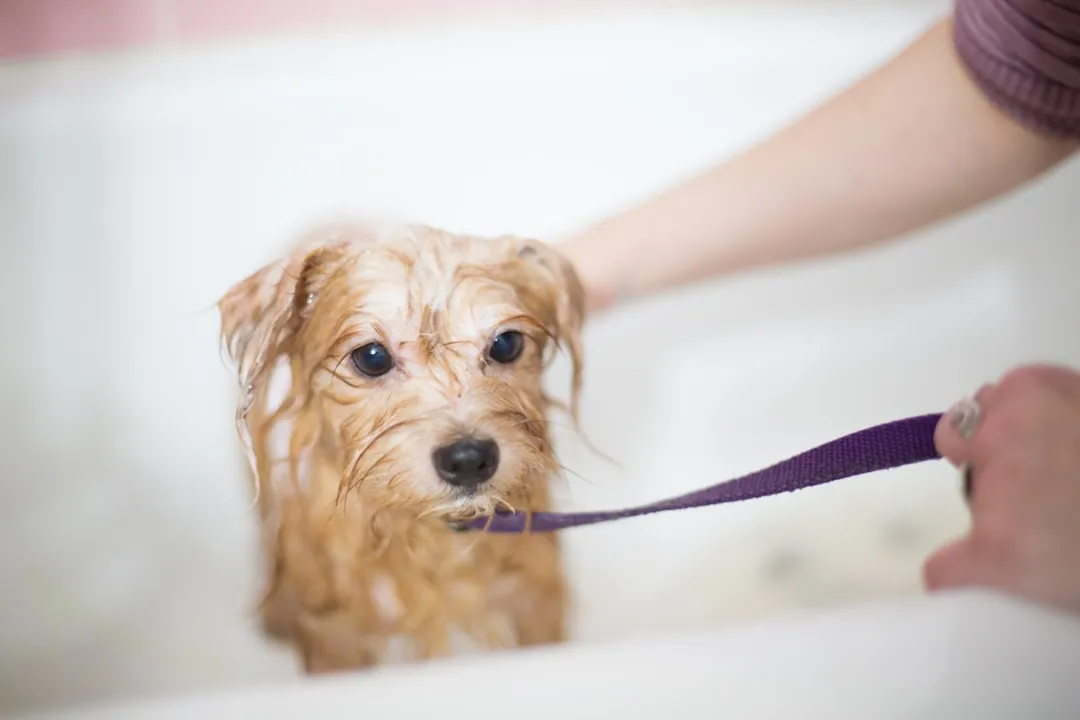
Ageing doesn’t just show up in what a dog does – it shows up in how long he can keep doing it. Groomers quietly track how long a dog will stand, lift a leg, or lie still before getting restless or fatigued.
When that window shrinks, it’s rarely “attitude.” It’s age. A dog who once powered through a full groom without complaint now starts shifting, sitting, or panting halfway through. Senior dogs need more micro-breaks – a quick sit, a sip of water, a moment off the table – and groomers see this pattern across every breed and every personality, long before an owner ever admits, “He just can’t do the long walks anymore.” Some groomers even quietly restructure appointments into shorter, more frequent visits because they’ve clocked exactly how much stamina has faded.
But that’s nothing compared to what they find at #9, when the skin itself suddenly stops cooperating.
#9 – Thinner, Drier, “Papery” Skin That Tears More Easily
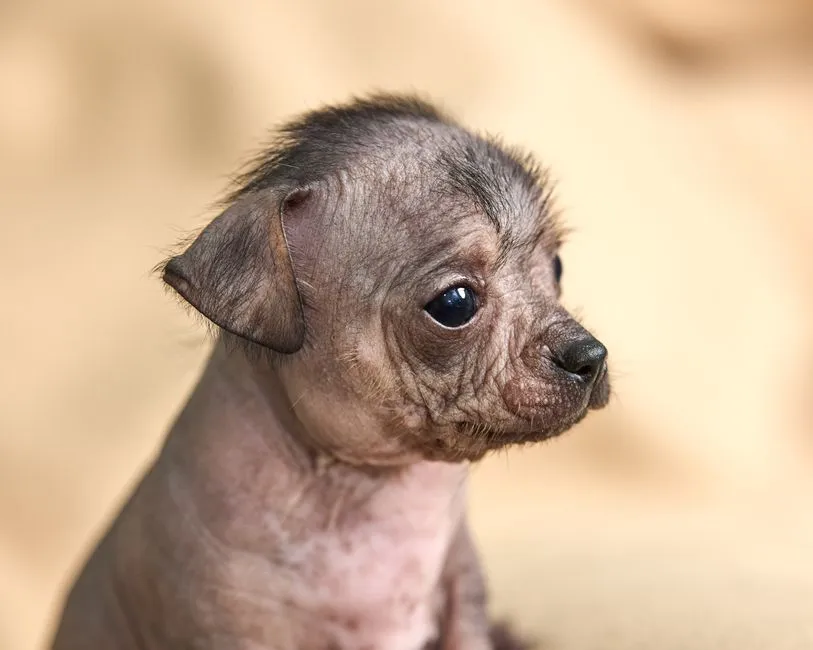
Groomers work millimeters from the skin with sharp tools all day, so changes there are impossible to miss. As dogs age, skin often turns thinner, drier, and more fragile, almost papery under the fingers. Tiny nicks that never used to happen start appearing from barely any pressure, and clipper blades glide differently over soft spots like the belly and groin.
Groomers also notice new flaky patches, mystery scabs, or faint bruising under light-colored coats. Owners chalk it up to allergies or a scrape in the yard. Groomers recognize it as a common trio: hormonal shifts, slower healing and circulation, or side effects from long-term medication. Many pros deliberately switch blades and products for senior dogs specifically because they know one wrong pass can tear fragile skin.
But that’s nothing compared to the mouth clues they catch at #10, brushing past your dog’s lips.
Quick Compare: Normal Ageing vs. Time to Call the Vet
- Normal ageing: Coat looks a little duller, dog naps more, slightly slower on stairs.
- Worth watching: New sensitivity to touch, shorter patience windows, thinning muscle along the spine.
- Call the vet: Sudden nail overgrowth, foul breath with red gums, bald patches, or a dog who won’t jump at all.
#10 – Hidden Dental Decline Long Before the Breath Turns Foul
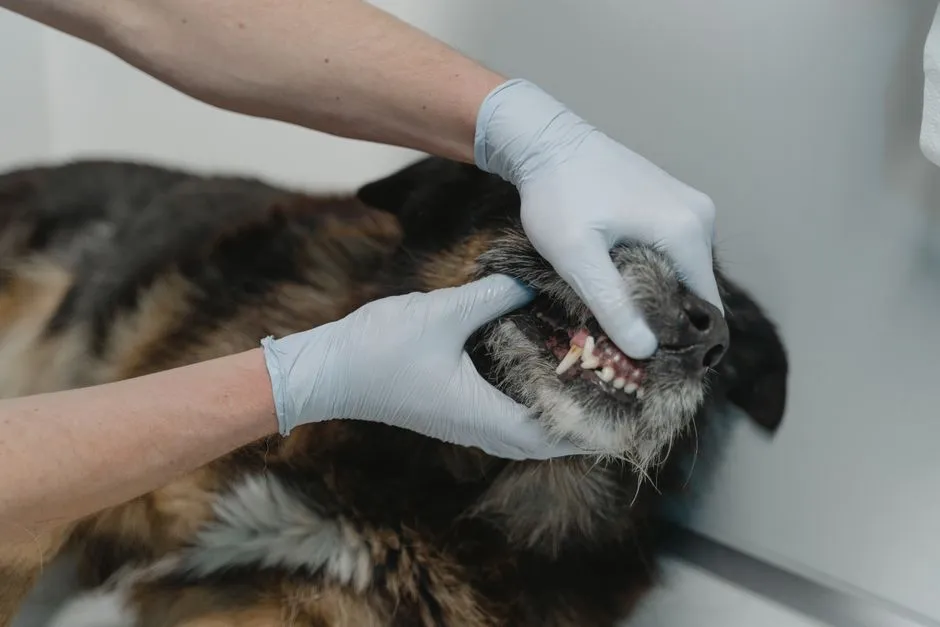
By the time you can smell your dog’s breath from across the couch, dental disease has already had a head start. Groomers, up in your dog’s face for 60-plus minutes at a time, catch it far earlier. They notice light tartar hardening into dark, crumbly buildup, red gumlines, and a flinch when a lip gets lifted.
Many dogs jerk their head away or lick constantly the moment their muzzle is touched, a quiet hint of mouth pain. Sometimes the only sign is how a dog holds his mouth under the dryer – tongue out more, lips slightly parted, drooling more than before. Seniors may also start resisting muzzle loops or face trims that never bothered them a year ago. Groomers can’t diagnose anything, but they see the pattern: untreated dental disease quietly stealing quality of life from ageing dogs, one meal at a time.
But that’s nothing compared to the emotional shift they pick up at #11, in dogs they’ve known since puppyhood.
#11 – Personality “Softening” or Sudden Grumpiness With Old Friends
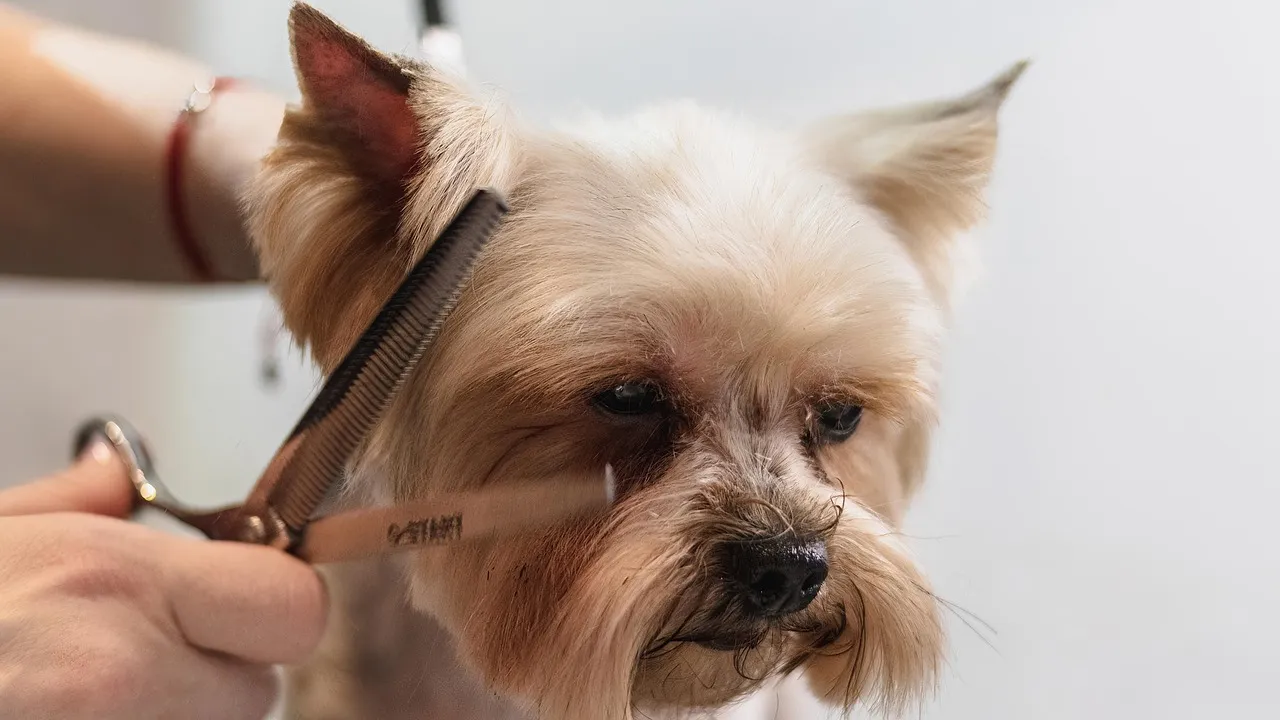
Groomers often know your dog’s baseline personality better than most people outside your household do. That’s exactly why they notice when a once-bouncy, social dog turns quieter, clingier, or oddly withdrawn. A senior who used to wag at everyone may now only tolerate handling from “their” person – or snap at unfamiliar staff.
Owners write it off as “getting cranky with age.” Groomers often see pain or confusion hiding behind it. Sometimes the opposite happens instead – a formerly anxious dog goes strangely flat and checked-out during the groom, which can be an early sign of cognitive decline. It’s no coincidence that many of these “suddenly grumpy” seniors later turn out to have arthritis, vision loss, or organ disease brewing underneath.
But that’s nothing compared to the mobility tell they catch at #12, on the stairs and jumps.
#12 – Hesitation on Ramps, Steps, and Jumps in the Salon
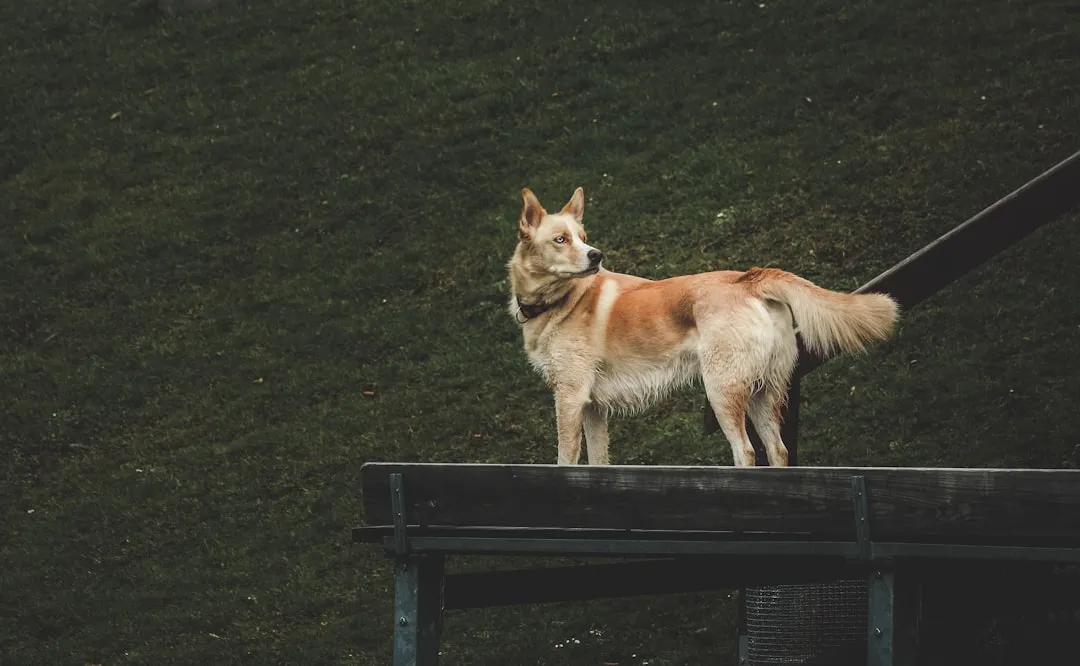
Most grooming salons have a built-in test: a small step into the tub, a ramp onto the table, a short hop into a kennel. Groomers notice instantly when a dog who used to bounce up without a second thought suddenly stops, stares, or asks for help with his eyes.
Some dogs plant their feet and refuse outright, letting out a tiny whine if they’re gently pushed to jump anyway. Others start scrambling mid-jump, losing coordination they used to have without thinking. Owners insist, “He jumps on the couch just fine!” – but groomers see how controlled, slippery, or awkward surfaces reveal the truth. Over time, that hesitation tends to turn into full dependence on ramps or lifting, proof the body is ageing faster than the household routine admits.
But that’s nothing compared to the coat pattern shift groomers catch at #13.
#13 – New Bald Patches, Breakage, or Pattern Changes in the Coat

Groomers see your dog’s entire body, not just the parts you cuddle. They’re often the first to spot thinning hair behind the ears, along the flanks, tail, or belly – spots that rarely see daylight but quietly reveal ageing or endocrine trouble underneath.
Coats that used to grow back quickly between appointments now take longer to fill in, or come in thinner and fuzzier than before. Groomers also notice breakage: hair shafts snapping instead of shedding cleanly, especially in long-haired or curly breeds. Paired with dullness or dandruff, it can hint at thyroid changes, Cushing’s disease, or nutritional gaps that tend to surface in mid-to-late life. Many vets actually lean on groomer observations here, because a pattern across several visits tells a clearer story than a single fifteen-minute exam ever could.
But that’s nothing compared to what senior paws and pads give away at #14.
#14 – Dry, Cracked, or Thickened Paw Pads That Change the Whole Gait
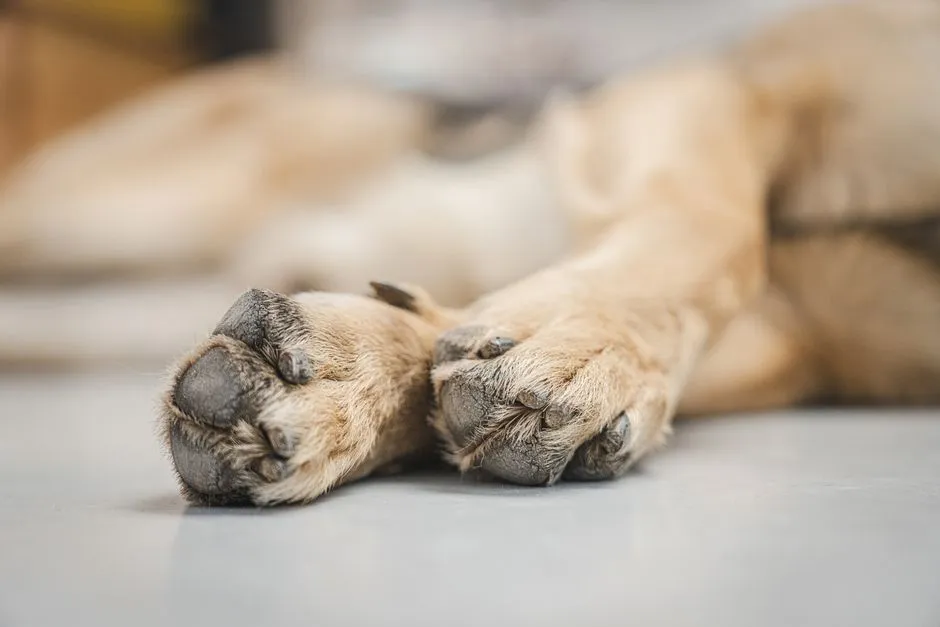
Most owners rarely inspect paw pads closely. Groomers clean and trim around them at every single visit. As dogs age, pads often turn thicker, rougher, or even cracked, like worn-out shoes – and that changes how a dog grips the floor, which quietly alters movement and balance everywhere else.
Groomers notice when a dog starts slipping on the tub mat, splaying his toes wider just to stay upright, or “tip-toeing” to avoid pressure on a sore spot. Some lick their paws excessively during drying, a quiet sign of discomfort. These aren’t just cosmetic details – painful pads make a dog less willing to walk, which speeds up muscle loss and overall decline. Plenty of groomers quietly recommend boots for arthritic seniors simply because they’ve watched how much more confidently those dogs move once the pressure eases.
Worth Knowing
- Non-slip mats or traction spray can help ageing dogs feel steadier at home, not just at the salon.
- Shorter, more frequent grooming sessions often reduce stress for seniors compared to one long appointment.
- Dog booties or paw balm can ease pressure on cracked or thickened pads between grooming visits.
- Many groomers recommend a vet check the same week they notice two or more signs stacking up together.
But that’s nothing compared to the early energy shift they see at #15.
#15 – The “After Groom” Energy Crash That Never Used to Happen
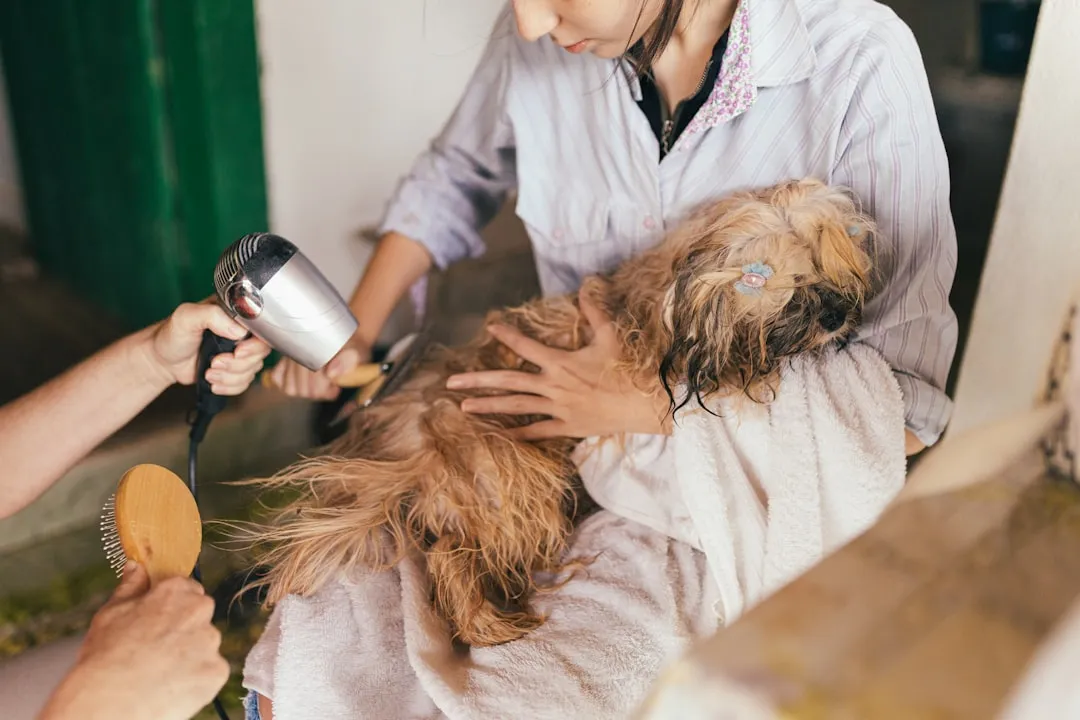
Every groomer knows the difference between a normal “I’m glad that’s over” nap and a genuinely worrying crash. Ageing dogs often go from bouncing out of the salon ready to play, to staggering out drained for the rest of the day.
When a routine groom starts wiping a dog out completely, it’s a red flag for reduced resilience and fading cardiovascular stamina. Groomers watch recovery in real time during the appointment itself – does the tongue stay out longer than usual, does panting take forever to settle, does the dog perk back up after a short break or just stay flat? Dogs who used to shake off the stress and reset now seem “hungover” by the time the bandana goes on. Owners only see the finished product at pickup. Groomers watch the decline unfold, visit after visit, over months.
But that’s nothing compared to the nighttime clue they piece together at #16, straight from honest owners.
#16 – Owner Reports of Night Restlessness That Match Salon Behavior
Groomers aren’t vets, but they are relentless pattern collectors. When an owner casually mentions, “He’s been pacing more at night,” while the same dog is circling, struggling to settle, or staring at doors in the salon, an experienced groomer quietly connects the dots.
Night restlessness paired with new grooming anxiety is a classic combo for both brain and body ageing. These dogs often can’t decide where to stand, repeatedly try to step off the table, or startle when touched from angles that never used to bother them. Some owners brush it off as “he just hates grooming now.” Many groomers suspect early cognitive dysfunction, undiagnosed pain, or both, because they’ve watched too many gentle seniors follow this exact script to write it off as coincidence.
But that’s still nothing compared to the single most overlooked sign they spot at #17 – the one almost every owner denies at first.
#17 – Weight “Redistribution” That Owners Swear Isn’t Happening
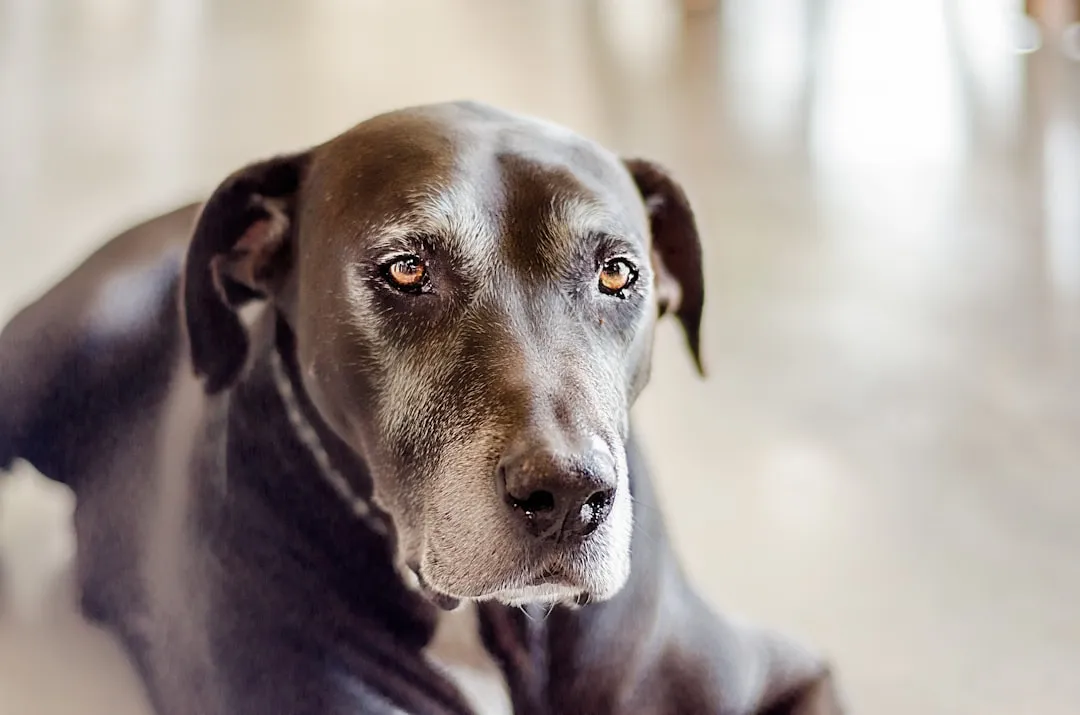
The most argued-about sign groomers see first? Subtle body shape change. Not dramatic weight gain or loss – redistribution. A slight thickening around the waist, a squarer midsection, a chest that stays big while the back end quietly shrinks.
Owners insist, “His weight is exactly the same,” but groomers, lifting and turning dogs all day long, feel the balance shift before anyone else does. Ageing dogs often lose muscle while keeping – or gaining – fat, especially around the belly, which can flag a slowing metabolism, emerging endocrine issues like Cushing’s or diabetes risk, or general senior decline long before a dog ever looks “skin and bones.” A good groomer quietly notices when the harness sits differently, or when two hands can’t meet the same way around the ribcage anymore. They often see this months, sometimes years, before an owner is ready to admit their dog has truly crossed into the senior chapter – and by then, a lot of other “little” changes have already stacked up around it.
The Real Takeaway Behind All 17 Signs

Groomers aren’t just handing out baths and cute haircuts. They’re frontline observers of your dog’s ageing process, catching the first dull patch of coat and the first refusal to jump into the tub long before you ever connect the dots at home.
Some owners roll their eyes when a groomer gently suggests a vet check or a few senior-friendly adjustments. Ignoring those early whispers is exactly how “he got old overnight” turns into a painful, avoidable reality a year later.
Here’s the part that should actually feel hopeful: almost none of these 17 signs mean your dog is “done.” Caught early, dental disease, joint pain, skin trouble, and anxiety can all be managed so your senior dog genuinely enjoys the years he has left. The real question was never whether your dog is ageing. It’s whether you’re willing to listen to the people who see it first.
Did we nail it, or do you think groomers overstep when they bring this stuff up? Tell us in the comments.
