

Have you ever stopped in your tracks while walking through a park, mesmerized by the elaborate tunes pouring from a tiny feathered creature perched on a branch? It’s honestly something that still catches me off guard, even after hearing it countless times. These aren’t just random chirps thrown into the air.
Birds weave together intricate patterns of sound that can rival some of the most sophisticated music humans have created. The question that naturally follows is obvious: why go through all that effort? Let’s be real, survival in the wild is tough enough without needing to compose a symphony every morning. Yet here they are, belting out performances that would make even seasoned musicians jealous.
The Biological Orchestra: How Birds Create Such Rich Sounds
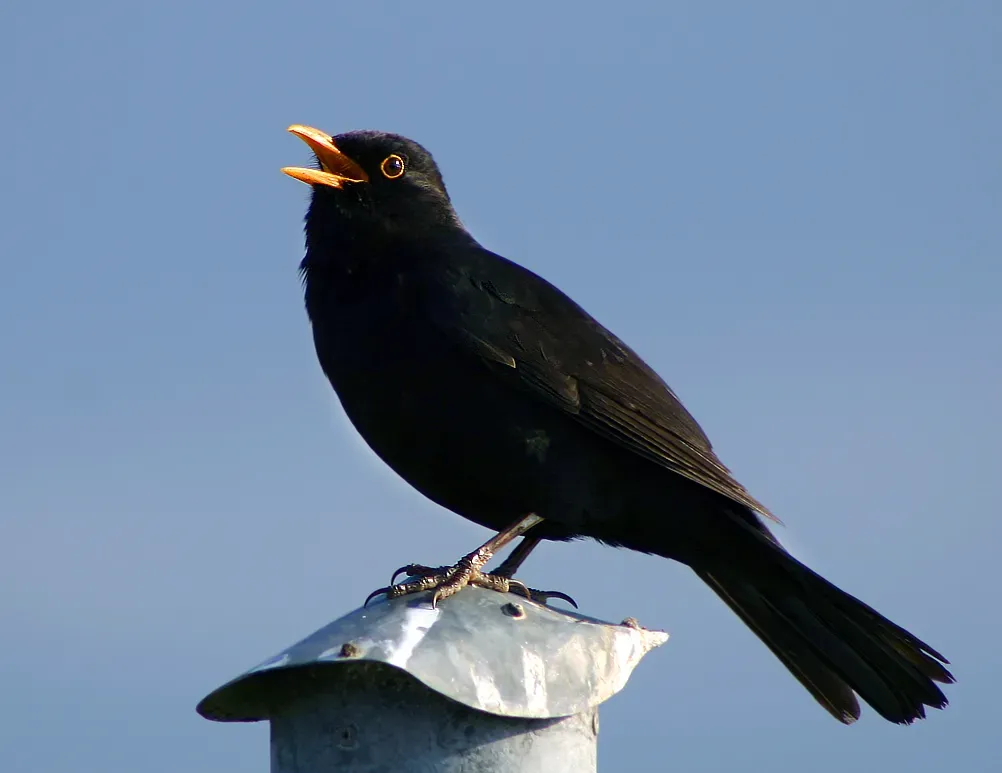
The secret behind these elaborate melodies lies in a specialized organ called the syrinx. Unlike the human larynx positioned in our throat, the syrinx is located right where the windpipe branches to connect to the two lungs. Think of it like having two separate instruments built into one body.
Birds can control each side of their syrinx independently, allowing them to produce two different notes at the same time. This gives them an almost unfair advantage in the sound department. About 4,000 of the world’s roughly 10,000 bird species are classified as songbirds, in which the syrinx is especially well-developed.
The level of control they have over this tiny pea-sized organ is remarkable. Some species can produce sounds with such precision that researchers have compared their vocal patterns to human music. Similar motor constraints on human and avian song may have driven similar song structures, including arch-shaped and descending melodic contours in musical phrases.
What really gets me is how they manage all this complexity. The syrinx has two membranes that can vibrate independently, and muscles surrounding it control the tension and position of these membranes. It’s like having a built-in digital synthesizer that can shift pitch, volume, and tone on the fly.
Interestingly enough, the syrinx is capable of far more sonic variation than most birds actually make use of. Species with simpler songs aren’t limited by their vocal hardware. They’re making deliberate choices about what to sing.
The physical abilities are just the starting point. What birds choose to do with those abilities reveals something deeper about their world and how they navigate it.
Love Songs and Battle Cries: The Dual Purpose of Complex Melodies

Birdsongs serve two main purposes for their singers: to defend territories and woo mates, carrying long distances and displaying the singer’s health and vigor. That’s the textbook answer, sure. The reality, though? It’s more nuanced than that.
Think about it from the bird’s perspective. You’re a male songbird sitting on a branch at dawn. Every note you produce is essentially a billboard advertising your genetic quality to potential mates while simultaneously warning rivals to back off. The quality and complexity of a male’s song are directly correlated with his attractiveness to females, as a complex song requires skill and energy to learn and perform, suggesting superior genes.
Here’s where it gets interesting. Song complexity is linked to male territorial defense, with more complex songs being perceived as a greater territorial threat. So a bird that invests in learning elaborate melodies isn’t just showing off to the ladies. He’s also telling other males that this territory is occupied by someone who has the resources and stamina to master a difficult vocal repertoire.
Dawn songs are more complex and louder than songs sung at other times of the day, and males that start singing earliest secure more mating opportunities. Females are listening carefully, assessing which males demonstrate the most stamina and precision. The timing matters as much as the complexity.
Some species take this to extremes. Males with exact repetition in their songs often attract a mate faster and pair with females that lay more eggs. Consistency isn’t boring in the bird world; it’s a sign of quality control and neural precision.
Learned, Not Instinctive: The Surprising Truth About How Birds Acquire Their Songs

One of the most fascinating aspects of birdsong is that it’s not hardwired from birth. True songbirds must learn their songs while still in the nest during the critical period, listening to adults singing around them, then following fledging, they attempt to replicate these songs.
This puts songbirds in rare company. Vocal learning is a rare trait found to date in only three distantly related groups of mammals (humans, bats, and cetaceans) and three distantly related groups of birds (parrots, hummingbirds, and songbirds). Most animals on this planet produce vocalizations that are entirely instinctive.
Young birds don’t just passively absorb what they hear, either. Research on Song Sparrows revealed that young males learn more from listening in on interactions among neighborhood males than from solo performances, as heated exchanges pack more information about which song patterns are most winning. They’re essentially eavesdropping on vocal battles to figure out what works.
Genetic predisposition for recognizing species-specific songs minimizes the risk of learning wrong songs. Birds come equipped with some built-in filters, but the actual melodies have to be learned through practice. It’s hard to say for sure, but this balance between nature and nurture seems critical to their success.
Learned songs allow the development of more complex songs through cultural interaction, allowing intraspecies dialects that help birds identify kin and adapt their songs to different acoustic environments. Cultural transmission means that bird populations can develop regional accents, just like humans do with language.
The learning process itself is surprisingly similar to how human infants acquire speech. Both involve a sensitive period early in life, lots of practice, and gradual refinement through trial and error.
Big Brains and Bigger Repertoires: The Cognitive Connection

Recent research has uncovered something remarkable about the relationship between song complexity and intelligence. Species with greater vocal learning abilities demonstrate better problem-solving skills and relatively larger brains, conclusions that held when controlling for noncognitive variables and phylogeny.
This isn’t just correlation without meaning. Species with the most complex vocal learning abilities were also the best problem solvers and had the largest brains relative to body size. It suggests that the neural machinery required for mastering intricate songs overlaps with the circuitry used for other cognitively demanding tasks.
Let’s be real, this makes intuitive sense. Learning and reproducing complex sequences of sounds requires memory, pattern recognition, motor control, and the ability to adjust based on feedback. Those are the same cognitive tools needed to solve novel problems in the environment.
Results support a hypothesis of shared genetic and cognitive mechanisms between vocal learning, problem-solving, and bigger brains in songbirds. The brain regions involved in vocal learning don’t exist in isolation. They’re wired into broader networks that support flexible, adaptive behavior.
What’s fascinating is that this connection between vocal complexity and cognition might explain why vocal learning evolved in the first place. Maybe the ability to learn songs was beneficial not just for communication, but because it required developing brain structures that could be repurposed for other intelligent behaviors.
It is not entirely clear why birds sing in such complex ways, and the amazing diversity in birdsong still raises questions. Even experts admit there’s still mystery here.
The Hormones, The Timing, and The Morning Symphony

Why do birds sing most intensely at dawn? The answer involves a complex chemical ballet happening inside their brains. Melatonin guides the rhythm, dropping before dawn to signal the body to prepare for activity, and this hormonal shift kicks the entire process into gear.
Birds become hormonally aroused in the dark long before initiating dawn singing, and suppression of spontaneous singing by darkness enhances their intrinsic motivation to sing. Think of it like being forced to stay quiet all night when you have something really important to say. By morning, those vocalizations are bursting to get out.
The hormonal influence goes beyond just timing. In canaries, females normally sing less often and with less complexity than males, but when given androgen injections, their singing increases to an almost male-like frequency. Testosterone and related hormones directly affect both the motivation to sing and the complexity of the songs produced.
Melatonin is believed to influence song behavior in adults, as many songbirds show melatonin receptors in neurons of song nuclei, suggesting it plays a role in seasonal changes of singing behavior. The amount of daylight throughout the year affects their neurochemistry, which in turn affects their vocal output.
Honestly, the dawn chorus is also strategic. At this time of day, sound travels much farther than when there is more background noise and there is often less wind. Birds are taking advantage of optimal acoustic conditions to broadcast their messages as widely as possible.
What Are They Actually Saying? Decoding the Message
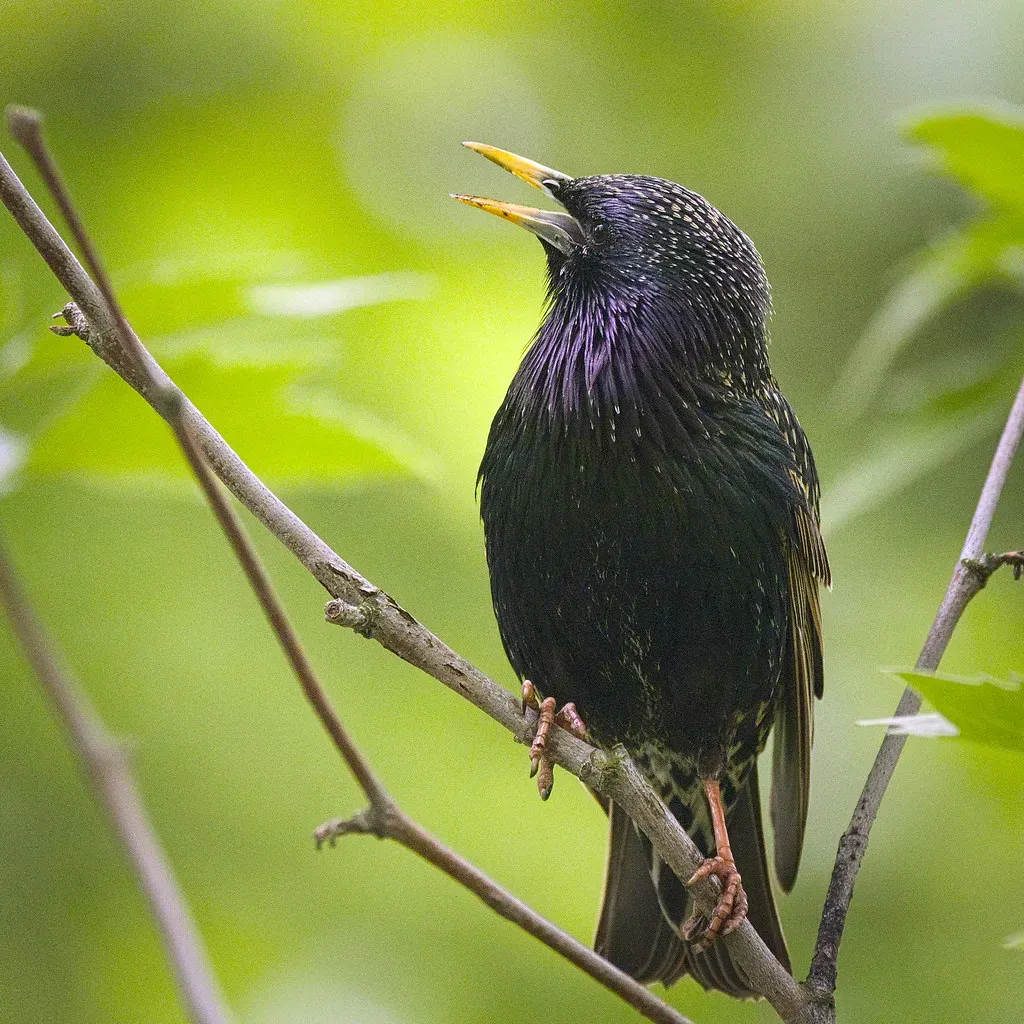
So we’ve established that birds sing complex songs for territory and mating, but what information is actually encoded in those elaborate melodies? In birds with song repertoires, individuals may share the same song type and use these song types for more complex communication.
Some species engage in sophisticated vocal matching behaviors. Birds may respond to a shared song type with a song-type match using the same song type, which may be an aggressive signal. It’s like someone responding to your statement by repeating it back to you with emphasis. The message is clear: I hear you, and I’m not backing down.
Birds most successful at defending territories are those whose song types most accurately match the various songs of their neighbors. Knowing your neighbor’s repertoire and being able to respond appropriately is crucial for minimizing unnecessary conflicts while still maintaining boundaries.
White-crowned sparrows integrate songs that match the dialects of neighboring males into their crystallized song, and males that sing local dialects have higher reproductive success than those that sing foreign dialects. Local dialects function like cultural passwords, signaling that you’re an insider who belongs in this particular community.
The complexity itself may carry information about individual quality. Some birds have extremely complex songs with a large phrase repertoire, organized in non-random fashion with discernible patterns. These aren’t just random sequences. There’s structure and syntax that may convey specific meanings or individual signatures.
What would you have guessed birds were communicating with all those trills and whistles? The answer is more sophisticated than most people expect.
Conclusion: The Meaning Behind The Melody

Complex bird songs represent one of nature’s most elegant solutions to the dual challenges of survival and reproduction. These elaborate melodies aren’t merely beautiful accidents. They’re finely tuned communication systems shaped by millions of years of evolution, backed by sophisticated neural machinery, and transmitted culturally across generations.
The complexity we hear reflects a bird’s cognitive abilities, genetic quality, territorial strength, and social standing all wrapped into one auditory package. Every trill carries information. Every repeated phrase reinforces a message. The dawn chorus isn’t random noise; it’s a carefully timed broadcast taking advantage of optimal acoustic conditions and hormonal motivation.
What strikes me most is how much birds and humans have in common when it comes to vocal learning. We both learn our “languages” during critical periods early in life. We both use cultural transmission to pass songs and speech across generations. We both have specialized brain circuits dedicated to producing learned vocalizations. Maybe that’s why birdsong resonates with us so deeply.
Next time you hear a bird launching into an elaborate melody, you’ll know there’s far more happening than meets the ear. What do you think about it? Does knowing the purpose behind the song make it more or less magical?
