

Have you ever noticed how your dog seems to relax when you whisper sweet nothings in their ear? Maybe you’ve caught them leaning in closer when you lower your voice, eyes soft and body language loose. This isn’t just coincidence or your imagination running wild. There’s genuine science behind why a gentle tone makes your furry friend feel more secure than a booming command ever could.
Dogs have lived alongside humans for thousands of years, evolving to read our emotional signals with stunning accuracy. Speaking softly taps into something primal in their understanding of us, creating a sense of safety that goes far deeper than words alone. Let’s dive in and explore the fascinating reasons behind this connection.
Their Ears Are More Sensitive Than You Think
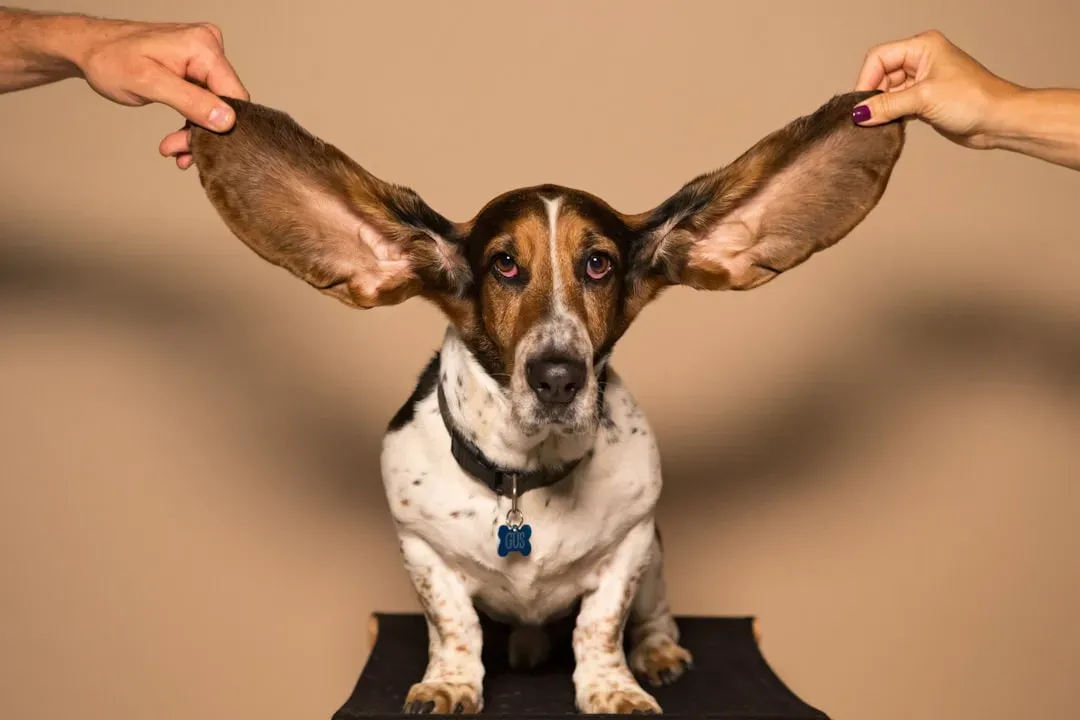
Dogs have maximum hearing sensitivity at about 8,000 Hz, while human hearing begins to drop off at these frequencies. This means your pup literally hears the world differently than you do. Dogs have much more sensitive hearing than humans, hearing some sounds up to four times further away. Think about what this means for a moment. When you raise your voice, even slightly, that sound hits their ears with far more intensity than it hits yours.
When sounds are between 3,000 and 12,000 Hz in frequency, dogs’ ears are far more sensitive than ours, and they can hear those sounds when they’re between -5 dB and -15 dB on average. That’s why something that seems moderately loud to us might genuinely overwhelm them. A soft voice isn’t just pleasant for dogs. It’s actually less physically jarring for their delicate auditory system.
Imagine wearing headphones turned up too loud. That discomfort you feel? Your dog experiences something similar when voices boom around them. Dogs can be so distressed by everyday noises because they sound louder to dogs than to humans, plus dogs can hear high-pitched noises from these devices that we can’t detect. Speaking softly respects the biological reality of how their ears work, making your voice a source of comfort rather than stress.
Tone Signals Safety Better Than Words

Here’s the thing. Your dog doesn’t really understand most of what you’re saying. Before learning word associations, your dog hears “yadda, yadda, yadda” when you speak, and it’s not what you say but how you say it that sends the desired message. Dogs are masters at reading the emotional content behind our voices, picking up on subtle shifts in pitch and volume that reveal our true state of mind.
A soft and reassuring tone with low volume and high pitch expresses affection and caring, similar to comforting a baby. This particular combination triggers something deep in a dog’s psychology. When you speak this way, you’re essentially telling them everything is okay, that there’s no threat, no danger lurking. It’s like a verbal hug.
Dogs evolved alongside humans precisely to decode these vocal nuances. Scientists have shown that your dog can hear your mood in the tone of your voice. A gentle, soft voice communicates calm, patience, and safety. It tells your dog that you’re not agitated, not on edge, not preparing for conflict. In the canine world, that peaceful energy is everything.
The calmer you sound, the more receptive your dog becomes to learning and cooperation. It creates an environment where they feel confident enough to listen, to engage, to trust. Soft speech becomes the foundation of your entire relationship.
Harsh Voices Trigger Stress Responses

Let’s be real about what happens when we raise our voices at dogs. Dogs respond better to calm, soft cues, while loud, threatening voices make them anxious and harder for them to work with that anxiety. It’s not just that they dislike it. Their bodies physically react with a stress response that can linger long after the shouting stops.
Lower-pitched, harsher tones of voice are associated with less predictable responses from dogs, creating uncertainty and fear. You’d think a stern voice would command obedience, right? Actually, the opposite often happens. Sharper, reproachful tones cause dogs to wag their tails less and want distance from the trainer, potentially damaging the trust bond you’ve built.
Think of it like this: when someone yells at you unexpectedly, your heart races, your muscles tense, your brain shifts into defensive mode. Dogs experience the same cascade of reactions. Dogs trying to learn become stressed, anxious, and fearful when handlers yell at them, and even “NO” can evoke enough fear that the dog may become defensive or aggressive.
The damage isn’t always visible on the surface. Cortisol levels spike, anxiety builds, and over time, your dog may become chronically stressed around you. It can take up to 72 hours for cortisol levels to return to normal, and for dogs who regularly experience overwhelming events, cortisol levels stay elevated long term. A soft voice prevents this entire physiological nightmare.
They Mirror Your Emotional State

This part honestly surprised me when I first learned about it. Dogs, to a great extent, mirror the stress level of their owners. That synchronization isn’t just behavioral. It’s biological. When owners experienced higher stress levels, their dogs displayed corresponding increases in cortisol, and when owners were less stressed, cortisol levels in their dogs also decreased.
Speaking softly often means you’re in a calmer state yourself, which creates a beautiful circle of mutual calm. When you lower your voice, you’re not just changing how you sound. You’re changing your own physiological state, slowing your breathing, relaxing your muscles. Your dog picks up on every bit of that.
Dogs perceive and interpret human facial expressions, tone of voice, and body language, and if a person exhibits fear, aggression, anxiety or sadness, it can trigger similar emotional responses in dogs. This emotional contagion flows both ways, creating a feedback loop. because you’re calm, which makes your dog calm, which makes you even calmer. It’s a beautiful dance of mutual regulation.
Higher oxytocin levels in owners are associated with dogs displaying calm behaviors, with fewer position changes. Your gentle voice contributes to that entire hormonal cascade, creating an environment where both you and your dog thrive emotionally.
Soft Speech Lowers Cortisol Levels

Let’s talk about the stress hormone that affects nearly every aspect of your dog’s wellbeing. When you use a gentle, soothing voice with your dog, you’re actively helping to lower stress hormones in their body, similar to how gentle massage works, and calm, reassuring tones help dogs maintain lower baseline cortisol levels.
Cortisol isn’t inherently bad. It’s necessary for survival, helping dogs respond to genuine threats. The problem arises when cortisol stays elevated chronically. Increased cortisol levels can cause all kinds of stress-related behavior such as hyperactivity, reactivity, compulsive behaviors, and even increased aggression. Your voice, believe it or not, has the power to influence whether your dog lives in a state of chronic stress or peaceful equilibrium.
Most studies have taken place in animal rescues where researchers record how dogs behave in response to music and note any changes in the stress hormone, cortisol. The same principle applies to human voices. It’s not magic, it’s biology responding to the safety signals you’re sending through your vocal patterns.
I know it sounds crazy, but your soft, gentle tone literally changes your dog’s brain chemistry. Dogs in soft-spoken households probably experience less chronic stress overall. That translates to better health, longer lifespan, fewer behavioral problems, and a deeper bond between you two. All from adjusting your volume and tone.
Building Trust Through Vocal Gentleness

Trust isn’t built overnight. It’s constructed through thousands of small interactions where your dog learns whether you’re safe, predictable, and kind. Using a soft gentle voice with your dog has a calming effect and will enhance learning. Every time , especially in moments when your dog might expect harshness, you’re making a deposit in the trust bank.
When owners whispered their signals to dogs during training, the effect was noticeable, with all dogs becoming calmer, quieter, and paying better attention to their handlers. This wasn’t a fluke or a one-time observation. It’s a consistent pattern that professional trainers recognize and utilize.
Dogs learn through association. If your voice consistently predicts safety, they’ll seek you out when they’re scared or uncertain. A soothing tone of voice expresses affection and caring and is often used when bonding with your dog. That bond becomes the foundation for everything else, from training to veterinary visits to navigating stressful situations together.
The beautiful part? It works both ways. Higher oxytocin levels in owners are associated with dogs displaying calm behaviors, and when you use a gentle voice, your own stress levels drop too, creating a feedback loop of calm. You’re not just helping your dog feel safer. You’re helping yourself feel more peaceful too. That’s the magic of soft speech with our canine companions.
Conclusion

The way we speak to our dogs matters far more than most people realize. A soft, gentle voice isn’t just nice or polite. It’s a powerful tool that respects their sensitive hearing, signals emotional safety, prevents stress responses, and builds the kind of trust that makes everything else possible. When you lower your voice and soften your tone, you’re communicating in a language your dog truly understands, one that transcends words and speaks directly to their nervous system.
Next time you’re about to call your dog or give a command, try softening your approach. You might be amazed at the difference it makes in their responsiveness, their relaxation, and the depth of connection you share. After all, isn’t that beautiful bond exactly why we chose to share our lives with these incredible creatures?
What’s your experience been with using different tones with your dog? Have you noticed changes in their behavior when you speak more softly?
