

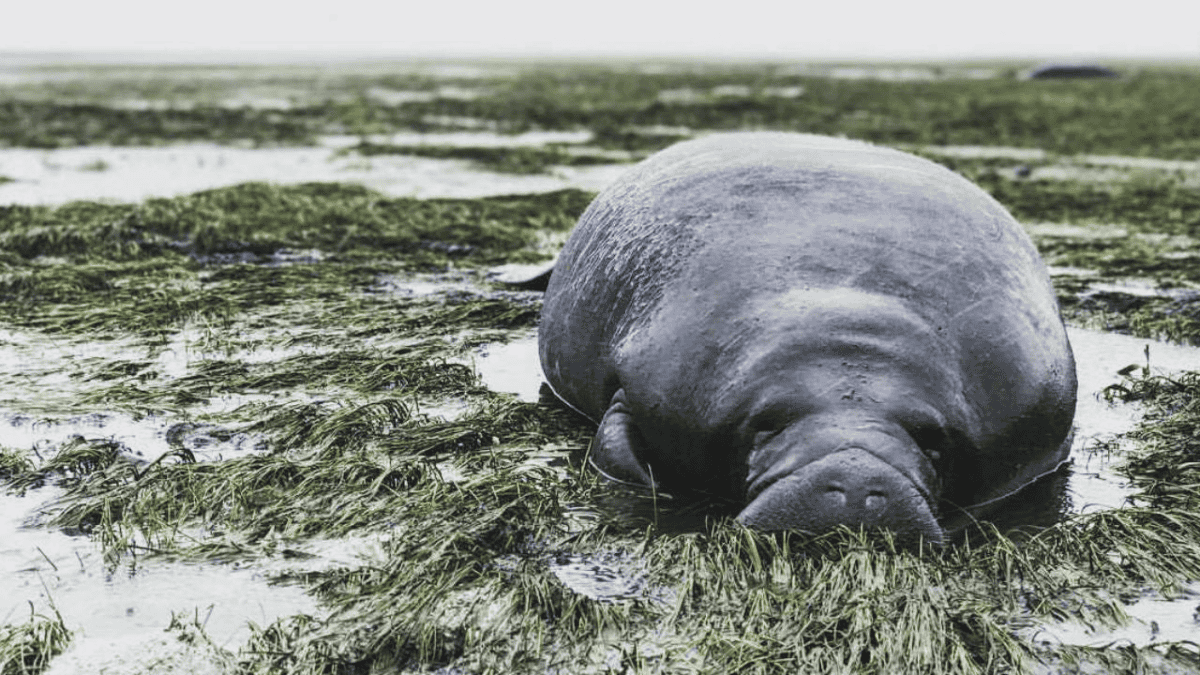
The manatee, often affectionately referred to as a “sea cow,” is a gentle giant roaming the warm waters of the coastlines of the Americas and Africa. These peaceful marine mammals belong to the order Sirenia, which also includes the dugong. Manatees have charmed people with their large, whiskered faces and slow-moving demeanor. However, unlike many of their marine counterparts known for speed and agility, manatees are notoriously slow. Let’s dive into why these aquatic creatures move at such a leisurely pace and what advantages this might entail for their survival.
Physical Adaptations for a Slow-Paced Lifestyle

Manatees are well-adapted to their slow-paced lifestyle, with certain physical characteristics contributing to their lack of speed. One primary reason is their body structure: they have large, paddle-shaped tails and flippers designed more for gentle propulsion through water than racing through it. Weighing between 800 to 1,200 pounds on average, manatees are also fairly heavy, which contributes to their placid movement.
Manatees’ slow metabolism correlates with their slow pace. Unlike carnivorous marine animals, which require a faster metabolism to chase prey, manatees are herbivores that graze on aquatic plants. This diet doesn’t demand rapid movement, allowing them to live more energy-efficiently.
Buoyancy and Flotation

Another factor influencing their slow movements is their buoyancy. Manatees have dense bones that help them stay submerged and maintain buoyancy control in shallow waters. This buoyancy allows them to float effortlessly along the water’s surface or drift near the bottom, making speed unnecessary for their survival.
Additionally, their lungs, which run along the length of their bodies, contribute to their buoyancy control. This anatomical feature allows manatees to regulate their position with subtle changes in lung volume, akin to how a submarine operates, rather than through rapid movement.
A Lifestyle Geared Towards Conservation of Energy
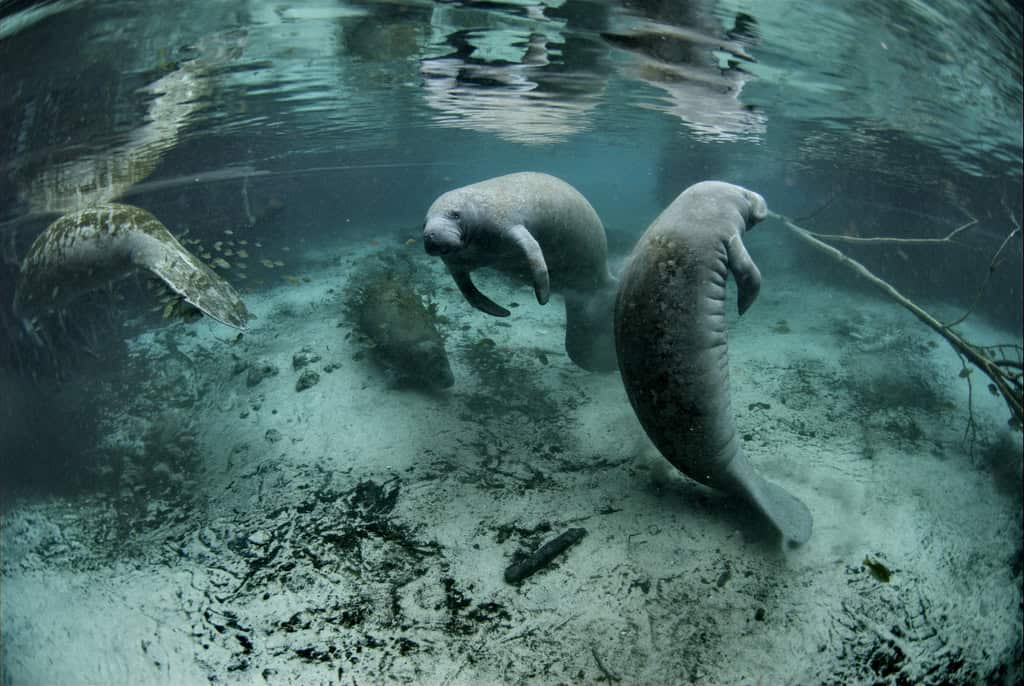
The manatee’s leisurely pace is perfectly suited to their lifestyle, focused on energy conservation. Manatees spend much of their time feeding on seagrass and other vegetation, which requires minimal energy output compared to capturing fast-moving prey. They can spend up to eight hours a day feeding and grazing, ingesting 50-100 pounds of vegetation daily. This is feasible due to their slow metabolic rate, which conserves energy and sustains them on their plant-based diet.
Further, due to their massive size, manatees do not have natural predators. Therefore, they lack the necessity for speed to escape threats. Their primary vulnerabilities come from human-related activities, like boating accidents, rather than natural adversaries.
Environmental Adaptations
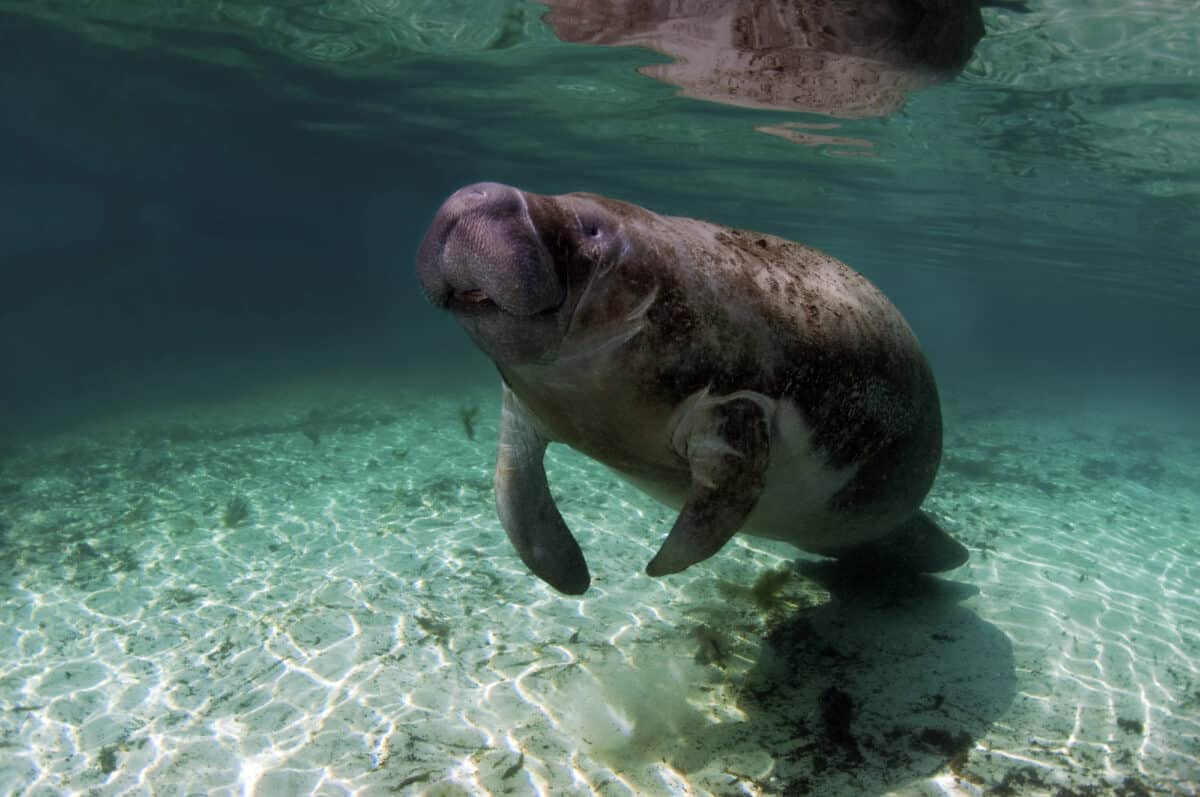
Manatees’ slow movements are also influenced by their coastal and riverine environments. Typically found in warm, shallow waters, they avoid turbulent open-sea environments where speed would be more advantageous. Instead, they thrive in environments with plentiful vegetation, where calm, slow movement suffices.
Seasonal migrations also illustrate their slow nature. In the winter, manatees migrate to warmer waters, such as rivers and springs in Florida. Although these migrations are equivalent to hundreds of miles, they are performed at a pace dictated by the need to find food and suitable living conditions rather than speed.
Conclusion: Embracing their Pace
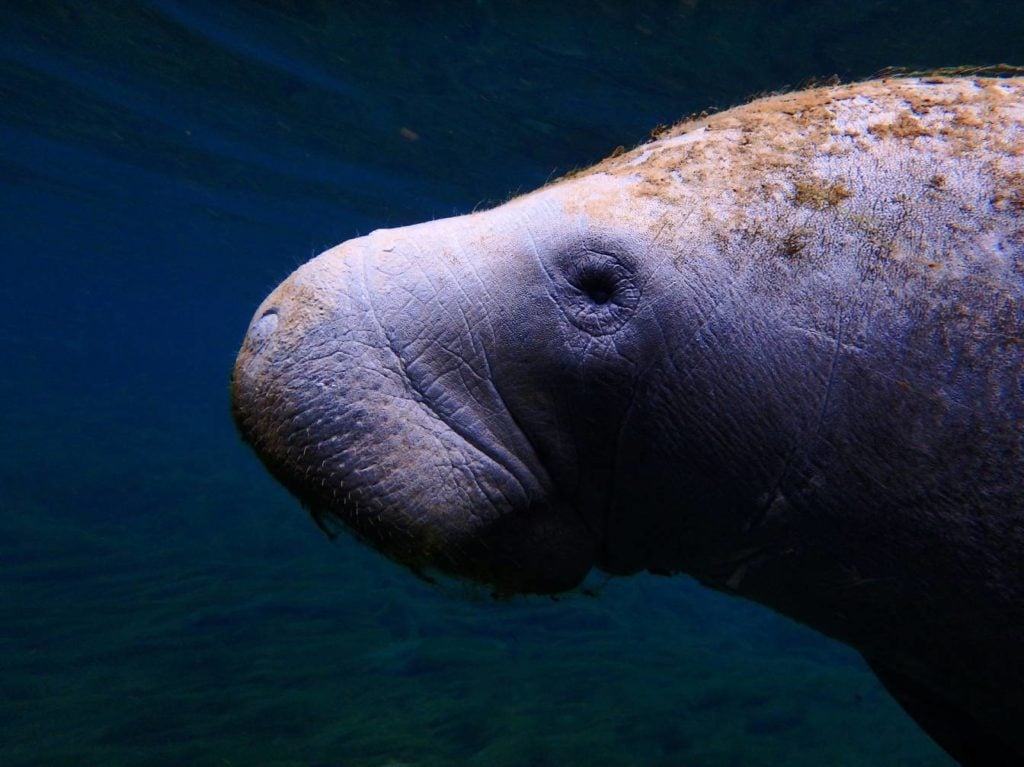
In the fast-paced aquatic world, the manatee’s leisurely cadence is a fascinating evolution story about adaptation and survival. These slow-moving giants have thrived for millions of years, in part because their pace perfectly matches their ecological needs and roles. By slowing down, manatees conserve energy, maintain efficient buoyancy, and thrive on a steady diet of vegetation.
Thus, the manatee’s sloth-like movements are not just a captivating quirk; they are a testament to the incredible adaptability of nature. The next time you spot a manatee gently gliding through clear waters, take a moment to appreciate the genius behind their slow-motion masterpiece.

As a little kid, I fell in love with nature, wildlife, and animals. Living in the USA, South Africa, Italy, China and Germany gave me the opportunity to discover the world's Wildlife. My favorite animals are Mountain Gorillas, Siberian Tigers, and Great White Sharks.
I'm a certified PADI Open Water Diver, went to Everest Base Camp and Trekked Gorillas in Uganda. I hold a Master of Science in Economics and Finance.
Please send any feedback to feedback@animalsaroundtheglobe.com
- 10 Reasons Lions Are the True Kings of the Wild - July 19, 2026
- 11 Cold Blooded Truths About Snakes And 2 Big Misconceptions - July 19, 2026
- 10 Habits That Strengthen A Wolf Pack And 3 That Break It - July 19, 2026