
The United States is bordered by some of the most biologically rich ocean waters on the planet. From the cold, kelp-draped depths of the Pacific Northwest to the warm, turquoise shallows of Florida’s Gulf Coast, each stretch of coastline supports a staggering cast of marine life. Some of these animals are icons. Others are quieter marvels, hiding in plain sight along beaches and bays that millions of people visit every year without ever looking down.
What makes the US coastline particularly remarkable is its sheer variety of marine habitats. Rocky Pacific shores, Atlantic sandy bottoms, Gulf tidal flats, and the rich upwelling zones off California each attract different species, different behaviors, and different seasonal rhythms. Whether you’re standing on a pier in Monterey, kayaking off Cape Cod, or walking the Delaware Bay at dusk, something wild is almost certainly within view.
Humpback Whale
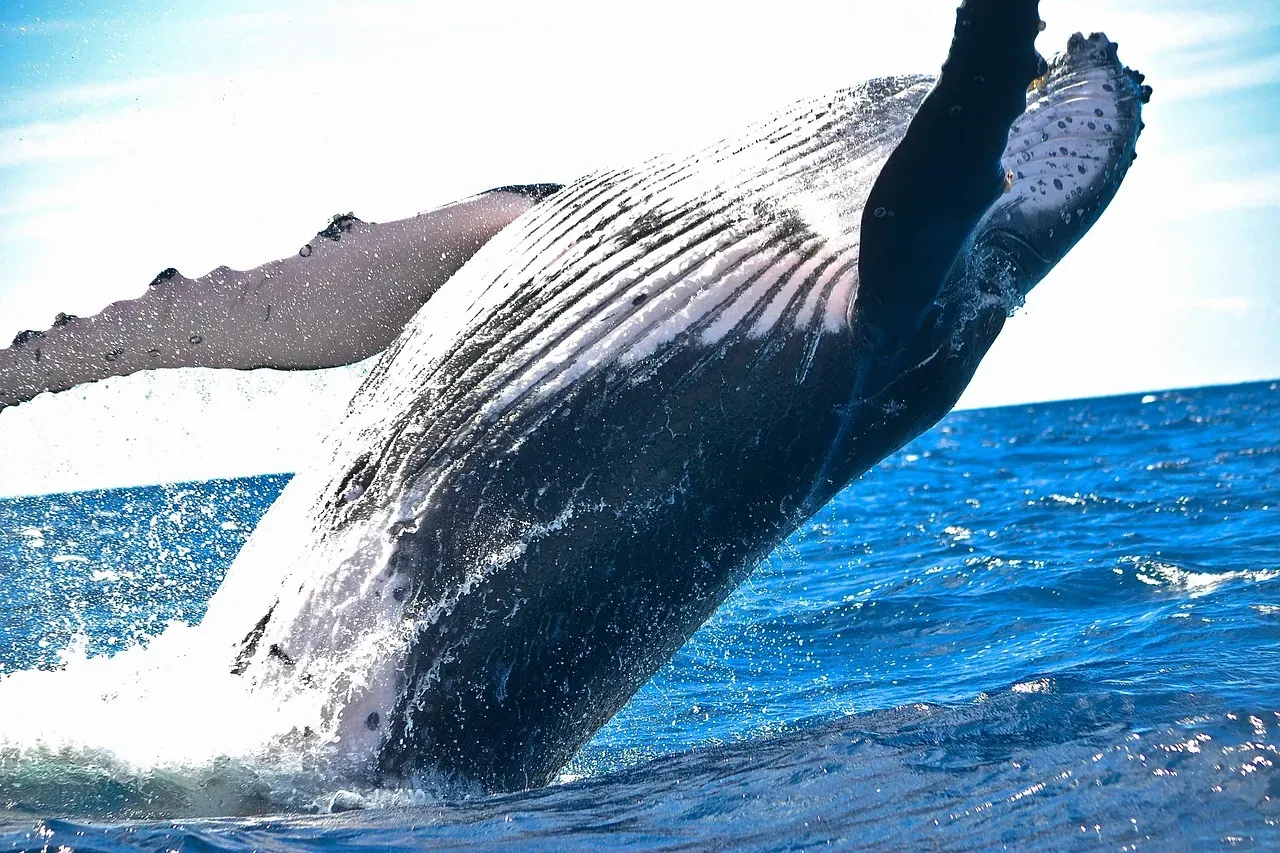
Humpback whales are among the most magnificent creatures to grace US coastal waters. These gentle giants migrate thousands of miles from their breeding grounds in Hawaii to the nutrient-rich waters of Alaska each summer.
Known for their acrobatic breaches and complex songs, humpback whales are a favorite among whale watchers. Their diet consists primarily of krill and small fish, which they consume using a technique called bubble-net feeding. This cooperative hunting strategy, where whales blow spiraling columns of bubbles to corral prey, is one of the most elaborate feeding behaviors found in any ocean mammal.
Humpback whales are common sights during their seasonal migrations, particularly in areas like Stellwagen Bank near Massachusetts and the waters off Maine. Boat tours in these areas regularly offer close encounters from spring through fall, making them one of the most accessible large whale species along the entire eastern seaboard.
Great White Shark
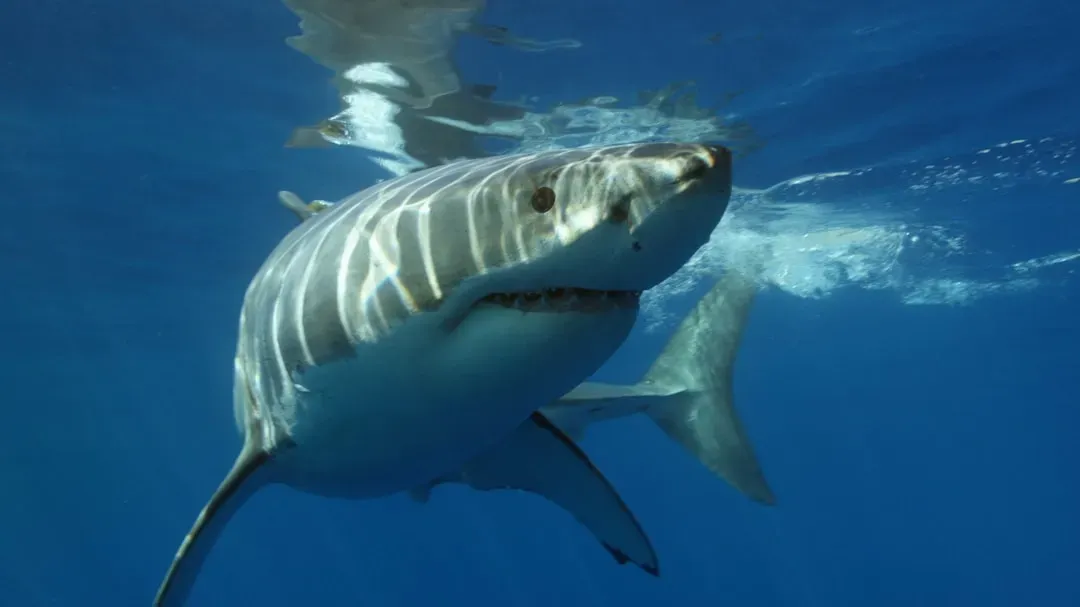
Great white sharks are found all over the world, including the North Atlantic and the Northeastern Pacific. In the Pacific, they can be found from Alaska to California and down to Mexico, and in the waters around Hawaii, according to NOAA.
White sharks grow slowly, can survive for a long time, and are the largest of the predatory sharks. They aren’t fully mature until after 25 years and can live up to 70 years old, growing up to 20 feet long and over 4,000 pounds. That combination of slow maturity and long life makes them particularly vulnerable to overfishing.
Great white sharks in the Pacific Ocean spend about half the year off the California coast and around Guadalupe Island, which lies 150 miles off Baja California, Mexico. On the Atlantic side, Cape Cod has become one of their most well-known gathering grounds, drawn by the region’s growing seal populations. Despite their fearsome reputation, great white sharks are essential for maintaining the balance of marine ecosystems. Researchers at Cape Cod have been studying great whites to better understand their behavior and migration patterns, work that has led to the development of shark tracking programs providing valuable data for conservation and public safety.
Florida Manatee
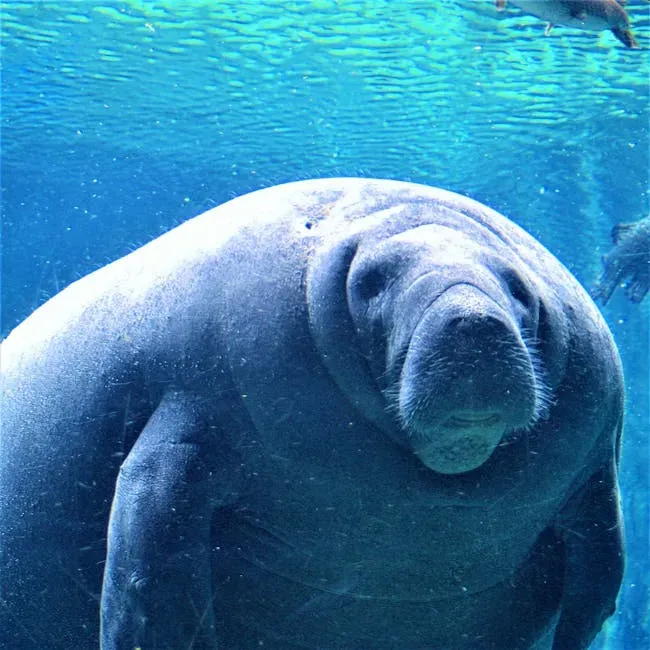
Manatees, often called “sea cows,” are gentle, slow-moving marine mammals that can be spotted from shorelines in Florida and other warm, shallow coastal waters throughout the Caribbean and Gulf of Mexico. There’s something undeniably calming about watching one drift through clear spring water, completely unhurried.
These massive herbivores typically measure nine to ten feet in length and weigh between 800 and 1,200 pounds, with some exceptional individuals reaching over 3,500 pounds. Despite their bulk, manatees are graceful swimmers, propelling themselves with powerful tail flukes while using their front flippers for steering.
Manatees thrive in the warm waters of Crystal River, particularly during the winter months when they seek refuge from colder temperatures. The area’s natural springs provide a constant source of warm water, creating an ideal environment for these creatures to gather in large numbers. Boats remain one of their biggest risks, which is why slow speed zones matter so much.
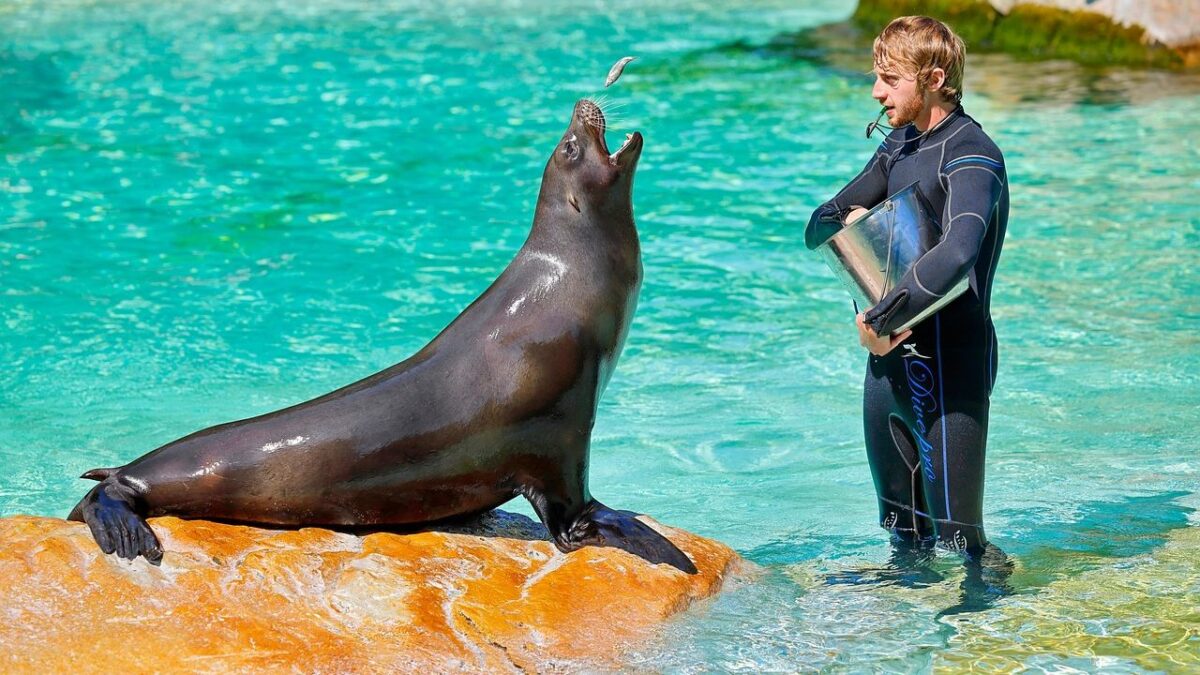
California Sea Lion
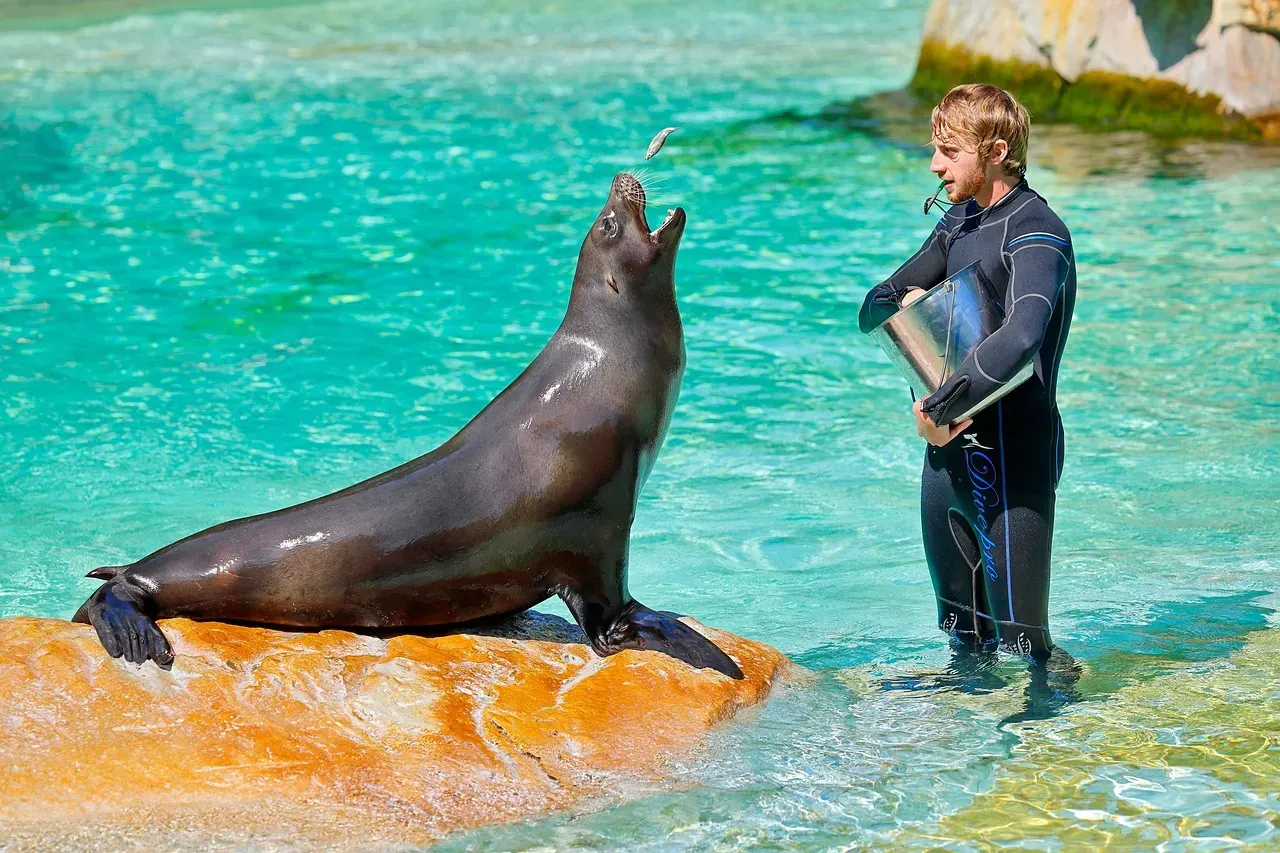
California sea lions are highly social animals that live in large colonies. They are excellent swimmers, capable of reaching speeds of up to 25 miles per hour. Their diet primarily consists of fish and squid, which they hunt using their keen eyesight and agility in the water.
The sea lions of San Francisco Bay are a popular attraction at Pier 39, where they have taken up residence on the floating docks. This unique urban wildlife experience provides an opportunity to observe these fascinating animals up close and learn about their natural behaviors. Few wildlife encounters in any American city are as effortlessly accessible.
Beyond the city, sea lions range widely up and down the Pacific coast, hauling out on rocky outcroppings from Southern California all the way to Alaska. They’re vocal, expressive, and genuinely entertaining to watch, which perhaps explains why they’ve become such a symbol of the West Coast’s coastal identity.
Sea Otter
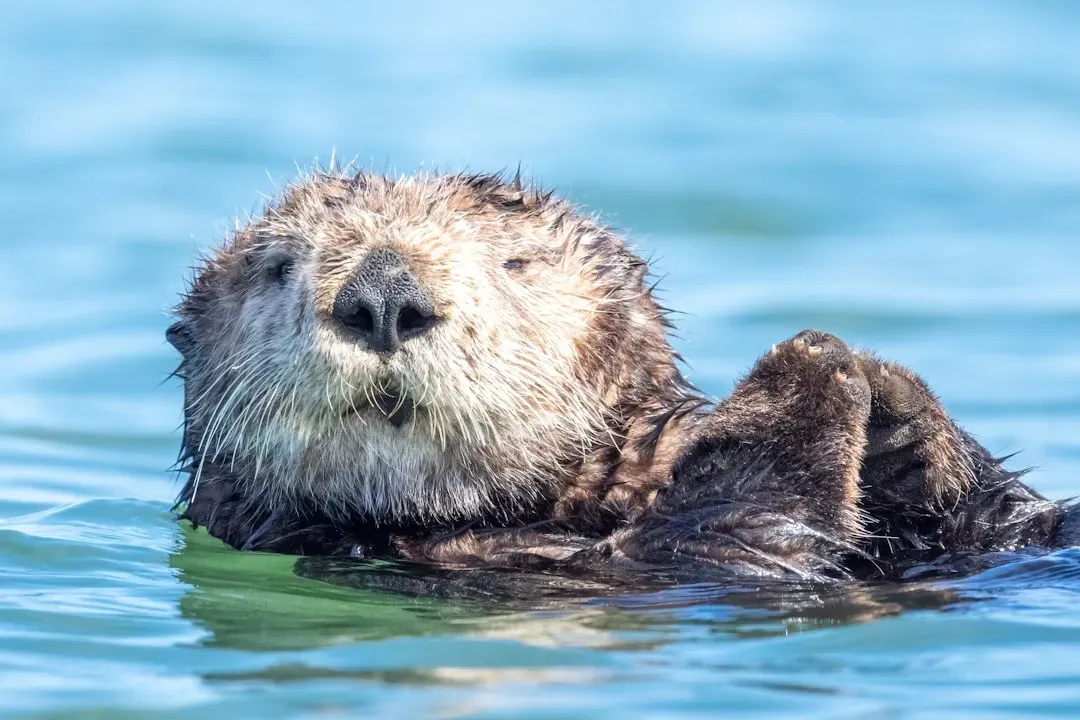
Monterey Bay in California is home to the charismatic sea otter, an adorable and highly intelligent marine mammal known for its playful behavior and use of tools. Sea otters are often seen floating on their backs, using rocks to crack open shellfish, a behavior that showcases their remarkable problem-solving skills.
Sea otters play a crucial role in maintaining the health of kelp forest ecosystems. By preying on sea urchins, which can overgraze and decimate kelp forests, otters help ensure the survival of these vital underwater habitats. This ecological balance supports a diverse range of marine life.
Sea otters have a thick fur coat that provides insulation in cold waters. This fur is the densest of any animal, with up to one million hairs per square inch. Unfortunately, this made them a target for fur traders in the past, leading to significant population declines. Recovery efforts have helped restore numbers along sections of the California coast, though their overall range remains far smaller than it once was.
Leatherback Sea Turtle
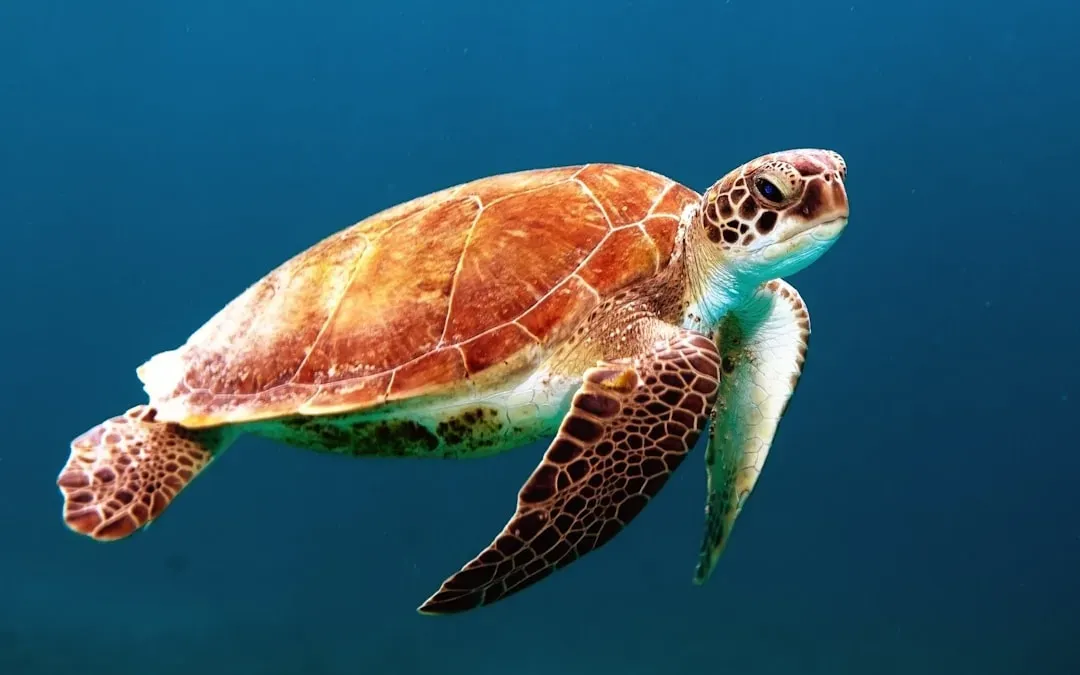
The leatherback turtle is the largest sea turtle species, capable of exceeding 1,500 pounds, and it maintains elevated body temperatures in cold water due to specialized adaptations. It nests on Atlantic beaches in the Caribbean and occasionally in Florida.
Leatherback sea turtles undertake long migrations across the Atlantic Ocean, traveling thousands of miles between feeding and nesting grounds. They primarily feed on jellyfish, using their delicate, scissor-like jaws to capture and consume these gelatinous prey. It’s a somewhat improbable diet for an animal that large, but jellyfish appear in enormous numbers along the same migratory corridors the turtles follow.
What makes the leatherback especially interesting is how far it travels and how well it handles cooler water. In the United States, nesting takes place mainly in Florida, Puerto Rico, and the U.S. Virgin Islands. Each nest can contain up to 100 eggs, which incubate for about two months before hatching. Conservation efforts are crucial to protect these vulnerable nests from threats such as habitat destruction and predation.
Bottlenose Dolphin
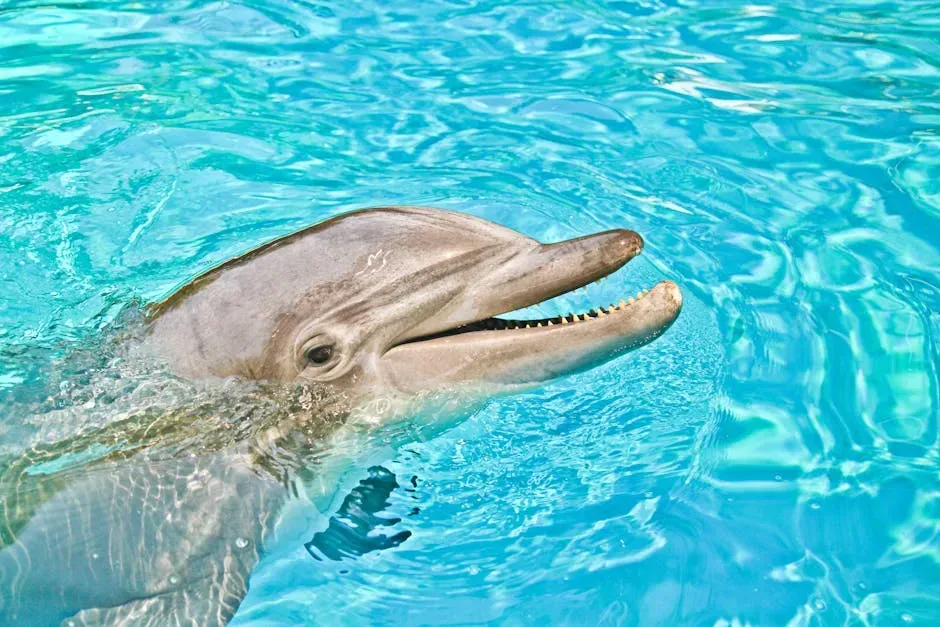
Bottlenose dolphins are frequent visitors to Atlantic coastal waters, often spotted in pods near shorelines from Florida to New England. They’re among the most reliably spotted marine mammals on both US coasts, close enough to shore that beachgoers sometimes watch them from the sand.
The Indian River Lagoon in Florida is a prime location for observing bottlenose dolphins, one of the most well-known and beloved marine mammals. These intelligent and social creatures are often seen leaping out of the water and riding the waves created by boats, delighting onlookers with their playful antics.
Bottlenose dolphins have also been studied extensively for their communication abilities and social structures, which are surprisingly complex. Different coastal populations develop distinct feeding techniques passed down through generations, a form of cultural learning that researchers continue to study closely along US shores.
Giant Pacific Octopus
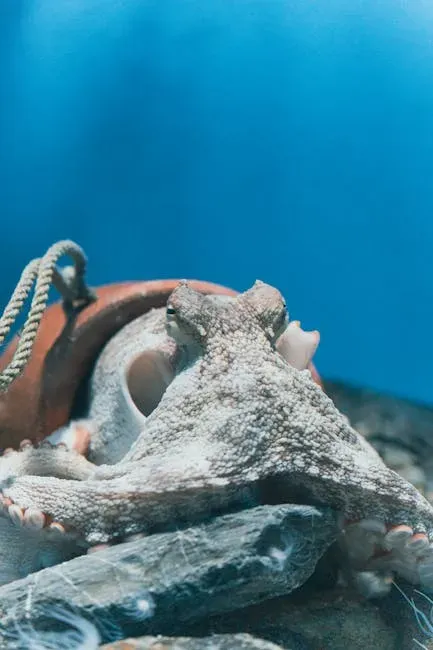
Puget Sound, Washington, is home to the giant Pacific octopus, the largest species of octopus in the world. These intelligent and elusive creatures are known for their remarkable ability to change color and texture to blend into their surroundings.
True to their name, these giants are larger than any other species of octopus, with arms that can span up to 31 feet across. They are normally reddish but can change color when camouflaging with their surroundings. Males may breed with several females, but females mate only once in their lifetime. After mating, females dedicate the remainder of their lives to tending to their eggs, laying 20,000 to 100,000 rice-shaped eggs in clusters hung from the ceiling of their den.
Giant Pacific octopuses are known for their problem-solving abilities and complex behaviors. They can navigate mazes, open jars, and even recognize individual humans, making them a subject of fascination for marine biologists and divers. For anyone diving the cold Pacific waters off Washington or Alaska, encountering one in its den is genuinely unforgettable.
Horseshoe Crab
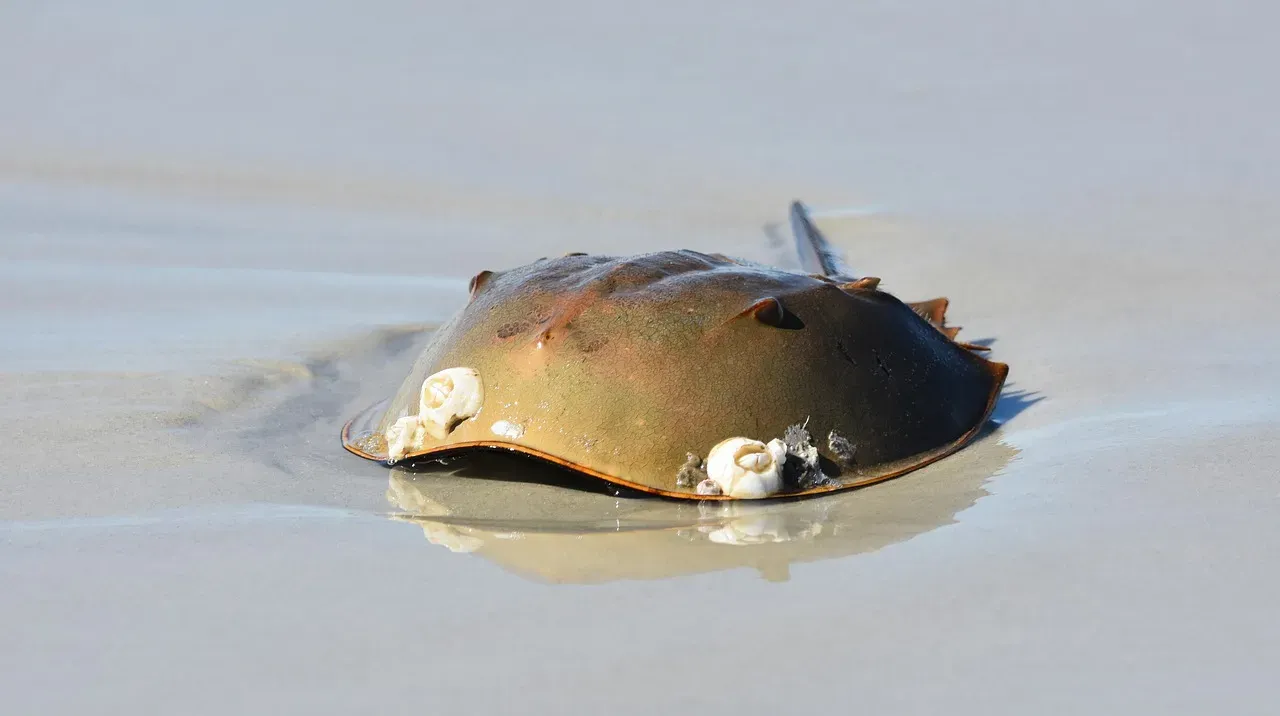
Delaware Bay is a critical habitat for horseshoe crabs, ancient marine arthropods that have remained largely unchanged for millions of years. These unique creatures are known for their helmet-like shells and long, spiked tails. Horseshoe crabs play a crucial role in the bay’s ecosystem, particularly during their spawning season.
The Delaware Bay hosts the world’s largest concentration of spawning horseshoe crabs. Each spring, thousands of horseshoe crabs come ashore to lay their eggs in the sandy beaches. These eggs provide a vital food source for migratory shorebirds, including the endangered red knot.
Horseshoe crabs have been around for over 400 million years. There are four different species, three in Asia and one in North America, known as Limulus polyphemus. Beyond their ecological role, their distinctive blue blood has become critically important in biomedical research. Their blood is used in the manufacture of Limulus Amoebocyte Lysate, the worldwide standard for testing virtually all pharmaceuticals for the presence of endotoxins.
North Atlantic Right Whale
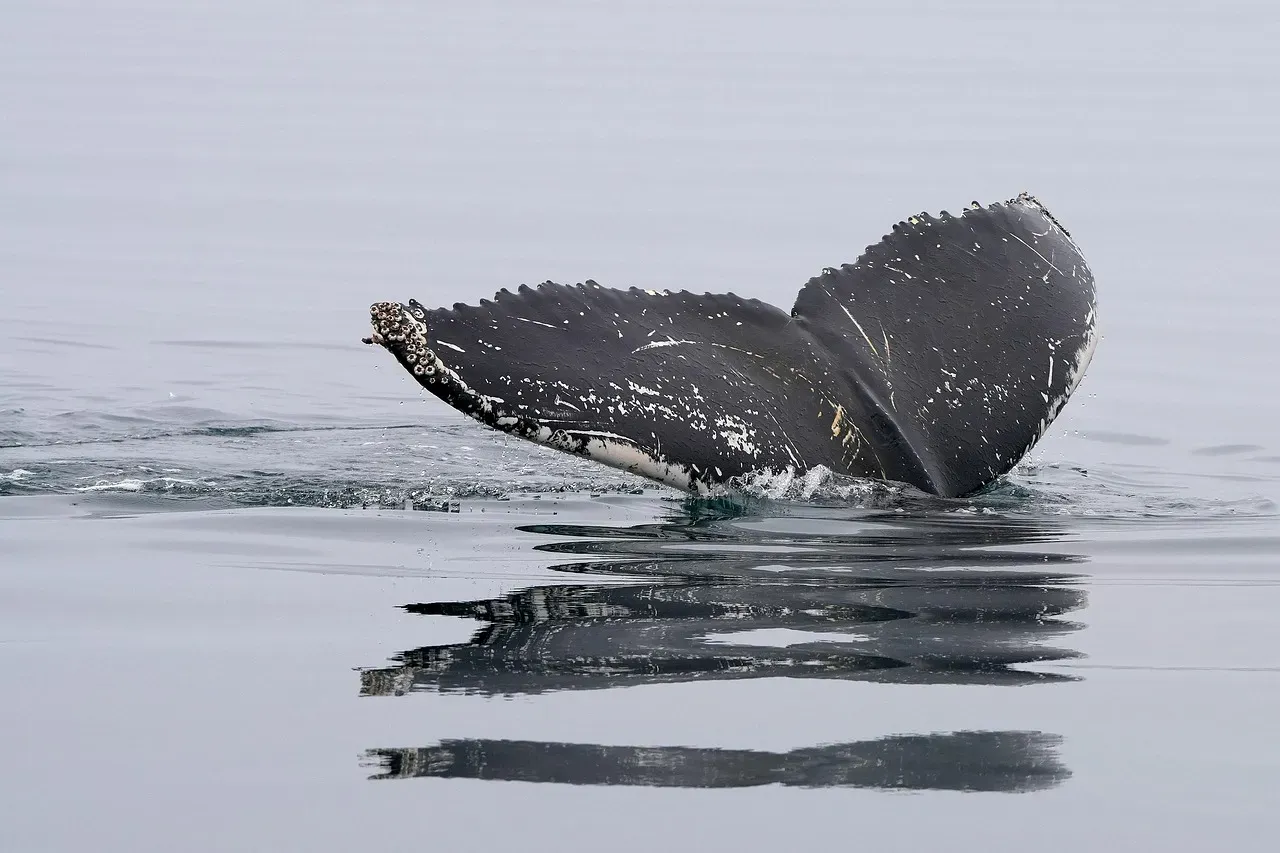
The Atlantic coastline hosts a remarkable diversity of marine mammals, with approximately 30 whale and dolphin species inhabiting its waters. The North Atlantic right whale, one of the world’s most endangered whale species with fewer than 350 individuals remaining, migrates along the eastern seaboard.
The majority of the North Atlantic right whale population lives along the US eastern seaboard for much of the year, but efforts to find them are typically limited to seasonal whale watches or researchers dedicated to locating seasonal habitats. The whereabouts of most individuals in the population are unknown for much of the year.
That combination of critically low numbers and vast, largely unmonitored ocean habitat makes the species one of the most urgent conservation priorities in US waters. Vessel speed restrictions and fishing gear modifications in key areas along the eastern seaboard represent the primary tools currently being used to reduce accidental deaths. Every individual lost now carries real weight for the species’ long-term survival.
Conclusion: A Coastline Worth Knowing
The ten animals described here are just a fraction of what US coastal waters actually hold. From the prehistoric rhythms of horseshoe crabs on Delaware Bay beaches to the ghostly intelligence of giant octopuses in Puget Sound, the variety is genuinely staggering. Each of these creatures fills a specific ecological role, and most face at least some degree of pressure from human activity, whether that’s boat traffic, entanglement, habitat loss, or shifting ocean temperatures.
The good news is that proximity matters. The fact that so many of these animals can be spotted from a pier, a beach, or a coastal boat makes them knowable in a direct way that species deep in remote wilderness simply aren’t. That familiarity tends to build care. The more people understand what’s actually out there, swimming just beyond the surf line, the more likely they are to value it.
The US coastline is long, layered, and still full of surprises. It rewards attention.
