


When we think of deadly ocean predators, sharks often steal the spotlight. Thanks to movies like “Jaws” and sensationalized media coverage, these cartilaginous fish have earned an outsized reputation as the ocean’s most fearsome hunters. However, the reality beneath the waves tells a different story. The marine world hosts numerous predators that employ fascinating, efficient, and sometimes terrifying hunting strategies that would make even the most formidable shark seem almost gentle by comparison. From microscopic assassins to massive marine mammals, the ocean’s deadliest hunters come in all shapes and sizes—and many of them aren’t the species you’d expect. In this exploration of the sea’s most lethal predators, we’ll dive deep into the hunting prowess of creatures that deserve more recognition for their predatory excellence.
11. The Box Jellyfish The Ocean’s Invisible Killer

The box jellyfish claims the title of the ocean’s deadliest hunter not through ferocity or size, but through sheer toxicity. These translucent predators, found primarily in the waters of Australia, the Philippines, and throughout the Indo-Pacific, possess venom so potent that a single sting can kill a human in minutes. Their tentacles, which can extend up to 10 feet, are covered with millions of cnidocytes—specialized cells containing nematocysts that inject venom upon contact. What makes box jellyfish particularly deadly is their active hunting style, unlike most jellyfish that simply drift with currents.
Unlike their cousins, box jellyfish have developed 24 eyes arranged in clusters called rhopalia, allowing them to actively navigate their environment and hunt prey with precision. These sophisticated hunters can swim at speeds up to 4 mph, tracking and pursuing small fish and crustaceans. Their hunting efficiency is staggering—studies show their venom paralyzes prey almost instantly, making escape virtually impossible. With an estimated 100 human fatalities annually, the box jellyfish demonstrates that in the ocean, the most dangerous predators aren’t always the most visible or famous.
10. The Killer Whale Strategic Pack Hunter
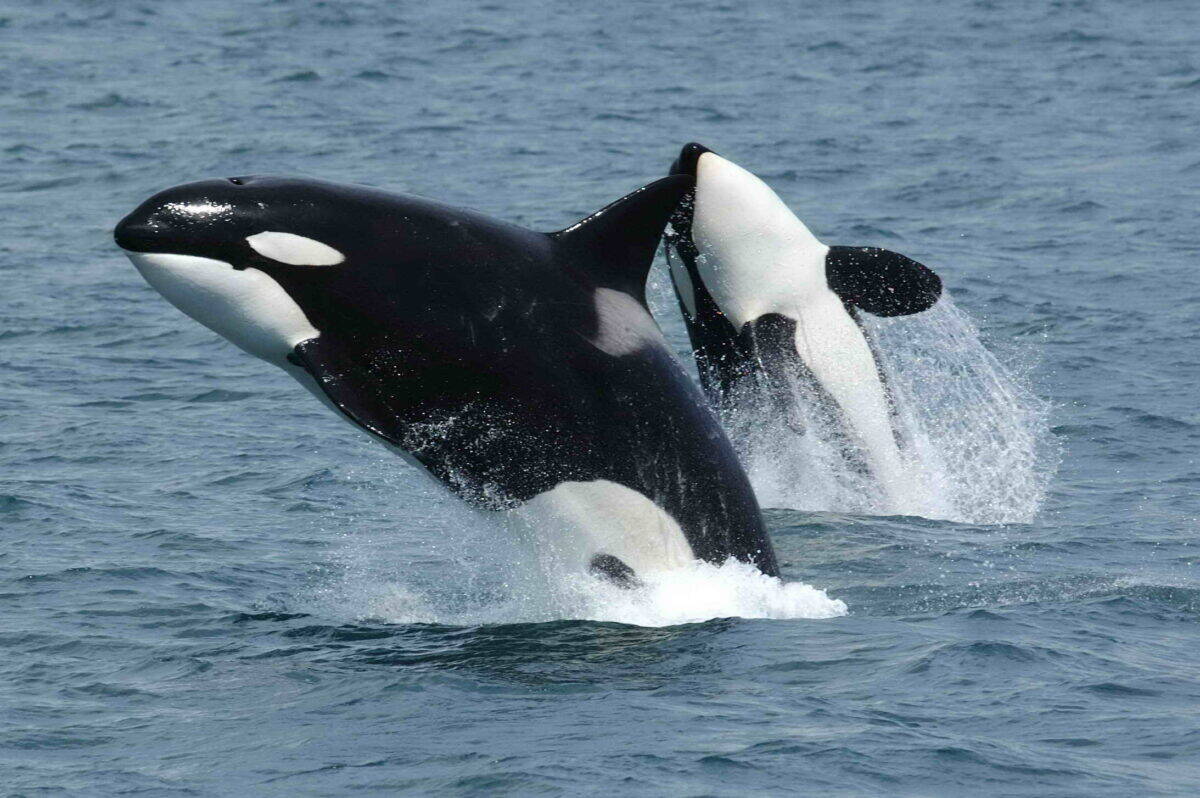
Orcas, commonly known as killer whales, represent the ocean’s apex predators and most sophisticated hunters. Despite their “whale” moniker, these massive marine mammals are actually the largest members of the dolphin family, combining intelligence with physical prowess to hunt virtually anything in the sea—including great white sharks. Killer whales employ complex, coordinated hunting strategies that showcase problem-solving abilities and cultural learning. Different orca populations have developed specialized hunting techniques passed down through generations, demonstrating a level of cultural sophistication rare in the animal kingdom.
In the waters of Patagonia, orcas practice “intentional stranding,” deliberately beaching themselves to capture seals on shorelines before sliding back into deeper water. In Antarctica, they create waves to wash seals off ice floes, while North Pacific populations have been documented working together to debilitate and drown even massive whale species. Perhaps most impressive is their ability to induce tonic immobility in sharks by flipping them upside down, then extracting the energy-rich liver with surgical precision. With their diverse arsenal of hunting techniques, strong social bonds, and ability to take down prey many times their size, killer whales exemplify collaborative hunting at its deadliest.
9. The Cone Snail Tiny Harpoon of Death

Don’t let the beautiful, patterned shell fool you—the cone snail is one of the ocean’s most efficient killers, armed with a venom potent enough to kill a human in under an hour. These unassuming mollusks, found primarily in tropical waters, have evolved a sophisticated hunting apparatus that functions like a loaded harpoon gun. When prey—typically small fish, worms, or other mollusks—approaches, the cone snail extends its proboscis (a modified tooth) and injects a complex cocktail of over 100 different toxins. This neurotoxic venom, called conotoxin, causes immediate paralysis, allowing the slow-moving snail to consume prey that would otherwise easily escape.
What makes cone snails particularly remarkable hunters is their ability to modify their venom composition based on whether they’re hunting, defending themselves, or competing with other cone snails. Some species, like the geography cone (Conus geographus), nicknamed the “cigarette snail” because after being stung, you allegedly have just enough time to smoke a cigarette before dying, contain venom with no known antidote. Despite their deadly nature, cone snails have become valuable to medical science—compounds derived from their venom have been developed into powerful non-addictive painkillers. These tiny assassins prove that in the ocean’s evolutionary arms race, sometimes the deadliest weapons come in the smallest packages.
8. The Blue-Ringed Octopus Tiny but Lethal

The blue-ringed octopus might be small enough to fit in the palm of your hand, but this diminutive cephalopod packs enough venom to kill 26 adult humans within minutes. Native to tide pools and coral reefs in the Pacific and Indian Oceans, these creatures normally display a yellowish-brown coloration. However, when threatened, they exhibit their namesake iridescent blue rings—a warning display that ranks among nature’s most beautiful and dangerous signals. Their hunting strategy combines stealth, speed, and deadly efficiency, utilizing a beak hidden among their eight arms to deliver tetrodotoxin, a neurotoxin 1,200 times more powerful than cyanide.
What makes the blue-ringed octopus such a formidable hunter is its precision and intelligence. Like all octopuses, it possesses problem-solving abilities and can navigate complex environments to ambush prey. When hunting, it pounces on small crustaceans and fish, using its arms to immobilize the victim before delivering a fatal bite. The tetrodotoxin causes paralysis by blocking sodium channels in nerve cell membranes, leading to respiratory arrest. Particularly terrifying is that the bite is often painless, and no antivenom exists—treatment consists solely of keeping the victim alive through artificial respiration until the toxin metabolizes. Despite their deadly capabilities, human fatalities are rare, as these octopuses are generally non-aggressive unless handled or threatened.
7. The Leopard Seal Antarctic Ambush Predator

In the frigid waters surrounding Antarctica, the leopard seal reigns as one of the most formidable predators. Named for their spotted coats and feline-like predatory behavior, these powerful pinnipeds can grow up to 11 feet long and weigh over 1,000 pounds. With a reptilian-shaped head housing massive jaws and sharp canine teeth measuring over an inch long, leopard seals are built for hunting. Unlike other seal species that primarily feed on fish, the leopard seal has a diverse diet that includes penguins, fish, squid, and even other seals, making them true apex predators in their ecosystem.
Their hunting techniques are as varied as their diet and showcase remarkable adaptability. When hunting penguins, leopard seals patrol the edges of ice floes, waiting for their prey to enter the water. Once a penguin dives in, the seal attacks from below with explosive speed, capturing the bird in its powerful jaws. For more agile prey like fish, they employ filter-feeding tactics, swimming with their mouths open and using their specialized teeth to strain krill from the water. Perhaps most brutal is their method of consuming larger prey—leopard seals will thrash captured penguins against the water’s surface repeatedly to flay the skin and access the nutritious flesh, demonstrating both the physical power and predatory efficiency that makes them the Antarctic’s most feared hunter.
6. The Portuguese Man O’ War Colonial Killer

Often mistaken for a jellyfish, the Portuguese Man O’ War (Physalia physalis) is actually a siphonophore—a colonial organism made up of specialized individual animals called zooids that work together as a single entity. This fascinating hunter floats on the ocean’s surface with a gas-filled bladder that resembles an old warship’s sail (hence its name), while its tentacles—which can extend up to 100 feet below—form a deadly curtain in the water. These tentacles contain thousands of specialized cells called cnidocytes, each housing a microscopic harpoon loaded with venom that delivers an excruciating sting capable of paralyzing fish and, in rare cases, killing humans.
What makes the Portuguese Man O’ War such an effective hunter is its passive yet highly efficient strategy. Rather than actively pursuing prey, it drifts with wind and ocean currents, creating wide-reaching “fishing nets” with its tentacles. When small fish or crustaceans contact these tentacles, thousands of microscopic venom-injecting cells fire simultaneously, immobilizing the prey. The tentacles then contract to bring food to specialized feeding zooids. This energy-efficient hunting method allows the Man O’ War to capture prey continuously without expending energy on pursuit. Even more impressive is their coordinated response system—despite being a colony of individual organisms, they react as a unified predator, with signals passing between zooids to coordinate feeding. This demonstrates how evolutionary pressures have created deadly efficiency through cooperation rather than individual strength.
5. The Giant Pacific Octopus Master of Disguise and Intelligence

The Giant Pacific Octopus (Enteroctopus dofleini) may not possess deadly venom or massive jaws, but its hunting prowess lies in unparalleled intelligence and adaptability. As the largest octopus species, weighing up to 150 pounds with an arm span reaching 20 feet, these cephalopods combine problem-solving abilities with physical attributes that make them formidable predators. Their hunting strategy begins with camouflage—using specialized cells called chromatophores, they can change color, texture, and even shape in milliseconds to blend perfectly with their surroundings. This allows them to become virtually invisible as they stalk prey like crabs, shrimp, and even small sharks.
The Giant Pacific Octopus’s hunting intelligence extends beyond mere disguise. They’ve been observed using tools, learning through observation, and remembering solutions to problems for months. When hunting, they employ tactics like “stilt walking” across the ocean floor to avoid detection, before pouncing with explosive speed using their powerful arms lined with over 2,000 suckers. These suckers not only grip prey but contain chemoreceptors that allow the octopus to “taste” what it touches. Once captured, prey faces the octopus’s sharp beak and paralyzing saliva. Perhaps most impressive is their ability to solve complex puzzles to access food—in laboratory settings, they’ve opened childproof pill bottles and navigated mazes, demonstrating that in the ocean’s evolutionary arms race, brainpower can be as deadly as physical weapons.
4. The Saltwater Crocodile Ancient Ambush Expert

While not exclusively marine, the saltwater crocodile (Crocodylus porosus) has earned its place among the ocean’s deadliest hunters through its mastery of coastal waters and ability to venture far out to sea. As the world’s largest living reptile, reaching lengths over 20 feet and weights exceeding 2,000 pounds, these prehistoric predators combine massive size with hunting techniques refined over 200 million years of evolution. Their patience is legendary—saltwater crocodiles can remain motionless for hours, with only their eyes and nostrils breaking the water’s surface, before exploding into action with the strongest bite force of any animal (3,700 pounds per square inch, more than three times that of a lion).
What makes saltwater crocodiles particularly effective marine hunters is their physiological adaptations to saltwater environments. Special glands in their tongues excrete excess salt, allowing them to survive in ocean waters where they prey on fish, sharks, and even sea turtles. They’ve been documented swimming over 500 miles across open ocean using ocean currents to their advantage. Their intelligence should not be underestimated—these ancient predators learn patterns in prey behavior and adjust their hunting strategies accordingly. They’ve been observed using sticks as bait during bird nesting seasons and coordinating group hunts for larger prey. With an estimated 1,000 human fatalities annually, the saltwater crocodile’s combination of patience, power, and predatory intelligence makes it one of the few animals that still views humans as potential prey.
3. The Humboldt Squid Pack-Hunting Demons
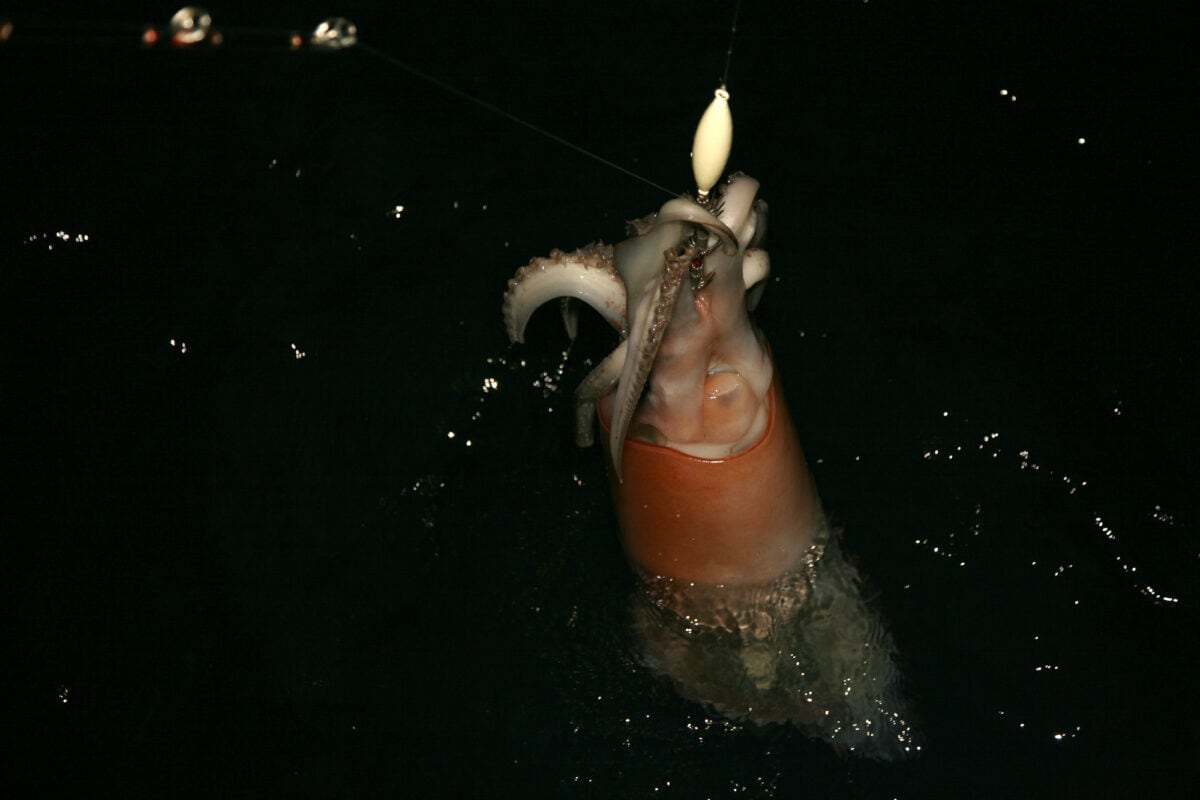
Known as “red devils” by fishermen who fear their aggressive nature, Humboldt squid (Dosidicus gigas) combine rapid growth, intelligence, and pack-hunting behavior into a formidable oceanic predator. These cephalopods, which can grow to 6 feet long and weigh over 100 pounds, patrol the eastern Pacific in shoals that can number in the thousands. Unlike solitary hunters, Humboldt squid employ sophisticated coordinated attacks, using their ability to rapidly change color—flashing red and white patterns across their bodies—to communicate with each other during hunts. This bioluminescent “language” allows them to coordinate complex strategies when pursuing prey like lanternfish, hake, and even smaller members of their own species.
The Humboldt squid’s physical attributes make them particularly effective hunters. Each squid possesses eight arms and two longer feeding tentacles lined with sharp, toothed suckers capable of securing struggling prey. Their parrot-like beaks can easily tear flesh, while their jet propulsion system allows them to reach speeds up to 15 mph in short bursts. What makes them truly terrifying is their metabolism—Humboldt squid can grow at rates up to 1mm per day, and their voracious appetite means they must constantly hunt. Their intelligence allows them to adapt quickly to changing conditions, and they’ve been observed engaging in what appears to be cooperative hunting, with some squid herding prey while others block escape routes. Stories of Humboldt squid attacking divers highlight their boldness—in groups, they show little fear, demonstrating why they’ve earned their diabolical nickname among those who encounter them in the deep.
2. The Sea Snake Serpentine Assassin
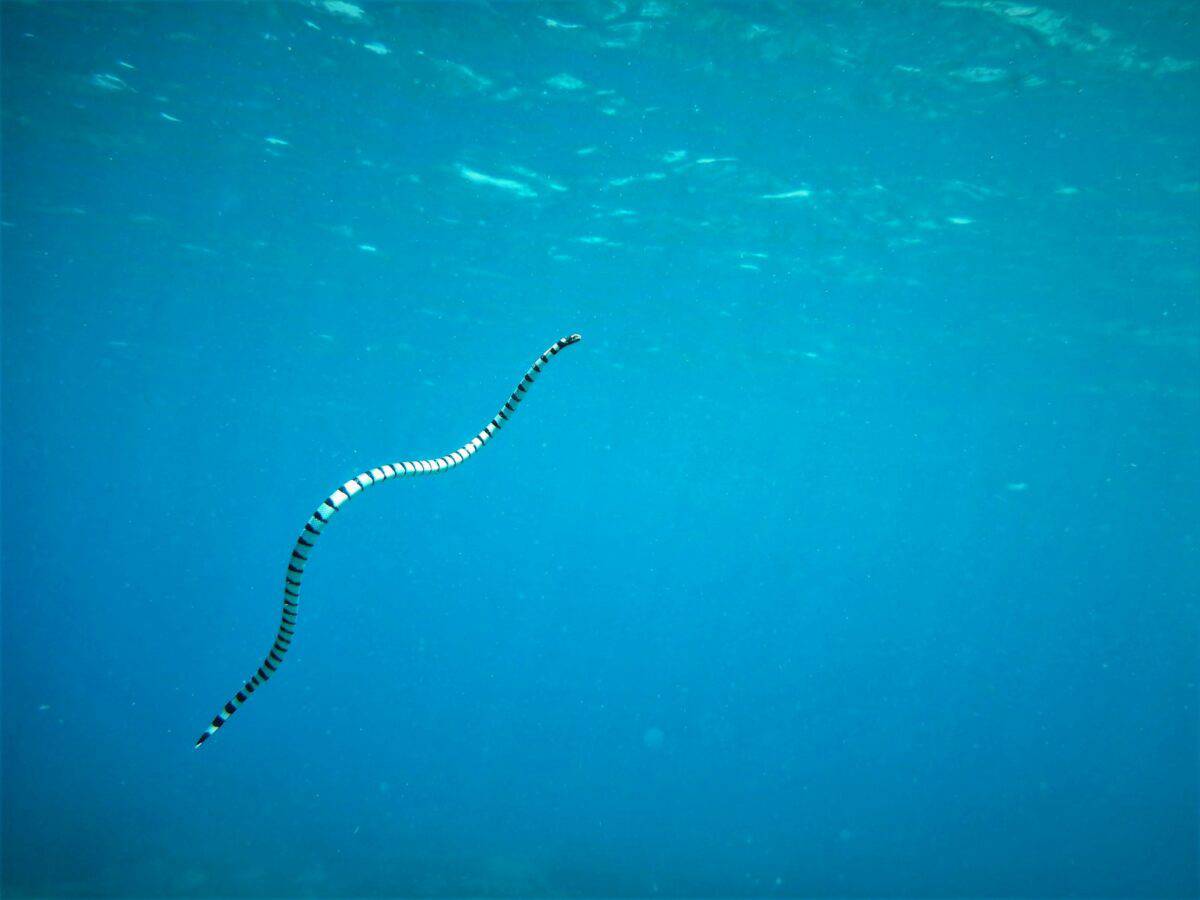
Sea snakes represent some of the ocean’s most elegant yet deadly hunters, combining extreme venom potency with specialized adaptations for marine life. Of the approximately 70 species, the Belcher’s sea snake (Hydrophis belcheri) is particularly noteworthy—its venom is estimated to be 100 times more potent than that of a cobra, with a single drop capable of killing 1,000 people. Unlike their terrestrial relatives, sea snakes have evolved flattened, paddle-like tails for swimming, valved nostrils that close underwater, and specialized glands that excrete excess salt. These adaptations allow them to remain submerged for hours while hunting in coral reefs and shallow coastal waters throughout the Indo-Pacific region.
What makes sea snakes such effective hunters is their combination of stealth, speed, and precision. They primarily target fish, using their sensitive tongue to detect prey’s electrical fields and chemical trails even in murky waters. When hunting, many species employ a unique strategy—they investigate crevices and coral formations, flushing out hidden fish that they capture with lightning-fast strikes. Their venom acts primarily on the neuromuscular system, causing rapid paralysis that prevents prey from escaping. Despite their deadly potential, sea snake bites on humans are relatively rare, as most species have small mouth openings and short fangs. However, their docile nature shouldn’t be mistaken for harmlessness—when threatened, these serpentine hunters can deliver a bite that, without antivenin treatment, has a mortality rate approaching 50% in some species.
1. The Great White Shark An Unfair Reputation
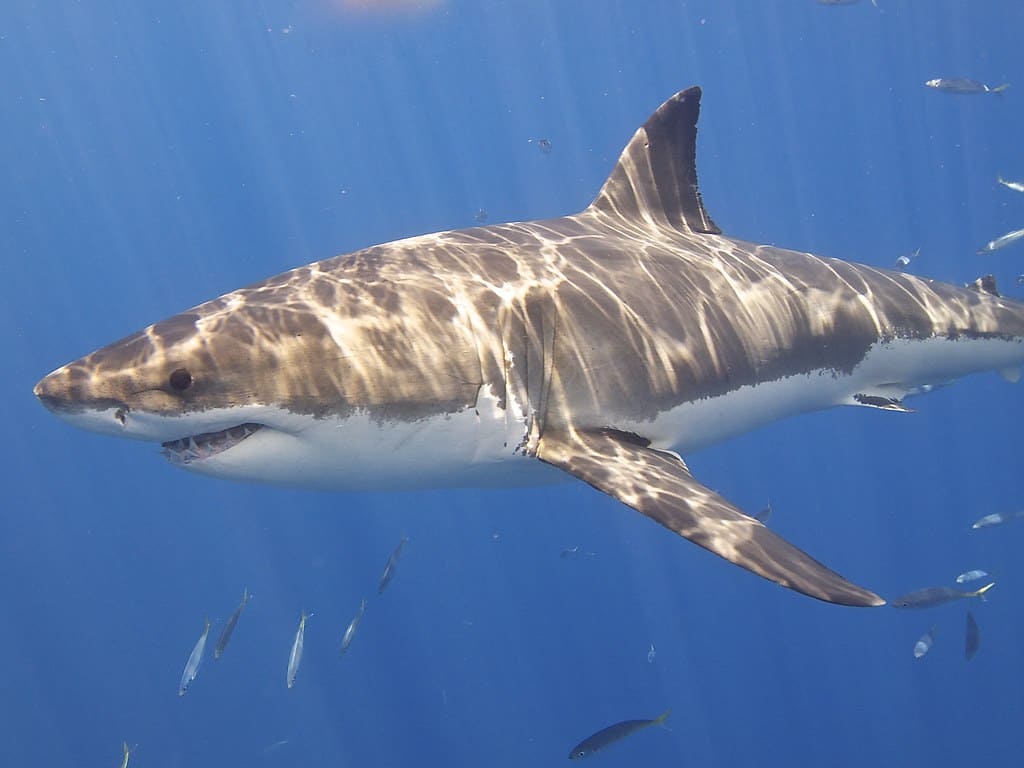
No discussion of ocean predators would be complete without addressing the great white shark (Carcharodon carcharias), perhaps the most misunderstood hunter in the seas. While pop culture has cemented their reputation as mindless killing machines, the reality is far more complex. Great whites are certainly formidable predators—growing up to 20 feet long, equipped with multiple rows of serrated teeth, and capable of detecting a single drop of blood in 25 gallons of water. However, their hunting behavior demonstrates sophistication rather than indiscriminate aggression. Great whites employ a “bite and wait” strategy when hunting seals, delivering an initial strike before retreating to allow blood loss to weaken their prey, minimizing risk of injury to themselves.
Conclusion:
While sharks often dominate headlines, the ocean is full of lesser-known predators that are just as, if not more, lethal in their own ways. From the cunning mimic octopus and lightning-fast mantis shrimp to the precision of the orca and the stealth of the cone snail, these hunters use unique adaptations to strike, disable, and devour their prey with remarkable efficiency. Their methods—whether venom, speed, camouflage, or teamwork—demonstrate the incredible diversity of predation strategies beneath the waves.
Recognizing the ocean’s deadliest hunters goes beyond fascination—it deepens our respect for marine ecosystems and the balance that sustains them. These predators, while fearsome, play vital roles in controlling populations and maintaining healthy food webs. As we continue to explore the ocean’s depths, it becomes clear that survival in the sea isn’t about size or fame—it’s about mastery. And many of the most effective hunters are those we rarely see coming.

As a little kid, I fell in love with nature, wildlife, and animals. Living in the USA, South Africa, Italy, China and Germany gave me the opportunity to discover the world's Wildlife. My favorite animals are Mountain Gorillas, Siberian Tigers, and Great White Sharks.
I'm a certified PADI Open Water Diver, went to Everest Base Camp and Trekked Gorillas in Uganda. I hold a Master of Science in Economics and Finance.
Please send any feedback to feedback@animalsaroundtheglobe.com
- Oceanography Says a Layer of Water Exists in the Pacific That Has Not Mixed With the Surface in Over a Thousand Years and What Lives There Defies Current Classification - June 26, 2026
- 12 Wild Animals That Build Homes Better Than Humans - June 26, 2026
- 13 Flight Patterns That Defy Gravity - June 26, 2026