
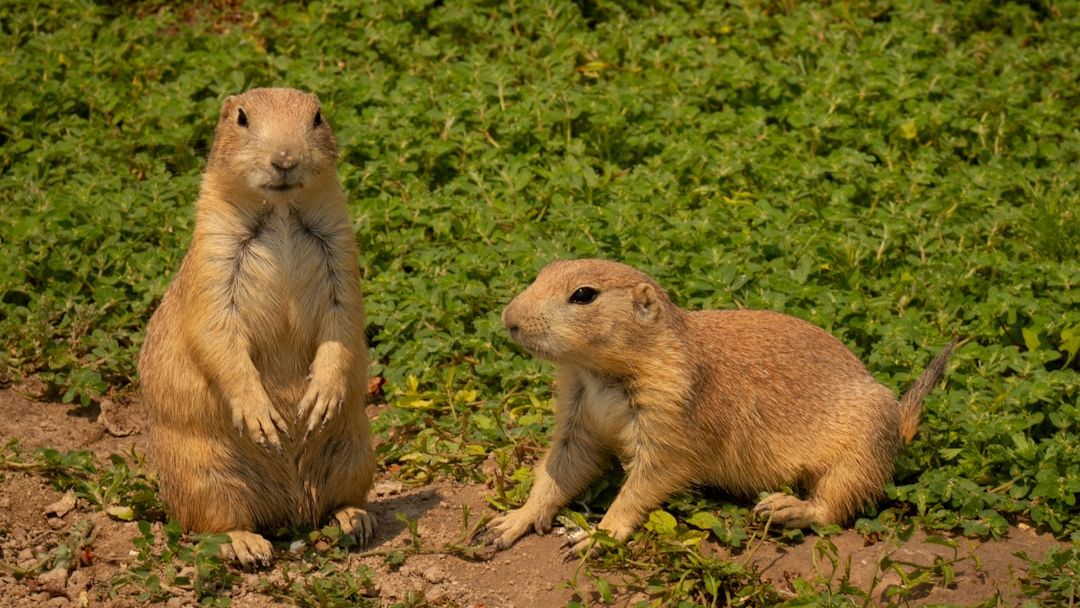
Most people walk past a prairie dog colony and hear noise. A chorus of high-pitched chirps, a few squeaks, maybe a ripple of activity across the grass. It registers as background sound, the kind of chatter you’d expect from a small, social rodent. What those sounds actually contain is something researchers have spent decades trying to fully decode.
Prairie dogs may have a vocal communication system more complex than that of dolphins, whales, and non-human primates. That’s not a loose comparison made to generate headlines. It’s the conclusion drawn from some of the most meticulous fieldwork ever conducted on animal communication. The details that have emerged from that research are genuinely striking.
The Researcher Who Spent Decades Listening
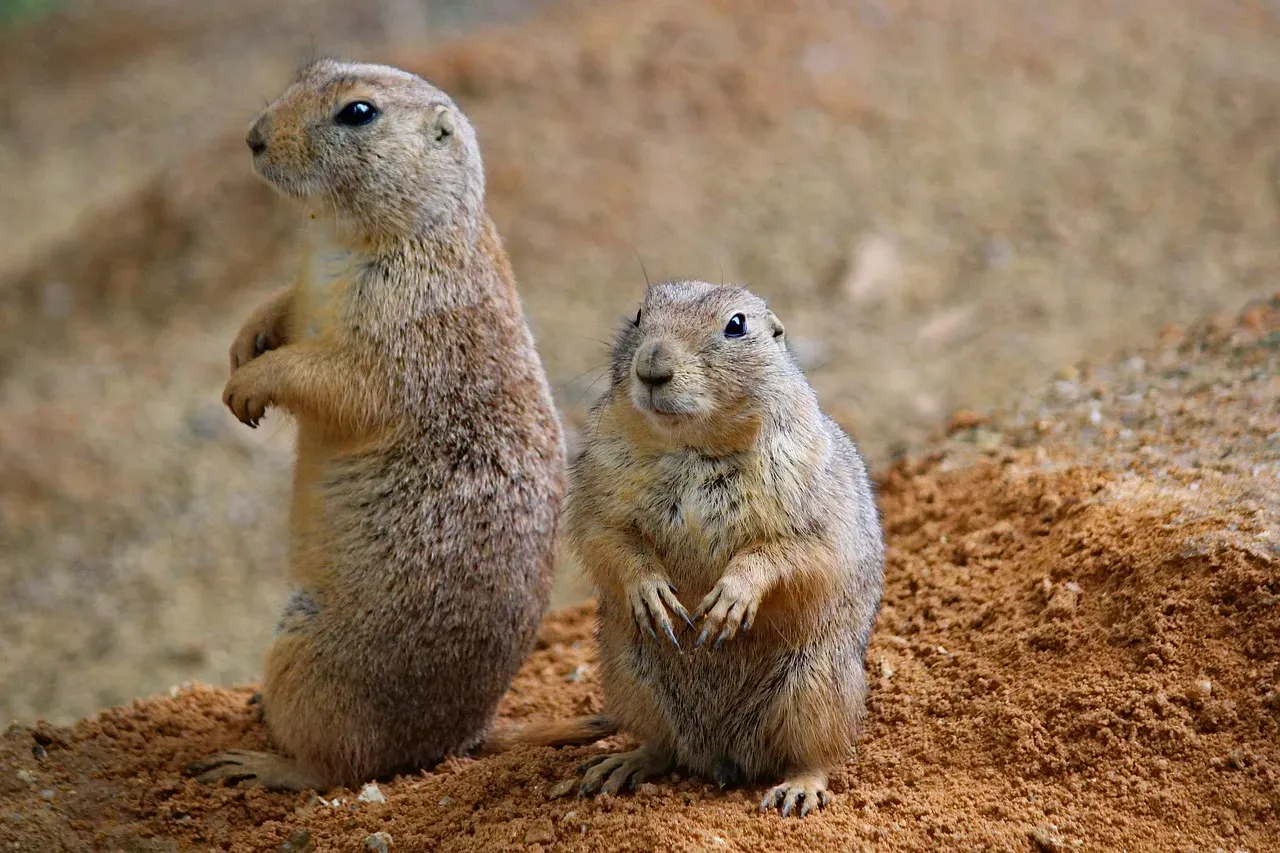
Professor Con Slobodchikoff, from Northern Arizona University, has been studying and recording the calls of the Gunnison’s prairie dog for three decades. His work didn’t begin with grand theories. It started with curiosity about why different alarm calls seemed to produce different behaviors across a colony.
After first observing how a colony of prairie dogs reacted to the presence of predators, he discovered that they didn’t just give the same alarm call each time. It sounded different depending on what type of predator the prairie dogs saw. Slobodchikoff also noticed that even though the calls signaling a certain type of predator would follow a distinct pattern, they contained small nuances that varied with each individual predator of that type. For instance, the prairie dogs had a similar call for all coyotes, but there were subtle differences for each different coyote.
He started recording the calls, using software to track slight variations, a rising pitch here, an overtone there. By combining sonic analysis with experiments, he realized the prairie dogs weren’t just sounding blunt alarms with their cheeps. They were exchanging detailed bulletins. That realization changed the entire direction of his career.
A Vocabulary That Describes the World in Detail

With a single call, prairie dogs can warn others of the type of predator, its direction, and even its color, and they are able to include this much information in a single call by varying the modulation and harmonics. The precision is hard to overstate.
Slobodchikoff and his team conducted experiments where they paraded dogs of different colors and sizes and various humans wearing different clothes past the colony. They recorded the prairie dogs’ calls, analyzed them with a computer, and were astonished by the results. The calls encoded not just the presence of a stranger, but specific physical descriptions of that individual.
Also remarkable was the amount of information crammed into a single chirp lasting a 10th of a second. These small rodents use their words to identify not only who the predator is, but also details like their shape, size, color, and pace. They can even convey information about the color and shape of a human’s shirt. It’s a level of descriptive specificity that most people wouldn’t expect from any animal, let alone one commonly dismissed as a pest.
The Hallmarks of True Language

It has been unfashionable in scientific circles to refer to animal communication systems as language. Plenty of people consider language to be unique to our own species. To Slobodchikoff, however, the prairie dogs clear the bar, exhibiting all the elements that linguists say you have to find, from sounds that carry distinct meanings to the capacity for expressing new combinations of thoughts.
Research in prairie dog communication has also shown displacement, the ability to communicate about things that are not present. This finding challenges prior theories on animal communication, since only humans had been known to use this linguistic process. Displacement is one of the more demanding criteria in linguistics, because it requires a speaker to reference something beyond the immediate sensory environment.
Through Slobodchikoff’s research, it has been found that prairie dogs also have the ability to construct new words referring to novel objects or animals in their environment, a characteristic called productivity. Prior to the study, only humans had been recognized with the ability of productivity within a communication system. The capacity to coin new terms for unfamiliar things is a cornerstone of human language, and it turns out prairie dogs share it.
Dialects, Social Chatter, and the Mysterious Jump-Yip

There are regional dialects in prairie dog communication. Slobodchikoff’s team expanded their work to see if different communities used the same sounds in the same ways. They found that they did, but they also found regional differences. The regional differences held up to statistical scrutiny, meaning that they weren’t just noise in the analysis, but consistent dialects of the prairie dog vernacular.
The researchers found that the degree of difference between the various communities was directly proportional to their distance from one another. This is a perfect analogy for human language dialects. The closer two communities live, the more their calls resemble each other. The further apart, the greater the divergence.
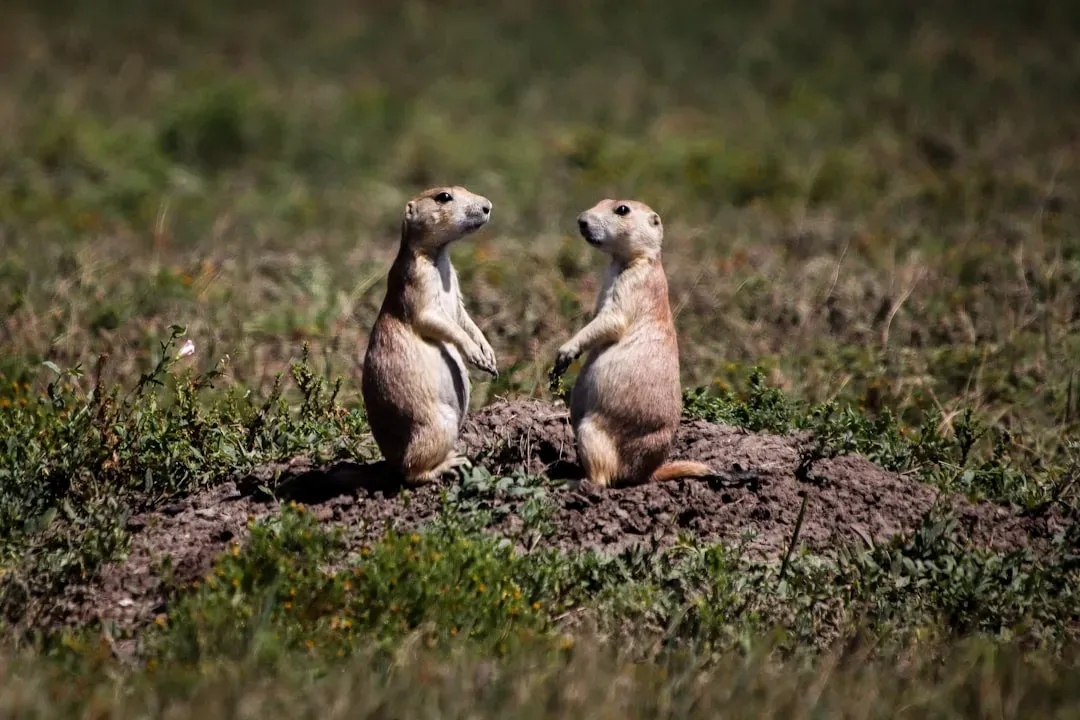
One mysterious communique popular with several species is the jump-yip, a gesture-vocalization combination frequently compared to a stadium wave, in which many prairie dogs in a row cry aloud while tossing their arms and sometimes their full bodies into the air. An entire colony can get swept up in a jump-yip. While it’s not entirely clear what these contagious bouts are for, researchers suspect they might be a prairie dog’s way of making sure everyone else is paying attention. The function of the jump-yip remains one of the more intriguing open questions in the field.
Why This Matters Beyond the Prairie
Research suggests that prairie dogs learn the foundations of descriptive communication from their parents in the wild, an experience captive animals lack. This points toward something culturally transmitted rather than purely instinctive, which deepens the already significant implications of the research.
These highly social animals have developed a complex language that allows them to convey specific information about predators, coordinate group activities, and maintain their intricate social structures. Scientists studying prairie dog communication have uncovered a system so nuanced that some researchers have compared it to a primitive form of language, complete with syntax and descriptive elements.
Recognizing the chirps of the prairie dog as something more than a simple call could create a whole new view of the depth of how animals communicate and a whole means of exploring that communication. If nothing else, it should give the lives of these small creatures some new respect and certainly some mystery.
Conclusion
The prairie dog story is, in some ways, a story about assumptions. For a long time, the working assumption was that sophisticated, descriptive language was something uniquely human. Then researchers started recording the chirps more carefully, running the audio through computers, and watching what the colonies actually did in response.
What emerged was a picture of an animal with a vocabulary for size, color, speed, and shape, capable of coining new terms, communicating about things not currently present, and even speaking in regional dialects. None of these findings are without debate in the scientific community, and researchers continue to probe the boundaries of what these calls truly encode.
Still, the evidence accumulated over decades is substantial enough to take seriously. Perhaps the most useful takeaway is simply this: the line between human communication and animal communication may be far less clear than we’ve long assumed, and a small, burrowing rodent of the North American grasslands has done more than almost any other species to blur it.
