
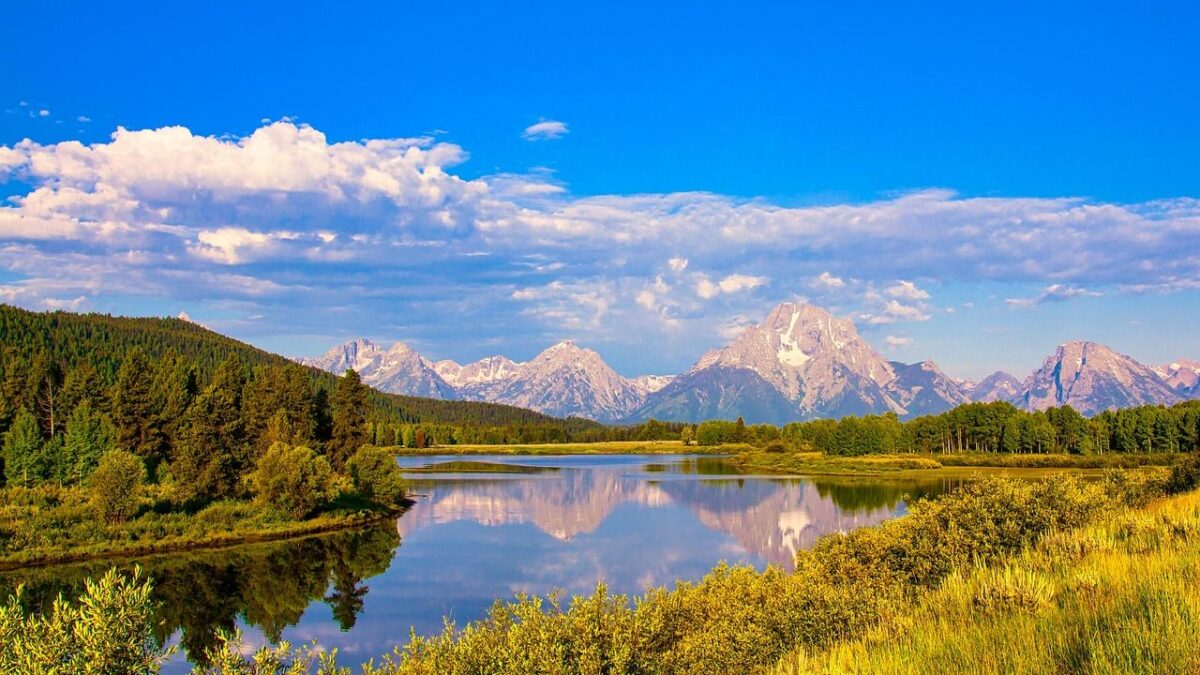
I have gathered enough information about majestic mountains in the United States. Based on the search results, I found details about several breathtaking US mountains including Maroon Bells, Denali, Grand Teton, Mount Rainier, Mount Whitney, Half Dome, Pikes Peak, and others. Now I’ll create a detailed article following the user’s instructions with exactly 6 H2 subheadings as requested.
There’s something about mountains that pulls at the human soul. Maybe it’s their towering presence or the way they scrape against the sky like ancient giants. The United States happens to be home to some of the most spectacular peaks on the planet, each one offering its own unique brand of jaw-dropping beauty.
From Alaska’s frozen wilderness to the granite spires of Wyoming, these mountains don’t just sit there looking pretty. They command attention. Whether you’re the type who loves a challenging climb or someone who’d rather admire nature’s handiwork from a safe distance, these peaks deliver unforgettable moments. Let’s explore what makes these American mountains so incredibly special.
The Crown of North America
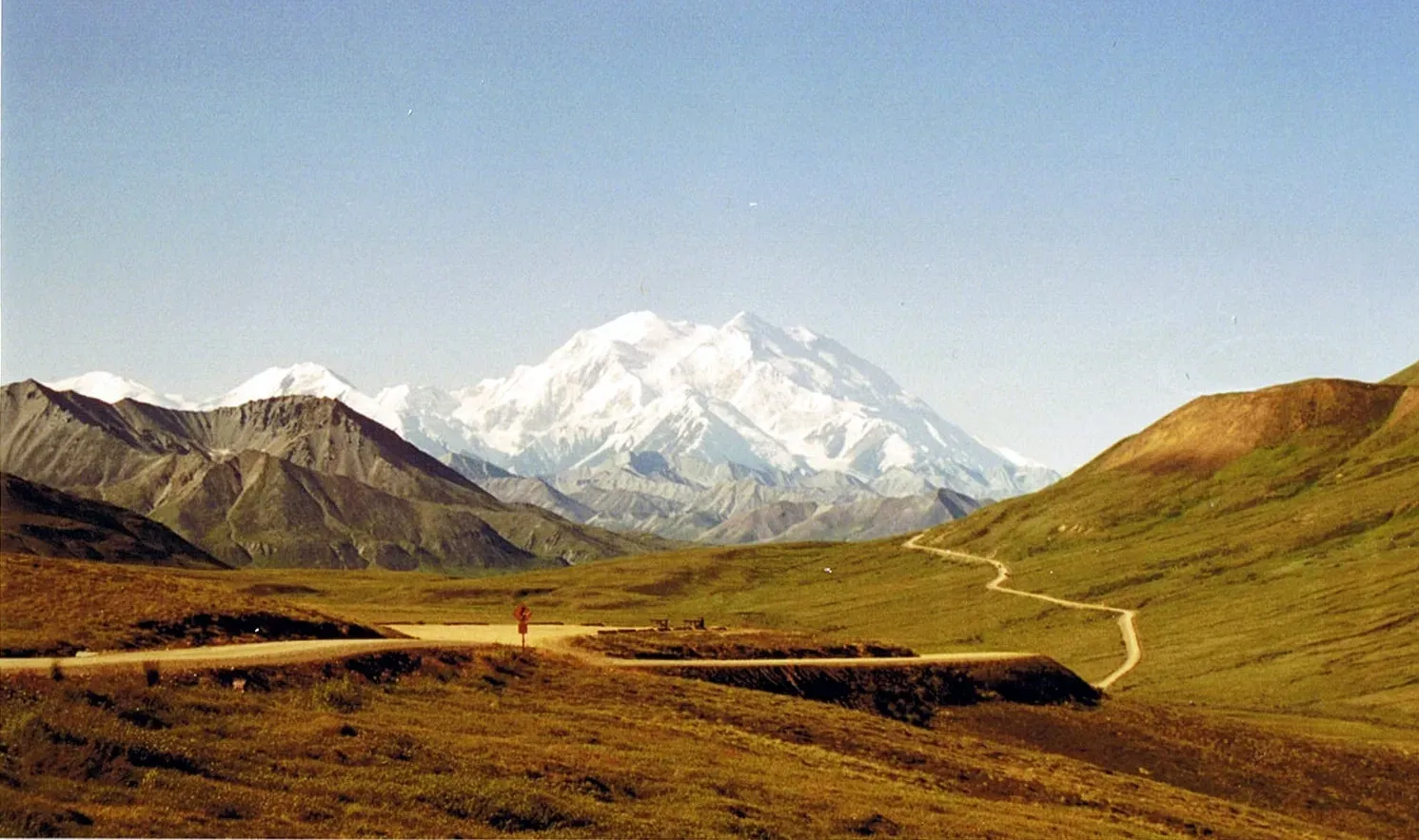
Denali stands at 20,310 feet above sea level, making it the highest peak in North America. This Alaskan behemoth doesn’t play by the rules of other mountains. Located in Alaska’s Denali National Park, this magnificent mountain creates its own weather patterns and ecosystems. The sheer size of this peak is hard to grasp until you’re standing there, dwarfed by its immensity.
Known as “The High One” or “The Great One” by the Koyukon Athabascans, this iconic mountain holds deep cultural and historical significance. Here’s the thing about Denali that most people don’t realize: it is the tallest mountain in the world from base to peak on land, measuring 18,000 ft, with a topographic prominence of 20,156 feet. That means the mountain’s actual vertical rise from its base is more dramatic than even Mount Everest. Wildlife thrives around its base, with grizzly bears, wolves, and moose roaming freely.
The Jagged Drama of the Tetons
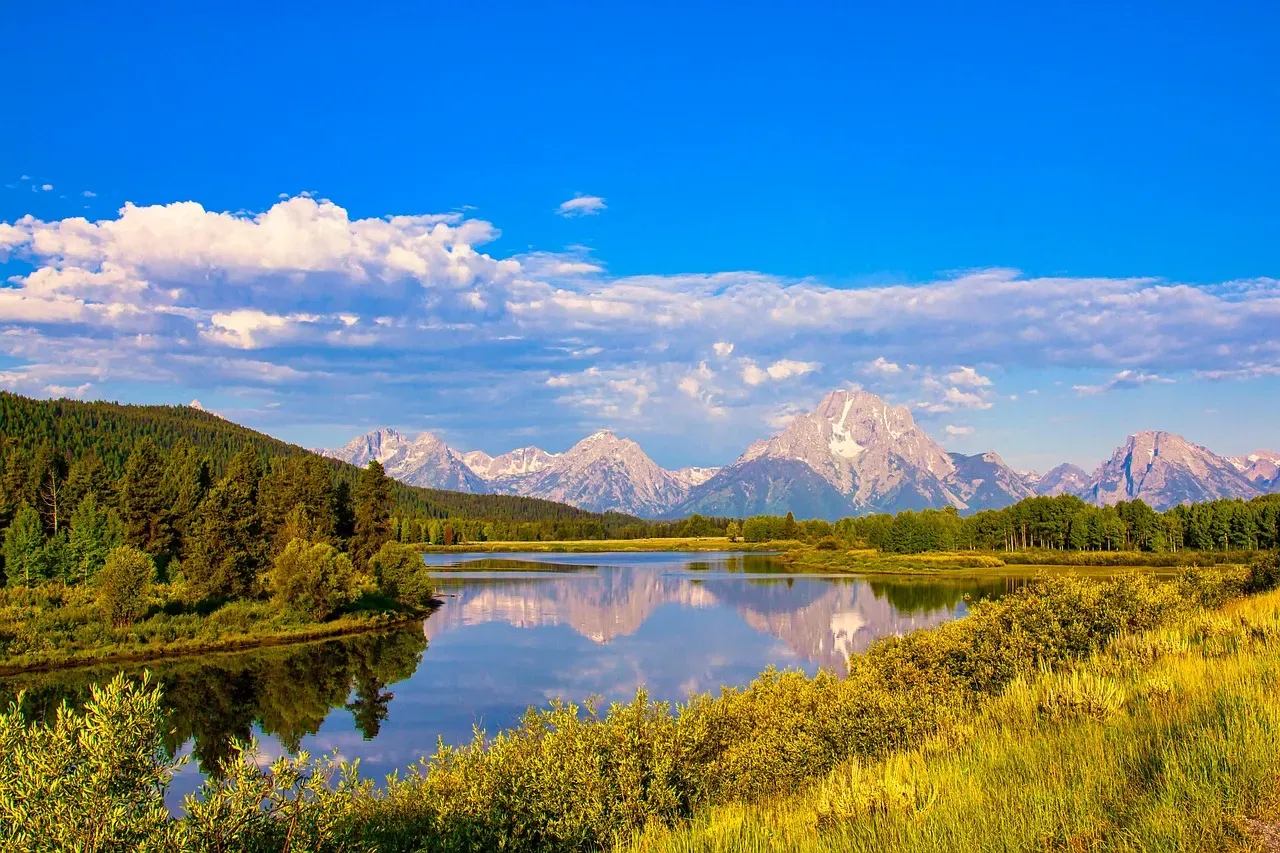
Without any gentle foothills to ease its rise, Grand Teton dramatically shoots up from the Jackson Hole valley floor in Wyoming, with this jagged 13,775-foot peak seeming to pierce the sky. The sight is honestly shocking the first time you see it. Unlike mountains that gradually build up from surrounding peaks, the Tetons just explode from the earth.
It has a jagged and rocky peak, and the beautiful Teton Glacier sits below its north face. One of the best areas to take in the range is from one of the beautiful lakes scattered throughout Grand Teton National Park, with Grand Teton itself standing just under 14,000 feet tall, and its silhouette over the extraordinary parklands is stunning. What makes this place extra special is the Teton Range is actually one of the youngest mountain ranges in North America, still actively rising today. You’re literally watching geology in action, though admittedly at a pace slower than watching paint dry.
The Glaciated Giant of Washington
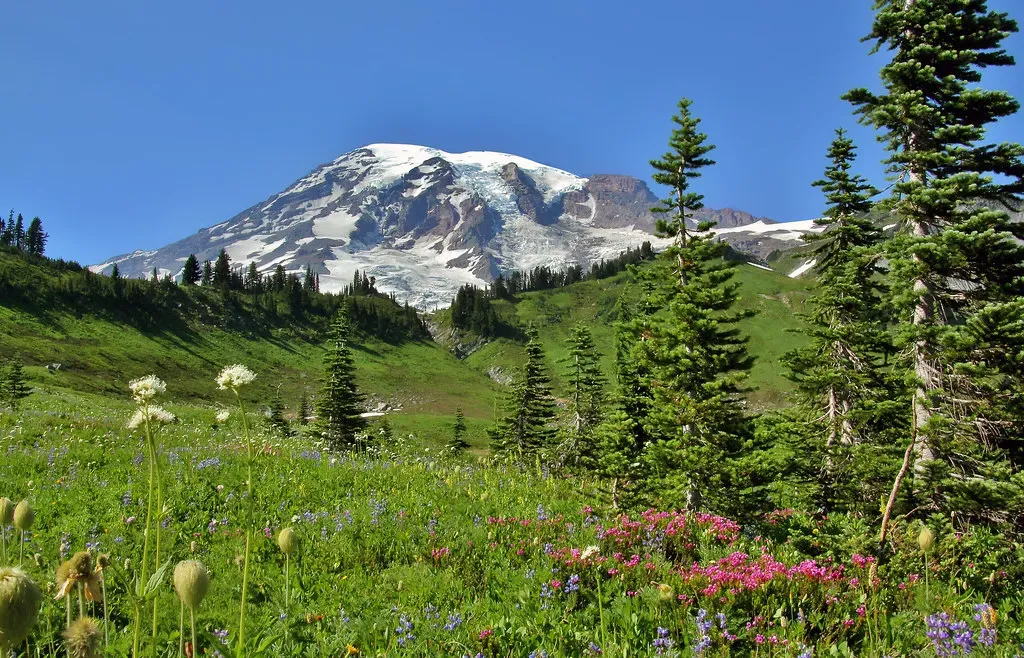
Looming over Seattle like a watchful guardian, Mount Rainier is an active stratovolcano of immense power and beauty, standing at 14,410 feet, its glaciated peak generating its own weather, leading to some of the highest snowfall totals on Earth. On a clear day, this mountain dominates the Seattle skyline from nearly sixty miles away. It’s hard to miss something that massive.
Mount Rainier is so large that it is capable of creating its own weather. Let that sink in for a moment. The mountain literally manufactures its own weather systems. Mount Rainier is one of the best mountains to visit in the U.S., partly because it is still an active volcano and the most glaciated peak in the U.S.. The wildflower meadows at Paradise during summer are legendary, carpeting entire hillsides in explosions of color. The Wonderland Trail loops 93 miles around the base, and wildflowers explode into color each summer in the aptly named Paradise meadows.
Tallest in the Lower Forty-Eight
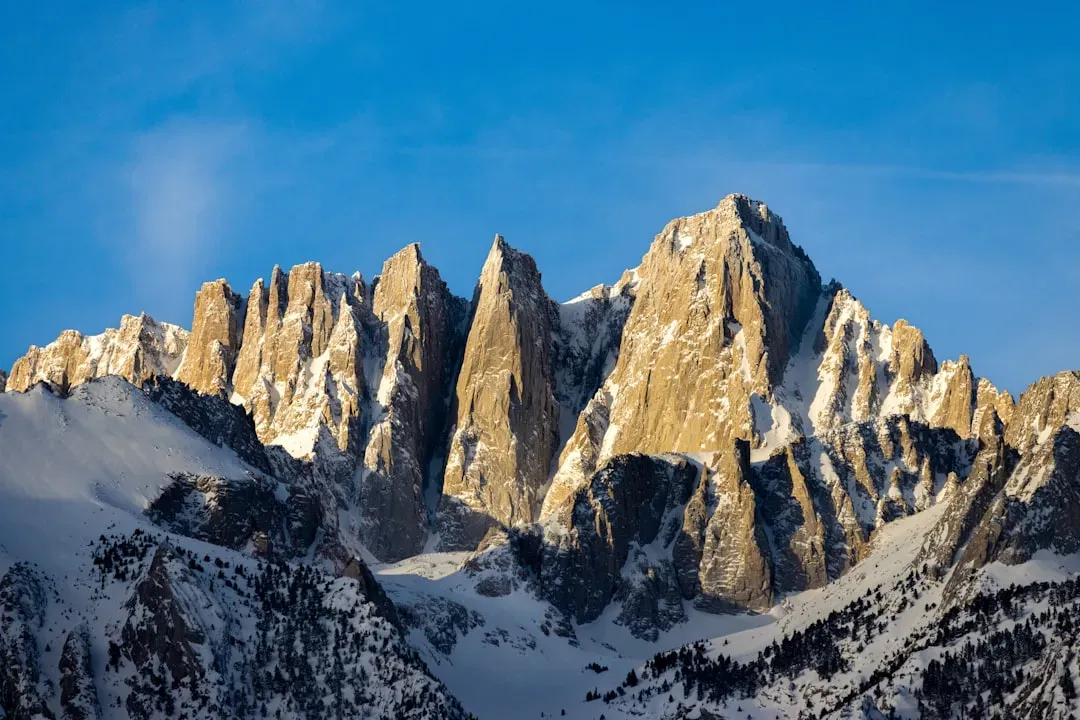
At 14,505 feet, Mount Whitney is the highest peak in the contiguous United States, serving as the grand finale of the 211-mile John Muir Trail. This California giant sits in the Sierra Nevada, but here’s something wild: it happens to be within 85 miles of the lowest place in North America, the Badwater Basin in Death Valley National Park. You could theoretically visit both the highest and lowest points in the lower forty-eight in a single day.
Mount Whitney is the tallest mountain in the “lower 48” states and the most commonly climbed mountain peak in the Sierra Nevada, with the jagged, snow-speckled California mountain being so popular that hikers must enter a lottery to win a permit. Unlike other hikes, reaching Mount Whitney’s 14,494-foot peak doesn’t require excessive training, but the 22-mile round-trip trek takes 12 to 14 hours to complete. It’s hard to say for sure, but that makes it somewhat accessible compared to other peaks of similar height, though don’t mistake that for easy.
The Iconic Half Dome Challenge
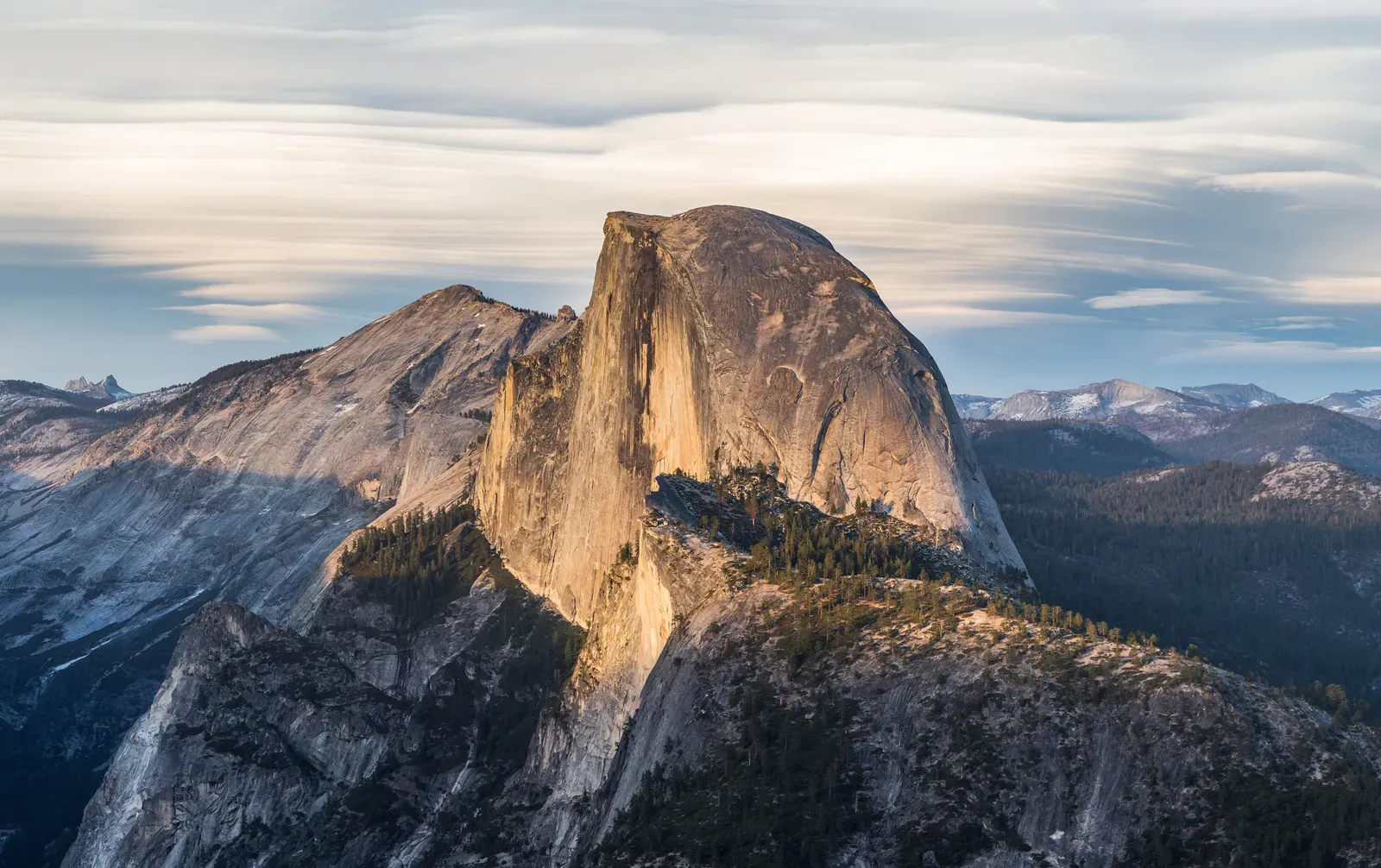
One of the most recognizable rock formations on the planet, Half Dome is a granite monolith rising nearly 5,000 feet from the Yosemite Valley floor. This isn’t just another mountain. It’s become a symbol of Yosemite itself and appears on everything from postcards to computer wallpapers. The view of Half Dome at sunrise and sunset is so majestic that it’s offered as a computer wallpaper for Macbook users.
The climb to the top isn’t for everyone. The journey is an arduous trek past Vernal and Nevada Falls before the final, thrilling ascent up the famous steel cables, with pulling yourself up the last 400 feet on that slick granite being a test of nerve and strength. A permit is mandatory and awarded through a highly competitive lottery in March, the cables are typically up from late May to early October, and this hike is extremely dangerous in wet weather. Let’s be real: dangling off steel cables on polished granite is not everyone’s idea of a good time, but those who make it never forget the experience.
America’s Mountain and Its Patriotic Legacy
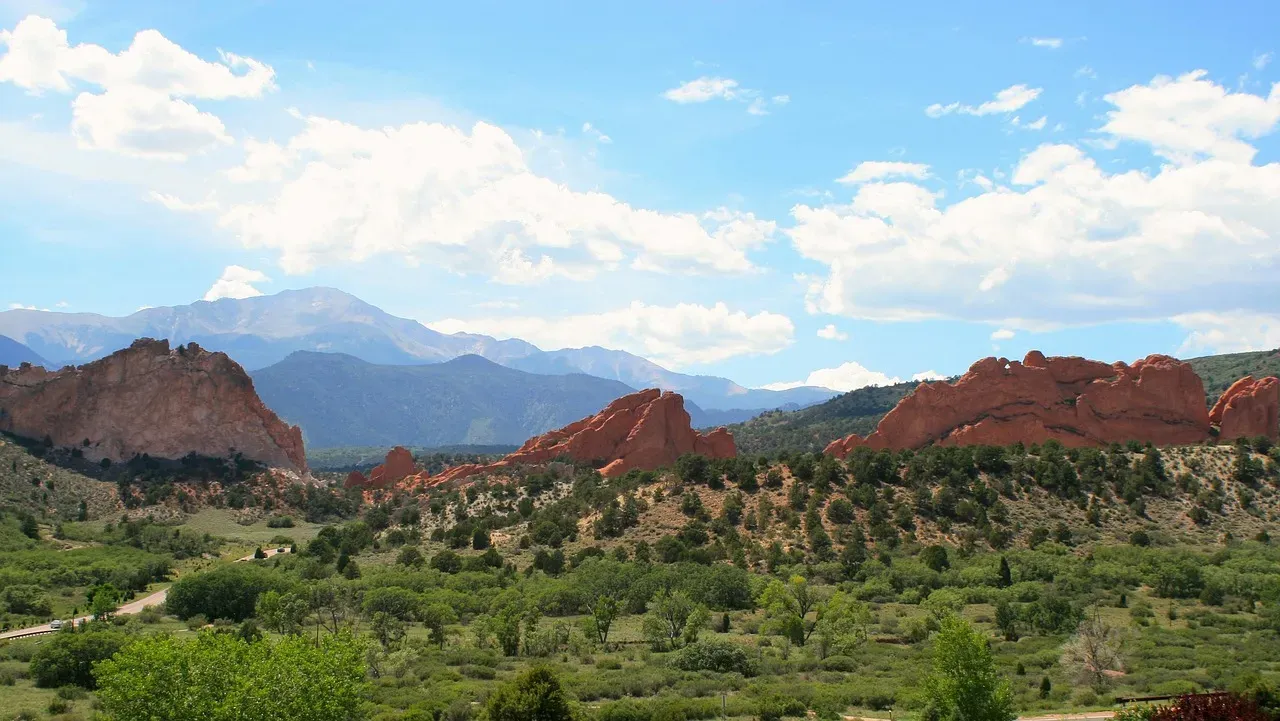
Inspiring the words to “America the Beautiful,” Pikes Peak rises majestically to 14,115 feet above Colorado Springs, with this iconic mountain standing alone rather than as part of a range, making its massive presence even more striking against the horizon. The connection between this peak and American culture runs deep. Katherine Lee Bates wrote the iconic song after a mule ride to the summit, and you can still drive, hike, or take a cog railway to the top for the same sweeping views she had in 1893.
At the summit, you’ll find a visitor center where you can warm up with hot chocolate and try the famous high-altitude donuts that have become a tradition. What other mountain serves donuts at the top? The mountain is also home to the annual Pikes Peak International Hill Climb, a legendary auto race that tests drivers and vehicles on the winding mountain road. Pikes Peak is one of the most visited mountains in the world, attracting over half a million visitors annually. The accessibility makes it possible for almost anyone to experience that breathtaking summit view.
Conclusion
These mountains represent more than just impressive geological features. They’re places where people test themselves, find peace, and reconnect with something larger than daily life. Each peak offers its own personality, from Denali’s remote wildness to Pikes Peak’s welcoming accessibility. Some demand technical skill and serious dedication, while others invite casual visitors to enjoy their grandeur from scenic viewpoints.
Standing at the base of any of these giants, you can’t help but feel humbled. They’ve witnessed thousands of years of history, weathered countless storms, and will continue standing long after we’re gone. Whether you’re planning your next big adventure or just daydreaming about mountain vistas, these American peaks deliver experiences that truly take your breath away. What’s your take on these majestic mountains? Have you conquered any of them, or is one calling your name for a future adventure?
