
Think you know bears? Maybe you picture a massive, lumbering creature roaming through the woods, occasionally stealing picnic baskets or fishing for salmon. Sure, that’s part of the story. Yet there’s so much more happening beneath that thick fur and behind those intelligent eyes than most people ever realize.
Bears are extraordinary in ways that go far beyond their size and strength. From their incredible mental abilities to their almost magical survival strategies, these animals challenge every assumption we make about wildlife. Let’s dive into some truly surprising facts that’ll make you see these giants in a completely different light.
They’re Smarter Than Most Dogs and Possibly Smarter Than You Think

Bears possess the largest and most convoluted brains relative to their size of any land mammal, with intelligence that compares with that of higher primates. Think about that for a second. We’re talking about animals that can rival great apes in cognitive ability.
Research has shown that black bears performed above chance on all trials when tested on counting tasks, demonstrating they could use numbers to guide their choices. They can actually count. Scientists taught three American black bear siblings to use a touchscreen computer by touching it with their noses or tongues to find out if bears could differentiate between quantities.
Studies found that black bears could tell polar bears from other species of bears, primates from hoofed animals, or even a chameleon from a car. The ability to categorize and distinguish between different types of objects shows a level of abstract thinking that’s genuinely impressive. Zookeepers and animal trainers consider bears to be smarter than dogs, which is remarkable considering dogs evolved alongside humans for thousands of years.
Their Hibernation Is a Medical Marvel That Could Save Human Lives
Hibernation sounds simple enough. Animals sleep through winter, right? Not quite. What bears do during hibernation borders on the miraculous.
Unlike small hibernators whose body temperature drops almost to freezing, bears’ body temperature drops by only about six degrees Celsius, yet their metabolism and oxygen consumption dropped by seventy five percent. While sleeping, they took only one or two breaths per minute, and their hearts did a quick flutter and then stopped until the next breath, resulting in a heart rate of about four beats per minute.
Here’s what really blows my mind. Hibernating bears do not lose muscle tissue, only fat, even after long periods of hibernation. If you or I stayed in bed for months, our muscles would waste away. Bears somehow produce a natural inhibitor that prevents muscle breakdown.
Brown bears hibernate for five to seven months without eating, drinking, urinating, and defecating at a metabolic rate of only twenty five percent of the summer activity rate, yet they emerge healthy and alert in spring. Scientists are studying this phenomenon because it could help treat muscle wasting diseases, improve recovery from strokes, and even help astronauts survive long space voyages.
Bears Use Tools and Solve Problems Like Seasoned Engineers
Tool use was once thought to be exclusively human. Then we discovered chimps do it too. Now we know bears belong in that exclusive club.
Since the 1700s, indigenous people have reported that polar bears use rocks and other objects to help them kill walruses, and in Alaska, people have observed polar bears throwing ice at seals. Recent research found that some bear species are capable of using tools to get their food, with one polar bear being spotted using a block of ice to batter a seal.
One animal trainer saw a captive grizzly use a plank of wood to create a bridge over a patch of thorny branches so that he could traverse the spiky terrain without injury. That’s not instinct. That’s planning and problem solving.
In another study, researchers hung donuts out of reach of bears in an enclosure with a tree stump, and to get to the donuts, they had to roll the stump underneath the donuts, flip it so they could stand on it, and reach up for the treat – the bears figured it out in less than two minutes. Two minutes. Most of us would still be staring at the donut wondering what to do.
They Have Memory That Might Exceed Human Ability
Ever forget where you parked your car? Bears don’t have that problem.
Grizzly bear mothers spend one and a half to three and a half years showing their cubs where and how to obtain food, and the cubs’ ability to form mental maps and remember locations may exceed human ability. That’s not a typo. Their spatial memory might actually be better than ours.
Bears can remember finding a particular type of food in a specific location after ten years or more. Imagine remembering every restaurant you ate at a decade ago and exactly how to get there. Bears do this naturally.
They can recall the location of important sites even after long periods of time and use mental maps to navigate their vast territories, which is essential for finding food, avoiding danger, and even retracing their steps to return to their dens. This isn’t just impressive memory. It’s survival intelligence honed over millions of years.
Polar Bear Fur Isn’t White and They’re Walking Contradictions
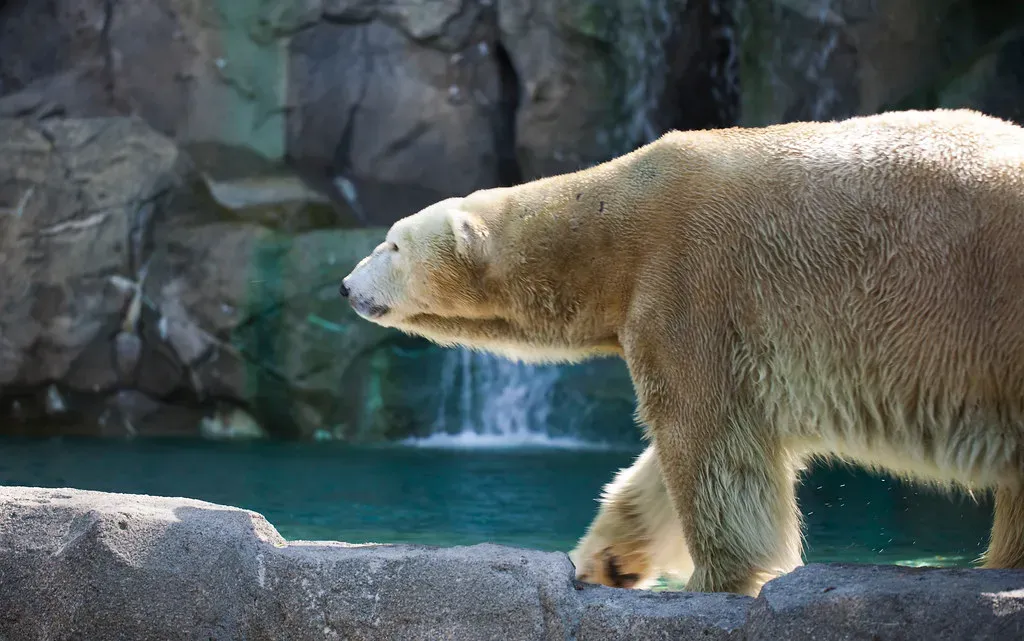
Look at a polar bear and what do you see? A white bear, obviously. Except you’re wrong.
Polar bear fur isn’t actually white – surprisingly, polar bear fur looks white but isn’t, as each hair shaft is pigment-free and transparent with a hollow core that scatters and reflects visible light. Polar bears look white because their fur reflects sunlight. It’s an optical illusion created by evolution.
Polar bears can eat over forty five kilograms of blubber in one sitting and they are the most carnivorous of all bear species. They are one of the most mobile four-legged animals, if not the most, as they can travel more than three thousand kilometers per month and can have home ranges that exceed six hundred thousand square kilometers. That’s larger than the entire state of California.
After killing and eating, polar bears wash themselves with water or snow, however no one has figured out the exact reason behind this behavior. They’re fastidious about hygiene for reasons scientists still can’t explain. How’s that for mysterious?
They Run Faster, Climb Better, and Swim Longer Than You’d Ever Expect
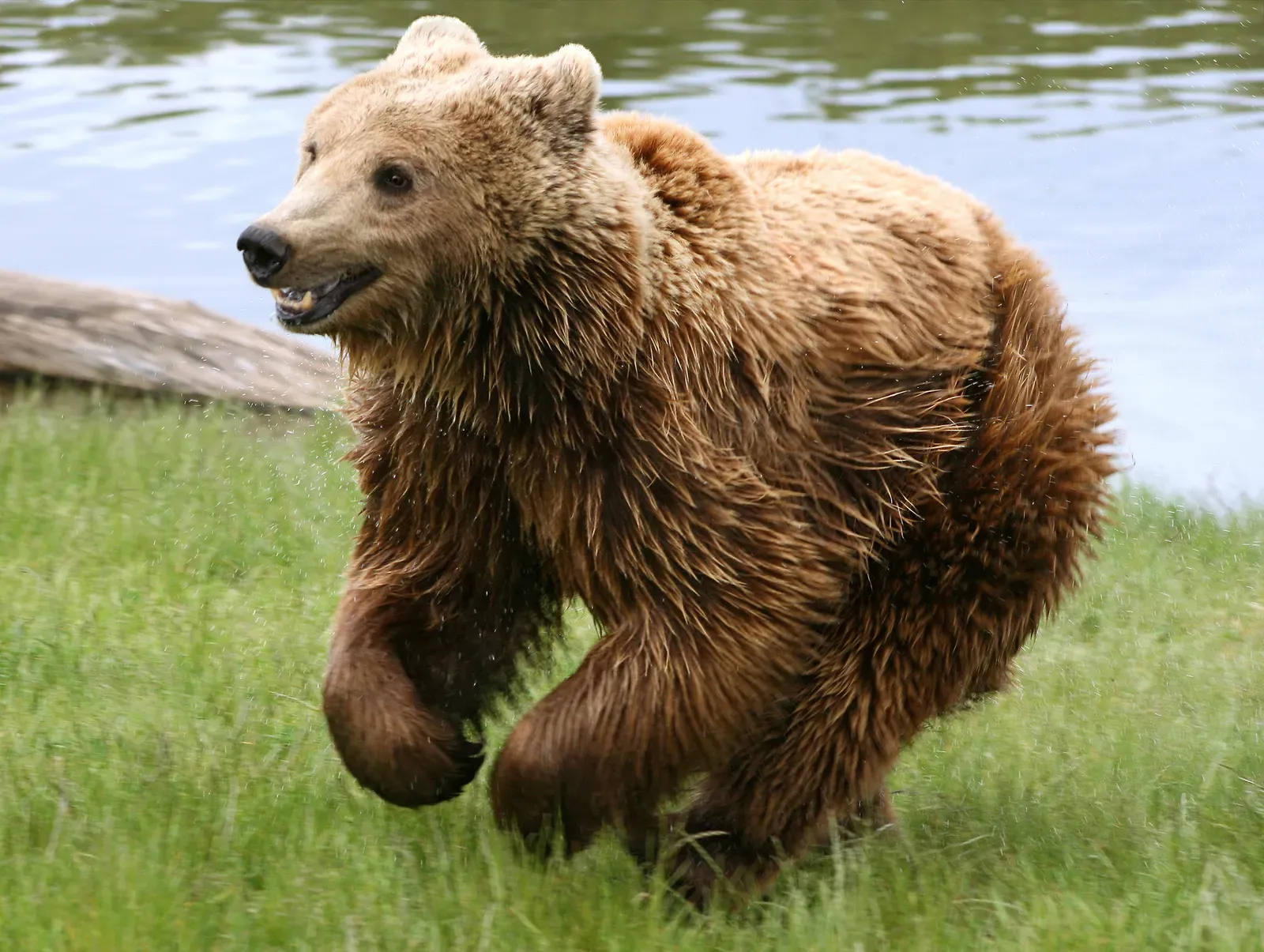
Given their size, you might assume bears are slow and clumsy. That assumption could get you into serious trouble.
Despite their size, grizzly bears are capable of surprising bursts of speed and can reach up to thirty miles per hour in short sprints, thanks in part to the powerful shoulder hump that supports their muscular legs. Black bears are also impressively fast runners, capable of reaching speeds of up to thirty five miles per hour, whether moving uphill, downhill, or across flat terrain. That’s faster than Usain Bolt at his peak.
Black bears are highly skilled climbers aided by their short sharp claws, which provide a powerful grip allowing even young cubs to expertly climb trees, and they will often retreat to the safety of the trees when threatened or in search of food. In addition to being skilled climbers, black bears are also strong swimmers, often swimming more than a mile in search of food such as fish.
The large hump on a grizzly bear’s shoulders is not just for show – it’s a massive muscle that powers the bear’s forelimbs and helps grizzlies dig for food, tear into carcasses, and run swiftly when necessary. Every part of their body is engineered for versatility and survival.
Conclusion
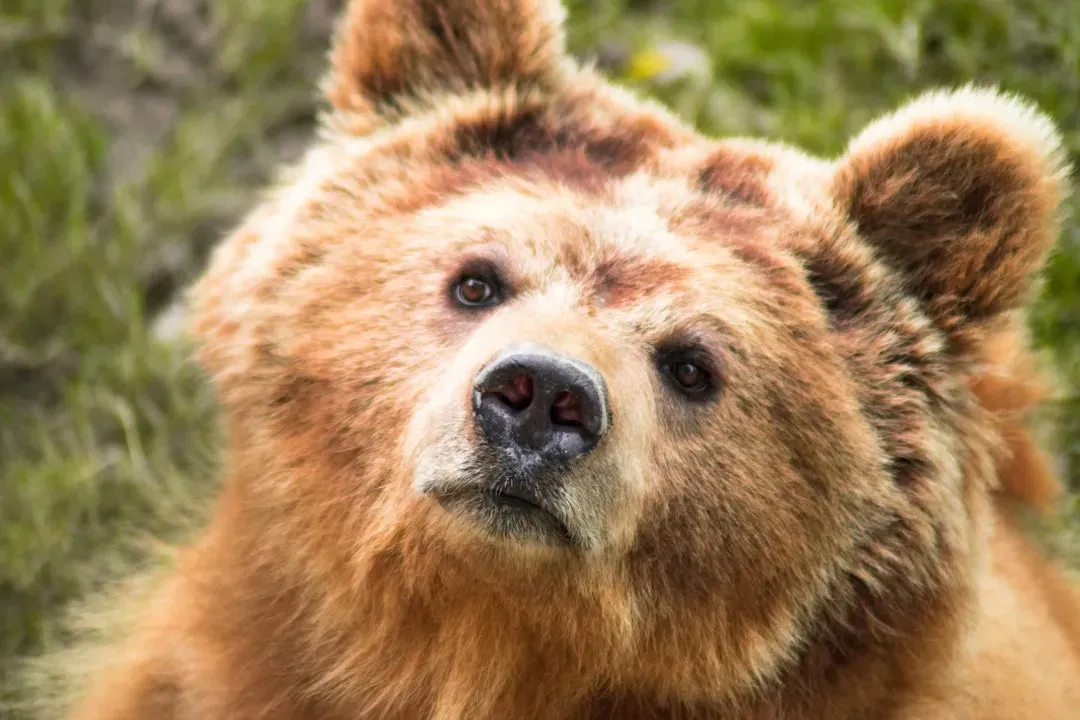
Bears aren’t just big, powerful animals wandering through the wilderness. They’re intelligent problem-solvers with memories that put ours to shame, survival strategies that baffle scientists, and physical capabilities that defy their massive size.
A vast and tissue-specific network of genes underlies the distinct seasonal and reversible phenotype of bears, making them living laboratories for understanding metabolism, muscle preservation, and even space travel. The more we study them, the more we realize how much they have to teach us.
Next time you see a bear in a documentary or at a wildlife sanctuary, remember you’re looking at one of nature’s most sophisticated creations. What do you think is the most surprising thing about these incredible animals? Did any of these facts change how you see them?
