
Worried about unexpected vet bills?
Pet insurance can cover thousands in unexpected vet costs. Get a free quote from Lemonade in under 2 minutes.
Get My Free Quote →Sponsored · Opens Lemonade.com
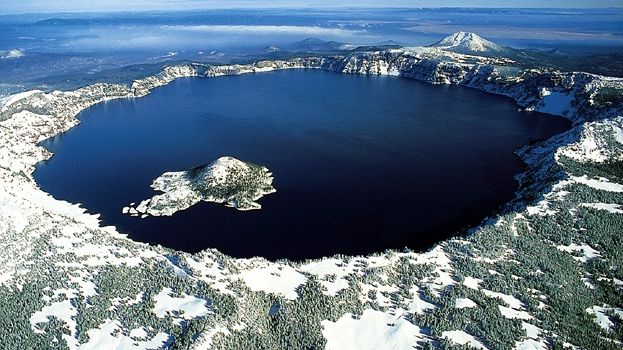
Standing on the rim of Crater Lake National Park in Oregon, visitors often pause in quiet awe. The water stretches out like a vast sapphire, impossibly vivid against the rugged volcanic walls. Something about its hue and apparent endlessness draws the eye downward, hinting at secrets below the surface.
This caldera lake, born from catastrophe, holds a unique combination of traits that create its mesmerizing look. Pure water meets profound depth in a setting untouched by rivers or streams. The result challenges everyday expectations of what a lake can be.
The Volcanic Origins
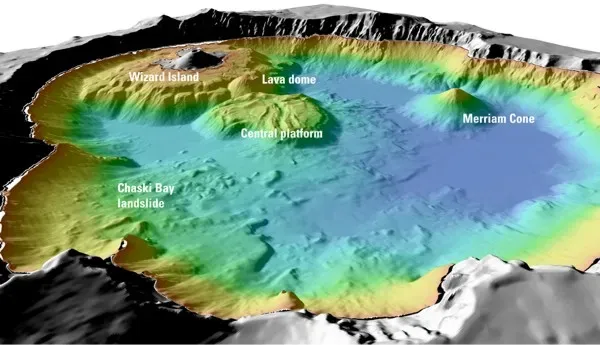
About 7,700 years ago, Mount Mazama erupted with explosive force in what is now southern Oregon. The volcano’s summit collapsed into a massive bowl-shaped caldera roughly 4,000 feet deep.[1][2]
Rain and snowmelt gradually filled this void over centuries, forming the lake without any inlet or outlet rivers. This isolation keeps sediments and pollutants at bay. Today, the water level stays remarkably steady, thanks to porous rock acting as a natural overflow drain.[3]
A Depth Beyond Imagination
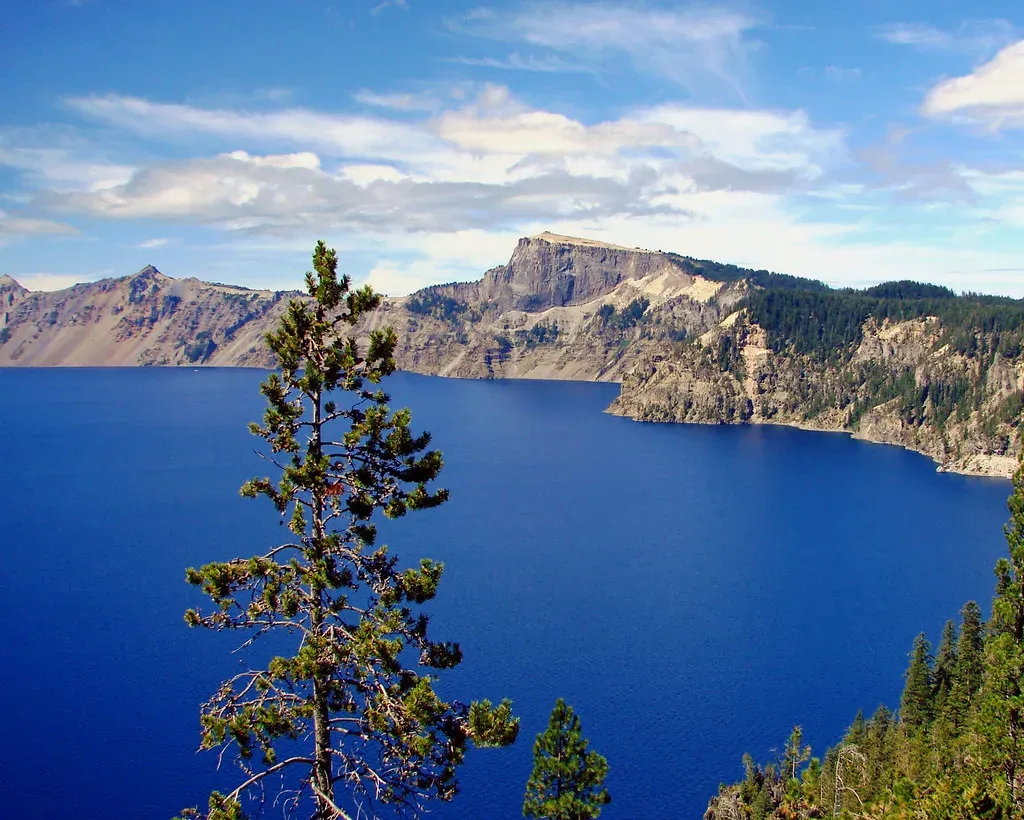
Crater Lake plunges to 1,949 feet at its deepest point, making it the deepest lake in the United States and among the top ten worldwide.[1][4] That sheer volume – nearly 5 trillion gallons – amplifies its sense of vastness from above.
Early explorers measured depths with weighted lines, confirming the abyss long before modern sonar. The caldera’s steep walls drop sharply, so even near the edges, the bottom lies far below. This true profundity pairs with optical tricks to make it seem bottomless on clear days.[5]
Exceptional Clarity
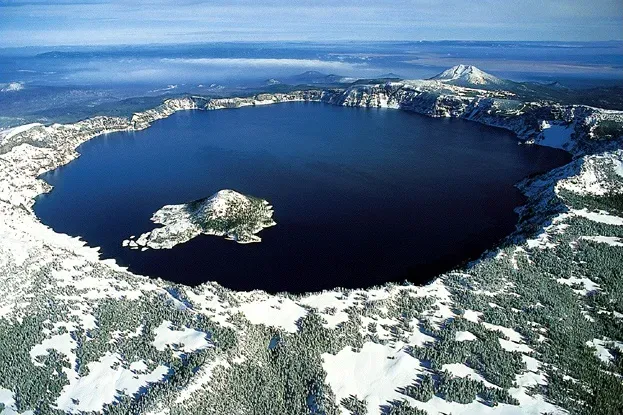
Water clarity here averages over 100 feet, with records reaching 134 feet using a Secchi disk – a tool that measures visibility by lowering a patterned plate.[2][6] Low levels of algae, particles, and nutrients allow light to travel unusually far.
Without river inflows carrying mud or organic matter, the lake stays pristine. Ultraviolet light even penetrates to 320 feet in places. This transparency lets observers peer deep into the blue, enhancing the illusion of infinite depth.[7]
Sunlight hitting the surface behaves differently in such pure conditions. Longer wavelengths like red and orange get absorbed quickly by water molecules. Shorter blue wavelengths scatter extensively, bouncing back to the surface intensified.[8]
Purity Fuels the Blue
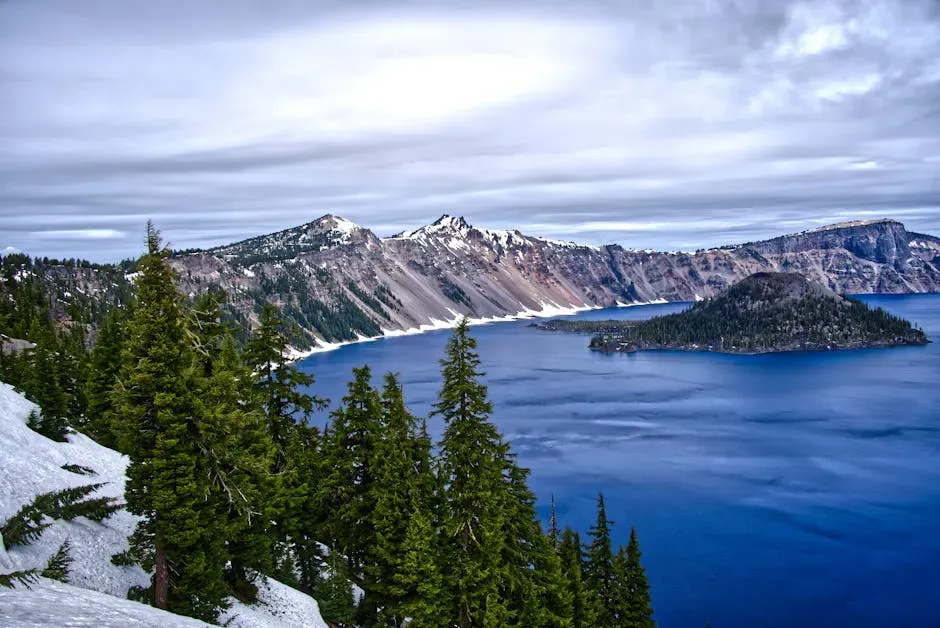
The lake’s water comes solely from direct precipitation, filtering through volcanic rock for natural purification. Minimal dissolved minerals or lifeforms mean almost no scattering from impurities. What remains is water’s inherent tendency to favor blue light reflection.[9][6]
Scientists note this creates a spectrum shift: turquoise near shores, deepening to intense indigo in the center. The effect peaks on sunny, calm days when the sky mirrors perfectly. Wind or clouds can mute it, but the core brilliance persists.[10]
Depth and Light Interaction
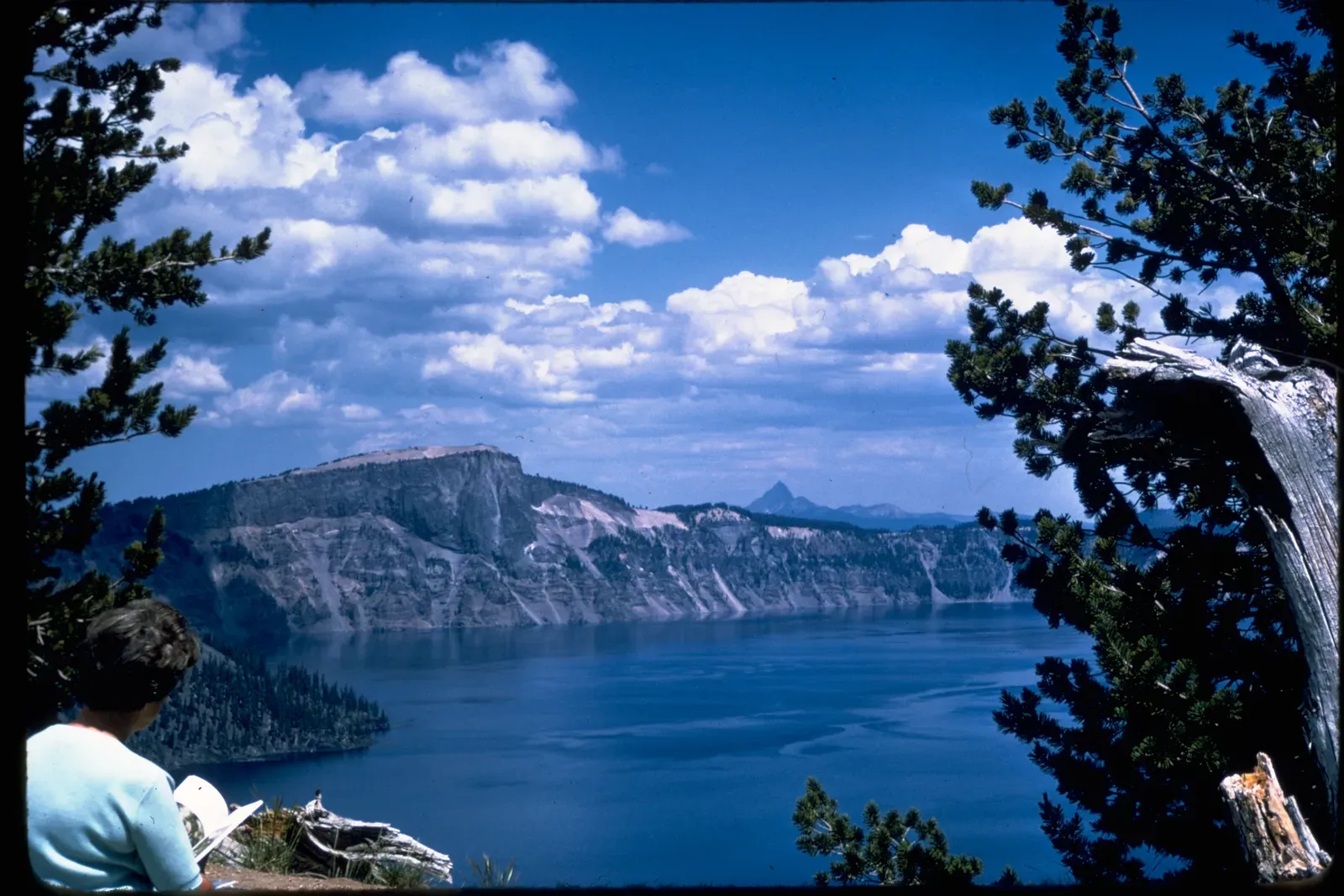
At over 1,900 feet, the lake absorbs most light before it reaches bottom, but clarity lets enough blue rays return from midway down. This back-scatter gives the uniform deep tone, unlike murkier lakes that fade to green or brown. The combination tricks the eye into sensing greater depth still.[3]
Phytoplankton cluster unusually deep here, around 250-500 feet, thriving on faint light penetration. Their sparse presence avoids clouding the water column. Such dynamics sustain the vivid appearance year-round.[11]
Seasonal and Weather Shifts
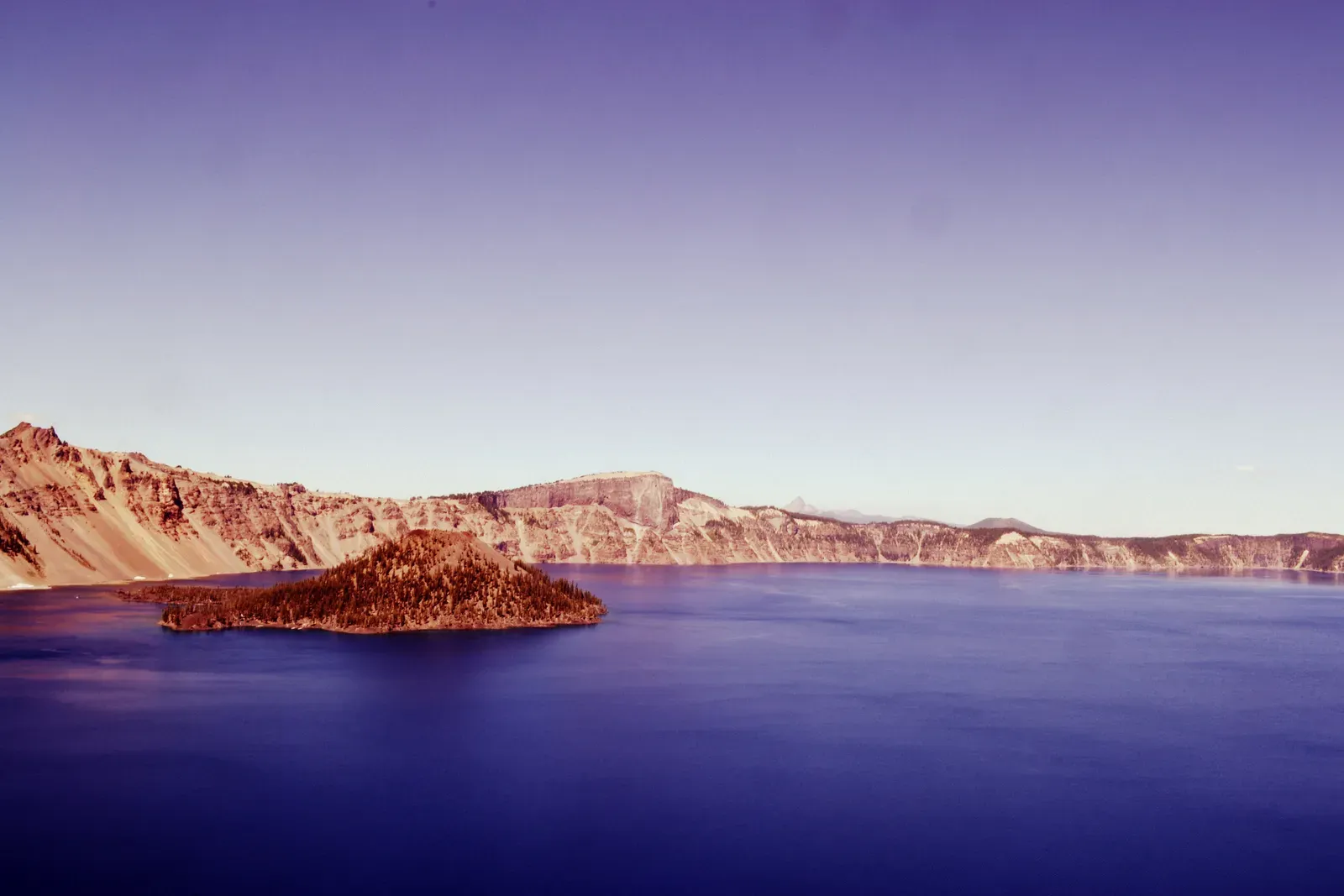
Surface temperatures hover around 55°F, rarely freezing despite heavy snows, keeping the water stable. Summer sun angles sharpen the blue, while winter overcast softens it to steel tones. Rim height – about 1,000 feet above – frames the color dramatically against dark cliffs.
Monitoring since the 1990s tracks subtle changes from tourism or climate, but the lake rebounds well. Clarity dips rarely, often from wind-stirred particles settling quickly. These variations remind us of nature’s delicate balance.[5]
A Lasting Natural Wonder
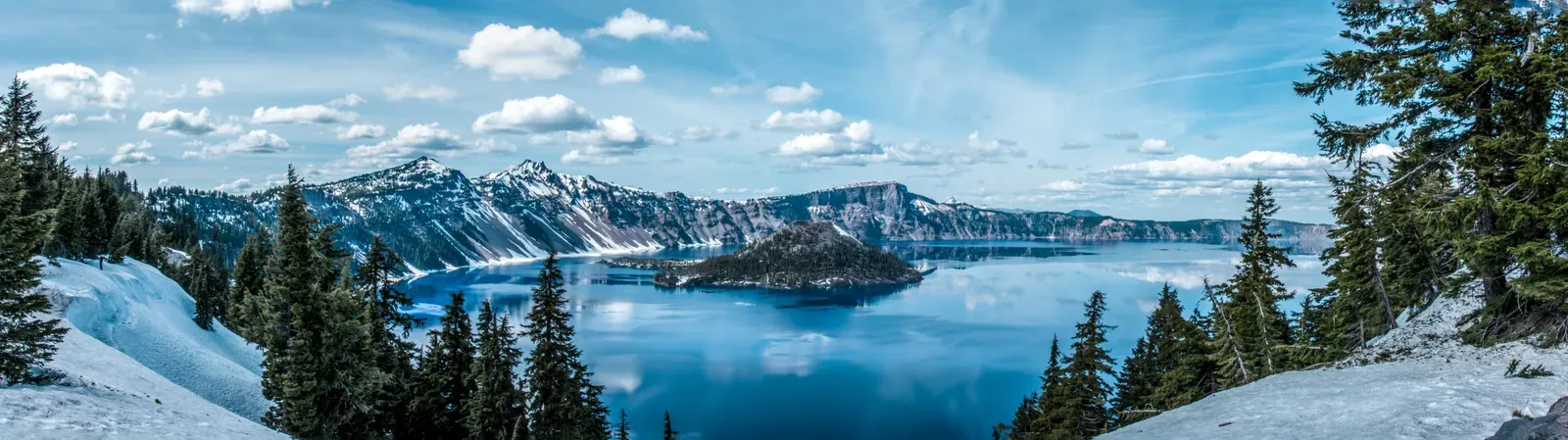
Crater Lake’s allure stems from this rare harmony of geology, purity, and physics. Ongoing studies by the USGS and National Park Service ensure its clarity endures.[5] Protecting it means limiting impacts, preserving that first glimpse of otherworldly blue.
Next time you gaze across those depths, consider the millennia of quiet filling and filtering. It’s a snapshot of Earth’s raw power, rendered in tranquil sapphire. Few places capture such purity so vividly.
Worried about unexpected vet bills?
Pet insurance can cover thousands in unexpected vet costs. Get a free quote from Lemonade in under 2 minutes.
Get My Free Quote →Sponsored · Opens Lemonade.com

- How Muskrat Behavior Can Indicate Climate Change in The Carolinas - June 6, 2026
- What Ancient Animal Symbolizes Prosperity for Your Zodiac Sign? - June 6, 2026
- The US States With the Most Elk - June 6, 2026