


In the savannas and forests where elephants roam, a profound ritual unfolds when one of their own passes away. Unlike most animals that simply move on after death occurs within their group, elephants display behaviors so emotionally complex and ritualistic that scientists and observers alike have been moved to describe it as mourning. These gentle giants demonstrate an awareness of death that challenges our understanding of animal consciousness and forces us to reconsider the emotional capacities of non-human species. Their mourning behaviors—touching the remains with their trunks, standing vigil, returning to burial sites years later—mirror human grief in ways that are both startling and poignant. This article explores the fascinating and heart-wrenching ways elephants process death, what these behaviors reveal about their cognitive and emotional complexity, and what these insights might teach us about our own relationship with mortality and grief.
The Emotional Intelligence of Elephants

Elephants possess some of the most complex brains in the animal kingdom, with a neocortex relatively similar to humans in terms of structure and complexity. Their brains contain as many neurons as human brains, though distributed differently, with a particular concentration in areas associated with cognitive functions. Scientists have documented that elephants demonstrate self-awareness (passing the mirror test), engage in problem-solving, use tools, and maintain complex social structures built on cooperation and communication.
Their temporal lobes—responsible for processing emotional reactions in humans—are particularly well-developed, suggesting a neurological basis for their observed emotional behaviors. This neurological foundation creates the capacity for elephants to form strong social bonds and experience a range of emotions, including what appears to be grief when those bonds are broken by death.
Elephant Family Structures and Social Bonds

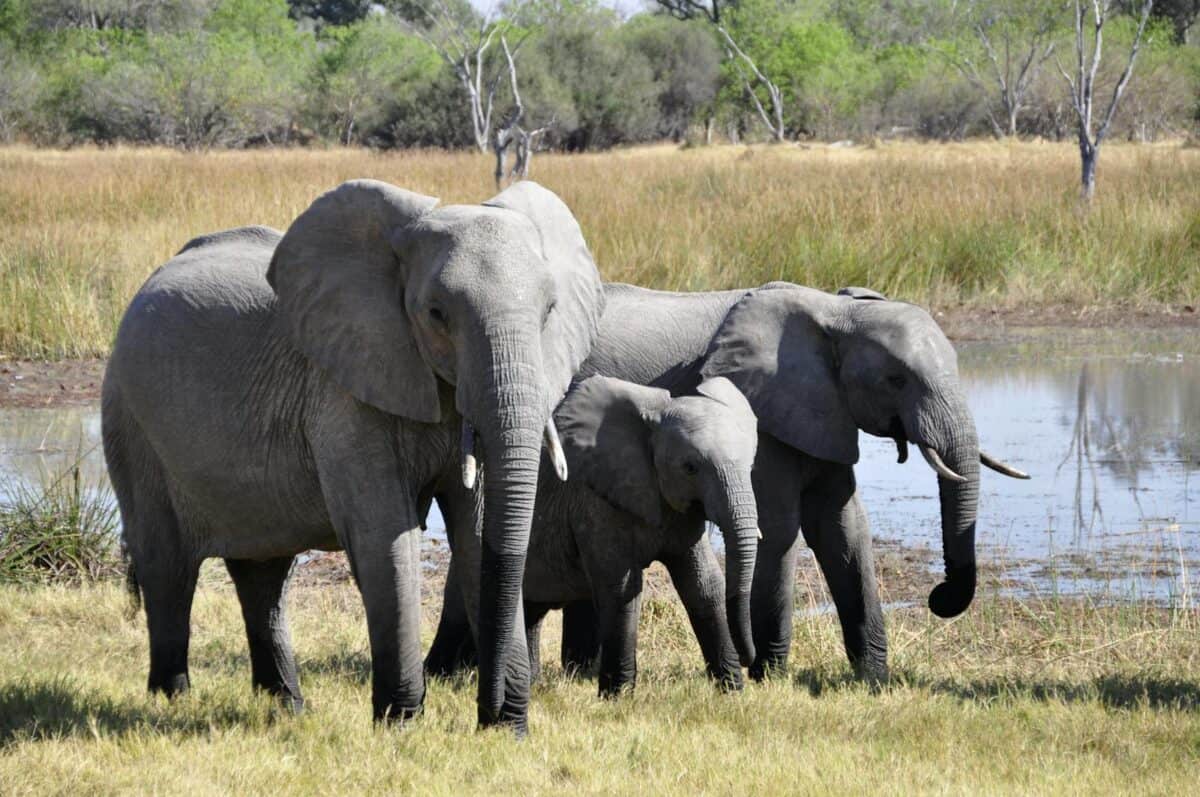
Understanding elephant mourning requires knowledge of their intricate social structures. Female elephants (cows) live in tight-knit matriarchal herds led by the oldest and most experienced female. These family units typically consist of related females and their offspring, with males (bulls) leaving the herd upon reaching adolescence. Elephants form deep, lifelong bonds with family members, recognizing and greeting relatives even after years of separation.
They communicate through a sophisticated system of vocalizations, some below the range of human hearing, touch, scent, and visual signals. Their exceptional memory allows them to remember individuals, locations, and events throughout their 60-70 year lifespan. The strength of these familial bonds explains why the death of a herd member, particularly a matriarch, can trigger such profound emotional responses throughout the entire family unit.
Documented Behaviors Around Death

When an elephant dies, herd members engage in a series of behaviors that appear ritualistic. They gather around the deceased, often becoming quiet and subdued. Using their trunks—organs of both incredible strength and remarkable sensitivity—they gently touch and investigate the body, sometimes trying to lift or support the fallen elephant as if attempting to help it stand. They may cover the body with branches, leaves, and dirt in what resembles a burial.
Perhaps most remarkably, elephants have been observed standing vigil over their dead for days, taking turns guarding the body and only leaving when necessary to find food or water. These behaviors have been documented consistently across different elephant populations in both Africa and Asia, suggesting they are innate rather than learned responses to death.
Return to Death Sites: Elephant Graveyards

The legendary “elephant graveyards” of folklore have a basis in observed behavior. While elephants don’t have designated burial grounds where they go to die, they do demonstrate an unusual interest in elephant remains, even those of unrelated individuals. Studies have documented elephants making deliberate visits to locations where herd members died, years after the death occurred.
Using their trunks, they will gently examine the bones, particularly the skull and tusks, in what appears to be recognition. Cynthia Moss, who has studied African elephants for decades, recorded instances where elephant families traveled significantly out of their way to visit the sites where relatives had died. This behavior suggests not only exceptional spatial memory but also a concept of death that includes remembrance of the deceased—a cognitive leap that few animals demonstrate.
Mourning Across Age Groups

Elephant grief spans all age groups within the herd, though expressed differently. Adult females show the most pronounced mourning behaviors, particularly for deceased calves or matriarchs. They may become withdrawn, separate temporarily from the herd, or display signs of stress through head-shaking, ear-flapping, or unusual vocalizations. Juvenile elephants often appear confused by death, sometimes continuing to nudge or attempt to rouse the deceased.
Young calves have been observed standing protectively near their dead mothers, refusing to leave despite their own needs for nourishment. When a matriarch dies, the entire herd structure is affected, with observable periods of disorientation and reorganization as a new leader emerges. This multi-generational response to death reinforces the idea that elephant mourning is both instinctual and learned through social observation.
Scientific Studies on Elephant Grief
Scientific investigation into elephant mourning has evolved from anecdotal observations to systematic studies. Dr. Joyce Poole, who has studied elephant behavior for over 40 years, has documented more than 30 distinct behaviors elephants display around their dead. Research teams have used camera traps and drones to observe elephant reactions to death without human interference. Hormonal studies have detected elevated stress hormones in elephants following a herd member’s death, providing physiological evidence of distress.
Brain imaging studies, though limited by practical challenges, show activity in elephants’ limbic systems—associated with emotion in mammals—when exposed to recordings of deceased herd members’ calls. While scientists remain cautious about anthropomorphizing these behaviors, the consistency and specificity of elephants’ responses to death are compelling evidence for emotional processing that parallels aspects of human grief.
Response to Unrelated Elephants and Other Species

Elephants’ awareness of death extends beyond their immediate family. They show interest in the remains of unrelated elephants, though with less intensity than for family members. This suggests recognition of their own species even in death. More surprisingly, elephants sometimes display similar behaviors toward dead rhinos, buffalo, and even humans. There are documented cases of elephants covering deceased humans with branches and soil in the same manner they treat their own dead.
Conservationist Lawrence Anthony, known as “The Elephant Whisperer,” had a herd of wild elephants he had rehabilitated walk over 12 miles to his home upon his death, where they stood in apparent vigil for two days. While we must be careful not to over-interpret these behaviors, they suggest that elephants’ concept of death may extend beyond species boundaries, raising profound questions about their understanding of mortality itself.
Cultural Transmission of Mourning Behaviors

Evidence suggests that elephant mourning behaviors are partially culturally transmitted. Different elephant populations show slight variations in their death rituals, and young elephants learn these behaviors by observing adults. In some populations, researchers have observed specific “grief calls”—distinctive vocalizations used only in the context of death. These calls appear to be regionally specific, suggesting cultural rather than purely instinctual origins.
Captive elephants born in zoos sometimes show less pronounced mourning behaviors than wild-born individuals, further suggesting that these responses are not entirely hardwired but partially learned within elephant society. This cultural dimension to elephant mourning provides a fascinating parallel to the way human grief rituals vary across cultures while maintaining certain universal elements—a reminder of the complex interplay between biology and culture in emotional expression.
Comparison with Other Mourning Animals

While elephants display perhaps the most elaborate mourning behaviors in the animal kingdom, they are not entirely unique. Primates, particularly chimpanzees and gorillas, have been observed carrying deceased infants for days or weeks, suggesting grief. Dolphins have been documented supporting dead calves at the surface of the water, seemingly unable to accept their death. Corvids (crows and ravens) hold what appear to be “funerals,” with groups gathering around a dead member and falling silent.
What distinguishes elephant mourning is its duration, elaborateness, and the elephant’s apparent concept of death that extends beyond the immediate event. While most animals eventually abandon their dead, elephants may maintain connections through visits to remains for years or even decades. This long-term relationship with the deceased sets elephant mourning apart and most closely resembles human grief patterns.
Implications for Elephant Conservation

Understanding elephant mourning has significant implications for conservation efforts. Poaching not only reduces elephant numbers but traumatizes surviving herd members, potentially affecting reproduction rates and social stability. When a matriarch is killed, decades of ecological knowledge die with her, leaving the herd without its most experienced leader. Conservation strategies increasingly recognize the need to preserve family units intact rather than focusing solely on population numbers.
Some reserves now implement “trauma counseling” for elephant herds that have witnessed poaching, introducing stable older elephants to guide traumatized younger ones. Awareness of elephants’ emotional lives has also influenced public opinion, with poignant images of elephants mourning their dead helping to generate support for anti-poaching initiatives and habitat protection. By recognizing elephants as sentient beings capable of grief, conservation efforts shift from purely ecological considerations to ethical ones.
What Elephant Mourning Reveals About Human Grief

Elephant mourning offers a mirror for examining our own relationship with death. For centuries, humans considered grief a uniquely human experience, one that separated us from “lower” animals. Elephant mourning challenges this exceptionalism, suggesting that the roots of grief lie deep in our evolutionary past and serve important biological and social functions. Some anthropologists propose that ritual treatment of the dead—a universal human behavior—may have evolved from similar behaviors in our pre-human ancestors.
By studying elephant grief, we gain insights into grief’s adaptive purposes: maintaining group cohesion, acknowledging loss, and processing emotional trauma. The similarities between elephant and human mourning suggest that rather than being a cultural construct, grief may be a necessary emotional process for highly social species with strong bonds. This perspective can normalize grief as a natural, even necessary process rather than a pathology to be quickly overcome.
The Ethical Questions Raised

Elephant mourning raises profound ethical questions about how we treat non-human animals. If elephants experience grief comparable to human grief, what moral obligations do we have toward them? Should elephants be kept in captivity where family bonds are disrupted? Is it ethical to cull elephant populations for management purposes when we understand the trauma this causes surviving herd members? Some ethicists argue that recognizing emotional complexity in animals should lead to an expansion of moral consideration beyond traditional boundaries.
Legal systems worldwide are beginning to grapple with these questions, with some countries granting limited personhood rights to elephants and other cognitively complex animals. The growing field of compassionate conservation advocates for wildlife management approaches that minimize suffering, taking into account animals’ emotional lives rather than treating them as unfeeling resources. By forcing us to confront the emotional lives of other species, elephant mourning challenges us to expand our circle of moral concern.
What We Can Learn from Elephant Grief

The study of elephant mourning offers profound lessons for humans navigating our own relationship with death and loss. In modern Western societies, death has become increasingly medicalized and removed from everyday life, with grief often treated as a condition to be managed rather than an experience to be honored. Elephants remind us that grief is natural, necessary, and potentially healing when expressed fully within a supportive community. Their practice of collectively acknowledging death—standing together, touching the deceased, comforting one another—models a more integrated approach to mortality than many human societies currently practice.
Some grief counselors now reference elephant mourning when encouraging clients to take time with their grief rather than rushing to “move on.” Conservation efforts that educate the public about elephant mourning often report that this aspect of elephant behavior creates the strongest emotional connection with human audiences, suggesting that across species boundaries, we recognize something universal in the experience of loss and remembrance.
Conclusion: The Bridge Between Species

Elephant mourning serves as a profound bridge between human and non-human experience, challenging our assumptions about the uniqueness of human emotion and consciousness. Through their careful attention to their dead, their long-term remembrance, and their community-based grieving, elephants reveal that the capacity for deep emotional attachment and the pain of its severance transcends species boundaries.
These behaviors force us to reconsider not just our understanding of animal cognition, but our own relationship with mortality and grief. As we face global challenges that threaten elephant populations—habitat loss, poaching, climate change—perhaps the most compelling argument for their protection lies not in their ecological importance or their majesty, but in the recognition of a shared emotional experience that connects us across the vast evolutionary distance between our species.

From exploring the marine wonders in the Azores and witnessing the vast savannas of Kenya, to delving deep into the rich biodiversity of South Africa and traversing iconic landscapes in Australia and the US like Yellowstone, Chris's experiences are vast.
With a penchant for diving alongside sharks, the ocean holds a special place in his heart.
Through his academic insights, he champions wildlife conservation, striving with 'Animals Around The Globe' to cultivate a profound connection between humans and animals, enhancing our mutual appreciation.
Connect with him at Feedback@animalsaroundtheglobe.com.
- Rhino vs. Hippo - July 26, 2026
- Could Your Cat Actually Understand Your Emotions? - July 26, 2026
- Wolves Reintroduced in Michigan Sparked Heated Debate, Why? - July 26, 2026