
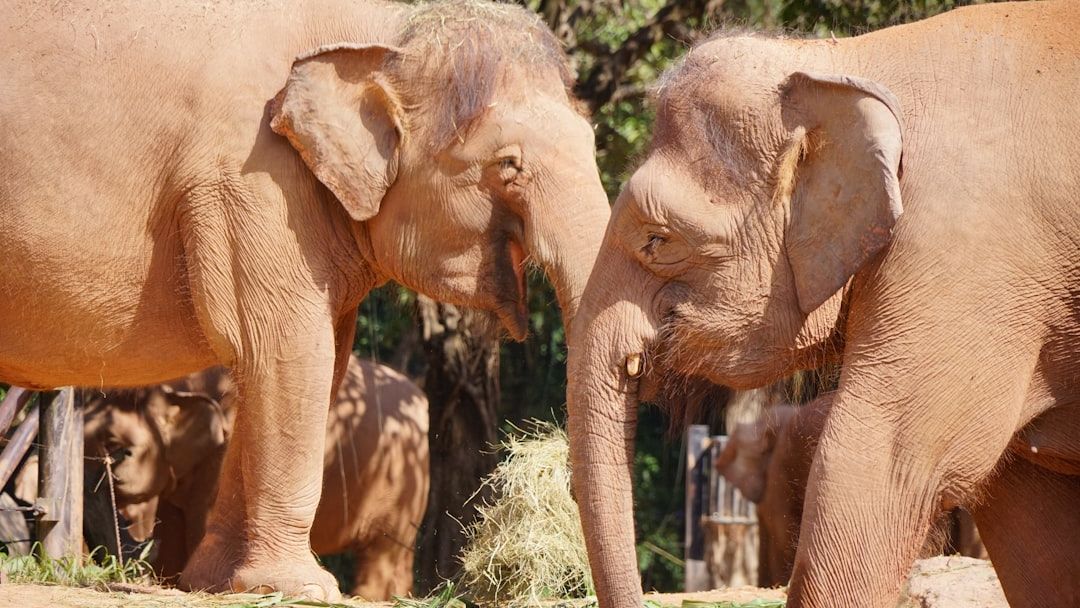
Standing on the open savanna at dusk, you might watch a herd of elephants suddenly freeze in unison, ears fanned wide, bodies stilled as statues. Nothing visible triggered it. No lion moved through the grass, no rival herd appeared on the horizon. Yet something passed between them, something real and purposeful. What you witnessed was a conversation, one that happens almost entirely beyond the reach of human senses.
Elephants communicate through touching, visual displays, vocalisations, seismic vibrations, and semiochemicals. That list sounds clinical until you begin to understand what each channel actually carries. These aren’t simple alarm calls or territorial grunts. They are layered, nuanced signals shaped by millions of years of evolution on a continent where distance is a daily fact of life. The science catching up to these animals is genuinely startling.
The Invisible Voice: Infrasound Below the Human Threshold
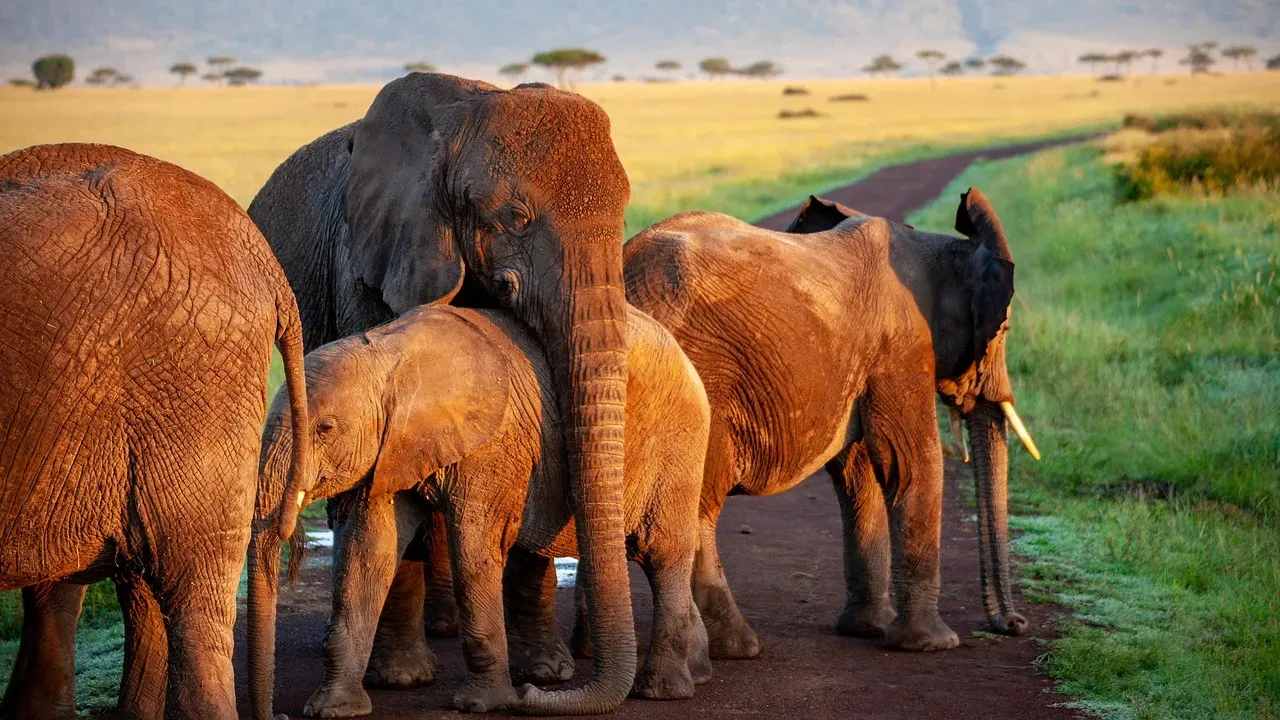
Most of what elephants say to one another, we cannot hear. Elephants can produce infrasonic calls which occur at frequencies less than 20 Hz, and these calls are important, particularly for long-distance communication, in both Asian and African elephants. Twenty hertz is roughly the lowest tone a healthy human ear can detect. Elephants operate well below that floor.
Elephants produce powerful vocalizations known as rumbles, and these deep sounds often have fundamental frequencies between 15 and 35 Hz, placing them squarely in the infrasonic range. The sounds are generated by one of nature’s most impressive instruments. The larynx of the elephant is the largest known among mammals, with vocal folds that are long and attached close to the epiglottis base, longer and thicker than those of humans.
Because infrasonic sound waves attenuate slowly, they can travel farther than higher-pitched calls, in some cases up to 10 km, making them ideal for long-distance messaging across wide open terrain. The physics is straightforward: longer wavelengths simply lose less energy as they push through air. Infrasonic waves have longer wavelengths that encounter less interference from obstacles and atmospheric conditions than higher-frequency sounds.
The time of day matters enormously. Infrasound travels farther at dawn and dusk due to temperature inversions, and wind and humidity can extend or shorten communication ranges. Around evening, a strong temperature inversion usually forms and doesn’t dissipate until dawn. The greatest calling areas are achieved during the formation and dissolution of these nightly inversions, especially with cloudless and relatively undisturbed weather. Under such conditions it is possible for an elephant to have a calling range covering an area almost the size of an entire national park.
Listening With Their Feet: The Seismic Underground Network
Field biologists often see groups of wild elephants freeze in unison and spread their ears to scan for infrasonic rumbles. While working in Namibia, biologist Caitlin O’Connell-Rodwell noticed something else: elephants occasionally freezing and lifting a foot without scanning with their ears, a behavior often followed by the arrival of another group of elephants. She suspected they were feeling something through the ground itself, and she was right.
The same low-frequency rumble that travels through air also creates vibrations that travel through the ground. When an elephant rumbles or moves, the energy doesn’t just travel through the air, it also couples into the ground as seismic waves. These are real, measurable tremors. The calls create surface waves, known as Rayleigh waves, that can travel roughly 2 kilometers along the ground surface like water waves on the ocean. Earlier research suggested the range could be considerably greater under certain soil conditions.
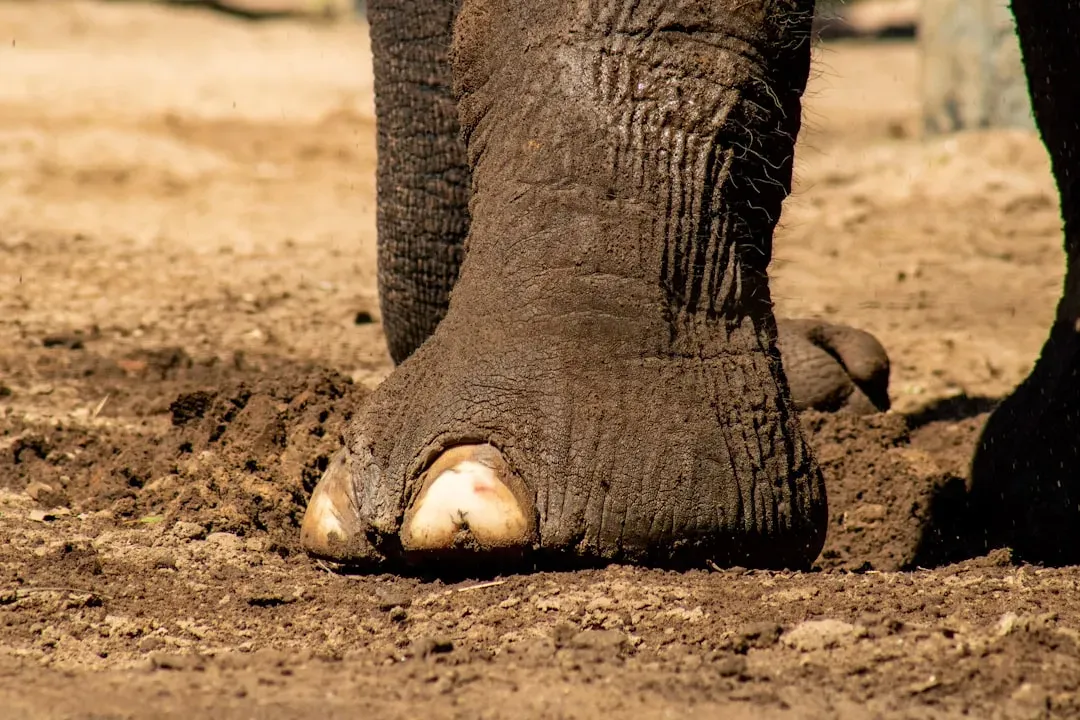
Elephants appear to rely on their leg and shoulder bones to transmit seismic signals to the middle ear. When detecting seismic signals, they lean forward and put more weight on their larger front feet, a behavior known as “freezing behaviour.” The anatomy behind this is remarkable. The cushion pads of the feet contain cartilaginous nodes and have similarities to the acoustic fat found in marine mammals such as toothed whales, and a unique sphincter-like muscle around the ear canal can constrict the passageway, dampening acoustic signals and allowing the animal to focus on seismic ones.
Research has shown that in elephants, some ground vibrations actually reach the hearing centers of the brain through a process called bone conduction, where the vibration message travels through the elephant’s skeleton directly to its inner ear bones, bypassing the eardrum altogether. Seismic waveforms produced by locomotion appear to travel distances of up to 32 km, while those from vocalisations travel up to 16 km. The ground, it turns out, is a remarkably efficient telephone wire.
A Vocabulary Carved in Scent: Chemical Communication
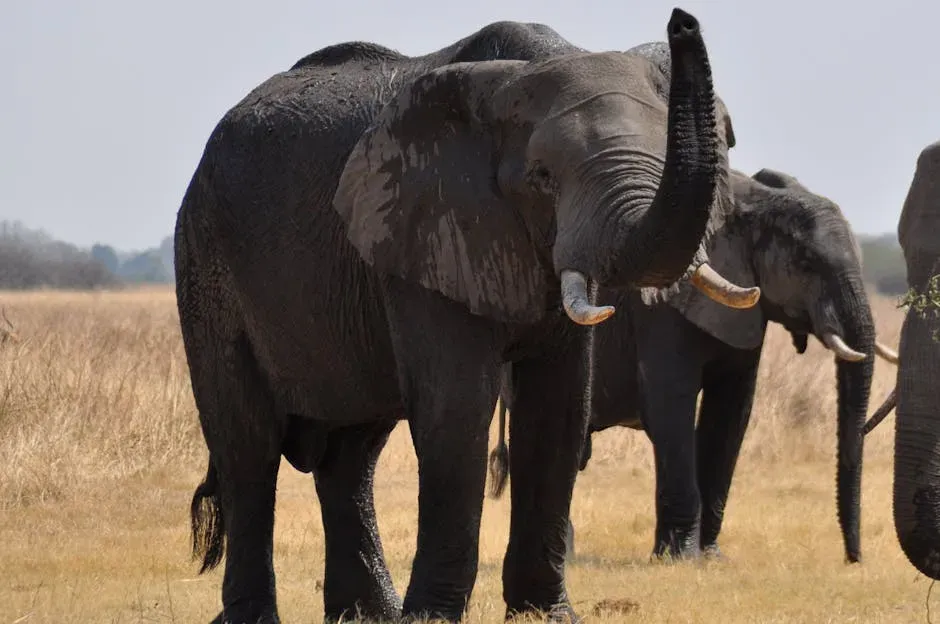
Elephants don’t just broadcast sound. They leave persistent, information-rich chemical signals wherever they go. Chemical communication provides an energetically efficient and long-lasting signal, and sources of odours used in chemical communication between elephants include urine, faeces, saliva and secretions from the temporal gland, a large multi-lobed sac located mid-way between the ear and eye.
Elephant social behaviour suggests that individuals use odour to monitor the sex, reproductive status, location, health, identity and social status of other elephants. The information carried is surprisingly specific. Research has revealed the existence of individual identity odour profiles in African elephants, as well as a signature for age encoded in temporal gland and buccal secretions, and olfactory signatures for genetic relatedness were found in labial secretions of adult sisters.
Unlike adult Asian elephant females, African elephant adult females secrete frequently from the temporal gland, particularly when separated groups reunite, and when distressed. This makes the gland a kind of emotional broadcaster, leaking chemical information during exactly the moments when shared social context matters most. Elephants have around 2,000 genes alone that are dedicated to scent, which gives some sense of how central olfaction is to their world.
Names, Recognition, and a Richer Vocabulary Than Anyone Expected
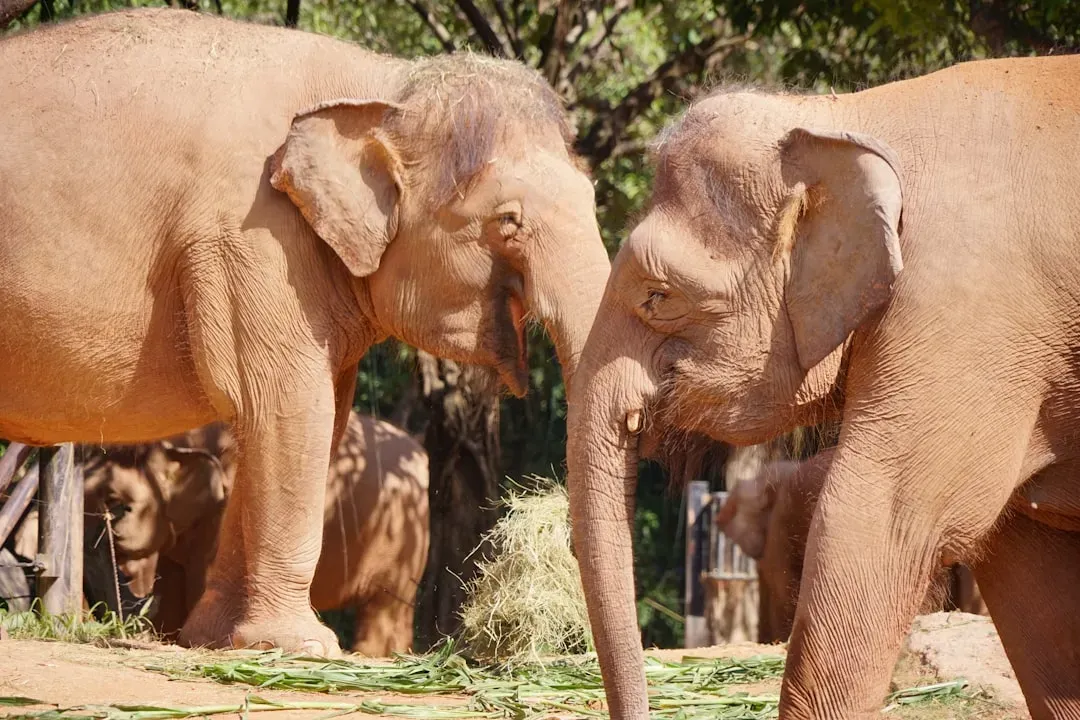
Perhaps the most surprising discovery of recent years isn’t how far elephants communicate, but what they actually say. Research published in Nature Ecology and Evolution demonstrated that elephants call each other by distinct vocalized names, and researchers analyzed hundreds of elephant calls recorded over more than a year in Kenya, applying machine learning to distinguish specific sounds by which elephants call each other.
When recorded calls were played back, elephants responded to the sound of their friends or family members calling their name by either calling back or moving toward the speaker. This behavior suggests that elephants may be capable of abstract thought and possess a vocabulary that extends beyond names. That’s a striking conclusion. Using personal names implies that the caller holds a mental representation of someone who isn’t present, which is a cognitive step that very few non-human species appear to take.
Elephants have a wide range of calls and signals for different purposes, to secure their defense, warn others of danger, coordinate group movements, reconcile differences, attract mates, reinforce family bonds, and announce their needs and desires. Researcher Joyce Poole’s work found that elephants use more than 70 kinds of vocal sounds and 160 different visual and tactile signals, expressions, and gestures in their day-to-day interactions. That breadth rivals the communicative complexity found in many socially sophisticated animals.
A study in Current Biology recorded elephants responding to infrasound playbacks of absent family members, proving they recognize individual voices. The contact call deserves particular mention here. One call researchers have deciphered is the “contact call,” which helps elephants locate distant family members. The elephant seeking to make contact lets out a powerful reverberating sound, after which it lifts its head to listen for a response. If it receives one, it emits an explosive sound, and the pattern is repeated, possibly for hours, until the elephant successfully rejoins her family.
Why This Matters: Conservation, Noise Pollution, and What We Can Learn
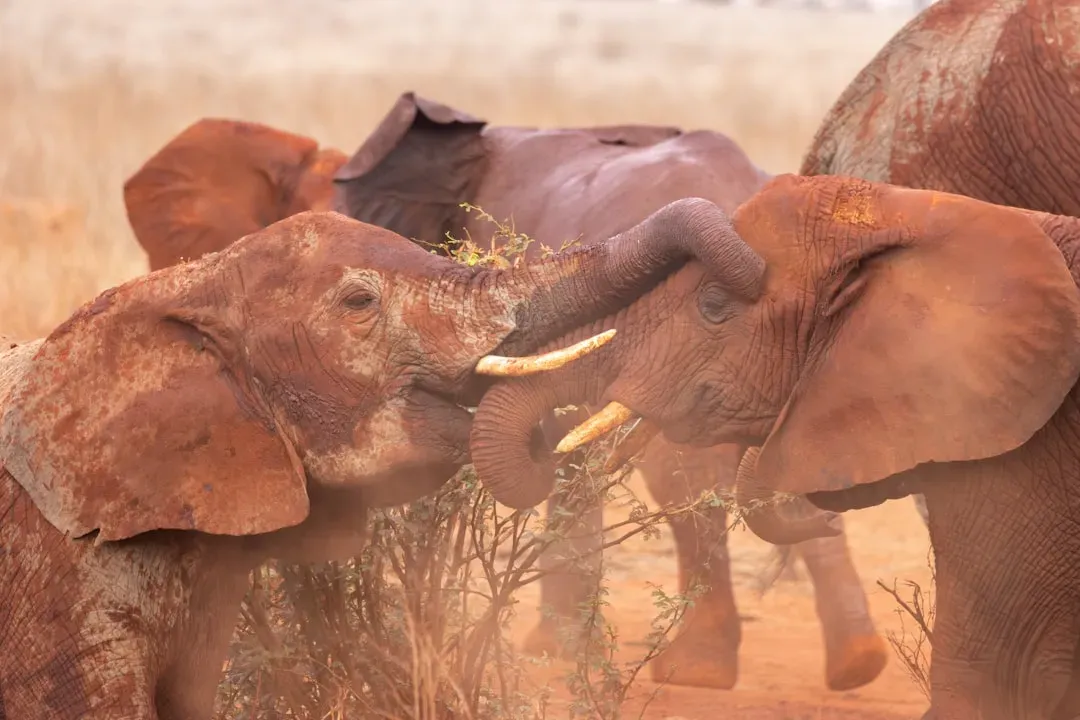
Understanding how elephants communicate isn’t just a matter of scientific curiosity. It has practical stakes. Noise pollution from roads and industry disrupts infrasonic signals, effectively cutting communication lines that herds rely on for social cohesion, predator avoidance, and reproduction. As human infrastructure pushes deeper into elephant habitat, these invisible conversations are being interrupted in ways that are difficult to measure but likely significant.
Recent research suggests that elephants can detect human-generated seismic noise, from vehicles, machinery, or other sources, and may interpret it as risk cues, adjusting their behavior accordingly. This highlights how sensitive and integral ground-based communication is to their survival. The implication is that even a busy road can send misleading alarm signals rippling through the ground for kilometers in every direction.
The cultural dimension of infrasonic communication becomes particularly evident when studying orphaned elephants or those raised in isolation from their natal herds. These individuals often show deficits in their infrasonic communication abilities, and conservation programs working with orphaned elephants now recognize the importance of exposing young animals to proper infrasonic models to ensure they develop normal communication skills. Communication, in other words, is partly learned. It depends on social transmission across generations.
This research might eventually enable humans to communicate directly with elephants, possibly warning them about dangers such as poachers. Conservationists already use infrasound recordings to repel elephants from farms, reducing conflicts. These are early steps, but they point toward a future where decoding elephant language has measurable conservation value.
Conclusion

There’s something genuinely humbling about learning that a herd of elephants can hold a coherent conversation across terrain you’d need a vehicle to cross, using channels your body can’t even detect. Over millions of years of evolution, African savannah elephants have developed complex communication capabilities, producing vocalizations with low fundamental frequencies that can travel over long distances. That’s not just a biological fact. It’s a reminder that the world is full of languages we haven’t learned to listen to yet.
The science here is still maturing. Researchers are applying machine learning to catalogues of recorded calls, developing better seismic sensors, and piecing together how different communication channels interact with one another. Every new tool brings a clearer picture of a social world that existed long before we thought to look for it.
What the evidence already makes clear is that elephants are not simply large animals moving silently across a plain. They are talking, constantly, in a frequency the earth itself can carry. We just needed the right instruments, and enough patience, to finally hear them.
