


Throughout human history, animals have held deep symbolic significance across different cultures and religious traditions. Among these, the peacock stands out as one of the most visually striking and spiritually significant creatures, particularly in Hindu and Greek mythology. With its magnificent iridescent plumage, the peacock has transcended its biological existence to become a powerful symbol of immortality, protection, and divine presence in these ancient traditions. The sacred status of peacocks emerged independently in these distinct cultural contexts, revealing fascinating parallels in how human societies interpret and venerate the natural world. This article explores the rich mythological, religious, and cultural significance of peacocks in Hindu and Greek traditions, unraveling the stories, beliefs, and practices that have elevated this remarkable bird to sacred status.
The Spectacular Appearance of Peacocks

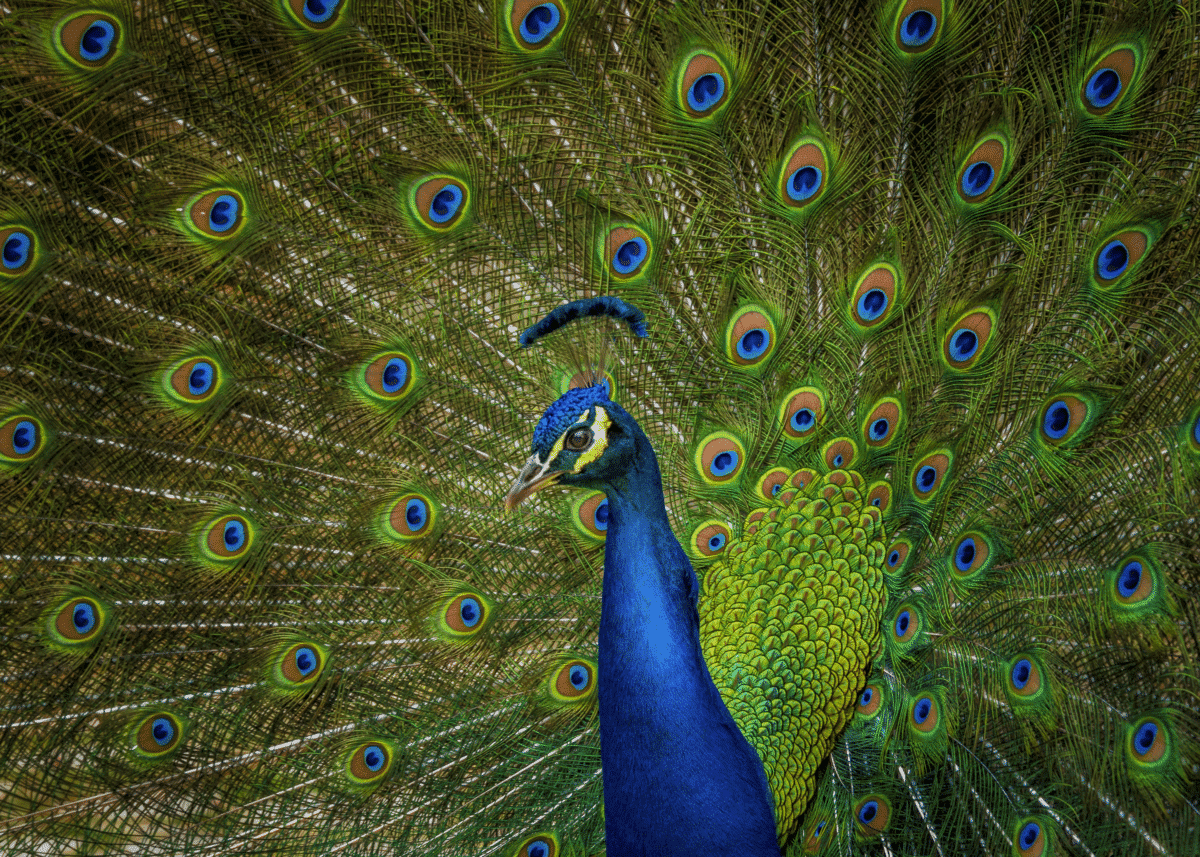
The peacock’s extraordinary beauty provides the foundation for its sacred status in both Hindu and Greek traditions. The male Indian peacock (Pavo cristatus), native to the Indian subcontinent, possesses one of nature’s most spectacular displays—a train of elongated upper tail coverts that can extend up to 5 feet in length. When fanned out during courtship displays, these feathers reveal stunning eyespots (ocelli) in vibrant blues, greens, and golds against an iridescent background. This natural marvel inspired awe in ancient peoples, who interpreted such exceptional beauty as evidence of divine creation and purpose.
Beyond their visual splendor, peacocks possess other distinctive features that contributed to their mythological importance. Their ability to consume venomous snakes and insects without harm led to beliefs about their immunity to poisons. Their loud, penetrating call—often described as a shriek resembling “may-awe”—was interpreted as heralding rain or announcing divine presence. These biological characteristics, combined with their regal bearing and mesmerizing display, made peacocks perfect candidates for deification and symbolic association with gods and goddesses in both Hindu and Greek religious contexts.
Peacocks in Hindu Mythology: Lord Kartikeya’s Divine Mount

In Hindu mythology, the peacock serves as the vahana (divine mount) of Lord Kartikeya, also known as Murugan, Skanda, or Subrahmanya. As the son of Lord Shiva and Goddess Parvati, Kartikeya is the commander-in-chief of the divine armies and the god of war. According to Hindu texts, Kartikeya received the peacock as his vahana after the bird demonstrated courage by defeating the powerful demon Surapadman. In some versions of the myth, after Kartikeya defeated Surapadman, he transformed the demon into a peacock, which then became his loyal mount. This association with Kartikeya, a major deity in the Hindu pantheon, immediately elevated the peacock to sacred status.
The peacock’s role as Kartikeya’s vahana also carries symbolic significance. As a god of war and victory, Kartikeya’s association with the peacock represents the triumph of beauty over brutality, wisdom over ignorance, and divine grace over demonic forces. In South India, particularly in Tamil Nadu where Murugan worship is especially prominent, the peacock is highly revered. Temples dedicated to Lord Murugan often feature elaborate peacock motifs, and peacock feathers are considered auspicious offerings during religious ceremonies, reflecting the bird’s central place in Hindu devotional practices.
Lord Krishna and the Peacock Feather Crown

Perhaps the most recognizable association of peacocks in Hinduism is with Lord Krishna, the eighth avatar of Lord Vishnu. Krishna is almost invariably depicted wearing a peacock feather (mor pankh) in his crown or headband. According to Hindu mythology, Krishna was enchanted by the peacock’s dance during the monsoon season and adopted the feather as an adornment. The peacock feather became an iconic symbol of Krishna’s divine playfulness, irresistible charm, and connection to nature. In artistic representations throughout India, from ancient sculptures to contemporary imagery, Krishna’s peacock feather is an essential identifying attribute.
The symbolic significance of Krishna’s peacock feather extends beyond mere decoration. The eye-like pattern on peacock feathers is associated with all-seeing divine wisdom and protection against evil. For devotees, it represents Krishna’s omniscience and vigilant protection of his followers. Additionally, the feather’s natural beauty mirrors Krishna’s own captivating appearance, which is said to enchant all beings. In the Bhakti (devotional) tradition of Hinduism, the peacock feather has become a powerful devotional symbol, with many Krishna devotees keeping peacock feathers in their homes or prayer spaces as a sacred object that invokes the presence of their beloved deity.
Goddess Saraswati and the Symbolism of Peacock Feathers

Goddess Saraswati, the Hindu deity of knowledge, music, arts, wisdom, and learning, is sometimes depicted with peacock imagery in her iconography. While her primary vahana is the swan, in some regional traditions and artistic representations, she is associated with peacocks or shown holding peacock feathers. This connection stems from the peacock’s symbolic association with beauty, grace, and knowledge. The hundred eyes on the peacock’s feathers are interpreted as representing the all-seeing nature of true wisdom and the multiple perspectives necessary for comprehensive understanding.
In Hindu educational and artistic traditions, peacock feathers often symbolize the transmission of knowledge and creative inspiration. Students of classical Indian music and dance may keep peacock feathers as symbols of artistic aspiration and divine blessing. The feathers are also used in ritual contexts related to learning and the arts. During Saraswati Puja, a festival dedicated to the goddess of learning, peacock feathers may be included among the sacred objects placed on the altar, reinforcing the bird’s association with divine knowledge and artistic excellence in Hindu tradition.
Peacocks and the Cosmic Dance of Lord Shiva

Though less prominent than his association with Kartikeya and Krishna, peacocks also hold significance in relation to Lord Shiva, one of the principal deities of Hinduism. In some artistic and textual traditions, peacocks are depicted as admiring witnesses to Shiva’s cosmic dance (Tandava). According to these accounts, when Shiva performs his divine dance that creates, preserves, and dissolves the universe, peacocks are among the creatures that gather in reverent appreciation. This connection reinforces the peacock’s status as a bird sensitive to divine rhythms and celestial beauty.
The peacock’s natural “dance” during the monsoon season creates another parallel with Shiva, who is sometimes called Nataraja, the “Lord of Dance.” Just as Shiva’s dance represents cosmic cycles and natural forces, the peacock’s spectacular display during the rainy season symbolizes nature’s response to life-giving water. In some Hindu traditions, the peacock’s dance is considered a form of worship, an instinctive recognition of and response to divine presence in nature. This concept elevates the peacock’s natural behavior to a form of spontaneous devotion, further sanctifying the bird in Hindu religious thought.
Peacocks in Greek Mythology: Hera’s Sacred Bird
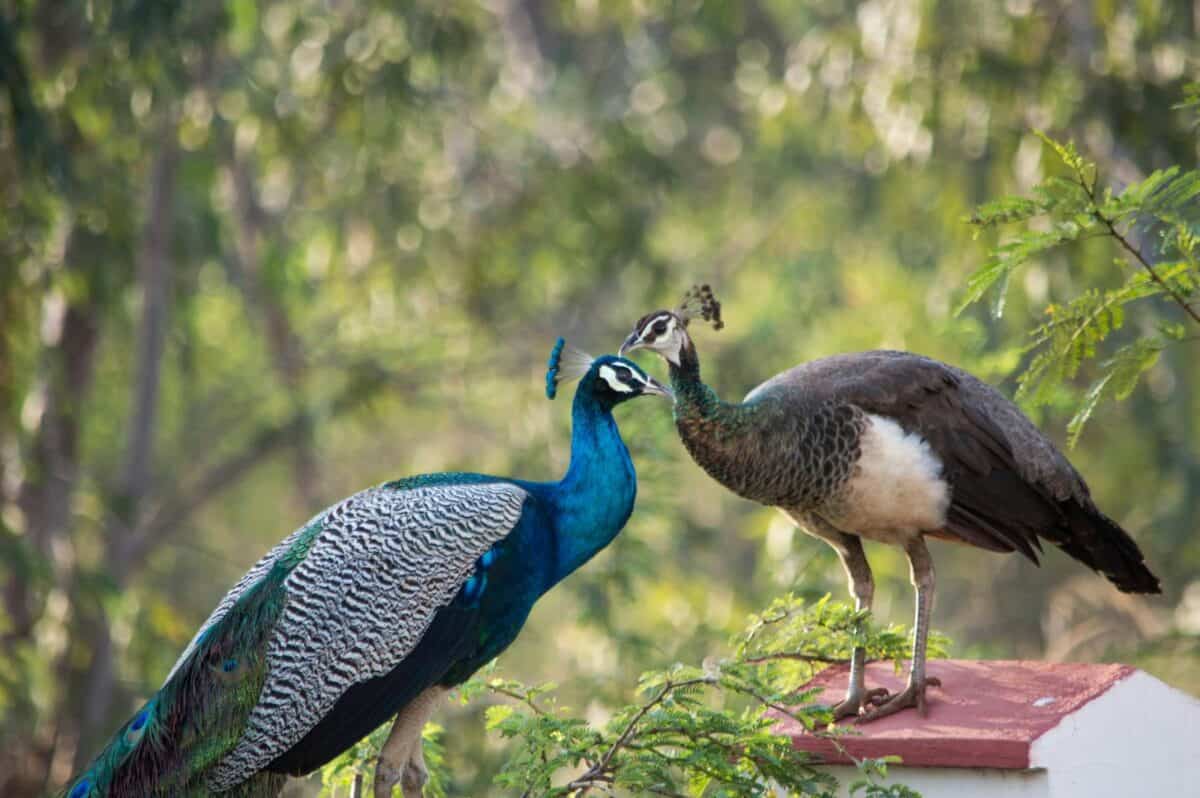
In Greek mythology, the peacock achieved sacred status through its association with Hera (Juno in Roman mythology), the queen of the gods and wife of Zeus. According to myth, Hera created the peacock from Argus Panoptes, a giant with one hundred eyes whom she had appointed to guard Io, a maiden Zeus had transformed into a heifer to conceal his infidelity. When Hermes slew Argus on Zeus’s orders, Hera honored her faithful servant by placing his hundred eyes on the tail of the peacock, explaining the eye-like patterns on peacock feathers. This origin story immediately established the peacock as Hera’s sacred bird and a symbol of her divine authority.
The peacock’s association with Hera carried multiple symbolic dimensions in ancient Greek religion. As a goddess of marriage, women, childbirth, and the starry sky, Hera’s connection to the peacock reinforced themes of beauty, vigilance, and celestial magnificence. The “eyes” on the peacock’s feathers symbolized Hera’s watchful nature, particularly regarding marital fidelity—a quality reflected in her continuous monitoring of Zeus’s extramarital affairs. At Hera’s temple in Samos, one of her most important cult centers in the ancient Greek world, peacocks were kept as sacred animals, and their images appeared prominently in temple decorations and religious art.
The Myth of Argus Panoptes and Immortality

The Greek myth of Argus Panoptes provides the central narrative explaining the peacock’s sacred status in Hellenic religion. According to the story, Argus was an exceptional giant with one hundred eyes distributed across his body, making him the perfect guardian as some of his eyes remained open even when he slept. When Zeus fell in love with Io, a priestess of Hera, he transformed her into a white heifer to hide his infidelity. Suspicious Hera claimed the heifer as a gift and appointed Argus to guard it. Zeus then sent Hermes to rescue Io. Hermes lulled all of Argus’s eyes to sleep with stories and music before killing him.
Hera, grieving for her loyal servant, immortalized Argus by placing his hundred eyes on the peacock’s tail, creating the bird’s distinctive eyespots. This act of divine transformation and commemoration established the peacock as a symbol of immortality in Greek thought. The preservation of Argus’s essence in the form of the peacock’s feathers represented the Greek belief in the potential continuity of consciousness beyond death. In later Greek and Roman art, peacocks frequently appeared in funerary contexts, symbolizing the immortality of the soul and resurrection—a meaning that would later influence early Christian symbolism as well.
The Peacock as a Symbol of Royalty and Divinity
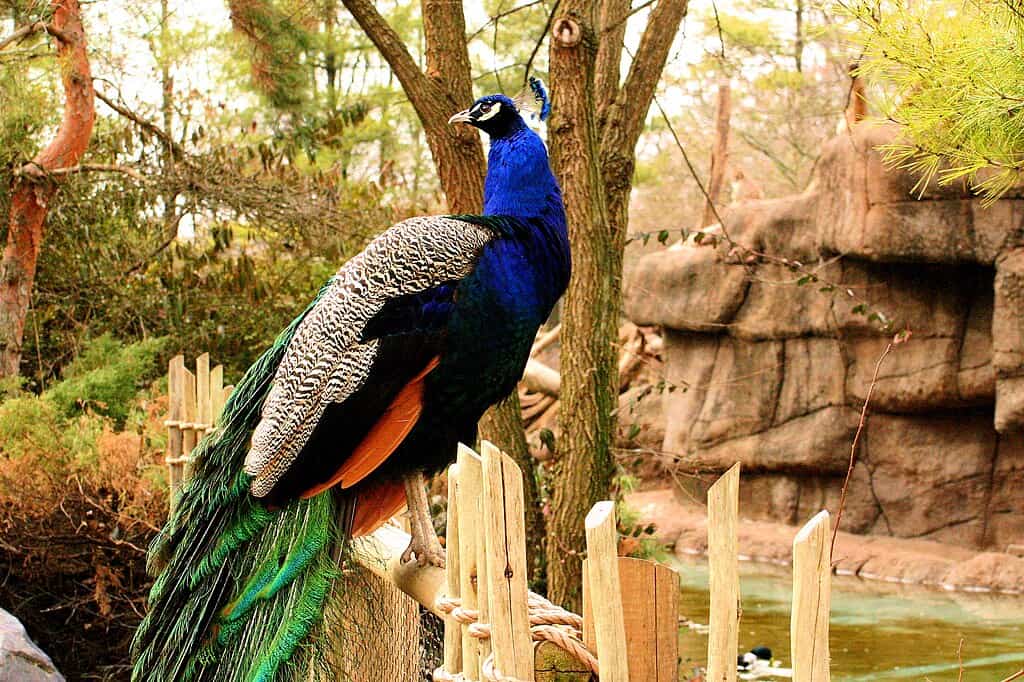
In both Hindu and Greek traditions, peacocks came to symbolize royalty and divine authority. The bird’s magnificent appearance, with its crown-like crest and regal bearing, naturally evoked associations with kingship and sovereignty. In Hindu contexts, the peacock’s connection to major deities like Krishna, Kartikeya, and Shiva reinforced its royal status. Indian kings and emperors throughout history incorporated peacock motifs into their regalia, thrones, and palaces as symbols of divine sanction for their rule. The famous Peacock Throne of the Mughal Emperors, though created in an Islamic context, drew upon this longstanding association of peacocks with royal power in the Indian subcontinent.
Similarly, in the Greek and later Roman world, the peacock’s association with Hera/Juno, queen of the gods, established it as a symbol of imperial authority. Roman empresses often identified themselves with Juno and adopted peacock imagery in their official portraits and palace decorations. The bird’s spectacular beauty was interpreted as a reflection of divine favor and exceptional status. In both cultural contexts, the peacock transcended its status as a mere bird to become a powerful emblem of the connection between earthly rulership and divine authority, reinforcing the sacred foundations of political power in ancient societies.
Peacocks as Weather Prophets and Seasonal Symbols
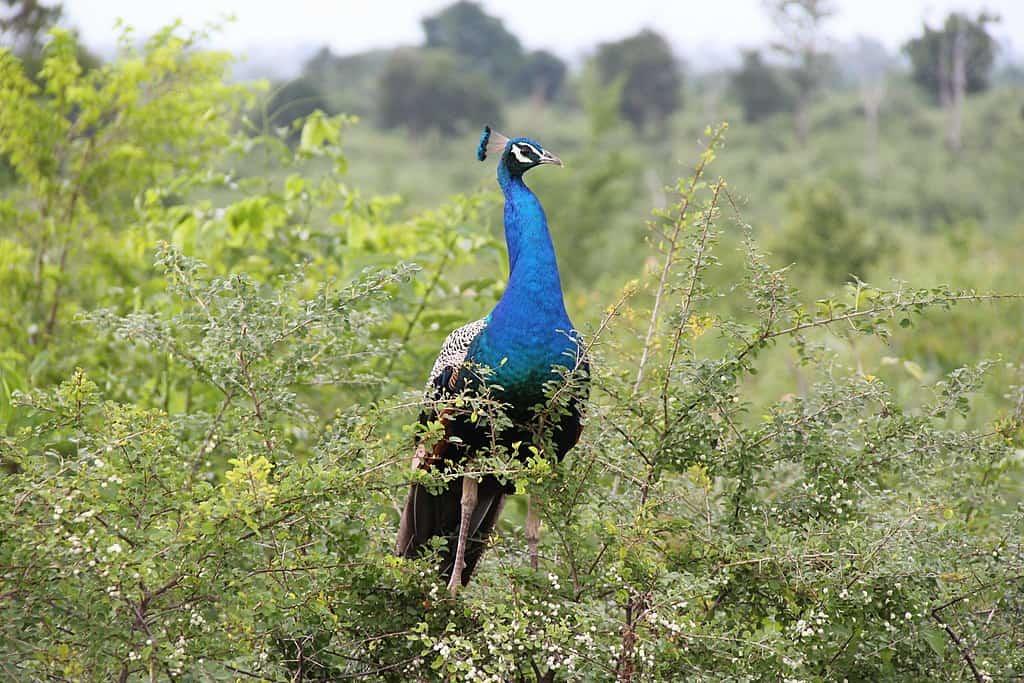
In Hindu tradition, peacocks hold special significance in relation to the monsoon season. The birds are known to dance with their feathers spread wide at the first signs of rainfall, seemingly celebrating the arrival of life-giving water. This natural behavior led to the peacock’s association with rain, fertility, and seasonal renewal in Indian culture. In Hindu mythology, peacocks are described as being able to predict rainfall, with their calls and dances serving as natural announcements of the approaching monsoon. This weather-predicting ability was interpreted as a form of divine knowledge, reinforcing the peacock’s sacred status.
The peacock’s seasonal dance also connected it to agricultural cycles and the prosperity that comes with successful harvests. Rural communities in India traditionally viewed dancing peacocks as auspicious signs promising good rainfall and abundant crops. This agricultural dimension of peacock symbolism integrated the bird into the yearly rhythms of life and livelihood, making it not just a symbol of distant deities but a sacred presence in everyday existence. Festival celebrations marking the arrival of the monsoon often incorporate peacock imagery and sometimes feature dance forms inspired by the peacock’s movements, reflecting the bird’s important place in Hindu seasonal observances.
Peacocks as Protectors Against Evil and Poison

One of the most practical foundations for the peacock’s sacred status in both Hindu and Greek traditions stems from the bird’s reputation as a predator of venomous creatures. Peacocks are known to hunt and consume poisonous snakes, scorpions, and insects without suffering harm. This natural ability led to beliefs about the peacock’s power to neutralize or transform poison. In Hindu mythology, this quality connected peacocks to Lord Shiva, who in one famous myth swallowed the deadly poison Halahala to save the universe. The peacock’s perceived immunity to venom made it a powerful symbol of protection against harmful forces.
In both cultural contexts, peacock feathers came to be regarded as protective talismans. Hindu households traditionally keep peacock feathers to ward off negative energies, evil spirits, and harmful influences. The eye-like patterns on the feathers are believed to remain vigilant even when human eyes sleep, providing continuous spiritual protection. In Greek traditions, particularly after the peacock absorbed the hundred watchful eyes of Argus, the bird’s feathers similarly represented protective vigilance. This apotropaic (evil-averting) function of peacock symbolism added a practical dimension to the bird’s sacred status, making it not just an object of veneration but a source of everyday spiritual protection.
Peacocks in Religious Art and Architecture

The sacred status of peacocks in Hindu and Greek traditions manifested prominently in religious art and architecture. In Hindu temples across India, peacock motifs appear in stone carvings, painted murals, and decorative elements. Temples dedicated to Krishna and Kartikeya feature particularly elaborate peacock imagery. In South Indian temples, stone-carved peacocks often flank entrances as guardian figures, while painted ceiling panels may depict scenes of peacocks dancing in divine attendance. The bird’s graceful form lent itself beautifully to artistic stylization, making it a favorite subject for religious artists throughout Hindu history.
In Greek and Roman contexts, peacocks appeared frequently in temple art dedicated to Hera/Juno. Mosaics, frescoes, and sculptural elements featuring peacocks have been discovered at archaeological sites throughout the Mediterranean. The bird’s spectacular beauty made it an ideal subject for expressing divine splendor through art. Interestingly, early Christian art adopted the peacock symbolism from Greco-Roman traditions, reinterpreting it as a symbol of resurrection and eternal life. Byzantine churches often featured peacock mosaics, demonstrating how the bird’s sacred associations transcended specific religious boundaries to become part of a broader visual language of spirituality.
The Enduring Legacy of Sacred Peacocks
The veneration of peacocks as sacred creatures in Hindu and Greek traditions continues to influence contemporary culture, art, and spirituality. In modern India, peacock imagery remains ubiquitous in religious contexts, from temple architecture to devotional paintings of Krishna and Kartikeya. The peacock serves as India’s national bird, reflecting its deep cultural and spiritual significance. Peacock feathers continue to be used in religious ceremonies and kept in homes as spiritual protection. The bird’s sacred status has even influenced conservation efforts, with many communities protecting peacocks out of religious reverence despite conflicts with agriculture.
Though Greek polytheistic worship has largely disappeared as a living tradition, the peacock’s symbolic associations continue to resonate in Western art and culture. The bird remains a powerful symbol of beauty, immortality, and transformation. The parallel development of peacock veneration in these distinct cultural traditions highlights the universal human tendency to find spiritual meaning in the natural world. Whether seen as the mount of Kartikeya, the crown of Krishna, or the memorial to Argus created by Hera, the peacock stands as a testament to humanity’s enduring capacity to recognize the sacred in the magnificent displays of the natural world.
Conclusion

The sacred status of peacocks in Hindu and Greek traditions reveals fascinating parallels in how different cultures interpret and venerate the natural world. Through mythological associations with deities like Kartikeya, Krishna, and Hera, the peacock transcended its biological existence to become a powerful symbol of divine beauty, protection, and immortality. In both traditions, the peacock’s dazzling plumage and regal presence inspired stories that connected earthly beauty with spiritual significance, demonstrating how humans seek meaning in nature’s most striking creatures. Despite vast geographical and cultural distances, Hinduism and ancient Greek religion each recognized the peacock as an earthly manifestation of divine qualities, reflecting universal human desires to understand and honor the mysteries of life.
Today, the peacock remains a potent symbol in art, religion, and popular culture, continuing to inspire awe and reverence. Its enduring significance reminds us that beauty in nature has long been a source of spiritual reflection and cultural expression. By examining such shared symbols across civilizations, we gain insight into our common human impulse to find the sacred in the natural world—an impulse that bridges cultures, centuries, and beliefs, reminding us of the timeless connections between humanity, myth, and the creatures with whom we share this world.

From exploring the marine wonders in the Azores and witnessing the vast savannas of Kenya, to delving deep into the rich biodiversity of South Africa and traversing iconic landscapes in Australia and the US like Yellowstone, Chris's experiences are vast.
With a penchant for diving alongside sharks, the ocean holds a special place in his heart.
Through his academic insights, he champions wildlife conservation, striving with 'Animals Around The Globe' to cultivate a profound connection between humans and animals, enhancing our mutual appreciation.
Connect with him at Feedback@animalsaroundtheglobe.com.
- This Lizard Shoots Blood From Its Eyes - June 26, 2026
- The Fastest Land Animal You’ve Never Heard Of (It’s NOT a Cheetah!) - June 26, 2026
- 10+ Joyful Reasons Why Life Is Better With a Pet in Your Golden Years - June 26, 2026