


The ocean is a place of mystery and wonder, teeming with life forms that have adapted to its depths in extraordinary ways. Among these marvels is the blue whale, a gentle giant considered the loudest animal in the ocean. Known for their incredible size, blue whales also boast an impressive auditory capability that enables them to communicate across vast distances. But what makes these marine mammals the loudest is as fascinating as the creatures themselves.
The Basics of Blue Whale Acoustics

Blue whales, the largest animals ever known to have existed, can produce sounds that reach up to 188 decibels. To put this in perspective, a jet engine at takeoff generates around 150 decibels. The frequency range of these sounds falls between 10 and 40 Hz, which is below the threshold of human hearing. Despite their low frequency, the sheer power of their vocalizations allows them to be heard hundreds, or even thousands, of miles away. But why do they create such loud calls?
Purpose of Blue Whale Songs

The primary purpose of blue whale vocalizations is communication. These marine giants use their calls to establish contact with other whales, locate potential mates, and even navigate the ocean’s vast distances. Male blue whales are particularly vocal during mating season, possibly to attract females or ward off rival suitors. This behavior suggests that their vocal prowess plays a crucial role in their reproduction and social interactions.
The Science Behind the Sound

The physiology of blue whales significantly contributes to their acoustic capabilities. Their massive size provides them with large vibrating structures, such as their lungs and vocal cords, which can produce deep, resonant sounds. Additionally, the ocean itself aids in transmitting these sounds over great distances due to the phenomenon known as the SOFAR (Sound Fixing and Ranging) channel. This deep water channel allows sound to travel with minimal loss of energy, effectively turning the ocean into an acoustic highway for blue whale communications.
Adaptation and Evolution

The evolution of such an acoustic capability likely provided blue whales with an evolutionary advantage. In the vast, dark expanses of the ocean, where visual cues are limited, the ability to communicate over long distances would have been crucial for activities such as coordinating movements within groups, finding mates, and avoiding danger. Over millions of years, these adaptations have allowed blue whales to thrive in oceans worldwide.
Impact of Human Activity
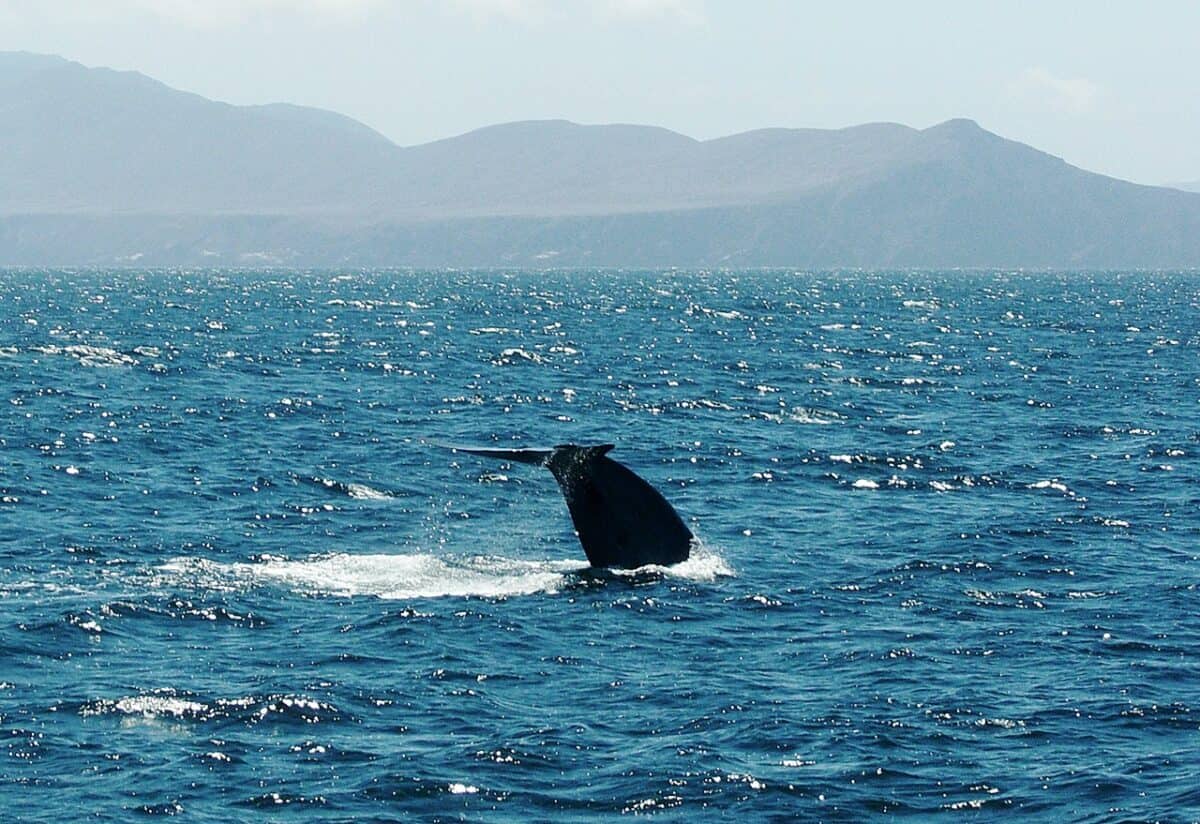
Despite their impressive adaptations, blue whales face significant threats from human activities that disrupt their acoustic environment. Increased shipping traffic, industrial noise, and military sonar all contribute to a cacophony of sounds that can interfere with blue whale communication. Scientists are concerned that this noise pollution might impede blue whales’ ability to find mates, locate feeding grounds, and navigate. Efforts are underway to study these impacts and find strategies to mitigate them, ensuring the continued survival of these oceanic giants.
Conclusion: The Eloquent Giants

The blue whale is not just an acoustic marvel due to its sheer loudness; it also represents an intricate balance of biology, physics, and evolution. These leviathans of the deep sea impress us with their size and their ability to bellow across ocean basins, reinforcing their status as one of nature’s most magnificent creations. As we continue to study and protect them, the more we learn about the importance of sound in their lives, and ours, highlighting the need for conservation efforts to preserve their natural acoustic environment.

As a little kid, I fell in love with nature, wildlife, and animals. Living in the USA, South Africa, Italy, China and Germany gave me the opportunity to discover the world's Wildlife. My favorite animals are Mountain Gorillas, Siberian Tigers, and Great White Sharks.
I'm a certified PADI Open Water Diver, went to Everest Base Camp and Trekked Gorillas in Uganda. I hold a Master of Science in Economics and Finance.
Please send any feedback to feedback@animalsaroundtheglobe.com
- 10 Reasons Lions Are the True Kings of the Wild - July 19, 2026
- 11 Cold Blooded Truths About Snakes And 2 Big Misconceptions - July 19, 2026
- 10 Habits That Strengthen A Wolf Pack And 3 That Break It - July 19, 2026