
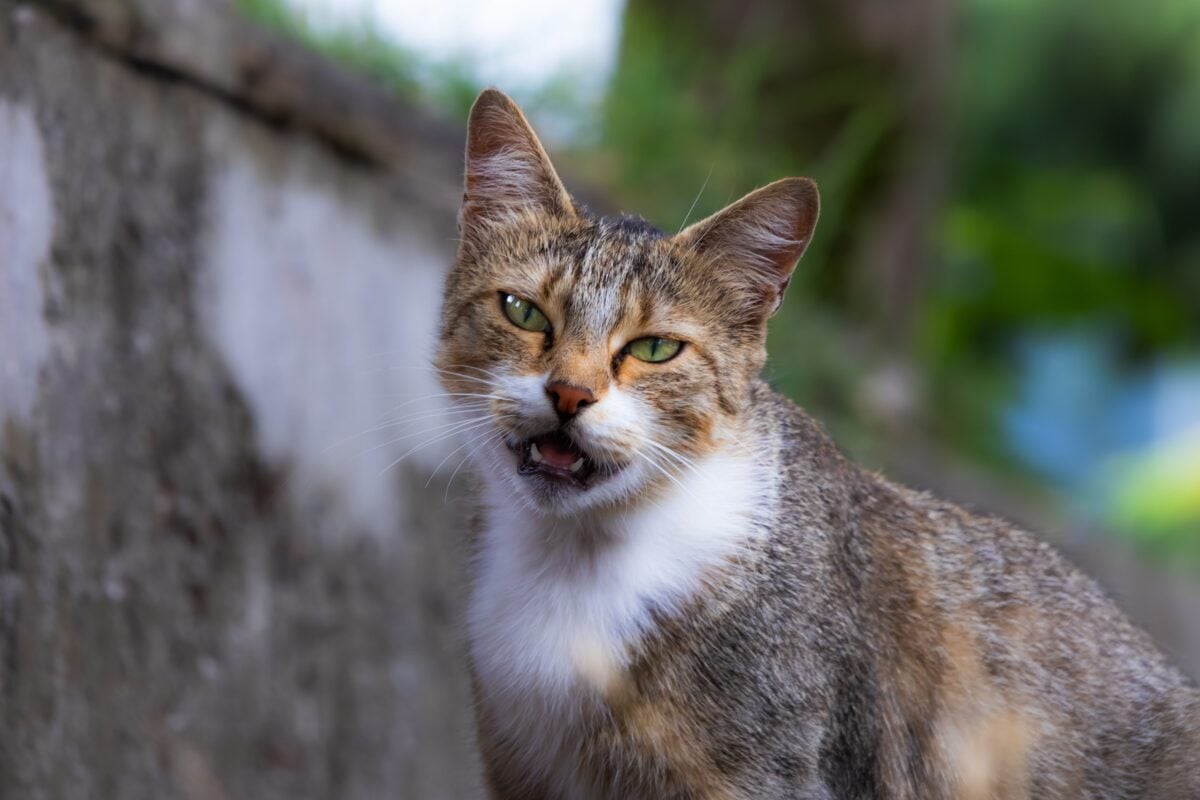

You’ve probably seen it. Your cat sniffs something interesting, maybe your sock or a houseplant, then freezes with its mouth slightly open and its upper lip curled, looking like it just caught a whiff of something awful. It’s a funny expression, and it often gets a laugh.
The look isn’t a sign of disgust, though. It’s a behavior with a name, a purpose, and some surprisingly specialized anatomy behind it. Once you know what’s happening, you’ll probably never watch your cat sniff the same way again.
The Face Has a Name: The Flehmen Response
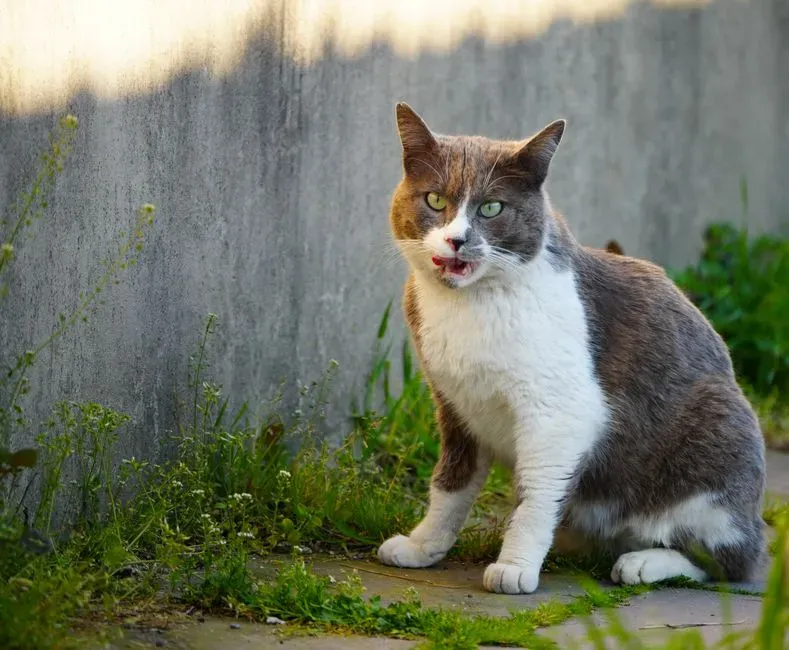
Zoologists call this behavior the flehmen response, and it’s named after a German word associated with curling the upper lip. Cats aren’t alone in doing it. Horses, goats, sheep, deer, big cats and many other mammals show a version of it too.
In cats, it usually looks like a brief pause. The mouth opens a little, the nose wrinkles, and the cat often stares off into space for a few seconds. It can look almost comical, but it’s a real sensory action rather than a quirk of mood.
Meet the Vomeronasal Organ
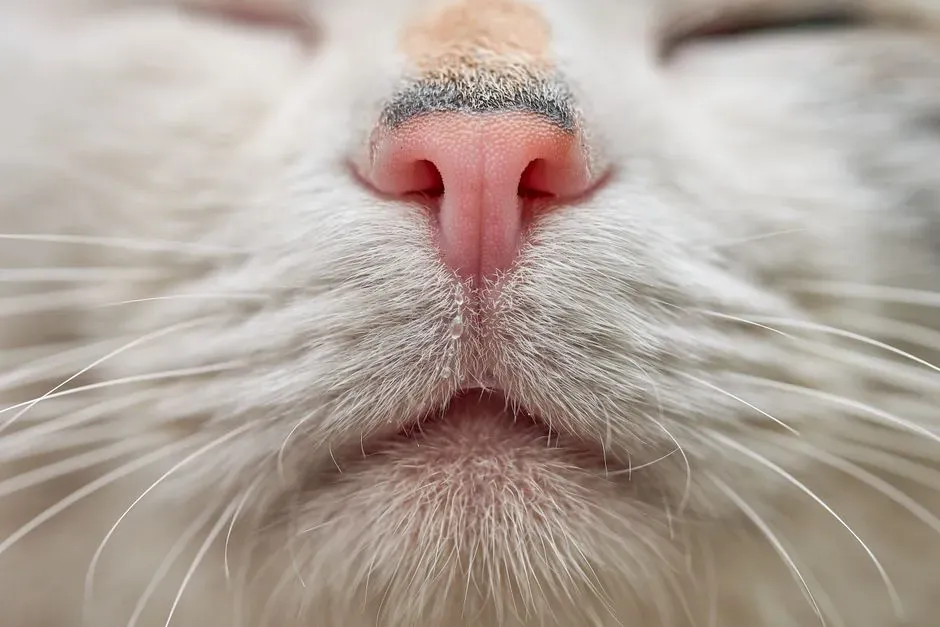
The second scent organ in the title is the vomeronasal organ, also called Jacobson’s organ. It’s a paired structure that sits above the roof of the mouth, behind the upper front teeth, and connects to the mouth and nasal area through small ducts. Many mammals have one, though the details differ between species.
It works alongside the regular nose rather than replacing it. The ordinary nose handles everyday smelling, while this organ is tuned to a particular class of chemical signals. Think of it as a specialist sitting next to a generalist.
Why Cats Open Their Mouths to Use It
The organ’s ducts open near the roof of the mouth, so the cat needs a way to deliver scent molecules there. Raising the lip and holding the mouth open appears to help draw those molecules toward the openings. Often the cat will first lick or sniff the source, which seems to help get the material in place.
The pause is part of the process. While the cat holds still, it’s effectively giving the organ time to sample. That’s why the expression often looks so intense and so brief at once.

Halloween Cat Costume Cloak Witch Hat Pet Accessories
Check Price on AmazonAs an Amazon Associate, we earn from qualifying purchases.
10/9/2026 2:44 pm GMTi

2 Pcs Halloween Pet Hat Bandana Set, Witch Pumpkin Costumes for Dogs
Check Price on AmazonAs an Amazon Associate, we earn from qualifying purchases.
10/9/2026 2:45 pm GMTi

Orthopedic Extra Large Dog Bed, Waterproof Washable XL Pet Bed 44"
Check Price on AmazonAs an Amazon Associate, we earn from qualifying purchases.
10/7/2026 1:32 pm GMTi

Professional 7 in 1 Dog Paw Cleaner for Dogs & Cats - Includes 1 Portable Paw Washer, 1 Bath Brush
Check Price on AmazonAs an Amazon Associate, we earn from qualifying purchases.
10/7/2026 1:26 pm GMTi

Halloween Dog Collar with Bow, Orange Cute Ghost Collar,
Check Price on AmazonAs an Amazon Associate, we earn from qualifying purchases.
10/9/2026 2:43 pm GMTi
What Is Your Cat Actually Detecting?
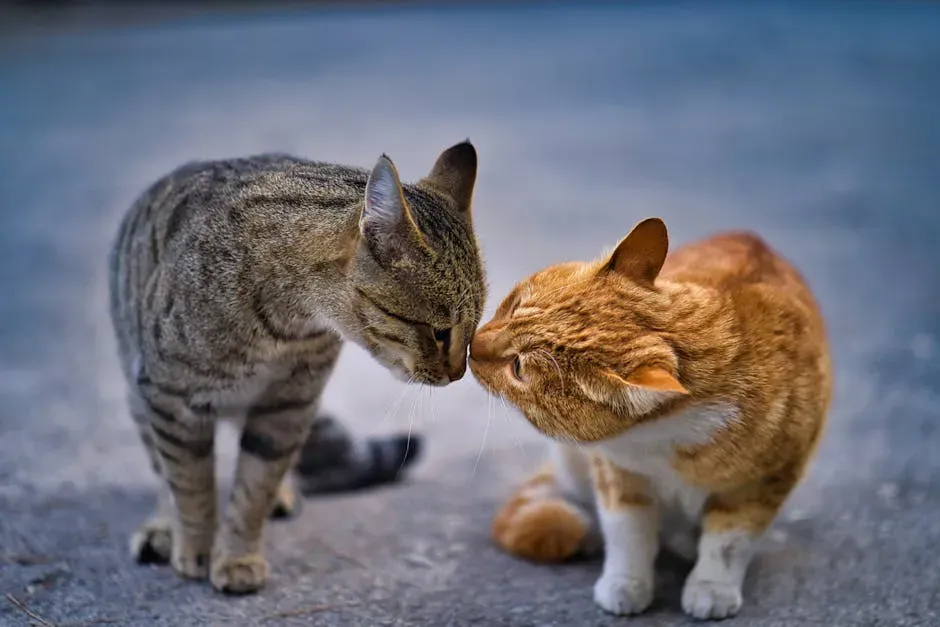
The vomeronasal organ is generally linked to chemical signals known as pheromones, along with other scent compounds that carry social information. In cats, these signals can come from urine, other cats’ scent marks, and similar sources. The details of exactly which chemicals do what are still being studied, so it’s best not to oversimplify.
What researchers broadly agree on is that the information is social and reproductive in nature. A cat may be learning who has passed by, or something about that animal’s condition. It’s less about “what is this food?” and more about “who was here?”
Why It Often Happens Around Odd Objects
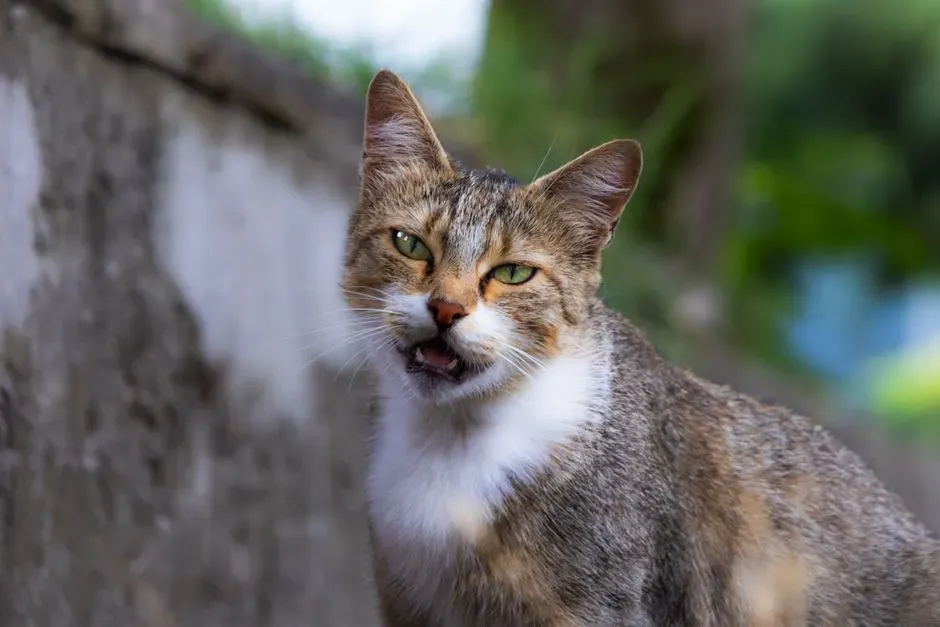
Owners often notice the face after their cat investigates something that smells strongly of a person, like worn laundry. Human sweat and skin carry plenty of chemical information, and cats are curious about it. A flehmen response doesn’t prove your cat is reacting to a specific pheromone, but it does show that the scent caught their attention.
It also turns up around other cats’ markings, in new rooms, and on unfamiliar surfaces. Male cats are often described as showing it more around urine marks, though cats of any sex can do it. If your cat does it near a spot where another animal has been, that’s about as ordinary as it gets.

Smart Bird Feeder with Camera Solar Powered, 2K HD Live Video, 10,000+ Bird Species AI Identification
Check Price on AmazonAs an Amazon Associate, we earn from qualifying purchases.
10/7/2026 1:22 pm GMTi

Glass Hummingbird Feeder for Outdoors Hanging
Check Price on AmazonAs an Amazon Associate, we earn from qualifying purchases.
10/7/2026 1:21 pm GMTi

Hand Blown Glass Hummingbird Feeders for Outdoors Hanging, 24oz Wild Bird Nectar Feeder
Check Price on AmazonAs an Amazon Associate, we earn from qualifying purchases.
10/7/2026 1:23 pm GMTi

PetSafe Oasys Pet Fountain, 1/2 Gallon (64 oz), Small Dogs & Cats
Check Price on AmazonAs an Amazon Associate, we earn from qualifying purchases.
10/8/2026 8:14 am GMTi

Air Purifiers for Home Pets Large Room Up to 3000 Ft²,HEPA Air Cleaner with Washable Double-Side Filter, PM2.5 Air Quality Monitor,15dB Sleep Mode for Bedroom Odor Dust Pollen,White
Check Price on AmazonAs an Amazon Associate, we earn from qualifying purchases.
10/8/2026 8:23 am GMTi
When the Smelly Face Is Nothing to Worry About, and When It Might Be
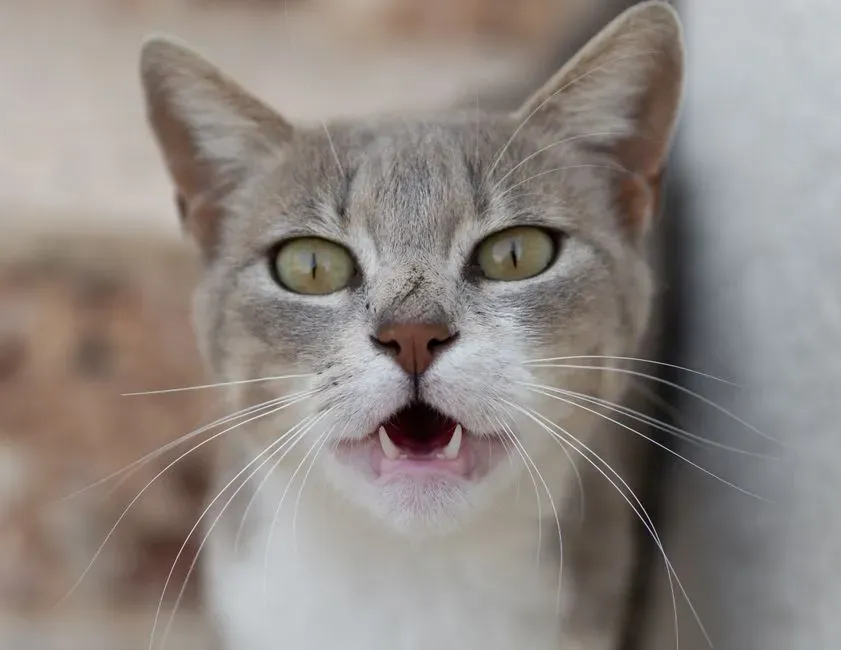
In almost every case, the expression is normal and healthy. It’s a short sampling behavior, and the cat usually returns to normal within moments. You don’t need to intervene or discourage it.
Still, an open mouth can mean other things. If your cat is panting, drooling, breathing with effort, or keeping its mouth open for long stretches, that’s a different situation, and a vet should look at it. The flehmen response is brief and tied to sniffing, which is the main way to tell the two apart.

Glass Hummingbird Feeder for Outdoors Hanging, 16 oz Leak-Proof Nectar Feeder with Bee Guards & Ant Moat
Check Price on AmazonAs an Amazon Associate, we earn from qualifying purchases.
10/7/2026 1:22 pm GMTi

Portable Dog Water Bottle Foldable Dog Travel Water Bottle
Check Price on AmazonAs an Amazon Associate, we earn from qualifying purchases.
10/7/2026 1:29 pm GMTi

Dog Stairs for Bed 18" H, 4-Step Dog Steps for High Bed
Check Price on AmazonAs an Amazon Associate, we earn from qualifying purchases.
10/9/2026 2:42 pm GMTi

Earth Rated XL Dog & Puppy Pee Pads, Discreet Top, Max Absorbency
Check Price on AmazonAs an Amazon Associate, we earn from qualifying purchases.
10/7/2026 1:28 pm GMTi
Final Thoughts
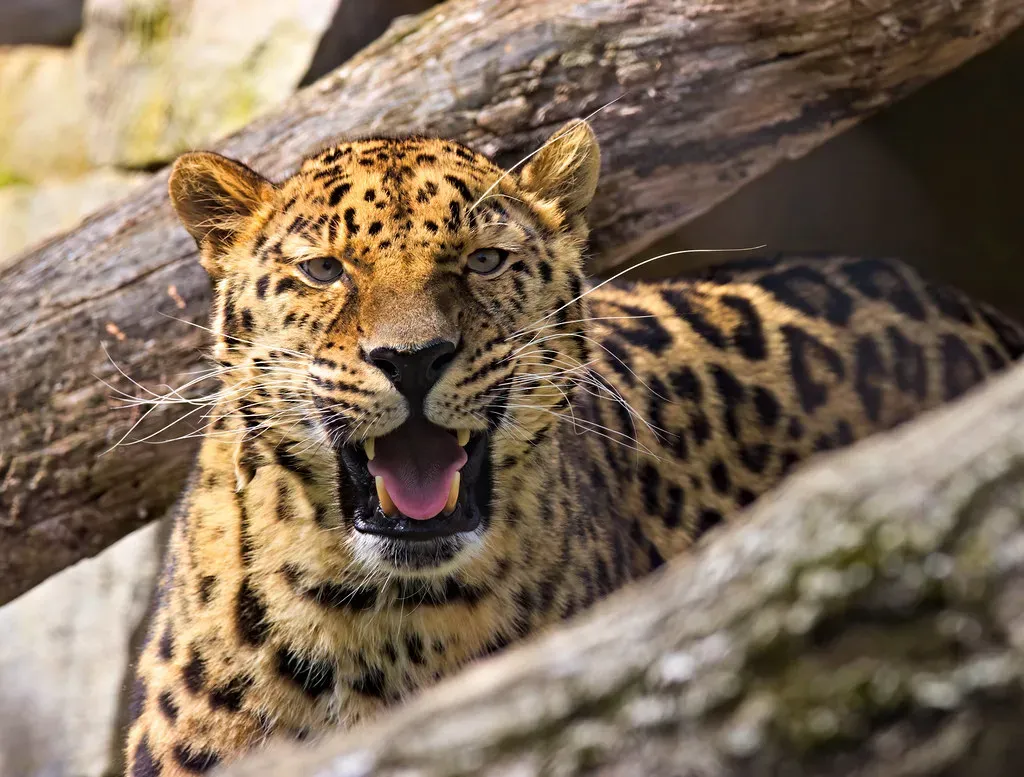
I think the flehmen face is one of the best reminders that cats live in a world we only half perceive. We see a grimace, but they’re reading a layer of chemical information we can’t access at all. That’s humbling, and a little delightful.
So next time your cat pulls that expression, resist the urge to take it as an insult. Let the moment play out, and appreciate that you’re watching a second sense at work. Honestly, it’s far more impressive than it looks.

- Zoology Says That Open-Mouthed ‘Smelly Face’ Your Cat Makes Is It Using a Second Scent Organ in the Roof of Its Mouth - November 11, 2026
- 7 Ice Age Animals Painted on Cave Walls That No Longer Exist - November 11, 2026
- 15 Things a Dog Does Only for the Household Member It Trusts Most of All - November 11, 2026