
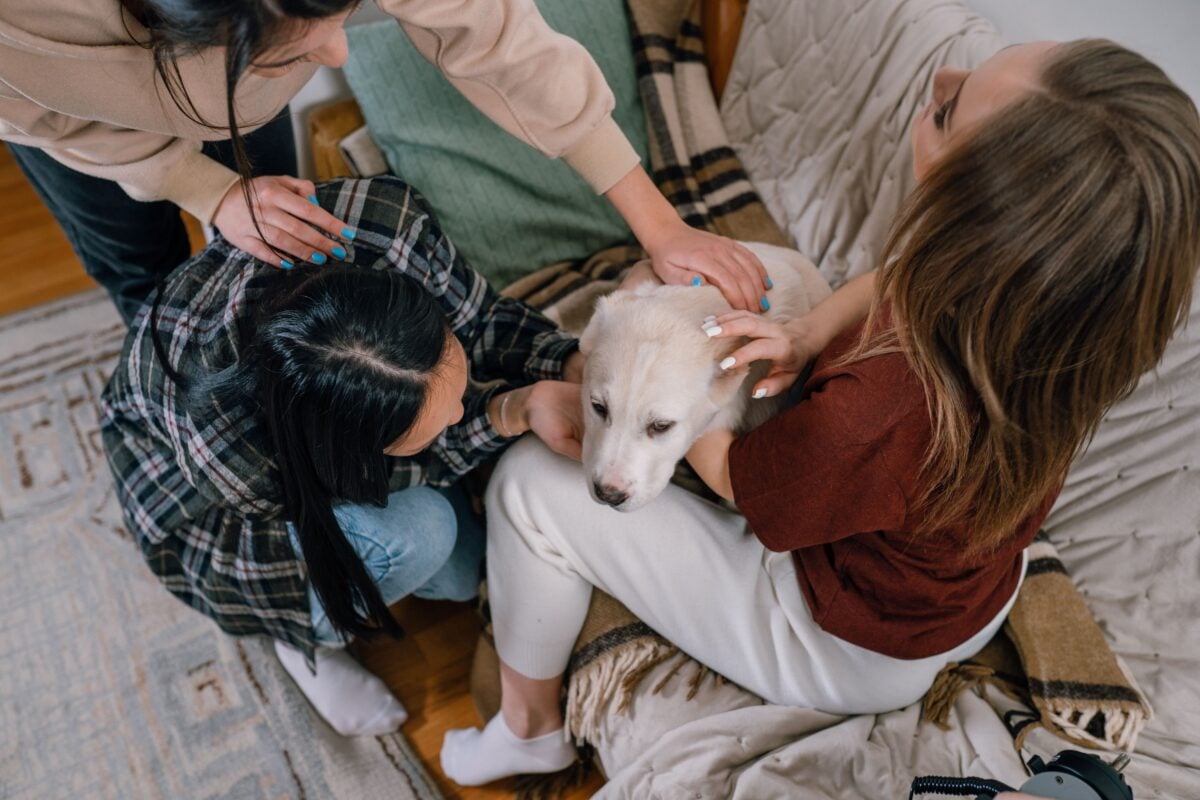

Ask most people why a dog loves one person best, and you’ll hear the same answer: whoever fills the food bowl. It’s a tidy theory. The research tells a much messier story.
Dogs form attachments that look a lot like the bond between a child and a caregiver, and they show it through small, specific behaviors they don’t hand out to everyone. Some are obvious. Others hide in the timing of a yawn, a quick glance, or the direction of a tail wag. Here are 15, counted down from #15 to #1, with what behavior researchers actually say about each one. Stick around for the last two, because one of them quietly flips the food-bowl theory on its head.
#15 – Shadowing You From Room to Room
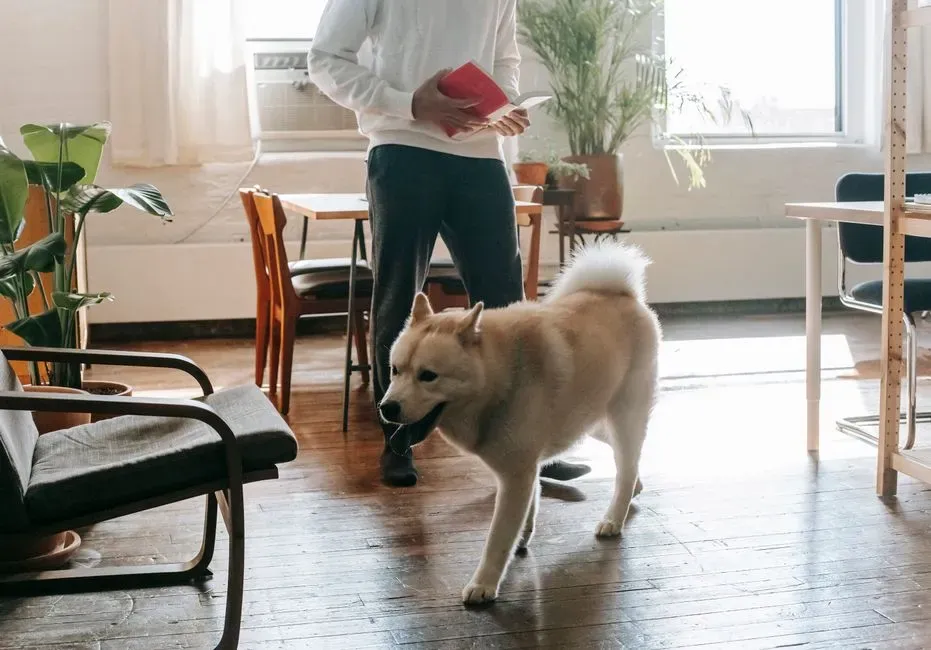
Your dog’s habit of tailing you everywhere isn’t random, and it isn’t just boredom. Yes, that includes the bathroom.
Behavior researchers treat proximity seeking as a core sign of attachment. A dog that keeps tabs on one person, room after room, is using that person as an anchor in a world that keeps changing.
Here’s the twist: the pattern is often selective. Picture a Saturday with the whole family home, kids on the couch, someone in the kitchen, and the dog parked in the hallway outside the one room where a single person is folding laundry. Many dogs trail one household member far more than the others, even when everyone is handing out attention. The “chosen” person can be someone who never feeds the dog at all.
Typical signs include:
- Settling in doorways while you work
- Getting up the moment you change rooms
- Pausing mid-walk to check where you are
One caution: constant following can also point to separation-related anxiety. If your dog panics when you leave, a vet or certified behaviorist is the right next call.
But the next habit happens when you can’t see your dog at all…
#14 – Sleeping as Close to You as Possible
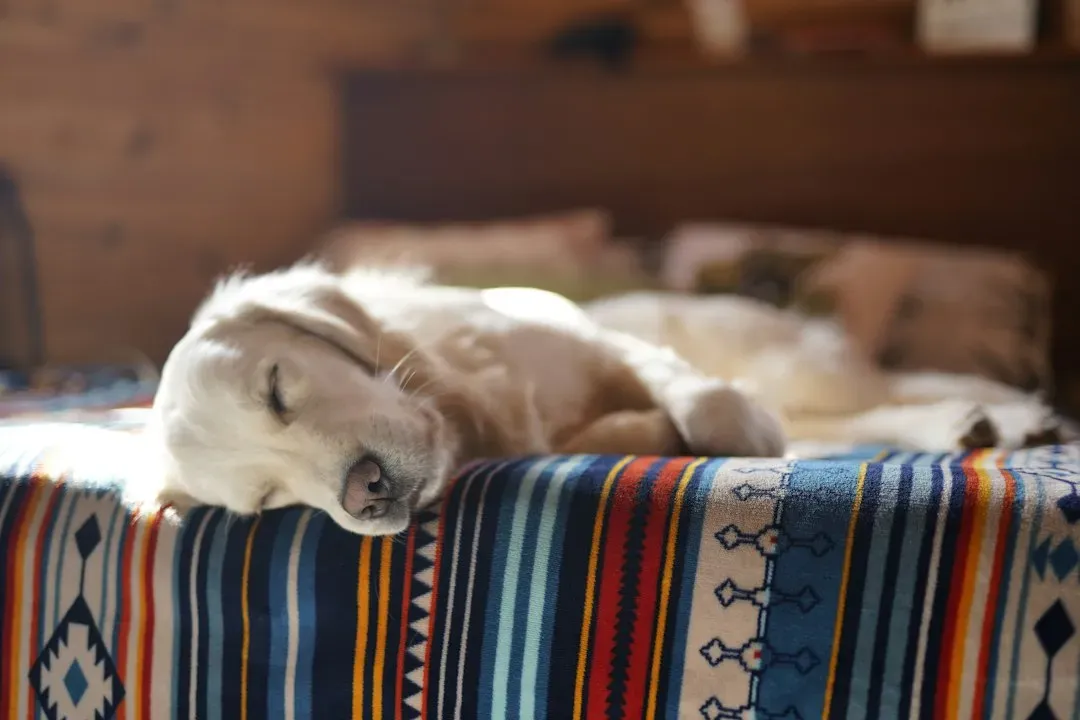
Sleep is the most defenseless state a dog can be in, and where it chooses to do it says a lot.
Dogs given a free choice often pick the spot nearest their favorite person. That might be pressed against your legs, curled at the foot of the bed, or flat across the doorway of your room like a furry draft stopper.
Behaviorists read this as a trust signal. A dog that can’t react quickly while asleep is betting that someone else is keeping watch.
Here’s the controversial part. Some trainers still insist that letting a dog sleep near you creates a “dominance problem.” Major veterinary behavior groups have pushed back hard on the dominance explanation for everyday dog behavior. Most experts now say proximity at night is about comfort and security. It isn’t a power grab.
Fast Facts
- Adult dogs commonly sleep around 12 to 14 hours a day, and puppies and seniors often sleep more.
- The American Veterinary Society of Animal Behavior published a position statement in 2008 advising against dominance-based explanations and training.
- The “alpha” idea traces back to studies of captive, unrelated wolves, not family packs in the wild.
- A dog that picks a spot near you, then drifts away and returns, is still showing a normal comfort pattern.
If your dog has medical or behavioral reasons to sleep elsewhere, follow your vet’s advice. For most healthy dogs, the sleep spot is a compliment.
Still, one thing dogs do while awake is even more revealing…
#13 – Bringing You a Toy the Moment You Walk In
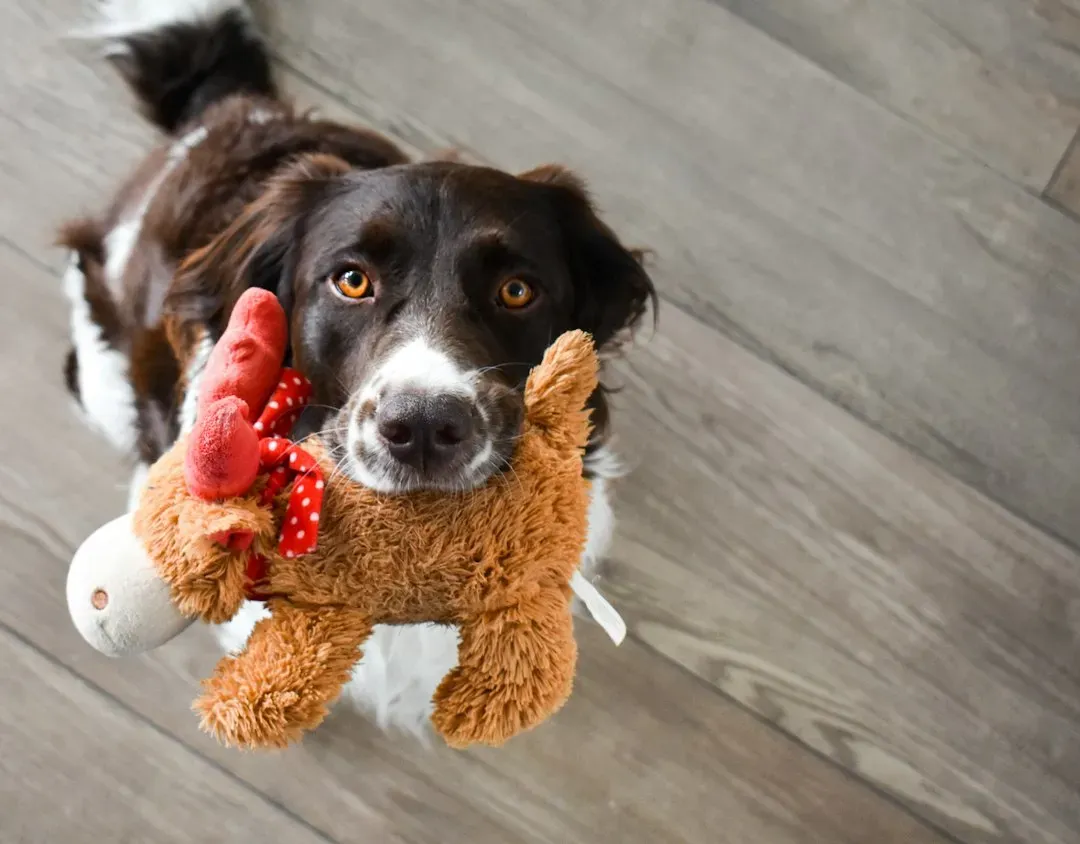
The “gift” your dog drops at your feet probably isn’t a gift, and the truth is more interesting.
Many dogs grab an object when someone arrives. Social media loves to call it a present. Most behavior experts are more cautious.
The simpler explanation is excitement plus invitation. The toy is something the dog already finds rewarding, and carrying it gives the dog an outlet while it greets you.
Now notice who gets this treatment. Dogs often save the full routine for the person they’re most invested in. They may ignore the same toy when a casual visitor walks in.
What to look for:
- A loose, wiggly body rather than a stiff one
- The toy offered or dropped near you, not guarded
- A play bow or bounce if you respond
If the dog growls or guards the item, that’s a different message entirely.
Next up is a behavior scientists still argue about…
#12 – Catching Your Yawns
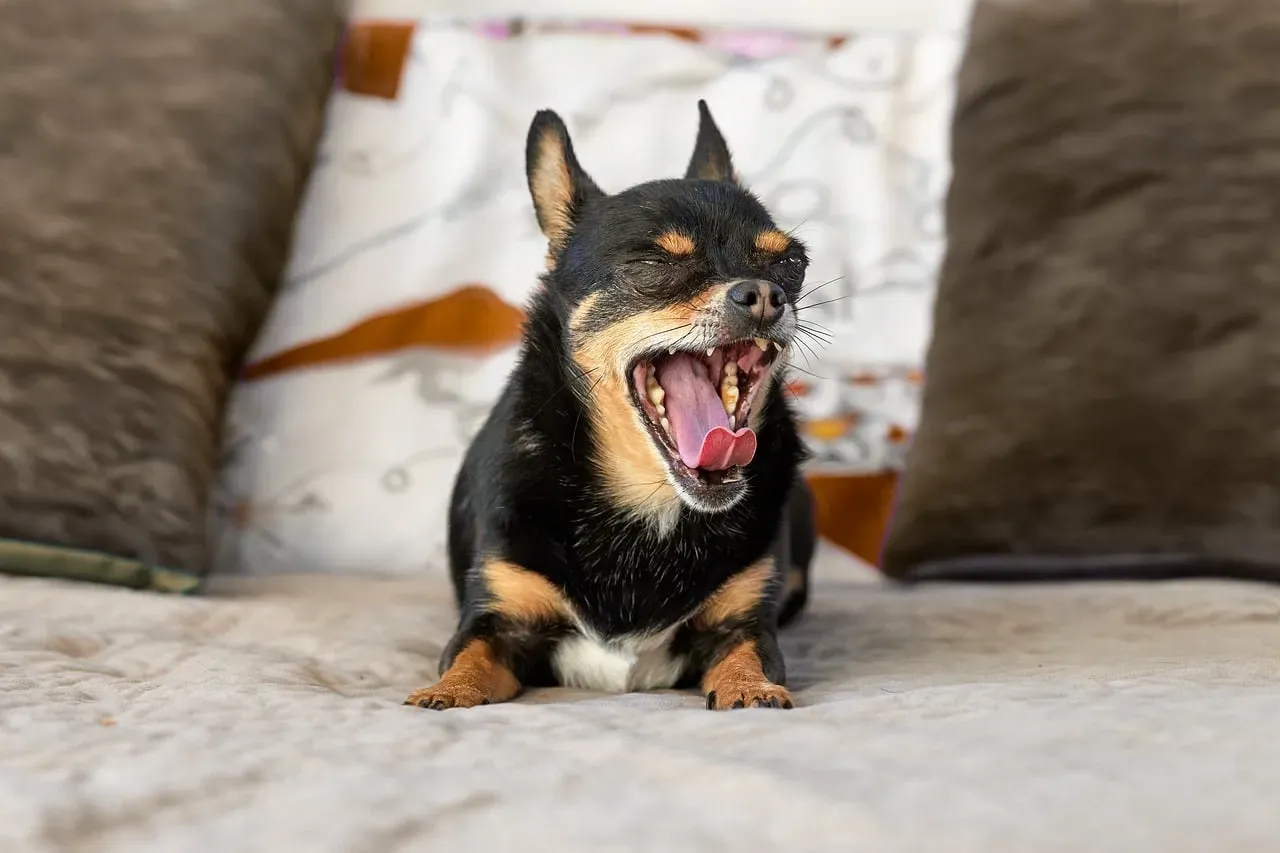
When you yawn, your dog may yawn back, and that’s where the debate starts.
Researchers have documented contagious yawning in dogs in response to human yawns. A 2012 study reported that dogs caught yawns more readily from a familiar person than from a stranger.
That finding made headlines as proof of “empathy.” Later work has been less consistent, and not every study found a familiarity effect.
Yawning in dogs can also be a stress or calming signal, not just a mirrored reflex. Context matters. A relaxed dog yawning on the couch isn’t the same as a dog yawning at the vet.
Many experts argue the empathy claim is overhyped. The safer reading is that dogs are tuned in to the people they spend time with, and yawning is one small place that shows up.
At a Glance
- Contagious yawn: Often follows your yawn, with a relaxed face and body.
- Stress yawn: Shows up in tense moments, often with lip licking or turning away.
- Sleepy yawn: Ordinary tiredness, usually near bedtime or after exercise.
So treat it as suggestive, not settled. It’s still a surprisingly human thing for a dog to do.
Where the evidence gets much stronger is what dogs do in unfamiliar situations…
#11 – Checking Your Face Before Reacting to Something New
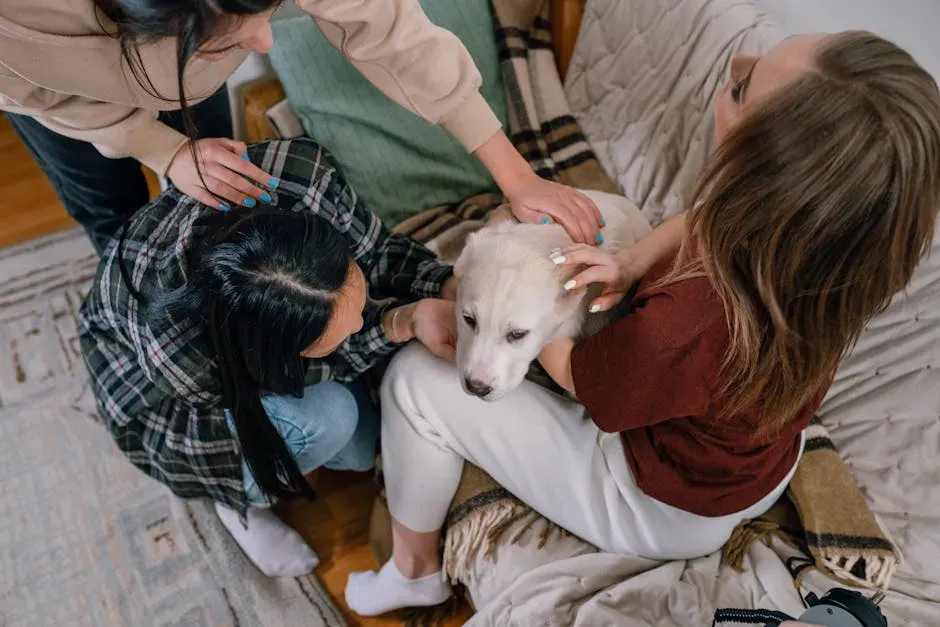
Faced with something strange, your dog may glance at you before deciding how to feel.
Scientists call this social referencing. In a well-known experiment, dogs met an unfamiliar object while their owners gave either a positive or fearful emotional message. The dogs’ behavior shifted based on what they saw and heard.
In other words, your reaction can steer your dog’s reaction. Most people don’t realize how much their own body language is part of that message.
This is also where a popular myth falls apart. Research on the “guilty look” found dogs showed it more when scolded, whether or not they had actually misbehaved. That means the look is probably a response to your cues, not proof of remorse. Plenty of owners disagree. Experts largely don’t.
And if you think that’s a strong bond signal, wait until you see the next one…
#10 – Treating You Like a Safe Base
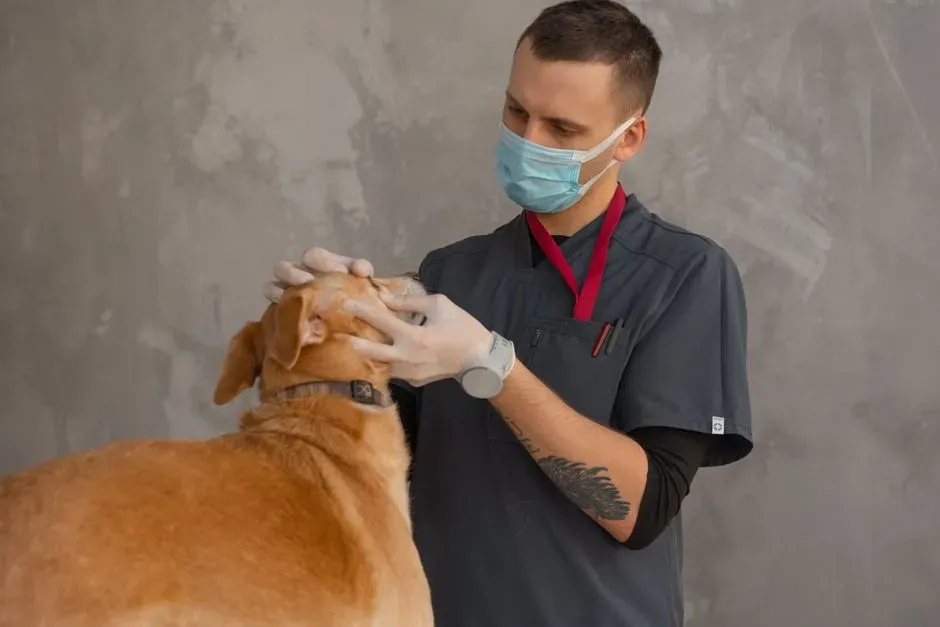
A confident dog in a strange place may be borrowing your calm.
Attachment researchers adapted a classic child-development test for dogs. They found that dogs showed attachment-style behavior toward their owners, including greater comfort and exploration when the owner was present than when a stranger was.
This is called the secure base effect. The person works like a charging station. The dog ventures out, then returns for a quick check-in.
Watch for it at the park. Your dog sniffs and wanders, then circles back to make contact before heading out again.
Key signs:
- Short, repeated returns during walks
- Settling faster in new places when you’re near
- Distress or searching when you disappear
Dogs don’t need constant contact to feel secure. Often a brief glance does the job.
But the strongest check-in happens through the eyes, and it changes your biology…
#9 – Gazing Into Your Eyes
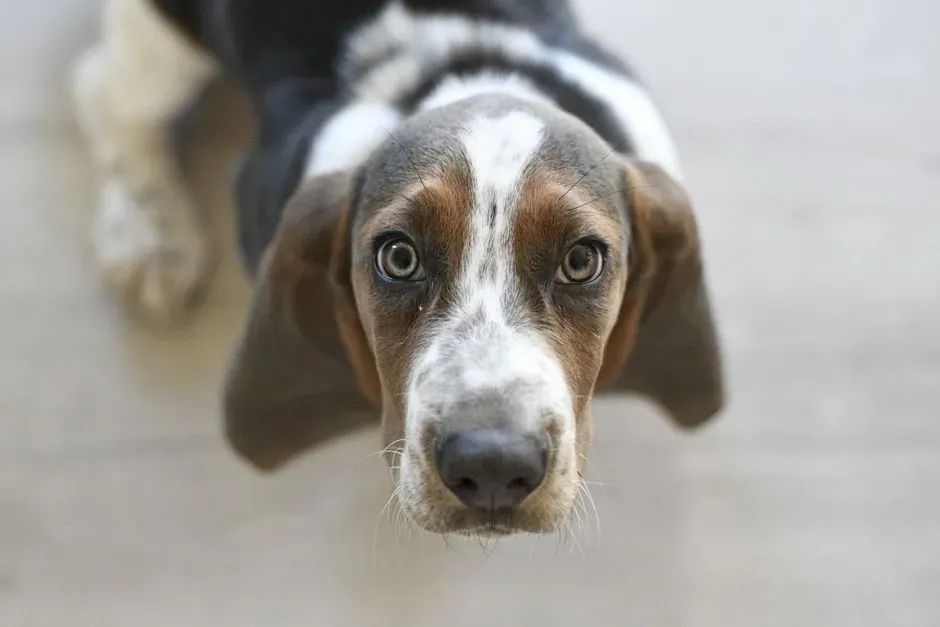
A long, soft look from your dog is doing more than asking for a snack.
A widely cited 2015 study in Science found that when dogs and owners gazed at each other for longer, both showed rises in oxytocin. That’s a hormone tied to bonding in mammals.
Researchers described it as a feedback loop. The dog looks, the human responds with touch or talk, and the bond strengthens.
The same effect wasn’t seen between hand-raised wolves and their caregivers. That suggests dogs developed this gaze behavior alongside humans.
One important warning. Dogs read a hard stare from an unfamiliar dog or person as a challenge. The soft, blinking eye contact is for people they trust. If your dog looks away or yawns when you stare, ease off. Trust is why the gaze works at all.
Gaze is only one channel. The next one runs through your stress hormones…

Dog Stairs for Bed 18" H, 4-Step Dog Steps for High Bed
Check Price on AmazonAs an Amazon Associate, we earn from qualifying purchases.
10/9/2026 2:42 pm GMTi

Smart Bird Feeder with Camera Solar Powered, 2K HD Live Video, 10,000+ Bird Species AI Identification
Check Price on AmazonAs an Amazon Associate, we earn from qualifying purchases.
10/7/2026 1:22 pm GMTi

Glass Hummingbird Feeder for Outdoors Hanging
Check Price on AmazonAs an Amazon Associate, we earn from qualifying purchases.
10/7/2026 1:21 pm GMTi

2 Pcs Halloween Pet Hat Bandana Set, Witch Pumpkin Costumes for Dogs
Check Price on AmazonAs an Amazon Associate, we earn from qualifying purchases.
10/9/2026 2:45 pm GMTi

Hand Blown Glass Hummingbird Feeders for Outdoors Hanging, 24oz Wild Bird Nectar Feeder
Check Price on AmazonAs an Amazon Associate, we earn from qualifying purchases.
10/7/2026 1:23 pm GMTi
#8 – Absorbing Your Stress
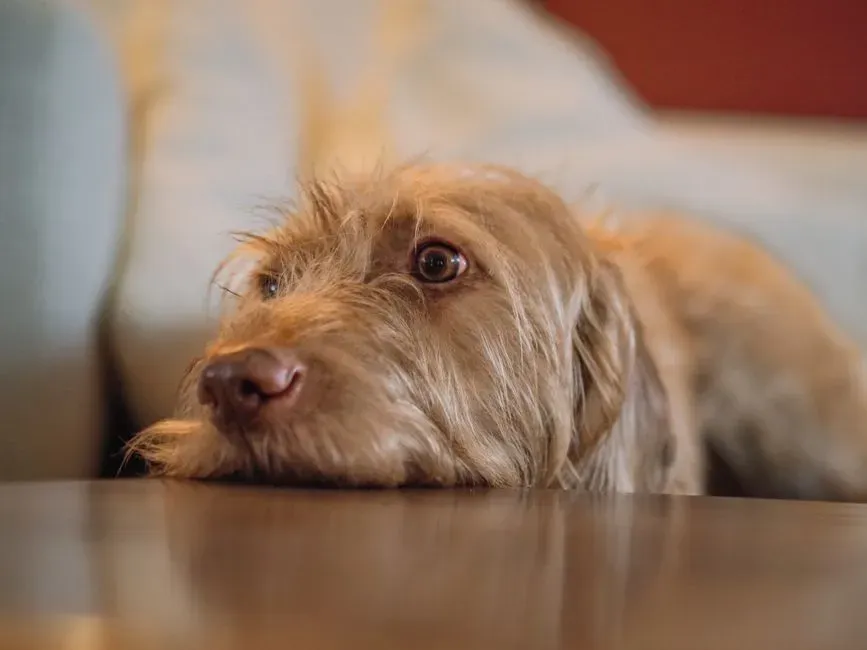
Your dog may be quietly keeping score of your mood, and it shows up in the chemistry.
Swedish researchers measured long-term cortisol, the stress hormone, in the fur of dogs and their owners. They found the levels were linked. The dog’s stress profile tended to mirror the human’s.
It’s one study, and it can’t prove cause and effect. Shared routines, walks, and living conditions could play a role.
Even so, it fits with what many behaviorists see in practice. Dogs appear to track the emotional state of the person they live with more closely than most owners assume.
Possible clues your dog is picking up on your stress:
- Restlessness when you’re tense
- Clinginess during hard weeks
- Changes in appetite or sleep
Reducing your own stress may help, but don’t assume you’re the whole cause. Medical issues can look the same.
That’s the invisible side. The next habit is one you can see from across the room…
#7 – Leaning Their Full Weight Against You
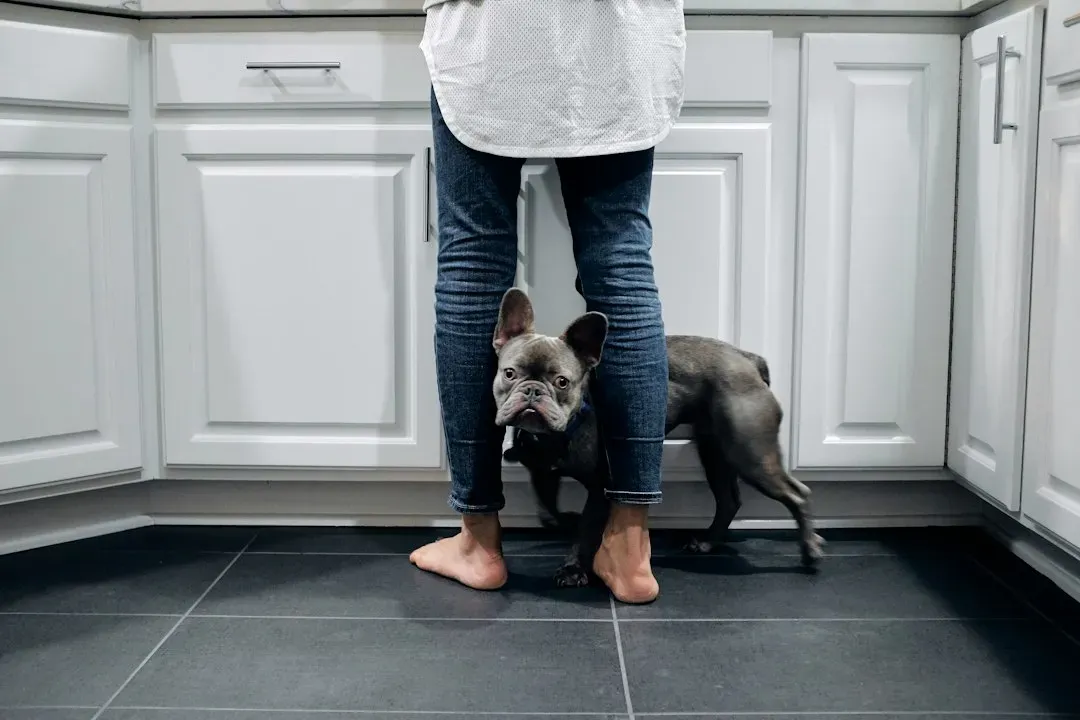
When a dog leans on your legs, it’s choosing contact on purpose.
Behaviorists generally read leaning as comfort-seeking or connection. The dog is using your body for reassurance, the same way it might press against a littermate.
It’s not formally studied as much as gaze or scent, so interpretations vary. Context is the key. A dog leaning during a thunderstorm may be seeking safety. A dog leaning during a quiet evening may simply enjoy you.
Dogs rarely lean on people they feel uneasy around. Pressing against someone means lowering your guard. That’s why it tends to be reserved for the household member the dog feels safest with.
Common versions include:
- Leaning on your shins while you stand
- Resting a head on your foot or knee
- Sitting directly on top of your feet
If the leaning looks tense, or your dog is shaking, stress is the more likely cause.
Quick Compare
- Connection lean: Soft eyes, loose muscles, maybe a contented sigh.
- Fear lean: Stiff or trembling body, panting, tucked tail, often during storms or fireworks.
- Request lean: Leaning plus a stare or paw tap, usually asking for food, play, or a door to open.
Even more telling is what your dog does when you walk back through the door…
#6 – The Full-Body Wag When You Return
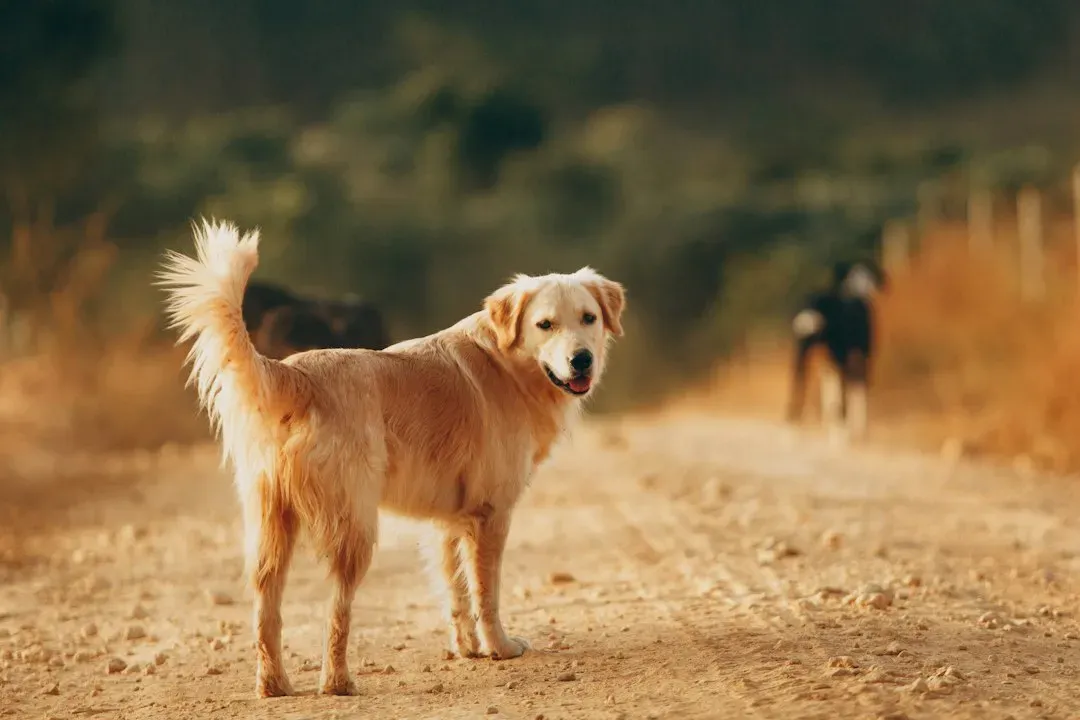
Not every tail wag means the same thing, and the one your dog saves for you is different.
Research on tail-wagging asymmetry found that dogs wagged more to the right when seeing their owner. They wagged more to the left when facing an unfamiliar, dominant dog.
Reunion greetings also scale with absence. One study found dogs greeted their owners more intensely after a longer separation than a short one.
Dogs in that line of research seemed to notice wag direction in other dogs, too. That hints that the wag carries information between dogs.
What a true reunion greeting often includes:
- A loose, wiggly body, with the hips moving too
- Soft ears and relaxed eyes
- Whining, leaning, or bringing a toy
A stiff, high, slow wag is a different message entirely. Read the whole body, not just the tail.
But the greeting is the easy part. Here’s what dogs allow only from people they trust…
#5 – Letting You Handle the Vulnerable Spots
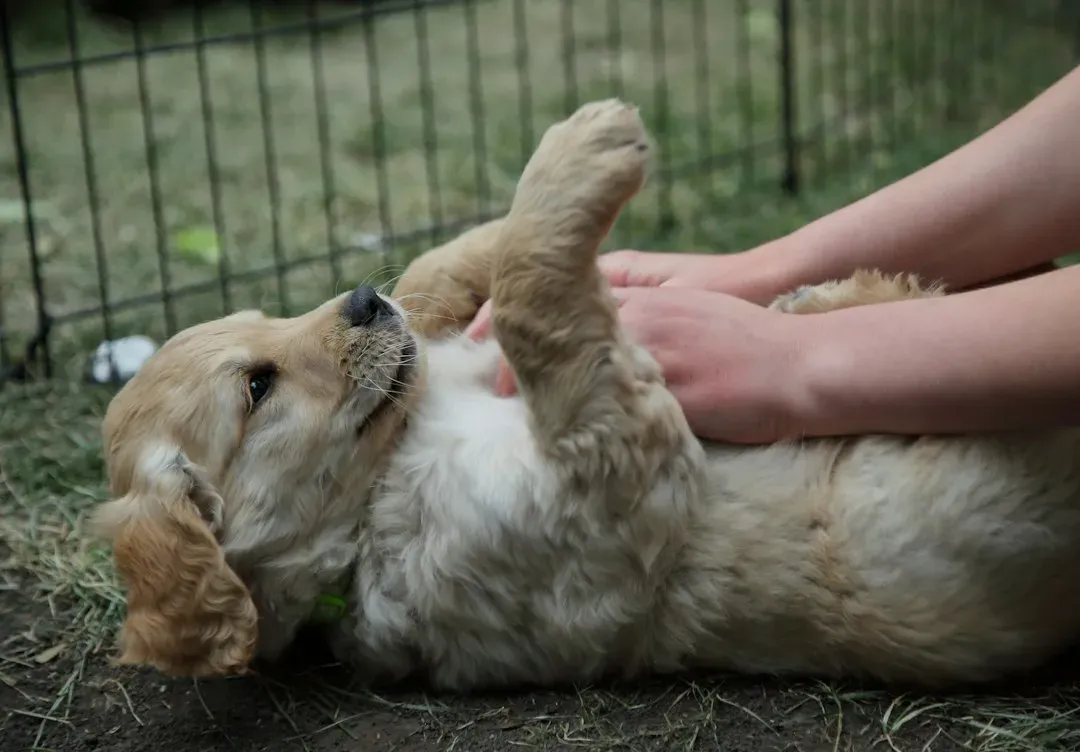
Paws, ears, belly, and mouth are off-limits for most dogs, unless you’re the exception.
Dogs tend to guard sensitive areas. A dog that lets you touch them, trim a nail, or rub the belly is showing a high degree of comfort with you.
Be careful with the belly, though. An exposed belly can mean relaxed trust. It can also be an appeasement signal from a nervous dog. Most people read a rolled-over dog as asking for a rub, and often they’re wrong.
Look at the rest of the body. Loose muscles, soft eyes, and a wiggly posture suggest relaxation. A stiff body, tucked tail, or lip licking suggests worry.
Safe habits:
- Let the dog choose to roll over
- Pause often to see if it asks for more
- Never force handling
A dog that trusts you still has the right to say no.
The next sign is one you can’t see at all…

Halloween Cat Costume Cloak Witch Hat Pet Accessories
Check Price on AmazonAs an Amazon Associate, we earn from qualifying purchases.
10/9/2026 2:44 pm GMTi

Earth Rated XL Dog & Puppy Pee Pads, Discreet Top, Max Absorbency
Check Price on AmazonAs an Amazon Associate, we earn from qualifying purchases.
10/7/2026 1:28 pm GMTi

Air Purifiers for Home Pets Large Room Up to 3000 Ft²,HEPA Air Cleaner with Washable Double-Side Filter, PM2.5 Air Quality Monitor,15dB Sleep Mode for Bedroom Odor Dust Pollen,White
Check Price on AmazonAs an Amazon Associate, we earn from qualifying purchases.
10/8/2026 8:23 am GMTi

Professional 7 in 1 Dog Paw Cleaner for Dogs & Cats - Includes 1 Portable Paw Washer, 1 Bath Brush
Check Price on AmazonAs an Amazon Associate, we earn from qualifying purchases.
10/7/2026 1:26 pm GMTi

Orthopedic Extra Large Dog Bed, Waterproof Washable XL Pet Bed 44"
Check Price on AmazonAs an Amazon Associate, we earn from qualifying purchases.
10/7/2026 1:32 pm GMTi
#4 – Lighting Up at Your Scent
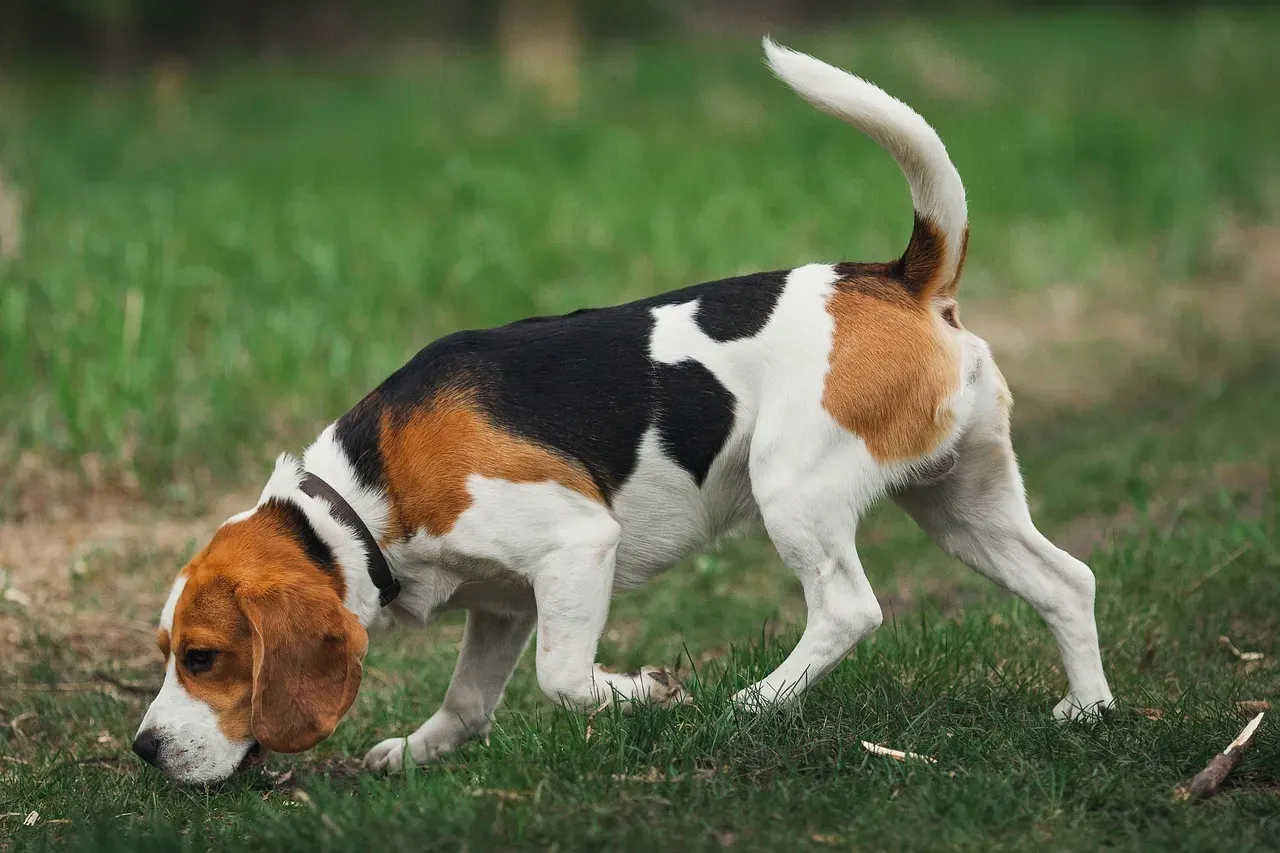
Your dog doesn’t just recognize you. Its brain seems to respond to you differently.
In a small fMRI study, researchers presented dogs with scents from familiar and unfamiliar people and dogs. The caudate, a brain region linked to anticipating things the animal enjoys, responded most strongly to the scent of a familiar human.
It’s a small sample, so it’s not the final word. But it fits what owners notice: dogs burying their noses in worn shirts and pillows.
That’s also why a piece of unwashed clothing can soothe some dogs during separation. It’s not magic. Scent is the dog’s main way of knowing who is who.
Most people don’t realize how much of a dog’s world is built from smell. You are, in part, a signature scent your dog knows by heart.
Scent is private. The next signal is the one you use out loud…
#3 – Expecting You When They Hear Your Voice
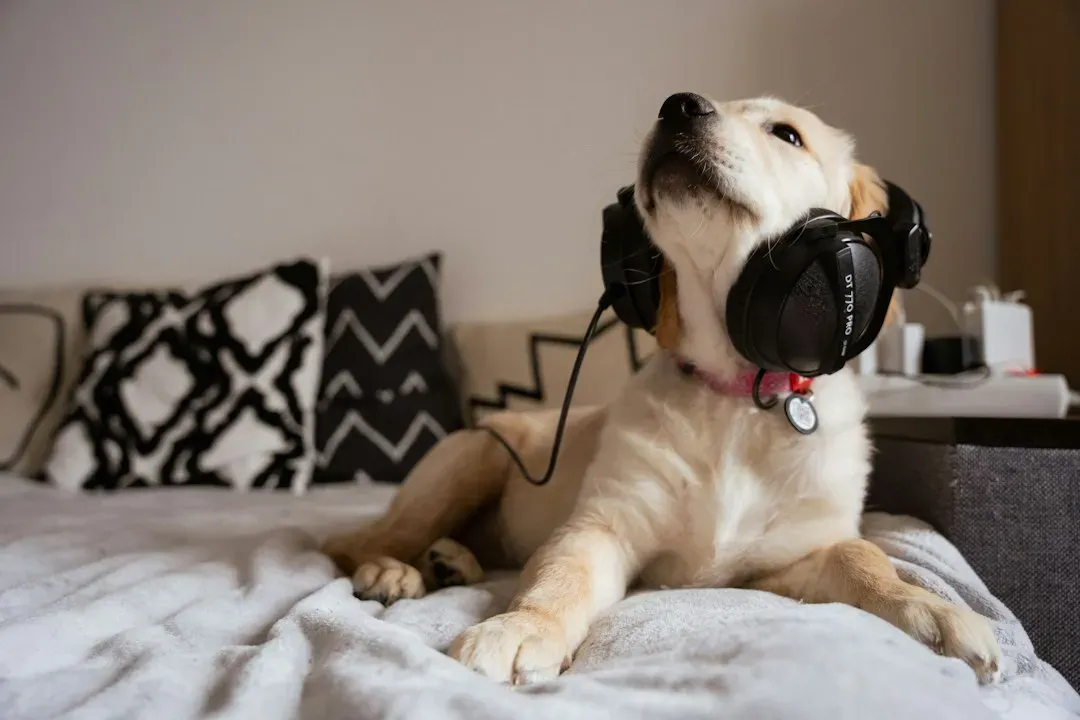
Your dog doesn’t just hear your voice. It builds a mental picture of you from it.
In one experiment, dogs heard their owner’s voice from a speaker while looking at a screen. They stared longer when a stranger’s face appeared than when the owner’s did. That suggests they expected to see their owner.
Later brain research found dogs process the emotional tone of voices in ways that overlap with how humans do.
Dogs may recognize your voice well enough to form an expectation of who’s about to walk through the door. That’s why a dog can seem to know your car or footsteps before you arrive. Voice, scent, and routine all feed the prediction.
Tone matters more than most people think. Dogs seem to pick up on pitch and emotion, not just words. Your “good dog” voice and your “I’m stressed” voice aren’t the same signal.
And the next behavior might surprise you, because dogs sometimes do it for strangers, too…
#2 – Rushing to You When You’re Upset
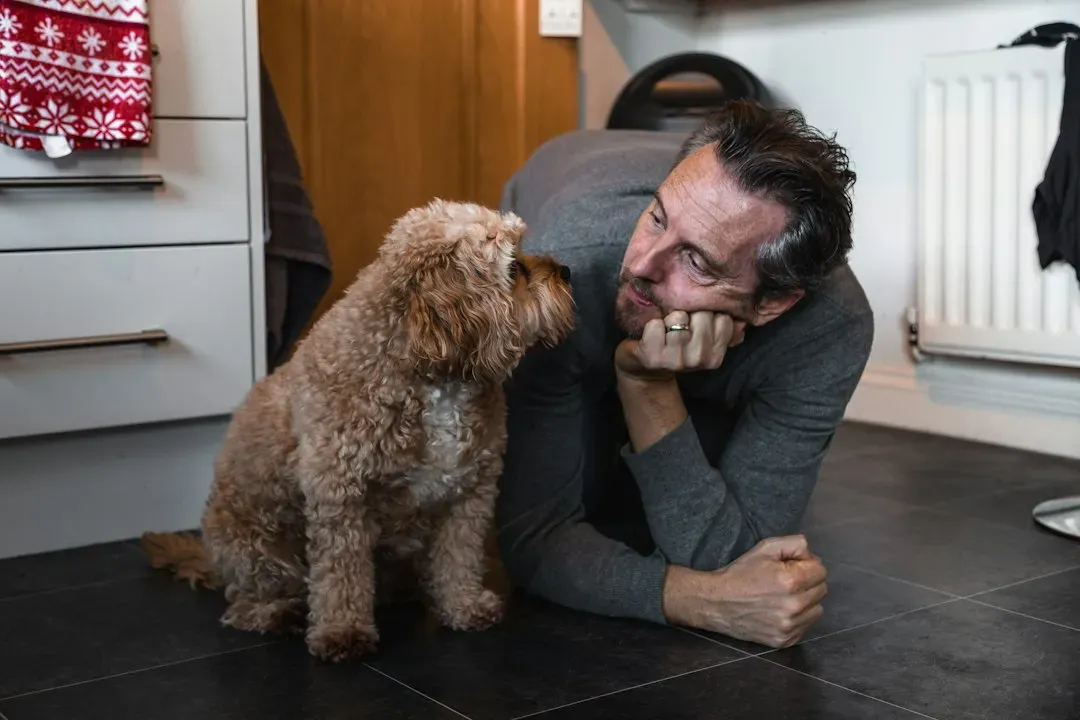
When you cry, your dog notices. Whether it’s only for you is a harder question.
In one study, dogs approached a crying person more than someone talking or humming. They did it whether the person was their owner or a stranger, and they often approached submissively.
In another, dogs more quickly opened a door to reach an owner who sounded distressed than one who was humming. The dogs’ own stress levels mattered, though. Dogs that were too stressed were less likely to help.
So the truth is mixed. Dogs respond to human distress in general, but the bond with their person likely shapes how strongly they respond.
Many owners are certain their dog “knows” exactly what they feel. Experts urge caution. A dog may be reacting to sounds, posture, and smell, not understanding sadness the way a person would.

Halloween Dog Collar with Bow, Orange Cute Ghost Collar,
Check Price on AmazonAs an Amazon Associate, we earn from qualifying purchases.
10/9/2026 2:43 pm GMTi

Glass Hummingbird Feeder for Outdoors Hanging, 16 oz Leak-Proof Nectar Feeder with Bee Guards & Ant Moat
Check Price on AmazonAs an Amazon Associate, we earn from qualifying purchases.
10/7/2026 1:22 pm GMTi

Portable Dog Water Bottle Foldable Dog Travel Water Bottle
Check Price on AmazonAs an Amazon Associate, we earn from qualifying purchases.
10/7/2026 1:29 pm GMTi

PetSafe Oasys Pet Fountain, 1/2 Gallon (64 oz), Small Dogs & Cats
Check Price on AmazonAs an Amazon Associate, we earn from qualifying purchases.
10/8/2026 8:14 am GMTi
Worth Knowing
- Both studies used small groups of pet dogs, so they’re early evidence rather than final proof.
- Dogs may be responding to tone, posture, and scent, not tears alone.
- A dog that paces, whines, or backs away when you cry may be overwhelmed, not unkind.
- If that happens, give it room and a calm voice instead of a tight hug.
Either way, it counts. And it leads straight to the strongest sign of all…
#1 – Treating Your Approval Like the Real Reward
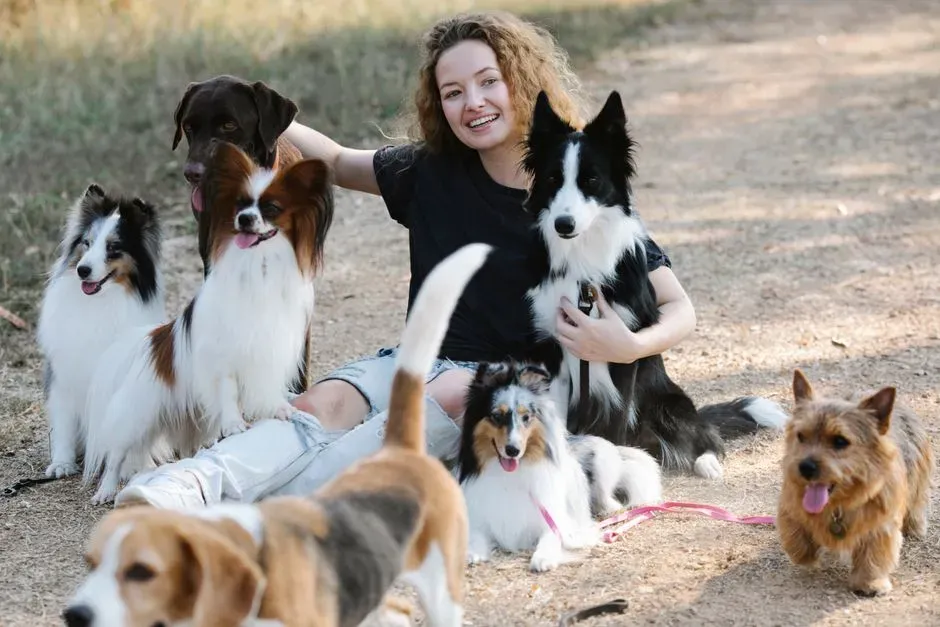
For many dogs, a kind word from the right person is worth more than a snack.
In a small fMRI study, researchers compared how dogs’ reward centers responded to food and to owner praise. Most dogs showed similar reward-center responses to both, and a few responded more strongly to praise.
That challenges the belief we started with: that a dog’s favorite person is whoever feeds it. The research suggests the story is more complicated. Attention, praise, and shared time matter, too.
Some dogs are more food-driven than others, and individual differences are large. But when a dog lights up at your voice, it’s reacting to more than calories.
So what does all of this really say about the bond between you and your dog?
Forget the idea that your dog loves whoever pays for dinner. The evidence points elsewhere. Dogs reserve their most revealing behaviors for the person who offers safety, predictability, and warmth. Those include the gaze, the check-ins, the lean, and the sleep spot.
Some of these signs are well studied, and some are better described as informed interpretation. Both deserve respect. The most overrated explanation is “dominance.” The most underrated is plain trust.
If you spotted several of these in your own dog, you’re likely the chosen one. Which sign did you recognize first, and did it surprise you?

- Zoology Says That Open-Mouthed ‘Smelly Face’ Your Cat Makes Is It Using a Second Scent Organ in the Roof of Its Mouth - November 11, 2026
- 7 Ice Age Animals Painted on Cave Walls That No Longer Exist - November 11, 2026
- 15 Things a Dog Does Only for the Household Member It Trusts Most of All - November 11, 2026