
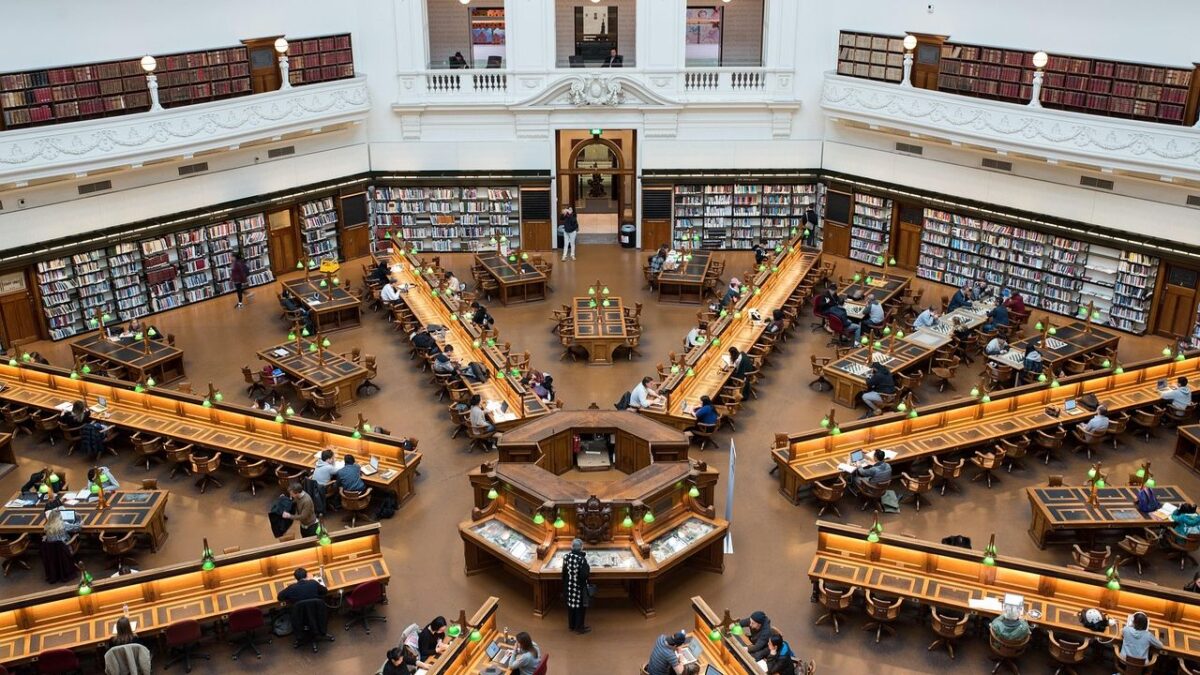
Ever wondered what it feels like to step into a place where time stands still, where architectural grandeur meets the quiet whisper of thousands of stories waiting to be told? Libraries aren’t just buildings filled with books. They’re portals to other worlds, sanctuaries of thought, and honestly, some of them are so breathtaking that you’ll forget why you walked in there in the first place.
From centuries-old monasteries to futuristic glass marvels, these fifteen libraries scattered across the globe represent something far more than just shelves and silence. They’re monuments to human curiosity, crafted by architects who understood that where we keep our knowledge matters just as much as the knowledge itself. So let’s dive in and explore these stunning spaces that’ll make you want to book a plane ticket immediately.
Library of Trinity College Dublin, Ireland
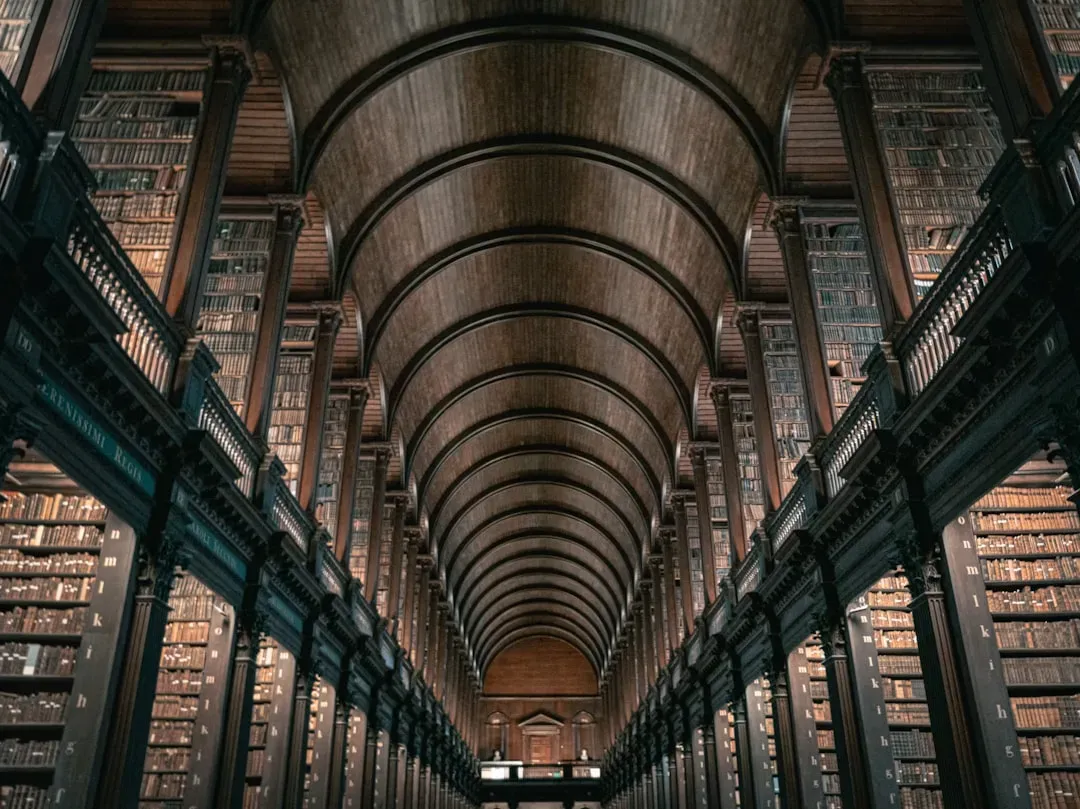
Voted as the most beautiful library in the world for 2025, the Library of Trinity College Dublin rightfully holds the top spot! Often compared to the Hogwarts library from the Harry Potter books for its enchanting atmosphere, the Library of Trinity College Dublin is Ireland’s largest library, housing thousands of rare manuscripts, including the famous 9th-century text known as the Book of Kells. Walking through this place, you can’t help but feel like you’ve stepped onto a movie set.
Its most prominent feature is the Long Room – aptly named at 65 meters – lined with the busts of famous literary figures. The dark wood shelving stretches endlessly upward, creating this almost cathedral-like atmosphere that makes you want to whisper. The library is renowned for its Long Room, a 65-meter hallway lined with 200,000 books. Let’s be real, if you’re visiting Dublin and skip this place, you’re doing yourself a major disservice.
Admont Abbey Library, Austria
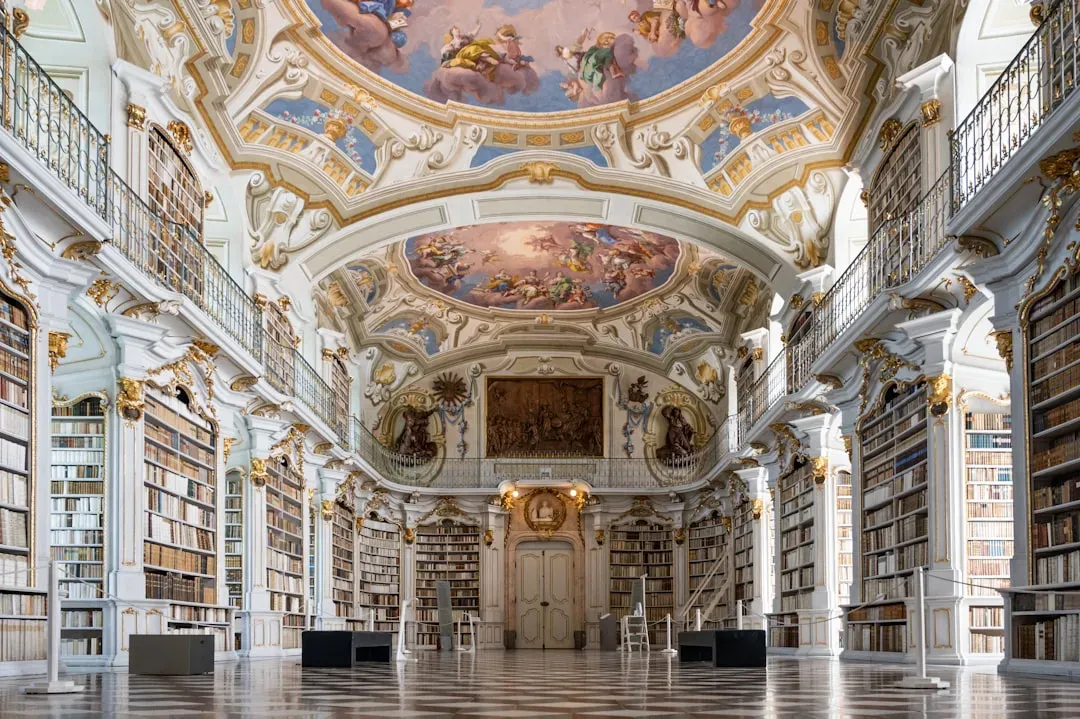
The Admont Abbey Library in Austria, completed in 1776, is the world’s largest monastic library and a masterpiece of late Baroque architecture. With a pristine white design and gilded accents, stepping inside this library feels almost like stepping into a sacred painting. The color scheme alone is stunning, all that white and gold creating this ethereal glow that makes you feel like you’ve wandered into heaven’s reading room.
It’s also the inspiration for the grand library from Disney’s Beauty and the Beast. A masterpiece of Baroque architecture, the library features seven ceiling frescoes by the Austrian painter Bartolomeo Altomonte. Every inch of this seventy-meter hall bursts with artistic detail, from colorful ceiling paintings to intricate sculptures. It’s hard to say for sure, but this might just be the most Instagram-worthy library on the planet.
Abbey Library of St. Gallen, Switzerland
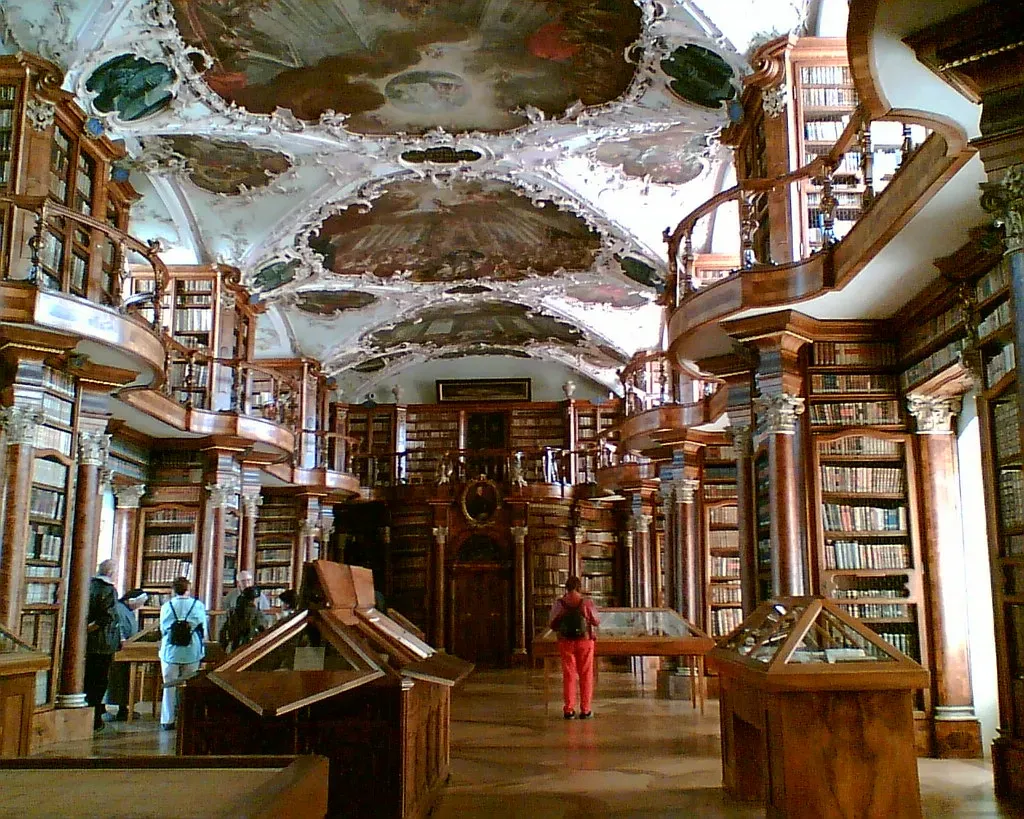
The Abbey Library of St. Gallen traces its roots to the mid-8th century, when a scriptorium was established to serve the monastery that had grown up on the site where the Irish monk Gallus founded a hermit community in 612. Today, it stands as one of the world’s oldest and most important monastic libraries. Walking into this space is like taking a direct trip back through more than a thousand years of history.
Its gleaming wooden interior – crowned by intricate Baroque frescoes completed in 1767 – creates an atmosphere both elegant and earthy. The St. Gallen Abbey Library is one of the oldest and possesses a vast collection of medieval manuscripts. The site earned UNESCO World Heritage status back in 1983, and once you see those elaborate ceiling paintings and centuries-old manuscripts, you’ll understand exactly why.
Duke Humfrey’s Library, Oxford, England
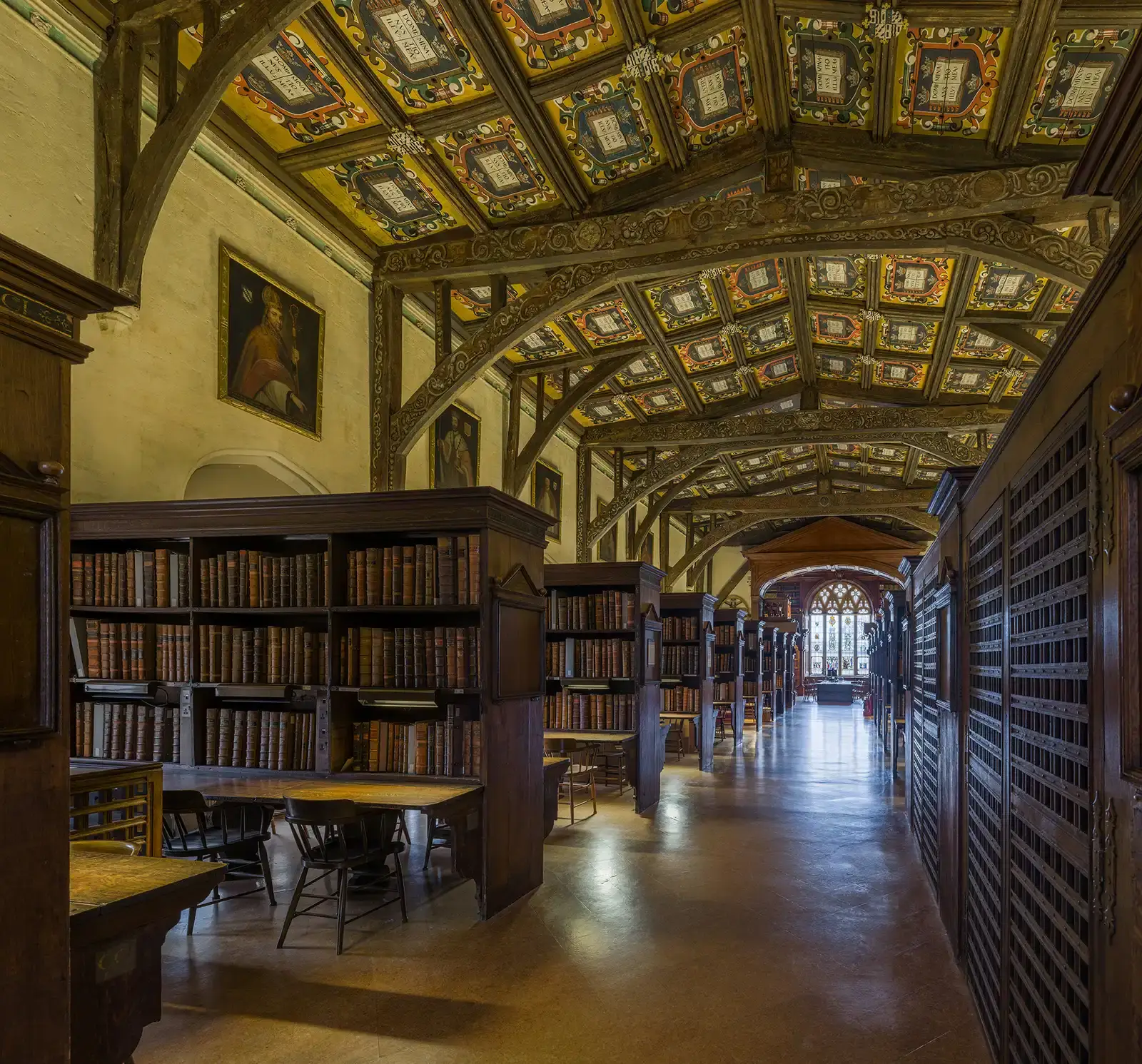
Duke Humfrey’s Library is a library within a library. It’s the oldest reading room in the larger Bodleian Library, the main research library at the University of Oxford. This fifteenth-century treasure represents the heart of one of Europe’s most prestigious academic institutions. Duke Humfrey’s Library, part of Oxford’s Bodleian Library, was established in the 15th century starting with a 281 manuscript donation from Humphrey of Lancaster, the Duke of Gloucester.
The carved wooden shelves and medieval atmosphere make this place feel frozen in time. Books in Humfrey’s library were once chained to the bookshelves, and today can only be read in Bodleian Library’s reading rooms. You might recognize it from various films, including certain wizarding adventures. The sense of scholarly tradition here is almost tangible, like you can feel centuries of brilliant minds who’ve sat at these very desks.
State Library Victoria, Melbourne, Australia
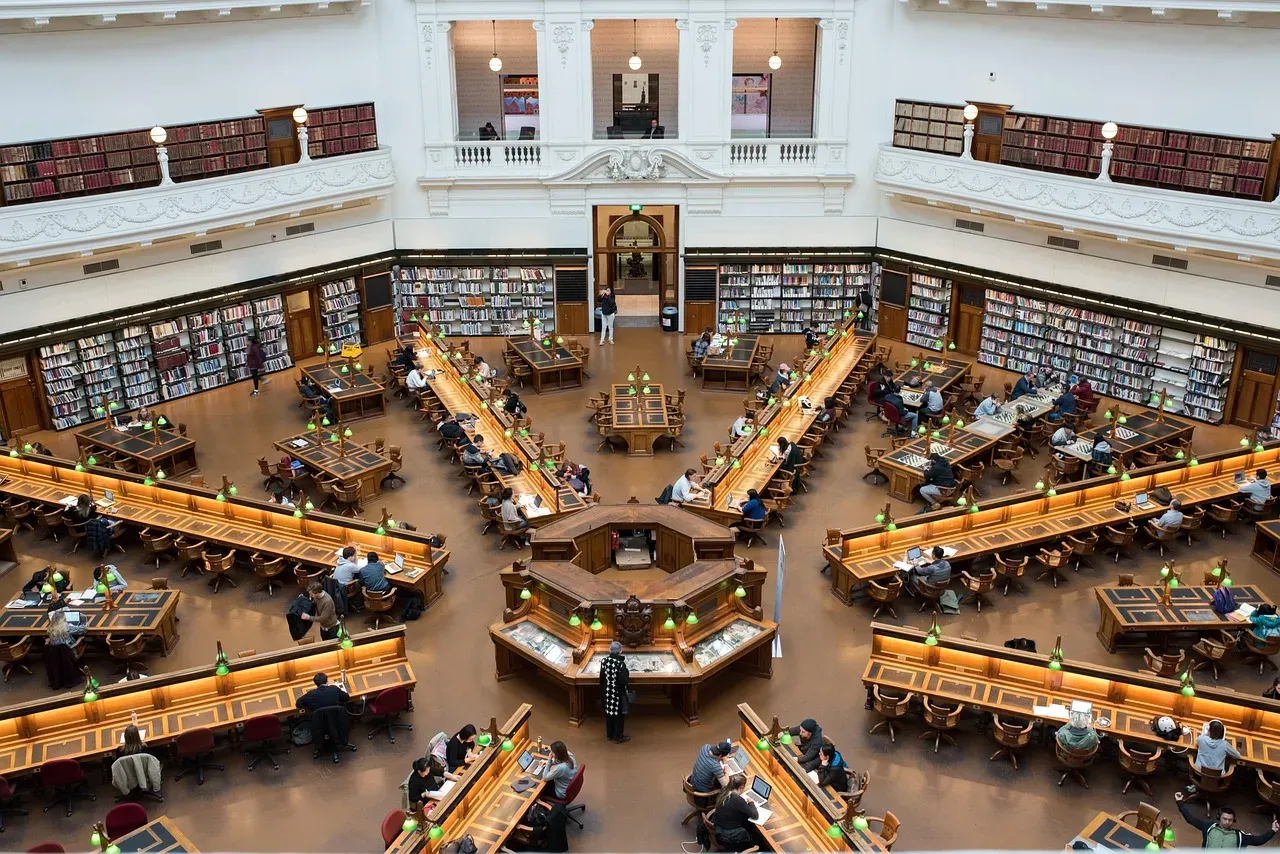
Established in 1854, State Library Victoria is Australia’s oldest public library and was one of the world’s first free libraries. Showing off a stunning Neo-Classical design, this building makes an impression with Corinthian columns and a grand portico. The exterior alone commands attention with its imposing classical architecture that speaks to the grandeur of the Victorian era.
It is occupying an entire city block in Melbourne and contains around 23 interconnected buildings huddled together over the past hundred-plus years. The recent Vision 2020 redevelopment also gave the place a new shine, expanding some spaces and modernizing others, blending historic architecture with contemporary design. The famous La Trobe Reading Room stands as the jewel in the crown, with its octagonal shape and soaring dome creating an absolutely magnificent space for contemplation.
Cuypers Library, Rijksmuseum, Amsterdam
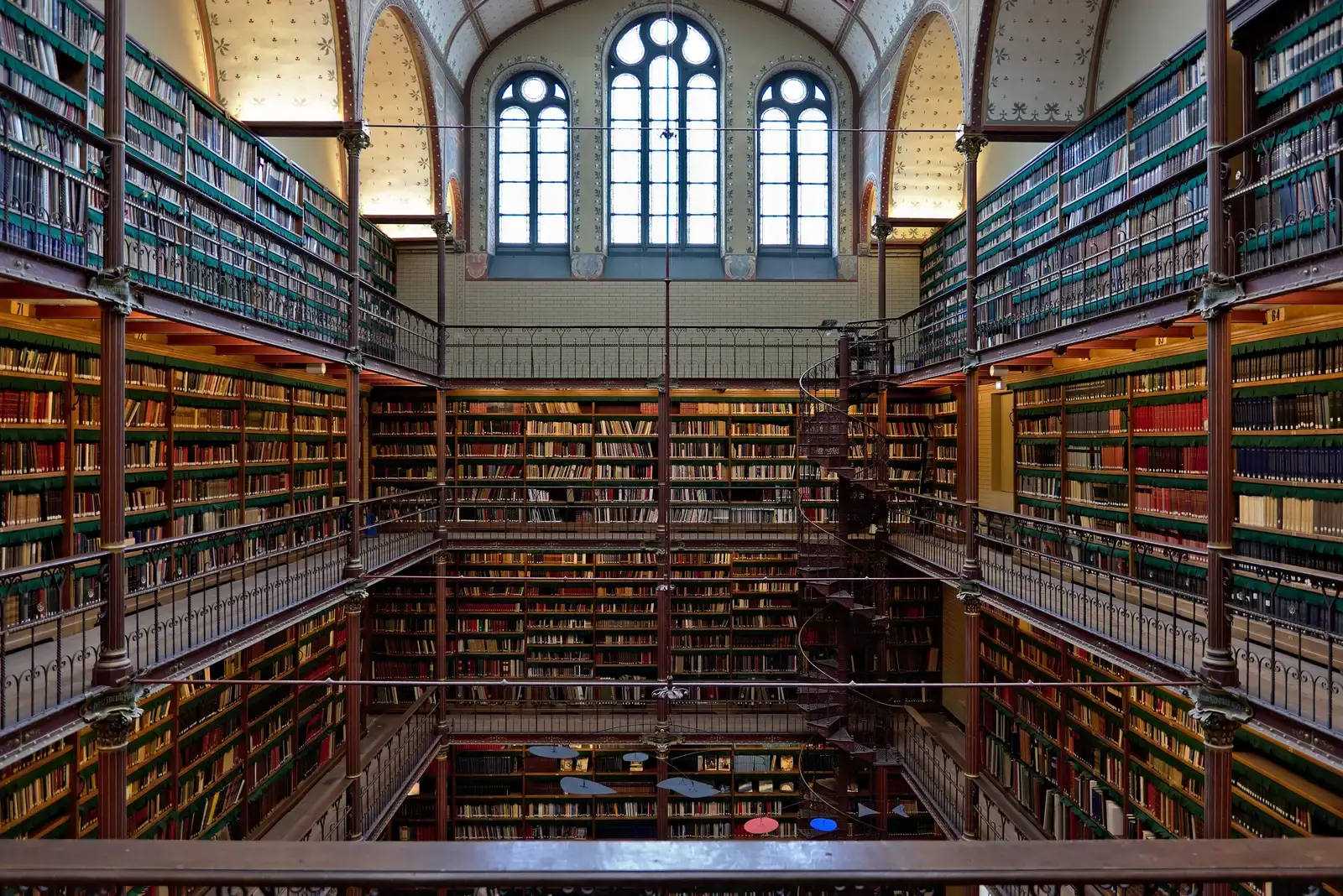
The Cuypers Library is located inside Amsterdam’s Rijksmuseum, home to many of the most famous paintings by Rembrandt, Vermeer and other Dutch masters. The library is the largest and oldest art historical library in the Netherlands. Imagine researching art history surrounded by actual masterpieces just a few rooms away. The neo-Gothic architecture creates this scholarly atmosphere that’s both intimidating and inspiring.
Part of Amsterdam’s Rijksmuseum, the Cuypers Library opened in 1885 is the Netherlands’ largest and oldest art history research library, housing around 450,000 volumes. The reading room’s vaulted ceilings and ornate ironwork make it a work of art in itself. Whether you’re an actual art historian or just someone who appreciates beautiful spaces, this library offers a unique blend of aesthetic pleasure and intellectual treasure.
Bibliothèque Sainte-Geneviève, Paris, France
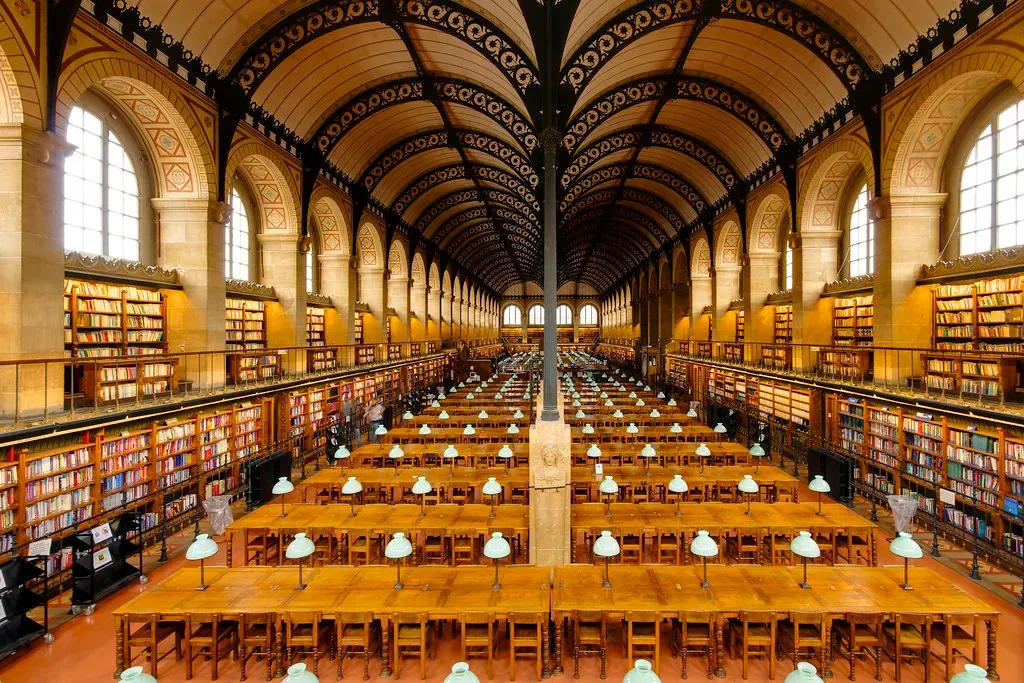
Another Beaux-Arts stunner, the Sainte-Geneviève library is located at 10 place du Panthéon, across the square from the Panthéon, and it’s every bit a “must-see’ Paris landmark as its famous neighbour. SGB was designed by Henri Labrouste, a graduate of the École des Beaux-Arts, and combines neo-Grecian flourishes with 19th-century engineering.
Its exposed iron frame is said to be the first of its kind, with SGB the first building in Paris to use mass-produced iron beams (a technology developed and popularised by the expansion of railways across Europe). The reading room is absolutely breathtaking, with those intricate cast-iron arches soaring overhead like industrial lace. These cast-iron arches are intricately decorated, and the ceiling features fireproof ‘vaults’ formed from latticework clad in plaster. It’s where nineteenth-century innovation meets classical elegance in the most beautiful way possible.
Tianjin Binhai Library, China
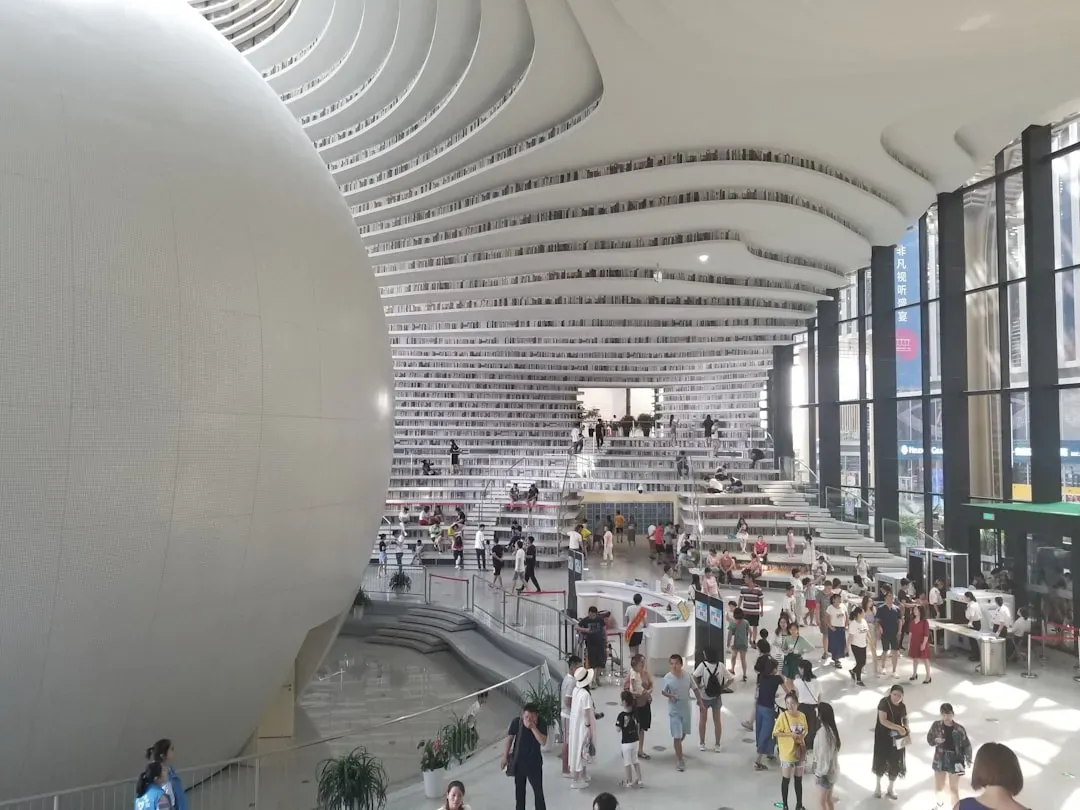
Dutch firm MVRDV took plenty or artistic liberty with the new library in Tianjin, opened in 2017, including an iris-looking sphere serving as the focal point of the center of the auditorium, which can also be seen from the outside, helping build on “the eye” nickname. This futuristic space looks like something straight out of a science fiction film, and honestly, photos don’t do it justice.
The five-story library has plenty more modern flair with all-white designs and terraced shelving. The undulating shelves create this wave-like effect that flows throughout the space, almost like someone sculpted knowledge itself into architectural form. The central sphere acts as an eye gazing out at visitors, creating one of the most distinctive and memorable library interiors you’ll ever encounter. Here’s the thing: modern doesn’t always mean cold, and this library proves it.
Seattle Public Library, Washington, USA
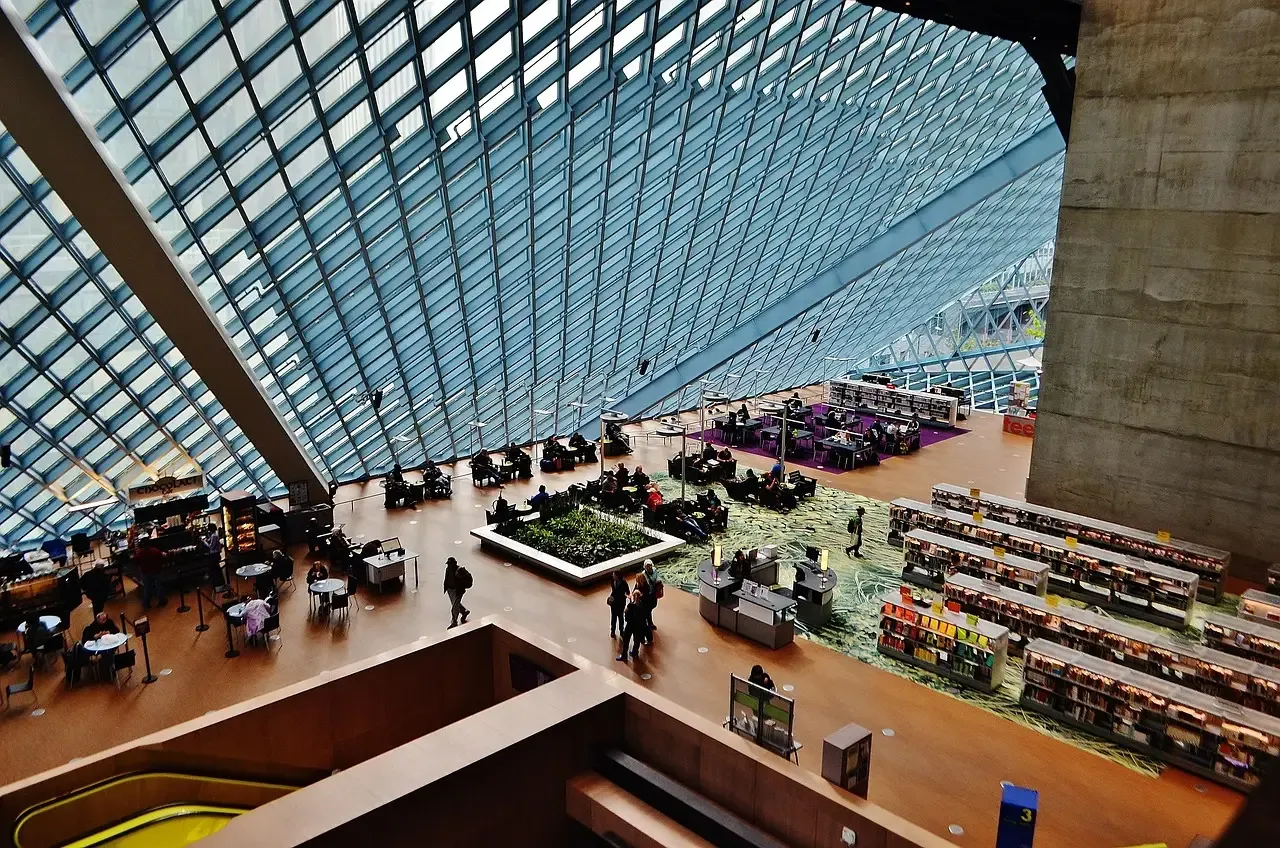
Rem Koolhaas gave Seattle a striking new architectural creation when the Seattle Public Library opened in 2004. The 11-story glass and steel building, located on a hill that allows for entry on multiple floors, juts into the Seattle skyline in a unique fashion. The unconventional diamond-shaped exterior makes this building impossible to miss, like a giant glass prism that’s been tilted at a daring angle.
The 10th-floor reading room includes views of Elliott Bay and downtown Seattle while the façade offers a transparent look both in and out of the downtown structure. Possibly the most innovative feature of the library is the Book Spiral, a winding bookshelf at the center of the building connected by ramps. The bright yellow escalators add pops of color throughout, and the whole place feels more like an exploration of what a library could be rather than what it traditionally has been.
Klementinum National Library, Prague, Czech Republic
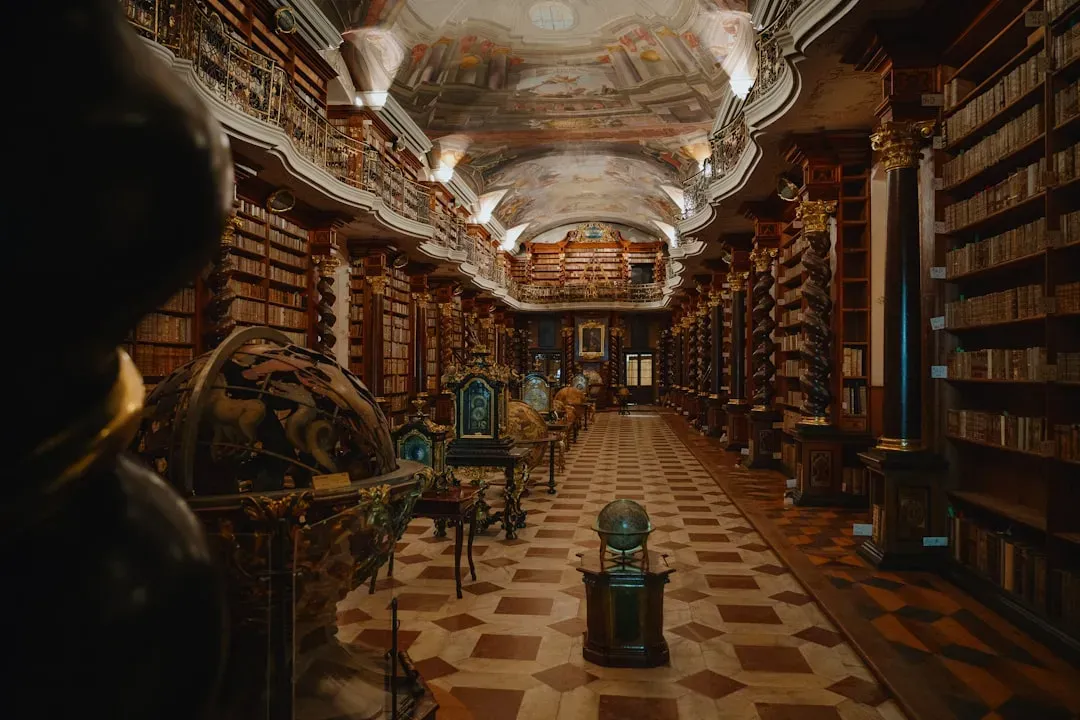
Located in the center of Prague, the Klementinum is home to the Czech Republic’s national public library. Its headquarters, within a vast building complex on Old Town Square, includes the historic Baroque Library, a hall so called for its curvaceous architecture and fantastical decor that has gone untouched since it was first built in 1722.
Perhaps its most striking feature is a series of 18th-century ceiling frescoes by Czech artist Jan Hiebel, depicting the disciplines of art and science, along with a collection of massive globes running through the center. The ornate decorations and perfectly preserved interior transport you straight into the eighteenth century. Honestly, this is probably the most romantic library in Prague, which is saying something considering how enchanting that entire city is.
Strahov Monastery Library, Prague, Czech Republic
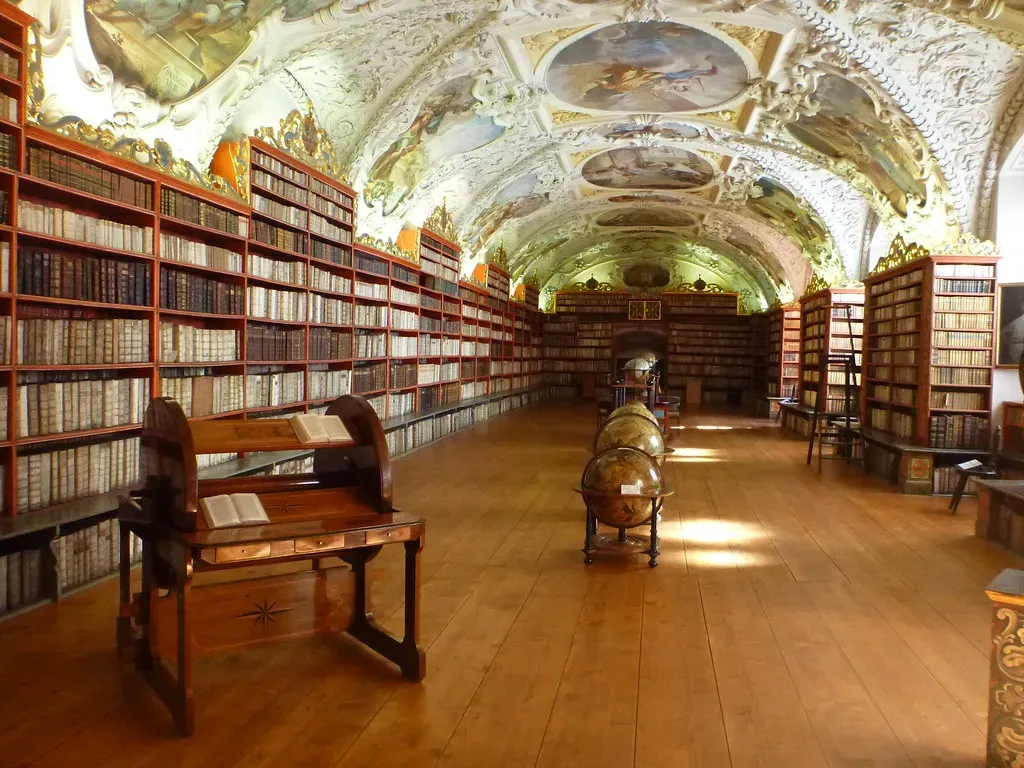
If you’re visiting Prague, the Strahov Library has to be on your to-do list. It’s considered to be one of the most valuable and best preserved historical libraries with 200,000 volumes. This monastery library actually consists of two distinct halls, each with its own unique character and style that reflects different periods of Baroque and Classicist architecture.
Decorated with intricate ceiling frescoes, it is made up of two historical halls – the Baroque Theological Hall from 1674, and the main Classicist vaulted Philosophical Hall from 1794. The frescoes are absolutely mesmerizing, covering every inch of the ceiling with elaborate artwork. However, it’s worth noting that the standard ticket grants you access to view the library, but not to enter. Still, even viewing from the doorway is worth the visit.
Wiblingen Abbey Library, Germany
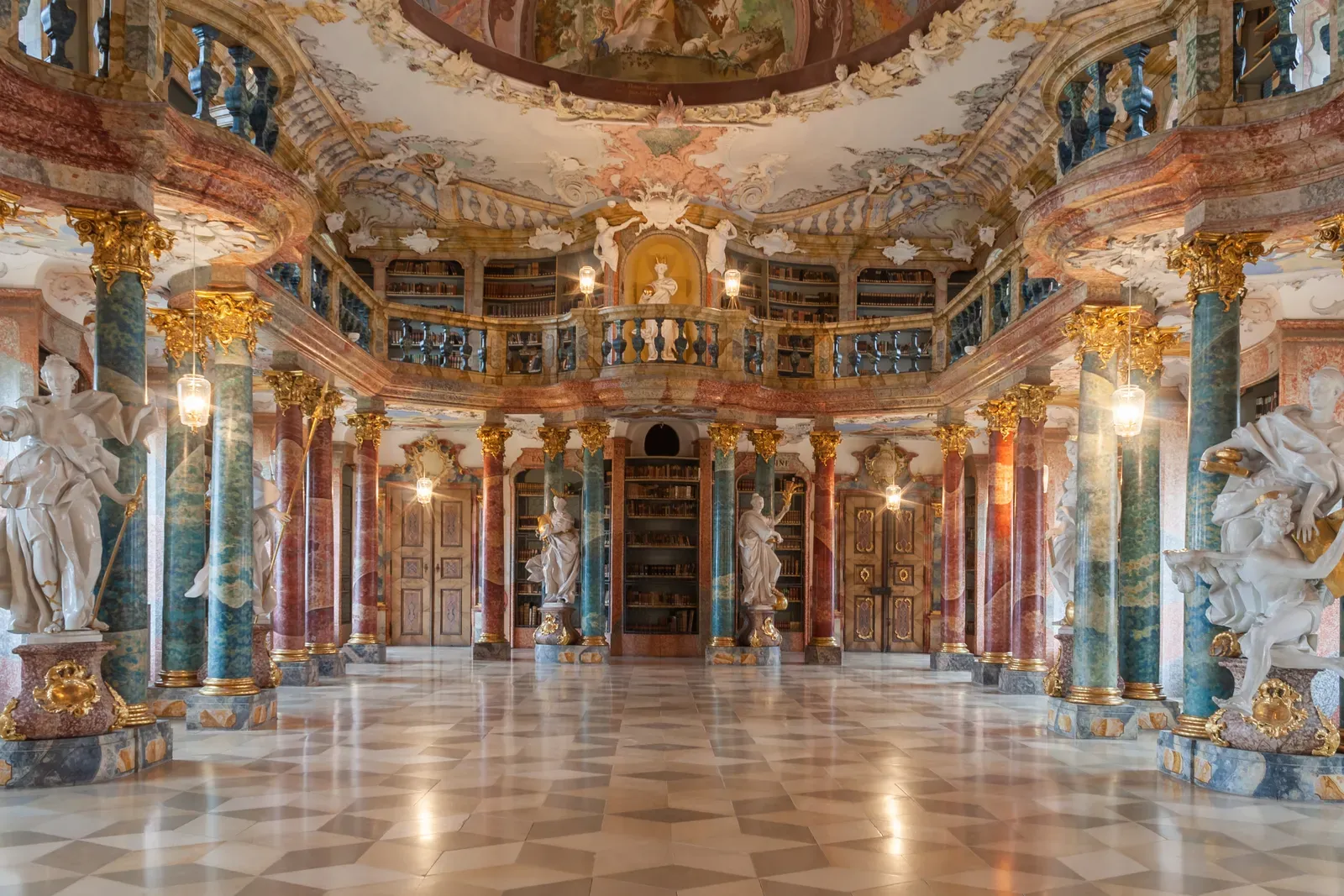
Over 15,000 rare books can be found at the Wiblingen Abbey Library, located in the former Benedictine abbey near Ulm, Germany. It is “considered to be one of the finest examples of Rococo architecture”, with the winding gallery supported by multiple colourful marble columns, and ceiling frescoes painted by Januarius Zick.
If any architecture buffs out there were wondering what late Baroque and Rococo styles would look like in combination, take a visit to Wiblingen Abbey Library. The interior of the library is alive with vibrant color, incorporating red and blue marble in columns, balconies, balustrades, and banisters. Decked out in gilding and ornate design in exquisite rococo style, it’s honestly heartrendingly gorgeous. The rich colors and elaborate details make this one of Germany’s most spectacular hidden gems.
Real Gabinete Português de Leitura, Rio de Janeiro, Brazil
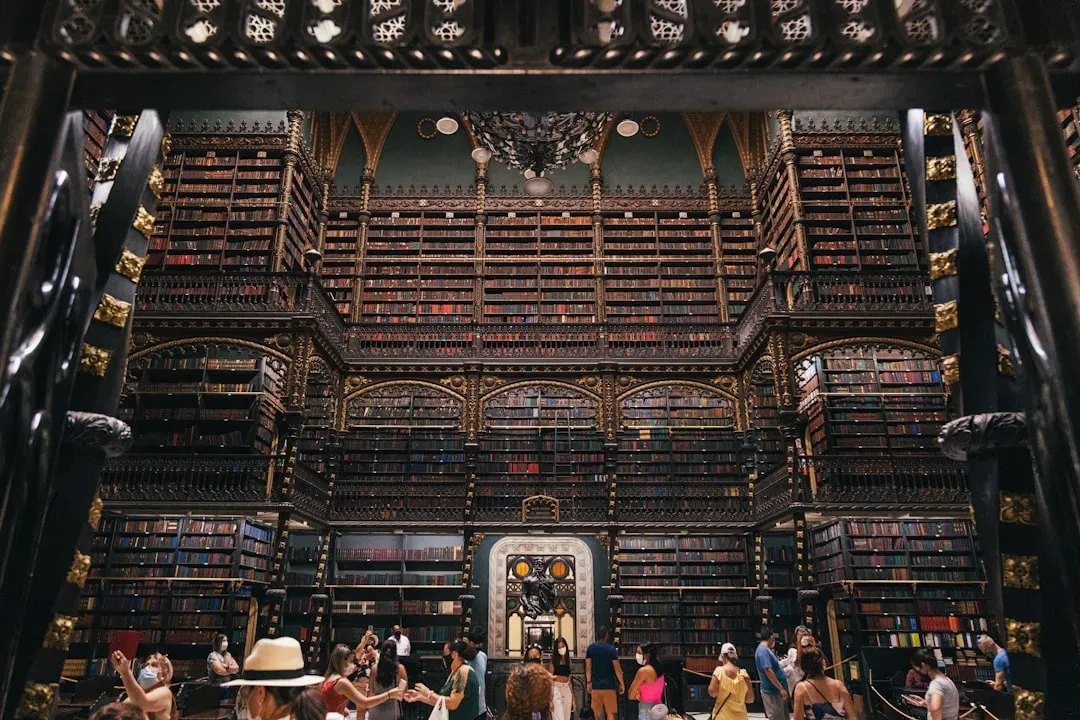
Set in Rio de Janeiro, this stunning Neo-Manueline library holds over 350,000 volumes, including rare first editions and the largest collection of Portuguese literature outside Portugal. Its design was inspired by Portugal’s 16th-century Jerónimos Monastery, and it features statues of key Portuguese explorers and literary figures. Inside, you can find carved oak galleries, a grand chandelier, and some of the most ornate moldings you’ll ever see in your life, marking the space with a sense of majesty.
The interior feels almost cathedral-like, with soaring ceilings and stained glass windows that bathe everything in colored light. This library represents a beautiful bridge between Portuguese cultural heritage and Brazilian identity. It’s a reminder that libraries can be powerful symbols of cultural connection and historical pride.
State Library of South Australia (Mortlock Chamber), Adelaide
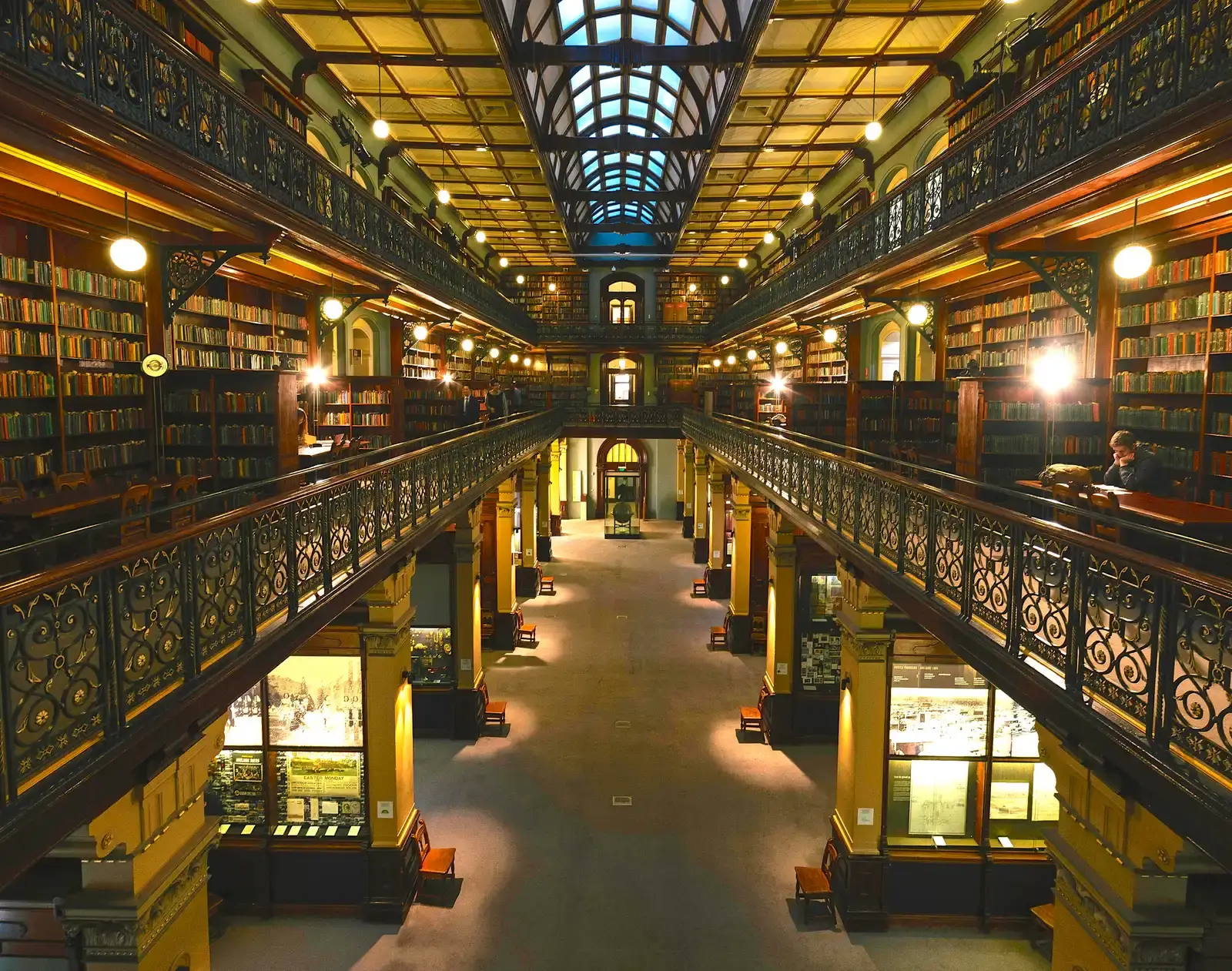
If you ever want to know what it’s like to have your jaw drop to the floor, take a stroll through the State Library of South Australia – particularly the famous Mortlock Chamber. Though the library as a whole was established in 1836, this particular chamber came a bit later, opening in 1884. The Victorian-era design creates this sense of stepping back into a more elegant time.
It has a gorgeous Victorian design with a long, barrel-vaulted skylight that lends an almost transcendent elegance to this literary space. The natural light streaming through that skylight creates an atmosphere that’s both dramatic and peaceful. The multiple levels of iron balconies surrounding the space add to the visual drama, making this chamber one of Australia’s most photographed library interiors.
Oodi Central Library, Helsinki, Finland
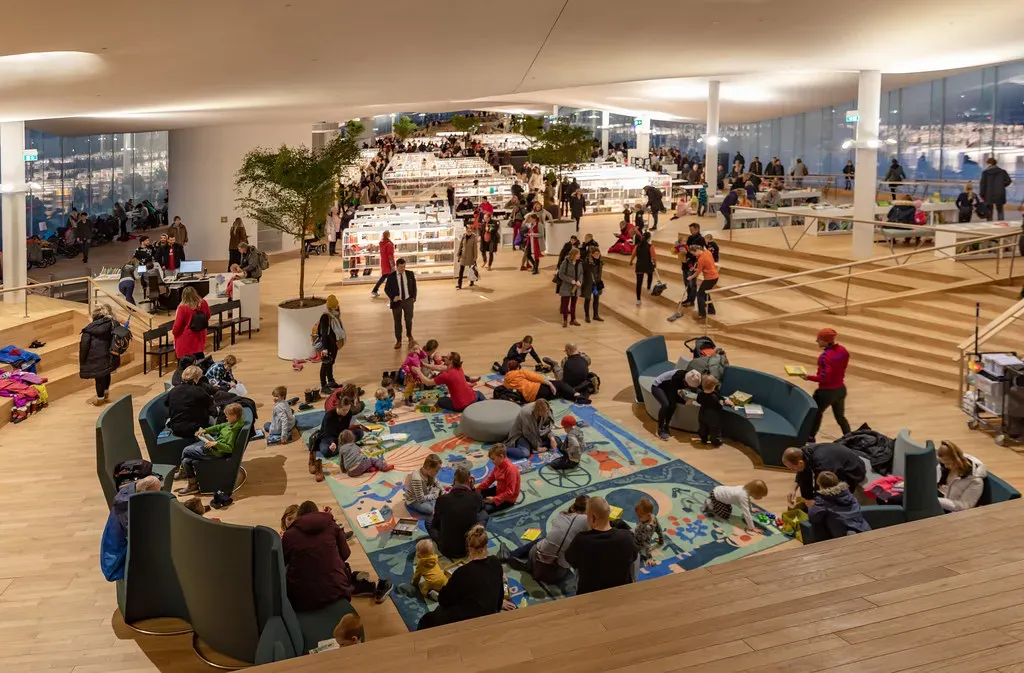
ALA Architects designed Helsinki’s strikingly modern Oodi public library, conceived as a ‘living room’ for the Finnish capital. Interiors are ultra-minimalist, with white walls, lofty ceilings and huge expanses of glass along the building’s undulating facade. This place represents a completely fresh vision of what a twenty-first-century library can be.
Interestingly, only a third of the library is dedicated to books, with the remainder housing exhibitions, 3D printing workshops, a recording studio, a theatre, a maker and event space, a restaurant and cafe – and a looking point to enjoy views across the city. Opened in 2018, it was designed functionally and aesthetically as the perfect public space, which is why it was organised into three distinct and stylised floors. It’s less a traditional library and more a community hub for the digital age, proving that libraries continue to evolve with the times.
Conclusion
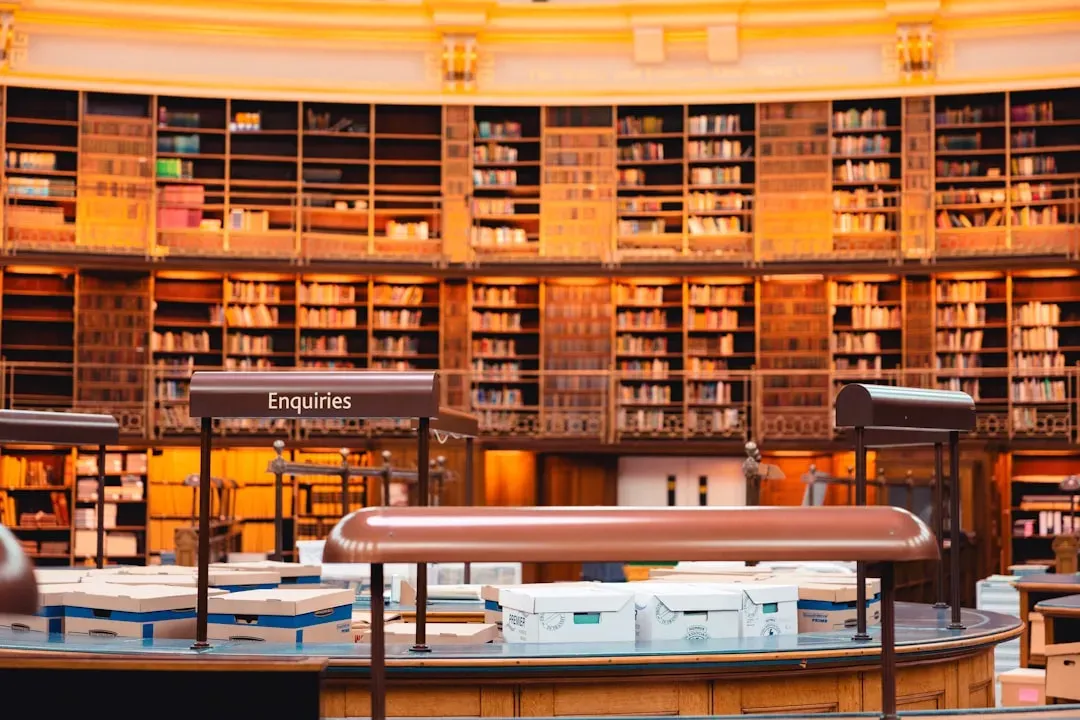
These fifteen libraries prove that humanity’s relationship with knowledge goes far beyond just storing information. They’re architectural love letters to learning, each one telling a story about the culture that created it and the values it holds dear. From the ancient monastic collections preserving medieval manuscripts to the futuristic community hubs embracing digital technology, libraries continue to adapt while maintaining their essential purpose.
What strikes me most about these spaces is how they make you feel small and inspired at the same time. Standing in Trinity College’s Long Room or beneath the frescoed ceilings of Admont Abbey, you can’t help but think about all the minds that have wandered through these halls before you, seeking answers to questions both timeless and immediate. Whether you’re a dedicated bibliophile or just someone who appreciates stunning architecture, these libraries offer experiences that transcend their function. So which one would you visit first? Have you been lucky enough to step inside any of these incredible spaces? The world is full of beautiful places to read, but these fifteen stand in a category all their own.
