


Deep in the lush rainforests of South America slithers one of nature’s most impressive giants—a snake so massive that it can outweigh your kitchen refrigerator. The green anaconda (Eunectes murinus) holds the title of the world’s heaviest snake, with exceptional specimens tipping the scales at over 500 pounds. These remarkable reptiles represent the pinnacle of snake evolution, combining immense size with powerful muscles and hunting prowess that has remained unchanged for millions of years. This article explores the fascinating world of the green anaconda and other contenders for the title of the world’s heaviest snake, examining their biology, habitat, behavior, and the challenges they face in our changing world.
The Green Anaconda: Heavyweight Champion of the Snake World

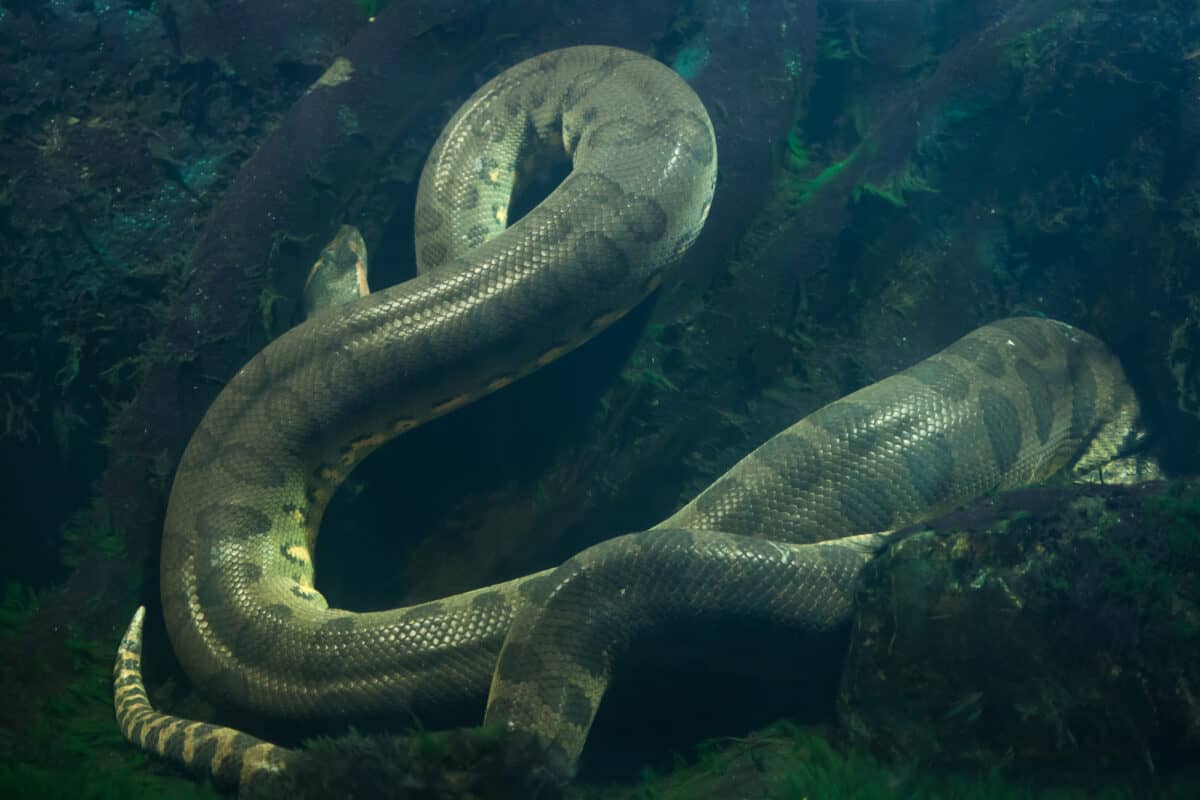
The green anaconda (Eunectes murinus) holds the undisputed title of the world’s heaviest snake. Native to the tropical regions of South America, particularly the Amazon and Orinoco basins, these massive constrictors can reach truly staggering proportions. While the average adult female weighs between 200-300 pounds (91-136 kg), exceptional specimens have been documented weighing over 500 pounds (227 kg)—indeed heavier than many standard refrigerators, which typically weigh between 250-400 pounds. To put this in perspective, that’s approximately the weight of three average adult human males combined into one serpent. The green anaconda’s immense weight is distributed across a body that can stretch 20-30 feet in length, with a girth as thick as a man’s waist at its widest point.
Sexual Dimorphism: Why Female Anacondas Break Records

One of the most fascinating aspects of green anacondas is the extreme sexual dimorphism displayed between males and females. Female anacondas grow significantly larger than their male counterparts—often reaching sizes 4-5 times heavier. While males typically weigh between 60-100 pounds (27-45 kg), it’s the females that achieve the jaw-dropping weights that make headlines.
This size difference serves an evolutionary purpose related to reproduction. Larger female bodies can produce more offspring and accommodate larger litter sizes, sometimes giving birth to 20-40 live young in a single birthing event. Additionally, during mating season, multiple males may wrap themselves around a single female in what’s called a “breeding ball,” where the larger female size provides a reproductive advantage in these complex mating aggregations.
Measuring Giants: The Challenges of Weighing Wild Anacondas

Accurately weighing and measuring giant anacondas presents significant scientific challenges that have contributed to some exaggeration and mythology around their maximum size. Unlike zoo specimens, wild anacondas cannot simply be placed on a scale. Researchers must employ creative methods such as using multiple handlers to stretch the snake across calibrated mats or utilizing specialized slings and industrial scales in the field.
These logistical difficulties are compounded by the remote habitats these snakes occupy and their primarily aquatic lifestyle. Most record-breaking measurements come from snakes that were already dead or captured, raising questions about the true maximum size these reptiles can reach. Some scientists believe that even larger specimens may exist in remote, unexplored regions of the Amazon basin, potentially weighing even more than currently documented records.
The Reticulated Python: A Close Second
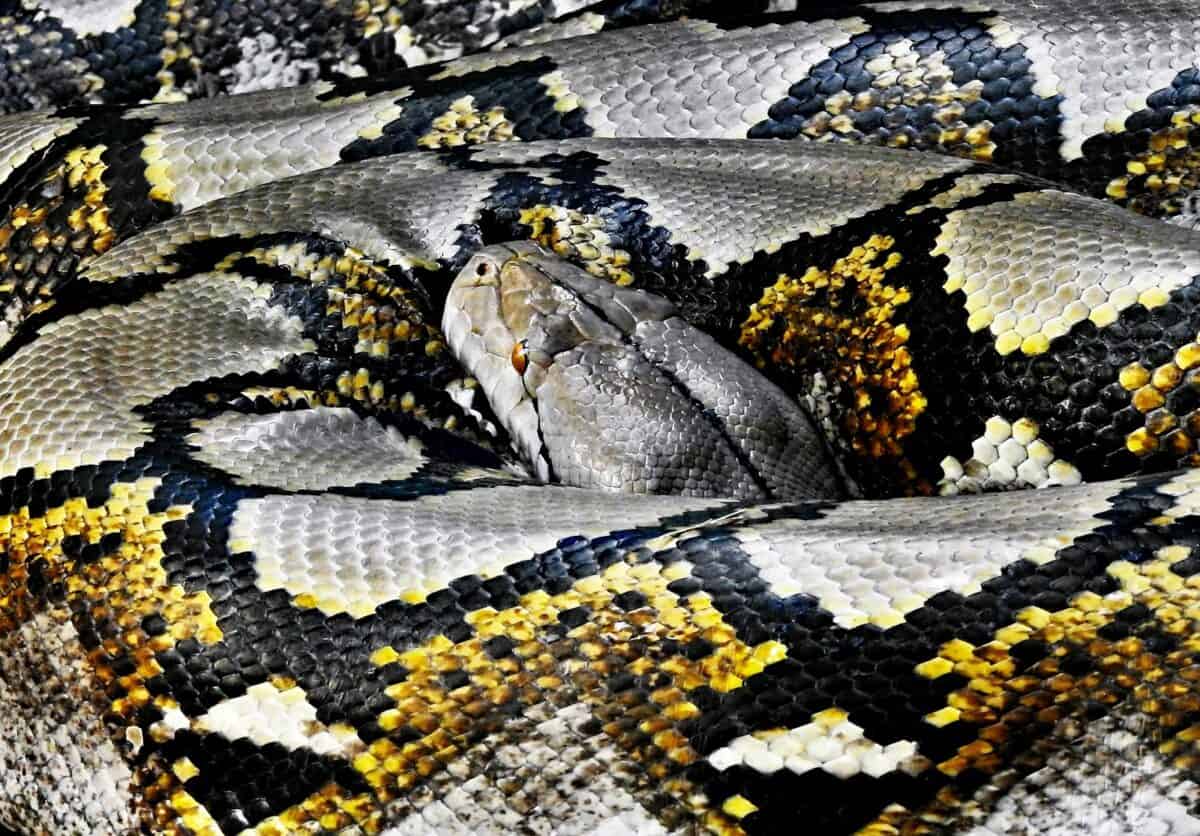
While the green anaconda claims the title for heaviest snake, the reticulated python (Python reticulatus) competes closely for the crown of the world’s longest snake. Native to Southeast Asia, these pythons regularly reach lengths of 15-20 feet (4.5-6 meters), with exceptional specimens growing beyond 25 feet (7.6 meters). Though typically lighter than anacondas, large reticulated pythons can still weigh between 200-250 pounds (91-113 kg).
The most famous documented specimen was a captive female named “Medusa,” certified by Guinness World Records in 2011 as 25 feet, 2 inches long and weighing approximately 350 pounds. Unlike anacondas, reticulated pythons are primarily terrestrial and arboreal rather than aquatic, with slimmer bodies relative to their length. This different body structure accounts for their lighter weight despite potentially exceeding anacondas in length.
Evolutionary Adaptations for Massive Size

The extraordinary size of anacondas and other giant snakes represents millions of years of evolutionary adaptations. Their skeletal structure features hundreds of vertebrae and ribs connected by highly flexible joints and muscles, allowing them to maintain mobility despite their enormous bulk. Their metabolism is remarkably efficient, enabling them to convert a very high percentage of consumed food into body mass while expending minimal energy.
Large anacondas can slow their metabolic rate dramatically between meals, sometimes going months without feeding after consuming a large prey item. Their digestive system produces extremely potent acids and enzymes capable of breaking down entire animals, including bones, hooves, and hair. Even their internal organs have evolved specialized adaptations—their hearts must generate enough pressure to pump blood through their immense bodies, and their lungs extend nearly the entire body length to provide sufficient oxygen.
Diet and Feeding Habits of the World’s Heaviest Snake

The green anaconda’s massive size is sustained through a diet of correspondingly large prey. These apex predators primarily hunt capybaras (the world’s largest rodents, weighing up to 150 pounds), caimans, deer, pigs, and occasionally jaguars. Their hunting strategy relies on ambush, typically striking from water where they spend most of their time partially submerged. After seizing prey with their powerful jaws lined with rear-facing teeth, anacondas rapidly wrap coils around the victim, constricting until the animal suffocates.
Unlike venomous snakes, anacondas kill through physical force, squeezing so tightly that the prey’s blood circulation stops, leading to rapid death. Perhaps most impressively, green anacondas can unhinge their jaws and stretch their bodies to consume prey whole that is several times wider than their head. After a substantial meal, these snakes may not need to feed again for weeks or even months, retreating to safe locations where they can digest undisturbed.
Habitat and Ecological Role

Green anacondas thrive in the flooded forests, swamps, and slow-moving waterways of the Amazon and Orinoco basins, perfectly adapted to a semi-aquatic lifestyle. Their eyes and nostrils are positioned on top of their heads, allowing them to remain almost completely submerged while still able to breathe and monitor their surroundings. This aquatic adaptation provides numerous advantages: water supports their massive weight, helps them regulate body temperature, aids in hunting, and offers protection from predators.
As apex predators, anacondas play a crucial ecological role in controlling populations of medium to large mammals and reptiles. They help maintain the delicate balance of these tropical ecosystems by preventing overpopulation of certain species. Additionally, juvenile anacondas serve as prey for other predators like caimans, large birds, and wild cats, integrating these massive snakes into the complex food web of South American rainforests.
Reproduction and Lifespan

Green anacondas employ a reproductive strategy known as viviparity, giving birth to live young rather than laying eggs like many other snake species. After a gestation period of approximately 6-7 months, female anacondas deliver 20-40 live babies, each measuring around 2 feet long and weighing about half a pound. This reproductive method provides greater protection for developing offspring in the anaconda’s aquatic environment where eggs might be vulnerable to flooding or predation.
The mating process itself is remarkable, featuring “breeding balls” where multiple males (sometimes up to a dozen) compete to mate with a single female, creating writhing masses that can sometimes be spotted floating in waterways. In terms of lifespan, these massive serpents typically live 10-15 years in the wild, though captive specimens with proper care have reached 30 years of age. Their growth is rapid in early years but slows considerably as they approach maximum size.
Record-Breaking Specimens Throughout History

Throughout history, accounts of truly gigantic snakes have captivated human imagination, though many historic claims require skeptical examination. Perhaps the most famous documented giant was a 227-pound, 17-foot female anaconda caught by National Geographic researcher Dr. Jesus Rivas in Venezuela in the 1990s. Other notable specimens include a 19-foot anaconda weighing approximately 215 pounds captured in Brazil in 2016, and a 26-foot reticulated python discovered at a construction site in Malaysia in 2016, though its weight was not accurately recorded.
Historical accounts from the early 20th century include reports of a 37-foot anaconda shot in Brazil in 1944, though this claim lacks photographic evidence and scientific verification. The distinction between verified records and folklore becomes important when discussing these giants, as exaggeration and misidentification have frequently occurred. Scientists generally agree that while 30+ foot anacondas weighing over 500 pounds are theoretically possible, conclusive documentation of such specimens remains elusive.
Anacondas in Culture and Mythology
Giant snakes have featured prominently in the mythology and folklore of indigenous Amazonian peoples for thousands of years. Many tribes regard the anaconda as a sacred creature associated with water spirits and creation myths. The Yanomami people of Venezuela and Brazil tell stories of giant anacondas that created the rivers by carving paths through the earth. In modern popular culture, anacondas have often been portrayed as monstrous threats in films like “Anaconda” (1997) and its sequels, typically exaggerating their size and aggressive tendencies for dramatic effect.
These representations have contributed to widespread misconceptions about these snakes being human hunters, when in reality, unprovoked attacks on humans are extremely rare. Despite their intimidating size, green anacondas typically avoid human contact and aren’t known to view humans as prey. This disconnect between cultural portrayal and biological reality highlights how these impressive animals have captured human imagination while simultaneously being misunderstood.
Conservation Status and Threats
While not currently listed as endangered, green anacondas face increasing threats that could jeopardize their future. Habitat destruction represents their greatest challenge, as rainforests and wetlands throughout South America continue to be cleared for agriculture, mining, and urban development. This habitat fragmentation isolates populations and disrupts breeding patterns. Additionally, anacondas are hunted for their skins, which are used in the exotic leather trade, and for their fat, which is used in traditional medicines in some regions.
Climate change poses another serious threat, as rising temperatures and altered rainfall patterns affect the wetland ecosystems these water-dependent snakes rely upon. Invasive species introduced to anaconda habitats, including feral pigs and non-native caimans, can compete for resources or prey upon young snakes. Conservation efforts focus on habitat protection, regulation of international trade through CITES (Convention on International Trade in Endangered Species), and educational programs to reduce human-snake conflicts in regions where they coexist.
Studying Giants: Scientific Research on Massive Snakes

Scientific research on giant snakes like anacondas presents unique challenges that have limited our understanding of these remarkable creatures. Field studies often require teams of researchers working in remote, difficult terrain, navigating dense jungles and treacherous swamps. Radio telemetry has revolutionized tracking efforts, with researchers surgically implanting transmitters to monitor movements, habitat use, and behavior patterns. DNA analysis is helping scientists better understand genetic diversity among anaconda populations and identify distinct evolutionary lineages.
Thermal imaging technology has proven valuable for locating these otherwise well-camouflaged reptiles, especially at night when they’re most active. Dr. Jesus Rivas, often called “The Anaconda Man,” has conducted some of the most comprehensive research on wild anacondas, studying their breeding behaviors and population dynamics in Venezuela since the 1990s. Current research focuses on how these apex predators respond to environmental changes, their role in ecosystem health, and developing more effective conservation strategies to ensure their survival in increasingly threatened habitats.
Conclusion: The Enduring Fascination with Nature’s Giants

The green anaconda represents one of nature’s most impressive evolutionary achievements—a perfectly adapted predator that has remained largely unchanged for millions of years. Their extraordinary size, with weights exceeding standard refrigerators, showcases the remarkable diversity of life on our planet and the specialized adaptations that allow species to thrive in specific ecological niches. As we continue to learn more about these magnificent creatures, our understanding deepens of both their biological importance and the critical need to preserve their habitats.
The world’s heaviest snakes serve as ambassadors for the biodiversity of tropical ecosystems, reminding us of nature’s capacity to produce organisms of awe-inspiring proportions. By protecting anacondas and their environments, we not only ensure the survival of these remarkable reptiles but also help maintain the complex ecological relationships that sustain countless other species in one of Earth’s most biodiverse regions.

From exploring the marine wonders in the Azores and witnessing the vast savannas of Kenya, to delving deep into the rich biodiversity of South Africa and traversing iconic landscapes in Australia and the US like Yellowstone, Chris's experiences are vast.
With a penchant for diving alongside sharks, the ocean holds a special place in his heart.
Through his academic insights, he champions wildlife conservation, striving with 'Animals Around The Globe' to cultivate a profound connection between humans and animals, enhancing our mutual appreciation.
Connect with him at Feedback@animalsaroundtheglobe.com.
- The Largest Clam Ever Dredged Up From U.S. Waters - July 22, 2026
- How Animated Films Shape What Kids Believe About Animals - July 22, 2026
- The Most Iconic Animals Saved from Extinction in the U.S. - July 22, 2026