
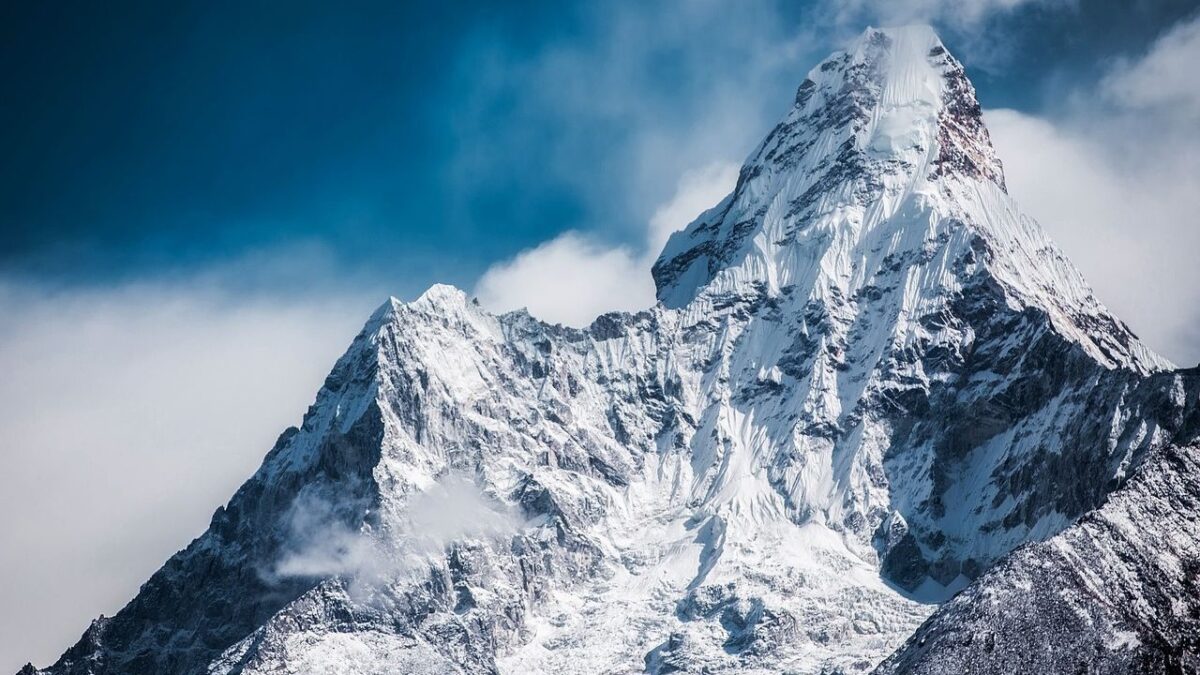
Standing at 8,848 meters above sea level, the summit of Mount Everest is about as far from the ocean floor as a place on Earth can get. The air is barely breathable, the cold is brutal, and the view stretches across a horizon of cloud and glacial ice. Nothing about it suggests the sea. Yet the rocks beneath a climber’s boots tell an entirely different story.
Embedded in the limestone near the very top of the world are the fossilized shells of ancient marine creatures. Trilobites, brachiopods, sea lilies. Organisms that lived in warm, shallow tropical waters hundreds of millions of years ago. It sounds impossible, but the geology is unambiguous. The summit of Everest was, without any reasonable scientific doubt, once beneath the ocean.
The Fossil Record Locked Into the Summit Rocks
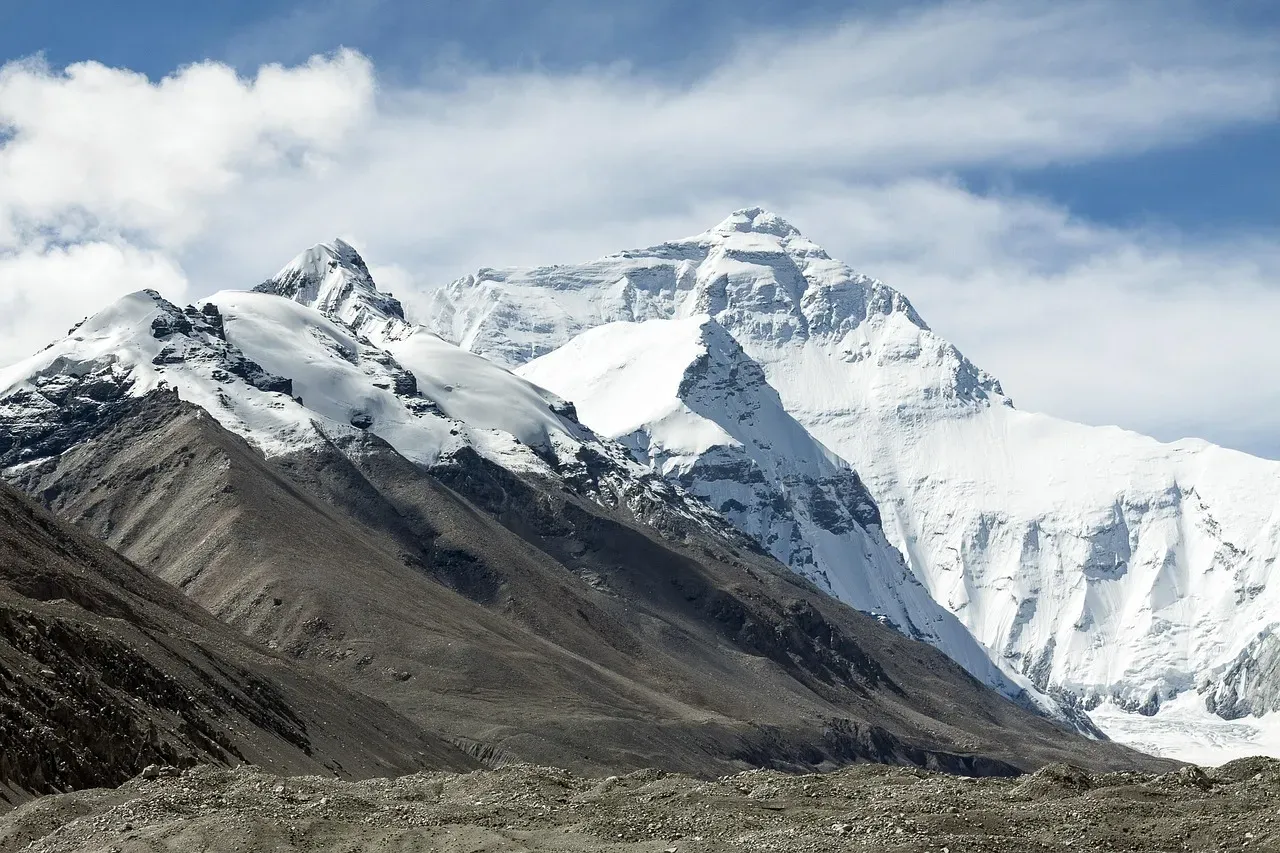
The highest rocks on Earth, marking the summit of Mount Everest, are Ordovician limestones, deposited in a warm, shallow-water sea some 450 million years ago. That alone is a remarkable fact to absorb. The very top of the world’s tallest mountain is made of ancient seafloor sediment.
These rocks still contain the fossils of marine animals such as brachiopods, conodonts, and crinoids that occupied tropical habitats during one of the most important intervals in Earth history, the Great Ordovician Biodiversification Event. This was a period of explosive growth in ocean life, and traces of it survive at nearly nine kilometers above sea level.
Called the Qomolangma Limestone by geologists, the summit rocks are well-bedded limestone with fragments of common Ordovician marine invertebrate shells, such as trilobites, brachiopods, ostracods, and crinoids. The name honors Everest’s Tibetan identity, but the scientific significance runs far deeper than naming.
The highest rocks that have been brought down were collected from just six meters below the summit, collected in 1997 by a Japanese climber, M. Sawada, and the analysis was later published by Harutaka Sakai and collaborators. Even those samples confirmed the unmistakable signs of ancient ocean life preserved within the stone.
The Ancient Tethys Sea: An Ocean That No Longer Exists
Eighty million years ago, India was approximately 6,400 kilometers south of the Eurasian plate, and separating the two was the Tethys Sea. This vast body of water, largely forgotten to history, is the direct predecessor of the rocks that now form the Himalayas.
From roughly 600 million years ago to 23 million years ago, this large body of water known as the Tethys Ocean or Tethys Sea was located east of the supercontinent Gondwana and south of Laurasia. It was, for vast stretches of geological time, one of the dominant ocean environments on Earth.
When the Indian land mass came close to Asia, it started to push up the land ahead of it, forming a large shallow ocean with rich ocean life. The bones and shells of the plants and animals in this shallow ocean formed limestone and left fossils. Those fossils are exactly what geologists find today at the roof of the world.
The Tethys Sea disappeared completely around 20 million years ago, and sediments rising from its seabed formed a mountain range. What had been a thriving tropical sea slowly ceased to exist, its floor compressed and pushed skyward into what we now call the Himalayas.
How Plate Tectonics Lifted an Ocean Floor Into the Sky
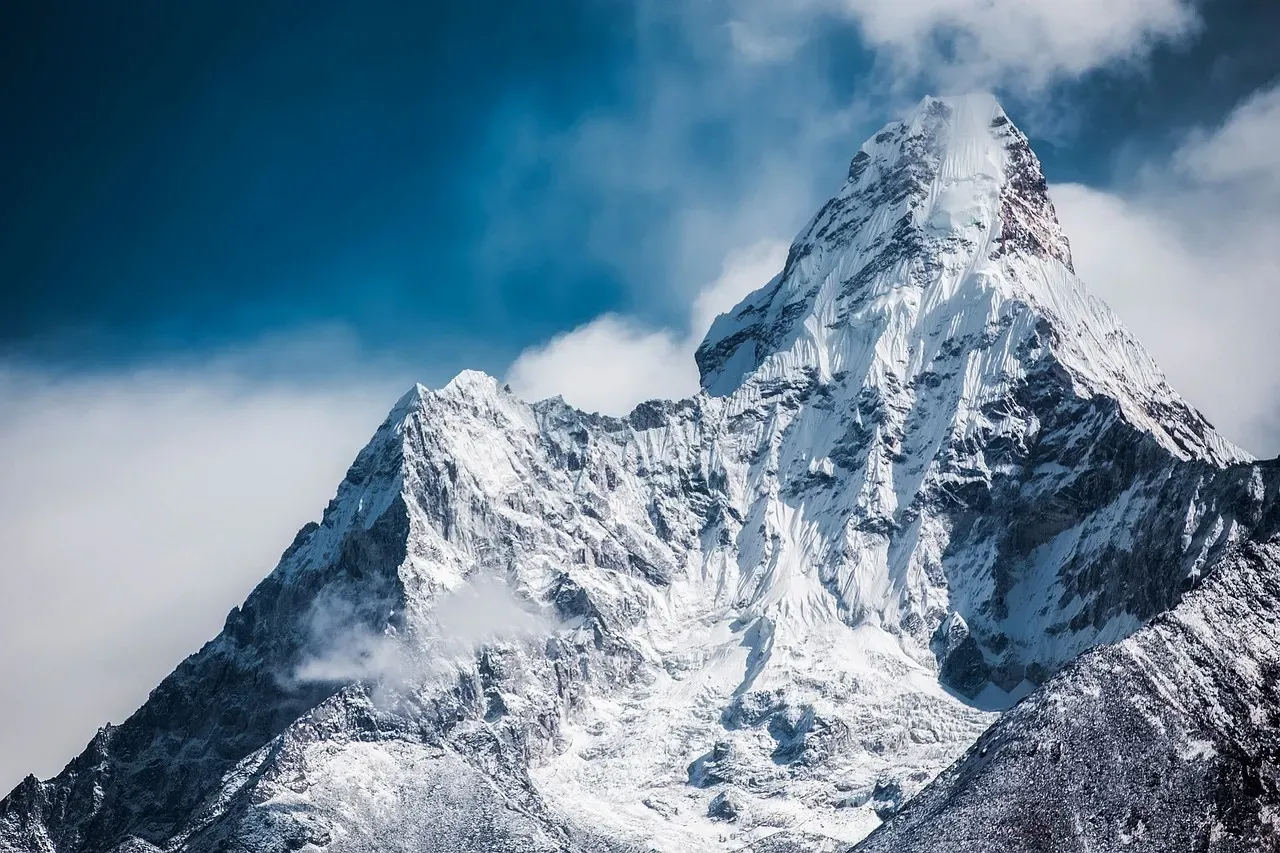
Rising at the border of Tibet and Nepal, Mount Everest formed from a tectonic collision between the Indian and Eurasian tectonic plates tens of millions of years ago. The forces involved were almost incomprehensibly large, operating on timescales that make human history look like a brief moment.
The story of the Himalaya begins some 200 million years ago, as the supercontinent of Pangea began to split into pieces. The Indian plate eventually broke free, trekking northward toward the landmass we now know as Asia, zipping along at surprisingly fast speeds, geologically speaking, shifting nearly 30 feet or more each century.
Unlike an oceanic plate, which is cold and dense, the Indian continental plate is thick and buoyant. As the continents compressed and India shoved its way under Asia, the surface buckled and the crust thickened to form what would eventually become the mighty Himalaya mountain range.
These rocks, deposited in an ancient Tethyan Ocean, were thrust and uplifted into their present commanding position when India collided with the Asian continent some 55 million years ago. The journey from seafloor to summit took tens of millions of years, but the rock preserved its biological record throughout.
The Layers of Everest: Reading the Mountain Like a Book
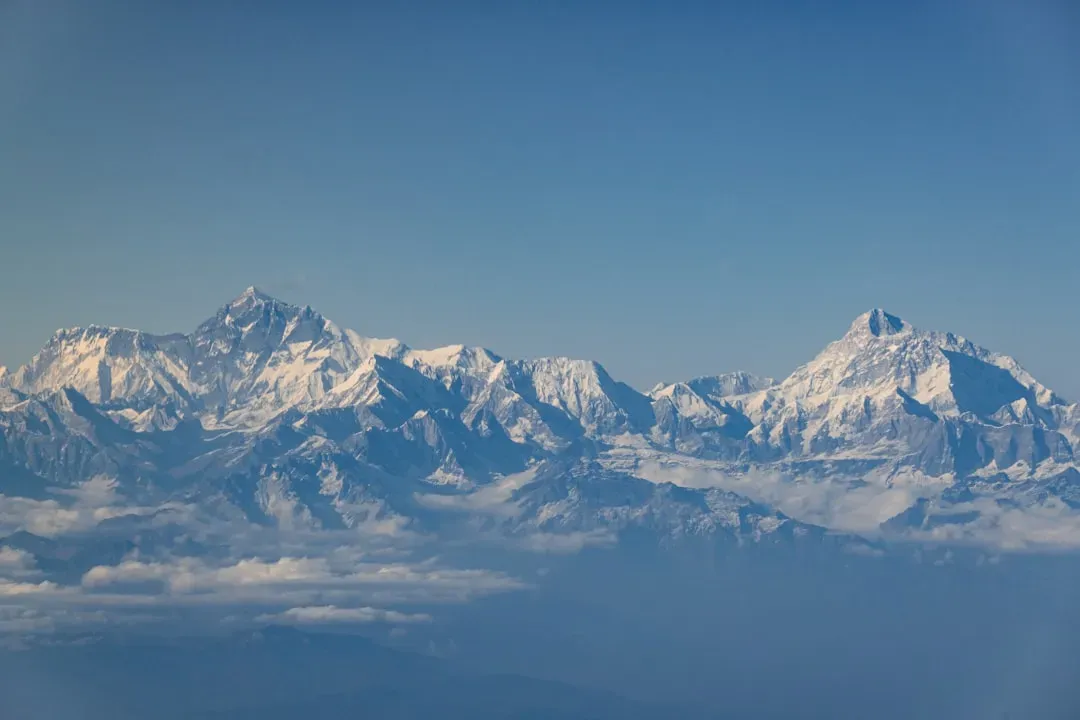
While the summit is composed of relatively low-grade metamorphosed sedimentary rocks, deeper parts of Everest reveal more complex geological features: the Qomolangma Formation at the summit contains Ordovician limestone and dolomite with marine fossils, the Yellow Band marks a transition zone of marble and metamorphosed limestone, and the Greater Himalayan Crystalline Complex below consists of high-grade metamorphic rocks formed at deeper crustal levels during intense tectonic compression.
Above the lower layers is the so-called Yellow Band, a region of layered bedding that is a limestone formed from a shallow marine sediment and later heated enough to become a marble. The heat and pressure transformed the rock, but could not erase its oceanic origins entirely.
The age and origin of Everest’s summit rocks are confirmed through radiometric dating, with zircon crystals within the rocks providing precise ages of roughly 485 to 443 million years ago, and through fossil biostratigraphy, where the marine fossils match those found in other Ordovician marine environments. Multiple independent lines of scientific evidence converge on the same conclusion.
The fossils formed in a shallow marine setting, likely no more than a few hundred meters deep, similar to modern coral reef environments. The Everest summit, in other words, once sat in waters not unlike those of a tropical reef today.
A Living Mountain: Everest Is Still Rising
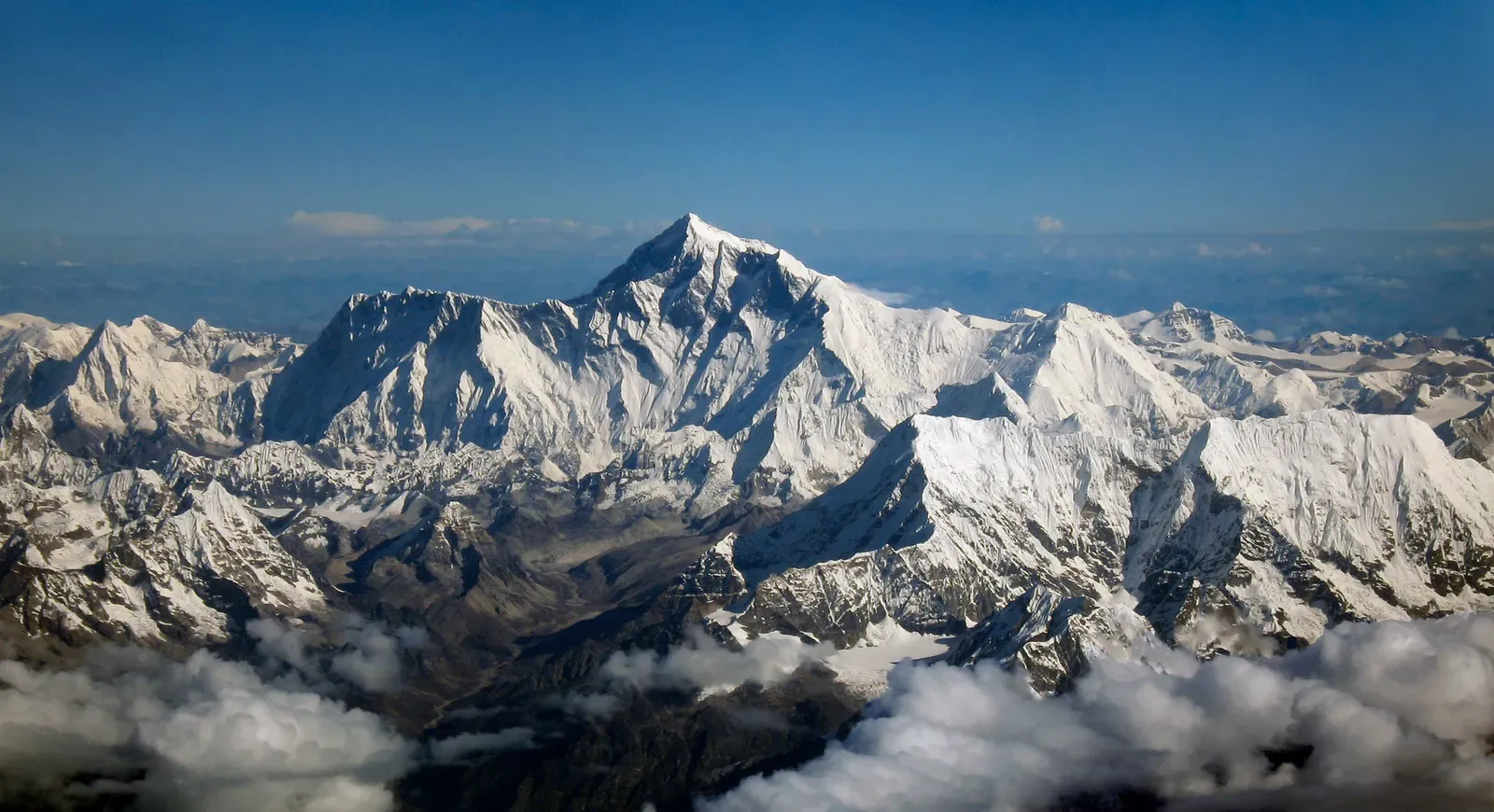
The Himalayas, including Everest, continue to rise at about five millimeters per year due to ongoing plate convergence. The geological event that began tens of millions of years ago has never actually stopped. The collision is still happening beneath our feet right now.
At the same time, as the rocks continue to rise toward the skies, erosion works against their upward progression. Wind and water scour away the surface, washing sediment into streams that race down the mountain’s flanks. Uplift and erosion are locked in a slow, permanent negotiation.
The presence of limestone and ocean marine fossils at the top of these mountains is one of the key pieces of evidence cited that advanced the idea of plate tectonics when it was first proposed as a theory in 1915. Everest did not just benefit from our understanding of plate tectonics. In a very real sense, it helped build that understanding.
While marine fossils have indeed been found around Mount Everest, scientists do not say they are proof the Earth was once flooded. Instead, they support the theory of plate tectonics, with the presence of ancient sedimentary rock and marine life as evidence that parts of the mountain were once seafloor. The distinction matters. This is not a story about water rising; it is a story about land rising.
Conclusion
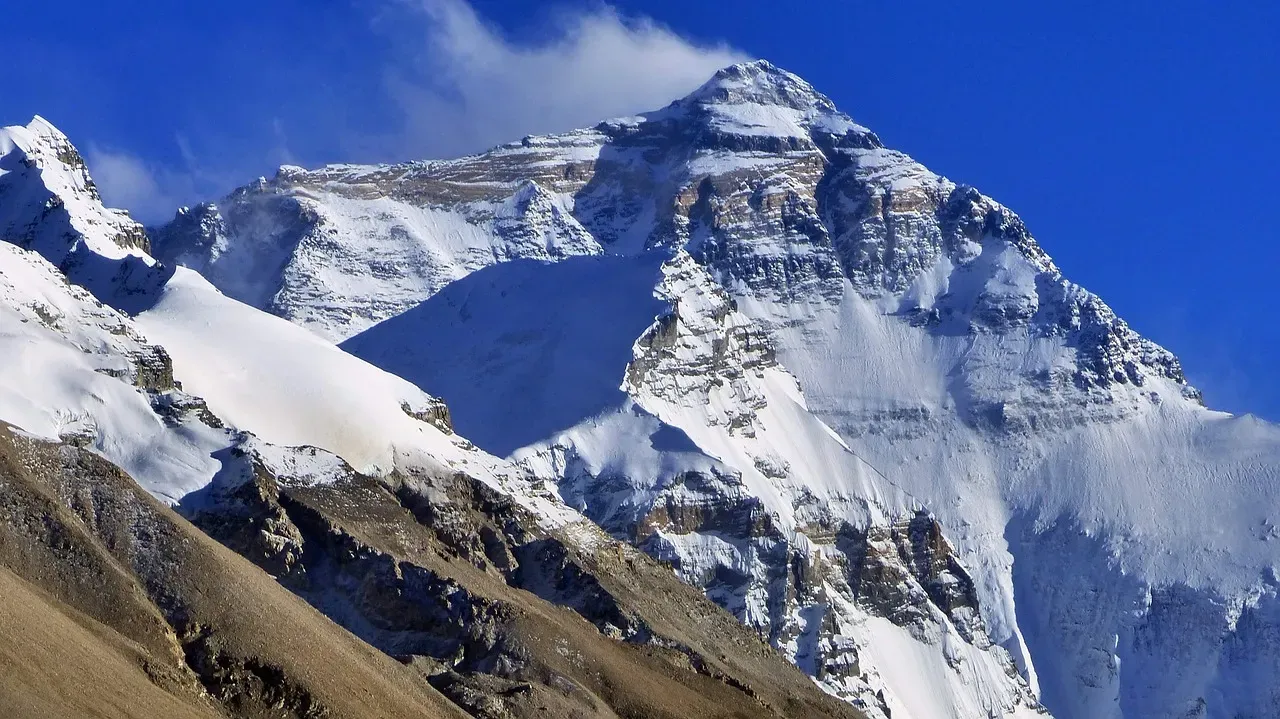
The answer to the question is simply yes. The summit of Mount Everest was once the floor of a shallow tropical sea, teeming with life, unremarkable by ocean standards. The fossils locked into the Qomolangma Limestone are not curiosities or coincidences. They are the original inhabitants of that seafloor, preserved across nearly half a billion years.
What makes this more than a geological footnote is what it reveals about the planet itself. Earth’s surface is not fixed. Oceans become mountain ranges. Seafloors become summits. The ground beneath us is in constant, if imperceptibly slow, motion. Everest just happens to be the most dramatic example of that truth.
There is something quietly profound about standing at the highest point on Earth and knowing that the rock under your boots once sat beneath warm ocean waves. The mountain keeps climbing. The fossils remain. And the story they tell is far older, and stranger, than the mountain itself.
