
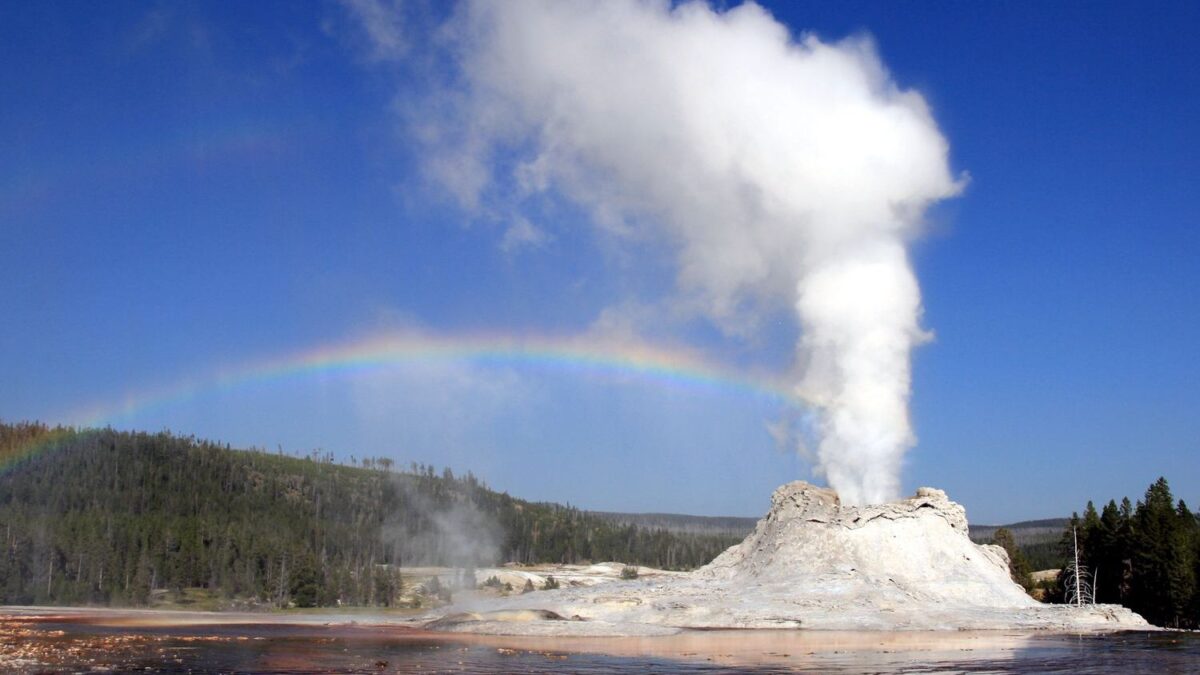
Most visitors to Yellowstone think of Old Faithful, bison wandering through meadows, and the deep blue of Grand Prismatic Spring. Few stop to consider that the ground beneath their feet is the remnant of one of the most violent geological forces on Earth. The park’s beauty is, in a very real sense, volcanic in origin.
The short answer to the question is yes. Not “once a volcano” in the way a cold, extinct mountain is a former volcano. Yellowstone sits above a system that geologists classify as an active supervolcano, one that still breathes, shifts, and moves to this day.
What Makes Yellowstone a Supervolcano?
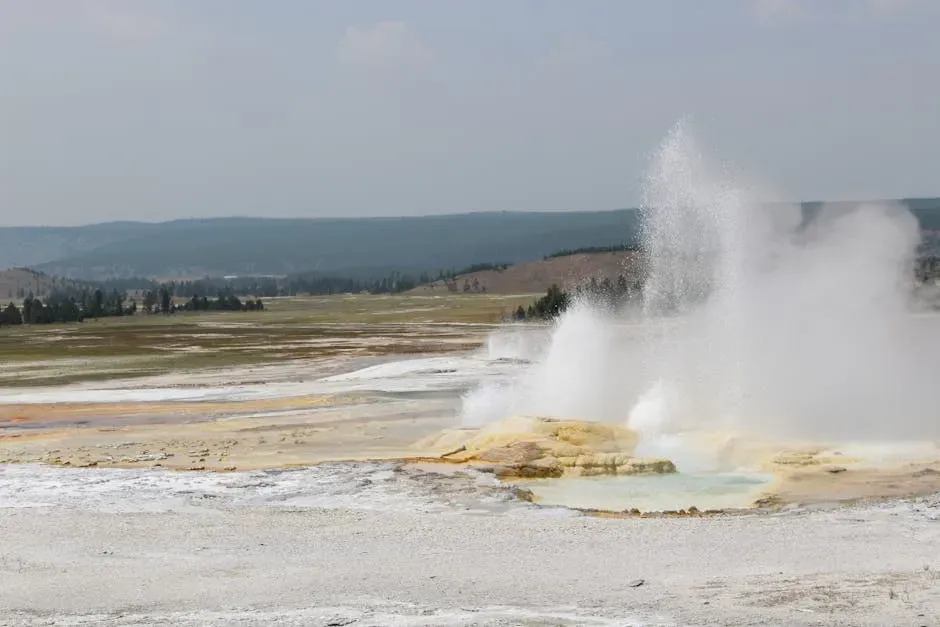
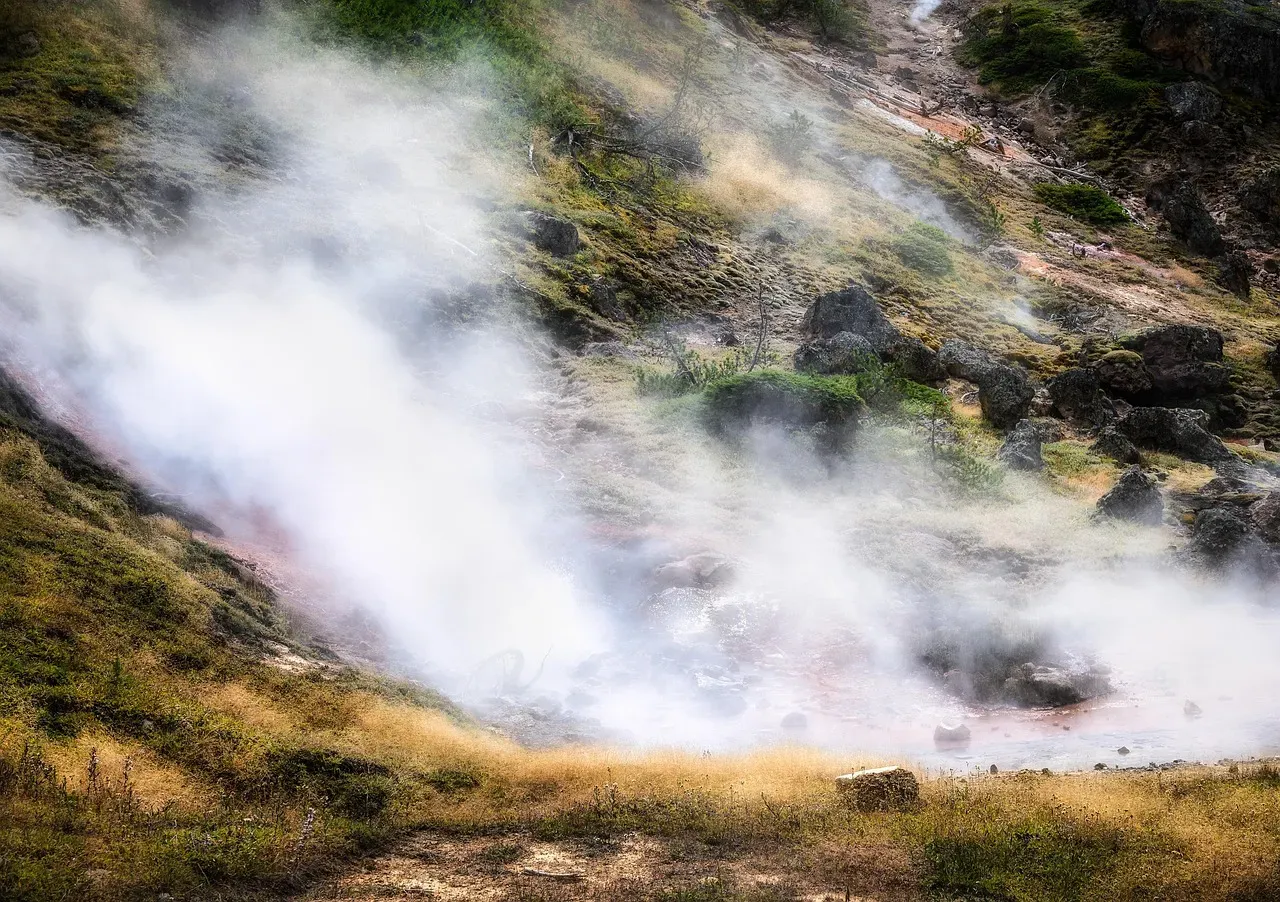
Yellowstone doesn’t just have a volcano. Yellowstone is a volcano. A plume of molten rock that rises beneath the park creates one of the world’s largest active volcanoes, and its presence is visible everywhere in the form of geysers, hot springs, mud pots, and other striking thermal features.
A supervolcano is defined as an eruption that rates a magnitude of 8 on the Volcanic Explosivity Index. That scale measures ejecta volume and plume height, and it represents a category of eruption so large it sits in a class almost beyond ordinary comprehension. Yellowstone has reached that threshold more than once.
There is a hot spot beneath Yellowstone. A hot spot is a persistent plume of hot material rising through Earth’s mantle. This deep heat source is ultimately responsible for everything extraordinary that happens at the surface, from the geysers to the ground deformation that scientists measure year after year.
The Yellowstone Caldera, also known as the Yellowstone Plateau Volcanic Field, is a Quaternary caldera complex and volcanic plateau spanning parts of Wyoming, Idaho, and Montana. It is driven by the Yellowstone hotspot and is largely within Yellowstone National Park.
Three Cataclysmic Eruptions That Shaped the Landscape
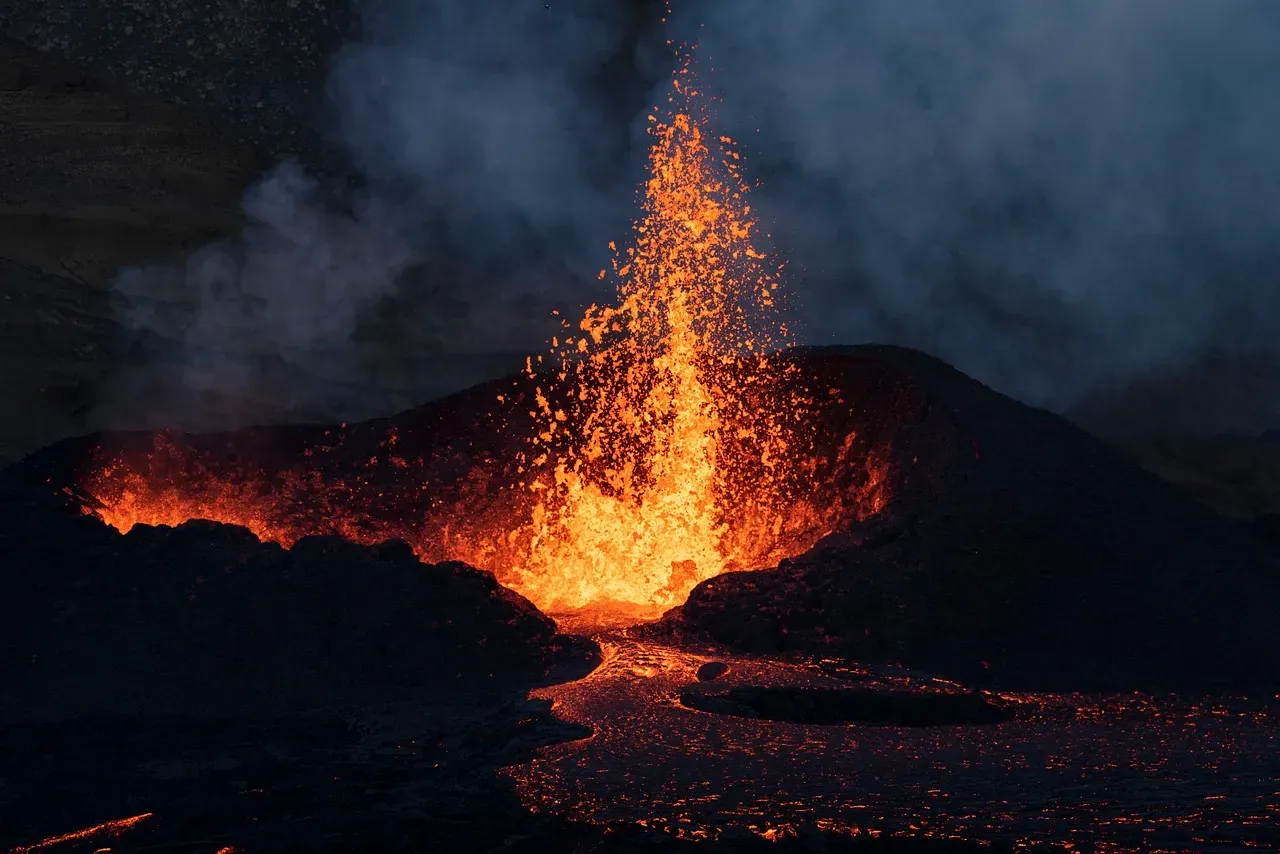
Molten rock rising from deep within the Earth produced three cataclysmic eruptions more powerful than any in the world’s recorded history. The first caldera-forming eruption occurred about 2.1 million years ago. Subsequent activity focused within the area of the National Park, and another huge eruption 631,000 years ago formed the Yellowstone caldera as we see it today.
The three caldera-forming eruptions were, respectively, about 6,000, 700, and 2,500 times larger than the May 18, 1980 eruption of Mount St. Helens in Washington State. Together, those three catastrophic eruptions expelled enough ash and lava to fill the Grand Canyon. That comparison alone gives a sense of the sheer scale involved.
Volcanism began 2.15 million years ago and proceeded through three major volcanic cycles. Each cycle involved a large ignimbrite eruption, pyroclastic flow, continental-scale ash-fall, and caldera collapse, preceded and followed by smaller lava flows and tuffs.
During the three giant caldera-forming eruptions that occurred between 2.1 million and 631,000 years ago, tiny particles of volcanic debris covered much of the western half of North America, likely a third of a meter deep several hundred kilometers from Yellowstone. Wind carried sulfur aerosol and the lightest ash particles around the planet and likely caused a notable decrease in temperatures around the globe.
The Caldera Hiding in Plain Sight
The eruptive blast of the first major eruption removed so much magma from its subsurface storage reservoir that the ground above collapsed into the magma chamber, leaving a gigantic depression in the ground. The resulting crater measured as much as 80 kilometers long, 65 kilometers wide, and hundreds of meters deep. Most visitors walk right through the remnants of this structure without realizing it.
The most recent major eruption, 640,000 years ago, caused the ground to collapse into the magma reservoir, leaving a giant caldera. Subsequent lava flows filled in much of the caldera, and it is now measured at roughly 30 by 45 miles. The scale of it is so large that it’s nearly impossible to see from ground level.
Yellowstone’s volcanism is the most recent in a 17 million-year history of volcanic activity that progressed from southwest to northeast along the Snake River Plain. That long geological trail is a record of the North American plate drifting slowly over a fixed hot spot, leaving a chain of ancient calderas behind it.
What Lies Beneath the Park Right Now
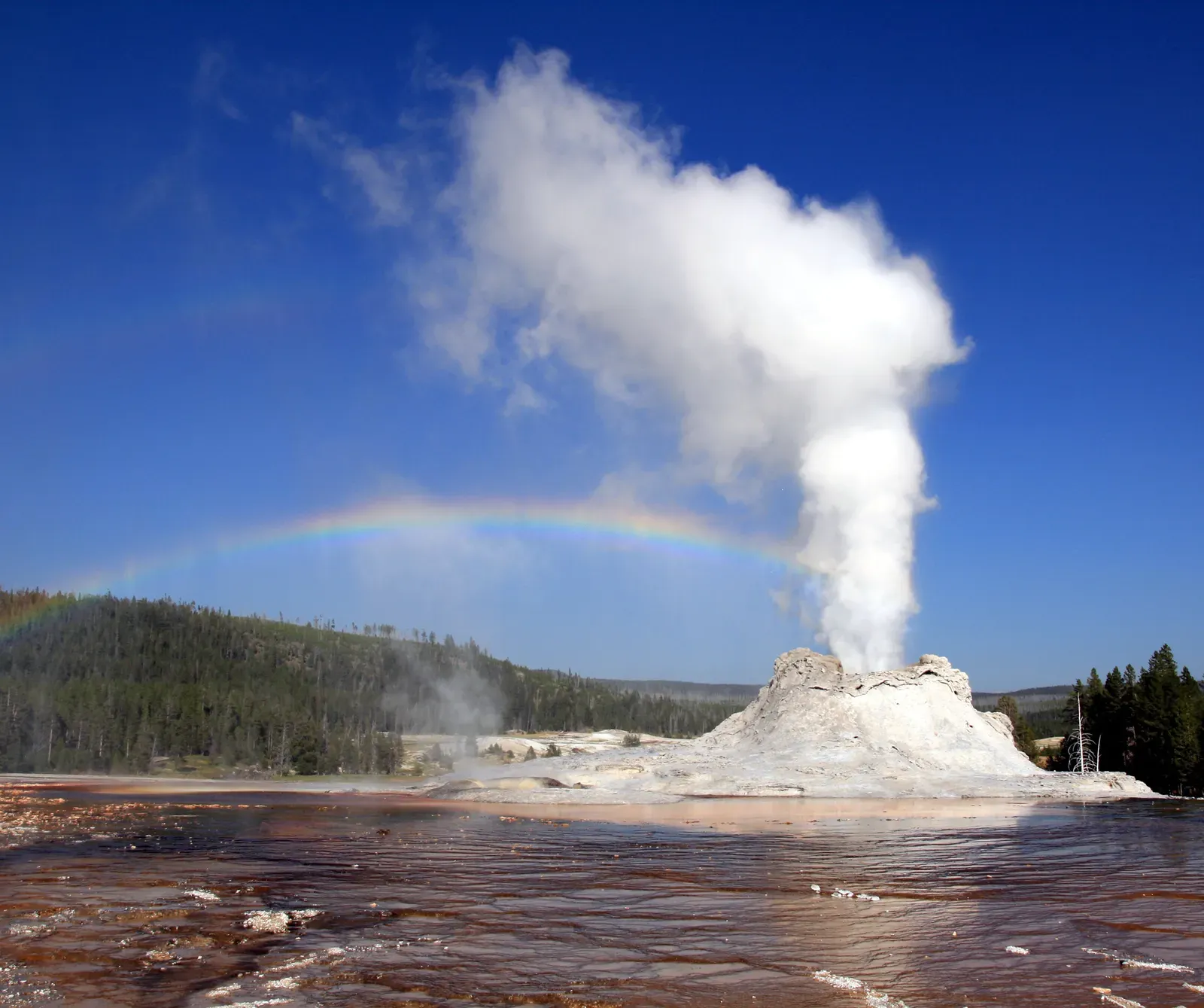
Since its most recent major eruption approximately 640,000 years ago, Yellowstone has remained geologically active, primarily due to the vast magma chamber beneath the caldera. This chamber is estimated to contain around 4,000 cubic kilometers of partially molten material, making it one of the largest of its kind globally.
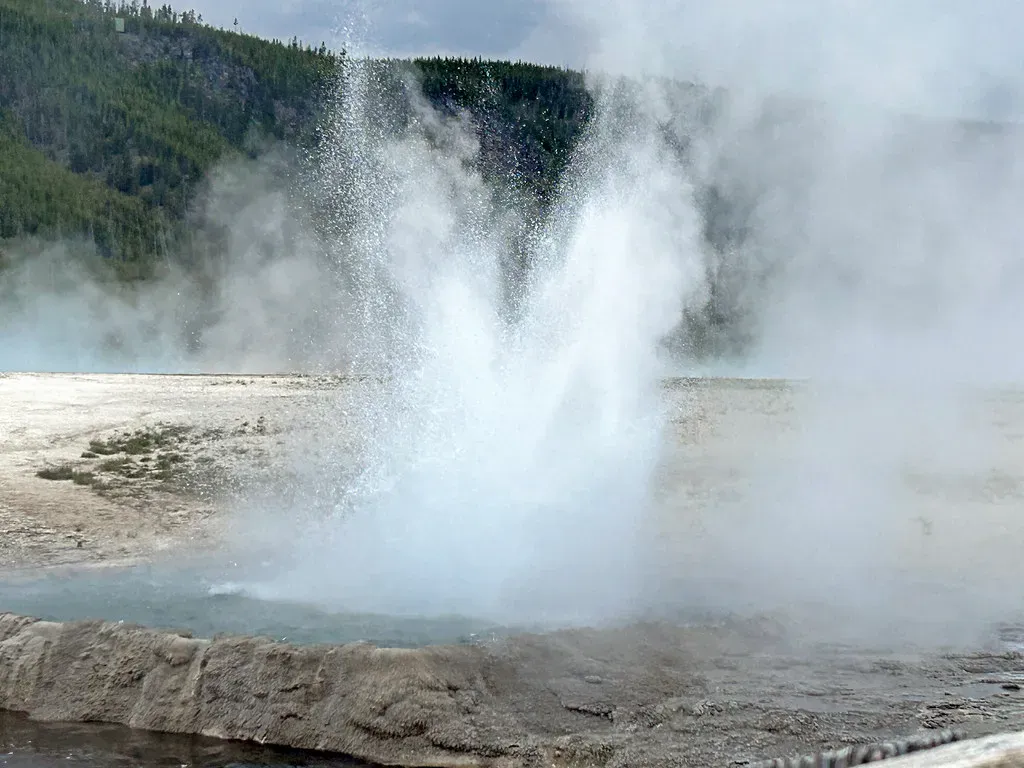
Heat is conducted from the molten rock, found four to five miles beneath the surface of the park, upward to the groundwater system, creating spouting geysers and bubbling hot springs. Every geyser eruption is, in its own small way, a reminder that the system below is still very much alive.
Yellowstone averages between 1,000 and 3,000 earthquakes a year. Most are so small they cannot be felt. Because earthquakes and volcanoes are closely related, these tremors can indicate that things are happening inside the supervolcano.
Geologists closely monitor the elevation of the Yellowstone Plateau, which has been rising as quickly as 150 millimeters per year as an indirect measurement of changes in magma chamber pressure. The upward movement of the Yellowstone caldera floor between 2004 and 2008 was more than three times greater than ever observed since such measurements began in 1923.
Should Anyone Be Worried About the Next Eruption?
USGS, University of Utah, and National Park Service scientists with the Yellowstone Volcano Observatory maintain that they see no evidence that another cataclysmic eruption will occur at Yellowstone in the foreseeable future. That consensus among scientists carries real weight.
Contrary to some media reports, Yellowstone is not “overdue” for a super eruption. The pattern of past eruptions does not follow a strict clock, and geologists are careful to point out that volcanic intervals vary considerably over deep time.
Officials of the USGS say a massive eruption like the last one is an unlikely scenario. The Yellowstone Volcano Observatory suggests the most likely future activities are hydrothermal explosions or lava flows. Although lava flows are a type of magmatic eruption, they are not as devastating as the caldera-forming explosions. Instead of instant destruction, lava flows slowly ooze out of the ground over a period of days, months, or even years.
Research from the University of Oregon suggests that a new catastrophic caldera-forming eruption likely will happen only in 1 million to 2 million years, probably in Montana. On any human timescale, that is as close to “never” as geology gets.
Conclusion
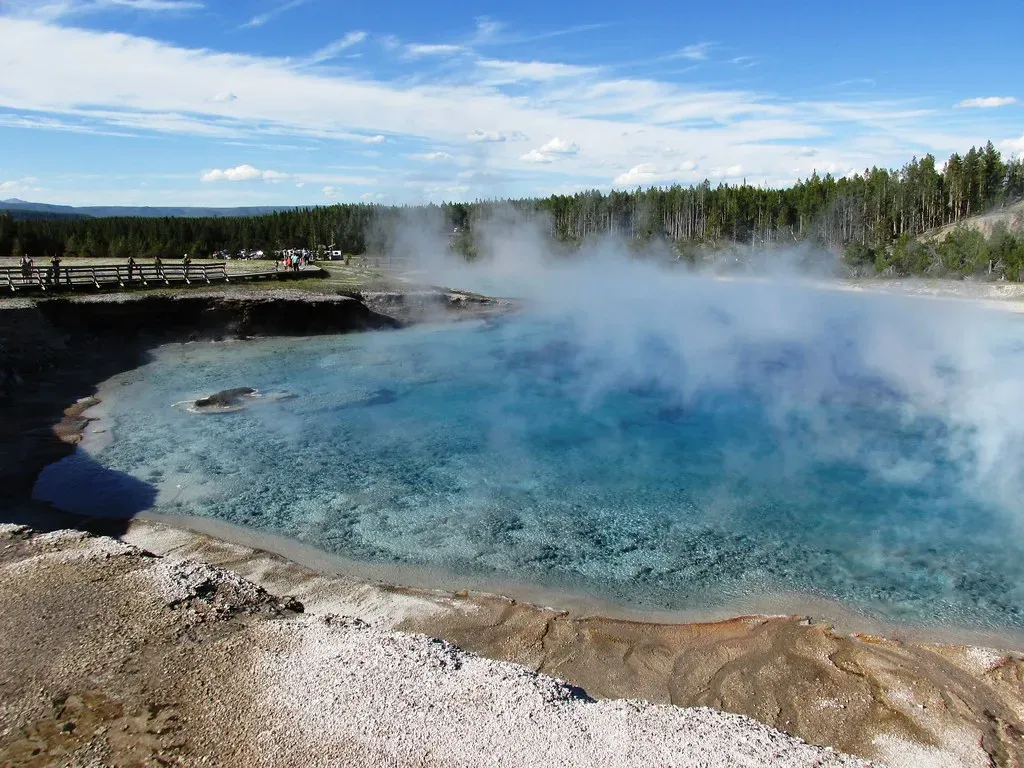
Yellowstone is not simply a park that sits on top of old volcanic rock. It is an active, breathing geological system with a history of eruptions that altered the climate of an entire planet. The geysers are not a curiosity. They are a direct expression of something immense still happening miles underground.
What makes Yellowstone remarkable is exactly this duality: a landscape of extraordinary natural beauty resting above one of the most powerful geological forces on Earth. The International Union of Geological Sciences recognized this, including the Yellowstone volcanic and hydrothermal system in its assemblage of 100 geological heritage sites around the world, acknowledging it as a place of irreplaceable scientific and natural significance.
Understanding that the ground beneath Old Faithful was once the floor of something catastrophic does not make the place frightening. If anything, it makes it more extraordinary. Yellowstone is what happens when deep time, raw geology, and the slow patience of the Earth all end up on the surface at once.
