


Humans rely on their five senses to navigate the world, but in the animal kingdom, many creatures possess extraordinary abilities that go beyond our comprehension. These incredible senses enable them to perceive their environment in unique ways, ensuring their survival and sometimes even leaving humans in awe of nature’s ingenuity. In this article, we explore nine fascinating animals that have developed an extra sense beyond human imagination.
1. The Platypus and Electroreception

The platypus, one of Australia’s most iconic and unusual mammals, has an extraordinary capability known as electroreception. This means they can detect electrical fields generated by the muscular contractions of their prey, such as shrimp and small fish, in murky waters. This sense compensates for their poor eyesight underwater, allowing them to hunt effectively in darkness. Their bill is lined with electroreceptors that are hypersensitive to these signals, making them efficient and stealthy hunters.
2. Pit Vipers and Infrared Sensing

Pit vipers, including rattlesnakes and copperheads, have specialized pit organs located between their eyes and nostrils that detect infrared radiation. This allows them to “see” the heat emitted by warm-blooded prey even in complete darkness. These infrared sensors are so sensitive that they provide a thermal image, guiding vipers accurately to their unsuspecting targets and making them formidable nocturnal hunters.
3. Bumblebees and Ultraviolet Vision

Bumblebees have a unique adaptation that enables them to see ultraviolet light, which is invisible to humans. Many flowers have ultraviolet patterns that guide bees to the nectar, functioning like a visual landing strip. This sense not only aids in pollination but also helps bees differentiate between flowers, enhancing their foraging efficiency and ensuring the survival of both the bees and the plants they pollinate.
4. Sharks and Ampullae of Lorenzini

Sharks possess a remarkable sensory system known as the ampullae of Lorenzini, which allows them to detect minute electric fields produced by other living organisms. This ability is particularly useful for finding prey beneath the sand or in murky waters. The ampullae of Lorenzini are specialized gel-filled canals located in the shark’s snout, providing them with an acute sense of their environment that is crucial for hunting and navigation.
5. Elephants and Seismic Communication

Elephants have an incredible ability to detect seismic vibrations through their feet. They are able to feel ground-based vibrations called Rayleigh waves, which help them communicate over long distances and even sense approaching threats or water sources. This sensitivity not only strengthens their social bonds but also plays a key role in their survival across vast and diverse terrains.
6. Pigeons and Magnetoreception
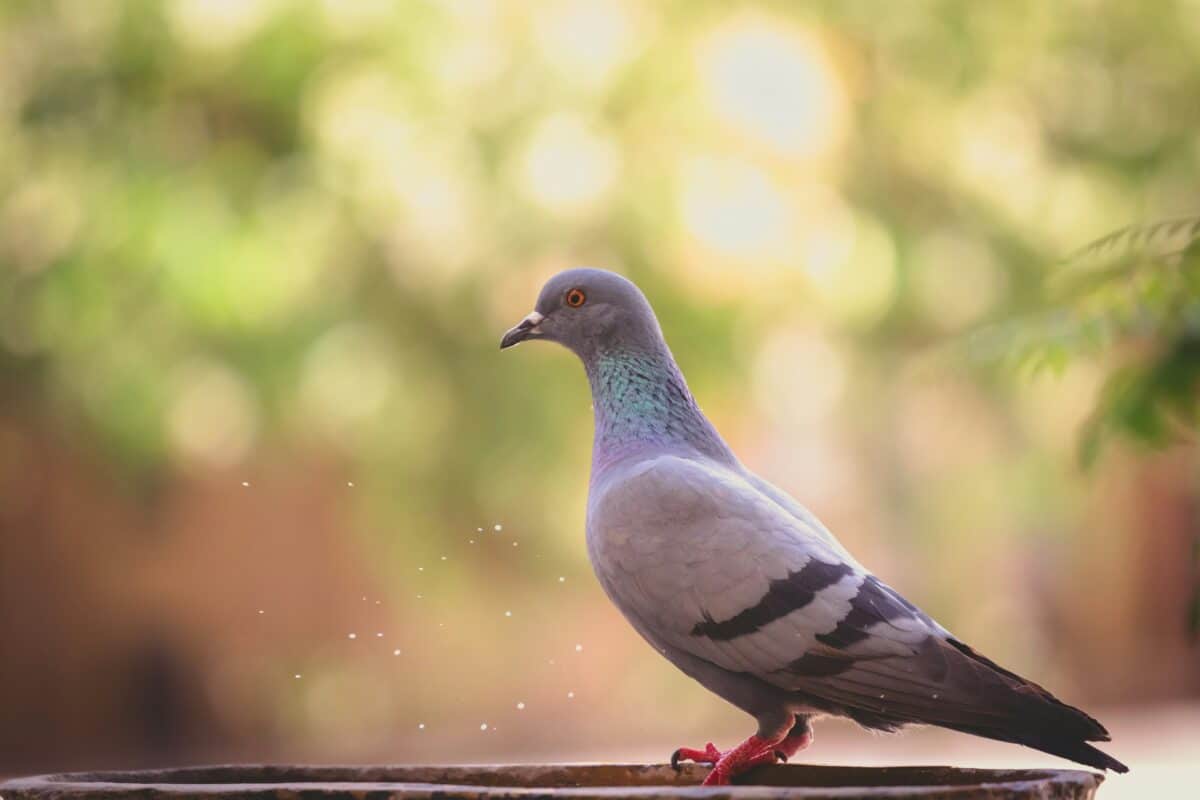
Pigeons have long been heralded for their exceptional navigational skills, which are attributed to a sense known as magnetoreception. This ability allows them to detect the Earth’s magnetic fields and use them as a compass to find their way over long distances. Magnetoreception provides pigeons with a built-in GPS system that has fascinated scientists and enabled these birds to thrive in various environments.
7. Cats and Enhanced Hearing

Cats have an extraordinary sense of hearing, which is far beyond human capability. They can detect higher-pitched sounds up to 64 kHz, which is more than an octave above the range of a dog. This heightened auditory sense enables them to hear the faint rustlings of rodents or insects, even from a distance. Combined with their acute sense of direction, cats’ hearing makes them exceptional hunters.
8. Dolphins and Echolocation

Dolphins use echolocation, a sophisticated sonar system, to navigate and hunt in the ocean. By emitting a series of clicks and listening to the returning echoes, they can determine the size, shape, and distance of objects around them. This sense is so accurate that it allows dolphins to catch fast-moving prey and swim with precision through the often-turbulent waters.
9. Bats and Biosonar

Bats employ a similar technique to dolphins, called biosonar, which enables them to hunt efficiently in the dark. They emit high-frequency sound waves that bounce off objects, including prey, and the returning echoes help them build a detailed picture of their surroundings. This remarkable adaptation allows bats to thrive in nocturnal environments, ensuring their success as nighttime navigators and predators.
Conclusion

The animal kingdom is filled with creatures whose senses extend far beyond human capability, showcasing the incredible diversity of life on Earth. From the electroreceptive powers of the platypus to the echolocating abilities of dolphins and bats, these animals possess gifts that may seem like science fiction but are based in remarkable evolutionary adaptations. Understanding these extraordinary senses not only highlights the wonders of biology but also underscores the diverse strategies employed by different species to thrive in their unique environments.

From exploring the marine wonders in the Azores and witnessing the vast savannas of Kenya, to delving deep into the rich biodiversity of South Africa and traversing iconic landscapes in Australia and the US like Yellowstone, Chris's experiences are vast.
With a penchant for diving alongside sharks, the ocean holds a special place in his heart.
Through his academic insights, he champions wildlife conservation, striving with 'Animals Around The Globe' to cultivate a profound connection between humans and animals, enhancing our mutual appreciation.
Connect with him at Feedback@animalsaroundtheglobe.com.
- The Most Remote Lake in the U.S. - August 19, 2025
- 9 Animals That Have an Extra Sense Humans Can’t Even Imagine - August 19, 2025
- 17 Dog Breeds With The Shortest Live Expectancy - August 19, 2025